.

.
Library of Professor Richard A. Macksey in Baltimore

POSTS BY SUBJECT

Labels

Showing posts with label Occult Symbols. Show all posts

Tuesday, October 16, 2012

Symbols & Psyche


Symbols & Psyche: Exploring Gateways to Realms of Knowledge, Power & Understanding

OTZ CHAIMBy JAMES WASSERMAN

The Muggle world is filled with symbols. From Coke cans to McDonald’s arches, IBM computers to Apple Macintoshs, from flags to emblems and medals, to the endless variety of product packaging, modern culture is brimming with images. Open the Yellow Pages of your phone book – with the emblematic pair of walking fingers – and you will find a myriad of professional logo designers and artists, many of whom have trained at colleges whose crests may date back a century or more.
Walk or Don’t Walk based on a traffic light flashing a message designed to prevent you from being run over by a car – whose distinctive hood ornament differentiates it from its competitors, and which is fuelled by different brands of gasoline whose identity may be apprehended from afar while travelling at high speed. Look at the dashboard and you can ascertain operational norms, be warned of engine trouble, and learn by iconic means about the vehicle and its amenities.
We live in a world filled with visual identifiers intended to convey meaningful information at a glance without the need for words.Heraldry, the distinctive symbols of noble warrior families, traces back to the Middle Ages, when grand tournaments were held with jousts between heavily-armoured knights wearing visors. Since individuals were unrecognisable in such gear, unique coats-of-arms were designed to identify the combatants to fans and foe alike. Taverns and inns, village blacksmiths, printers and publishers, all manner of craftsmen and merchants were as recognisable in villages and cities a thousand years ago, as they are in today’s hyper-illuminated metropolitan areas and quieter rural main streets.However, there is another level of symbolism that goes beyond the merely commercial, socially informative, or technologically useful.
And that is the universe of sacred symbols, whose resonance in the archetypal levels of the human psyche can cause spiritual change and expand consciousness beyond the confines of mundane reality. Symbols that serve as gateways to realms of knowledge, power, and understanding that inform and control life on earth, and, presumably, the after-death state of non-physical life as well. Symbols that can open the mind to communication with spiritual beings who welcome the opportunity to interact with human consciousness. Symbols that confirm to the aspiring student the nature of the truths he or she seeks.
Symbols are the alphabet of the Law of Correspondence. This universal principle acknowledges the inter-connection of all things with all other things, the existence of multiple relationships within Nature’s kaleidoscopic richness.
In The Mystery Traditions, I quoted the following statement by Titus Burckhardt from his book Alchemy, “True symbolism depends on the fact that things which may differ from one another in time, space, material nature, and many other limitative characteristics, can possess and exhibit the same essential quality.”
This article will briefly examine two symbols of great importance to human life. I hope the reader may gain an insight into the richness of the subject and an appreciation for the multiplicity of ideas involved in the study of symbolism. I also hope it may suggest a means by which other symbols may be explored.

The Circle

Let us then begin with the Circle, a symbol of unity, wholeness, and completeness – a figure that seems to contain all within itself. Yet, conversely, it defines and delineates space. Thus it is simultaneously an image of distinction, separation, and difference – setting boundaries between that which is within and that which is without. It is a barrier against intrusion, offering a cocoon of protection within which growth may occur in safety – the egg wherein the babe may take form and mature, the magical circle in which spiritual progress may be made.
The circle is traditionally a symbol of the Sun. To understand the derivation of this association, one need only look up at the sky. With a point in the centre, the circle is the glyph of the Sun in the alphabet of astrology. Its astrological zoomorph is the male lion, king of beasts, powerful, ravenous, swift, courageous, triumphant, regal. He is filled with a self-confidence that allows for the enjoyment of leisure, a kind of benign self-indulgence or laziness that springs from an understanding of his role in the aptly-named pride, or family of lions, over which he rules.
The Sun is a symbol of resurrection. Each day it rises from the depths of night to gradually illumine the world. Through the course of the day it waxes in power and pulses with life-giving heat. Its radiance sustains the growth of crops and the activities of all species on earth. As the day draws to a close and the light of the sun diminishes, it sends forth rays of magnificent colour that herald its decline and descent, its apparent death as it is about to be swallowed by the dragon of night. And yet on the morrow it comes forth again, bursting the chains of its imprisonment, rising to herald the new dawn. It is the embodiment of continuity and hope, of the possibility of life beyond death, and of triumph in adversity.
The Sun is a symbol of the self and of self-consciousness. It represents the unique individuality of each being. As he stands out among the luminaries of heaven, so is each of us the centre of our own universe. While it may not be quite politic to express it in words, each of us feels that he or she is the centre around which the world, as we know it, revolves. The Book of the Law expresses this image beautifully in the passage, “In the sphere I am everywhere the centre, as she, the circumference, is nowhere found.” While there are many who like to imagine themselves as amorphous ripples in a universal continuum, Nature herself rebels against this fantasy. The Sun is her proof.
In the world’s mythology, the Sun is the archetypal essence of numerous deities who span all cultures while sharing the same identity.
Ra in the Egyptian pantheon is hawk-headed. The hawk is far-seeing, inhabits the very heights of the celestial environment, is swift as a beam of light, able to penetrate all darkness and depths to snatch forth his nourishment from the myriad of creatures over whom he reigns. Ra is the creator god, both the spark that enlivens the world and the sustaining energy that keeps it alive. Ra was the first and most powerful of the gods; like the Sun, his role is that of prominence, leadership, and dominion.
The Sun subsumes the resurrection gods, the saviours who act as mythic intercessors between Deity and humanity. The Sun is the eye of God monitoring its creation – prominently, unavoidably, consistently omnipresent in our world that we may learn the lesson of our own essence. The Sun is the link, the representative, the prince, vice-regent, and son of God – visible representative of the Invisible Father of all. As such, he is Jesus, Adonis, Bacchus, Krishna, Apollo, even the Buddha. His death is suffered as an inspiration to us of a life beyond, offering the promise of victory over the chthonic states of non-existence.

The Tree of Life

In the diagram of the Tree of Life (page 16) – the traditional esoteric geometric representation of the mystic totality of existence – the Sun is the number six, the Sephira, or sphere, of Tiphareth, Beauty. Tiphareth stands in the balance, midway between the topmost sphere of Kether, the Crown – the Point, the first manifestation of the Infinite – and the bottom sphere of Malkuth, the Kingdom – the world of three-dimensional physical reality in which we live. Tiphareth occupies the central of the three pillars of the Tree of Life, the Middle Pillar, surrounded on either side by the Pillars of Mercy and Severity.
As the Sun is Tiphareth, the number six, its geometrical figure is the hexagram. The hexagram further exemplifies the nature of the Sun as intercessor or balance point between above and below, heaven and earth, God and man. The hexagram is formed by the union of the ascending male triangle of Fire, and the descending female triangle of Water. The number six, or hexad, was called “the Perfection of Parts” by Pythagoras. This reminds us that Tiphareth (Beauty) is the sphere of Harmony. And harmony is produced by the joining together of distinct, and, in some cases, discordant elements, to produce a unified and aesthetically pleasing whole. Pythagoras observed that the number six is the first mixture of odd and even, being the multiplication of two by three. The Pythagoreans designated odd numbers as male, and even numbers as female. Thus, we are reminded once again that the number six and the hexagram represent the union of male and female, the harmony upon which all creation relies.
The Sun’s metal is gold, the luminous and most beautiful of all, whose value has been an unchanging indicator of wealth and a medium of exchange for millennia. A visit to any fine Egyptian collection, in either a museum or the pages of a book, will show the prominence of gold as the chosen metal of pharaonic iconography and architecture. Similarly, gold was the metal chosen for most of the ritual implements in the Temple of Solomon. It was also used to cover the sacred Ark of the Covenant. Medieval and Renaissance Europe used gold liberally in churches, shrines, and palaces, as did the Aztec, Mayan, Indian, and Chinese royalty and priesthood. Gold is the ultimate symbol of the perfection reached by the alchemist – who removes in countless stages the myriad of impurities that make up lead, and allows for its transformation and refinement into the king of metals.
In the body, the Sun is the heart, symbolically the single most important organ. The heart is the central pumping station of the blood, the essence of life. All survival and health depend on its regular and consistent motion. Long regarded as the seat of courage, the heart was torn from the chest of enemies and eaten by ancient warriors, that they might increase their own strength by ingesting the essence of worthy opponents. Colloquially we speak of a person “with heart” to describe the motivation and self-discipline necessary to pursue a course of success in life. The heart denotes sincerity, the appreciation of the essence of the self in action. It is also the symbolic seat of love, the motivating force that sustains the world through generation.
Among the parts of the Soul in the Qabalah, the Sun is one of six of the ten Sephiroth that compose the intellect, known as theRuach. Here again, the Sun acts as an intercessor between the higher levels of the soul (the Self, Life Force, and Intuition) and its lowest aspect (the Animal Soul of Nature). The Intellect weighs and analyses, decides on the appropriate response to stimulation from above and below. It acts as the mediator between “heaven” and “earth.”
On the level of spiritual experience, the Sun is a symbol of the magical virtue of Devotion to the Great Work, the path by which an aspirant may reach the heights of spiritual potential. The stage of initiation represented by Tiphareth, the sphere of the Sun, is known as the Knowledge and Conversation of the Holy Guardian Angel. This may loosely be understood as the point at which the upward motion of the soul is met with a profound response from the higher reaches of Divinity. A direct interaction occurs in the consciousness of the aspirant that allows for an understanding of one’s continuing mission, the reality of one’s faith in the quest, and the nature of the tasks and obligations under which one is to continue. Such an interaction is a perfect expression of the symbol set we began exploring with the Circle.

The Moon

In order to balance this Solar meditation, let us now turn to the Moon. She is represented by various glyphs in the astrological alphabet because of the several stages of her passage during the twenty-eight days of the lunar cycle from New to Full Moon. However the Crescent is the Moon’s standard astrological symbol.
The Moon is the unconscious self. It represents the hidden parts of the psyche from which spring moods, emotions, dreams, and intuition. The depths of the soul are the very realm of images. The unconscious mind is the wellspring of magic and witchcraft – in which the hidden forces of nature are brought into operation by direct appeal from the hidden forces of the self. (On a practical level, to access such deeper levels of consciousness, the rational intellect must be enlisted to help strategise a means to bypass itself.) The Moon is the symbol of universality, the collective unconscious, the pleroma, wherein the individual self is united with the universal life stream.
The Moon traditionally represents the Goddess, the complement of the solar male deity. In Egypt, she is Isis, the Enchantress. Isis is a complex deity who is identified as the mate of both Ra and Osiris, Lord of the Underworld. She is variously known as the daughter and mistress of Ra, and wife and sister of Osiris. (Osiris may be considered the nocturnal aspect of Ra – the Sun god beneath the horizon, Lord of the realm of death. Symbols, as the reader may have noticed, tend to run together. Their fluidity and tendency toward transmutation are among their lessons.)
The Moon is further identified with goddesses such as Persephone, whose tenure in the Underworld is balanced by her time on earth. Diana, the beautiful virgin goddess of the hunt, is another lunar archetype, as is Mary, Athene, Vesta, Kuan Yin, Astarte, Inanna, and Kali. The symbols of the Moon and Venus run in close parallel (as do those of the Sun and Mars), so one can easily include Hathor, Venus, and Aphrodite, as well as darker feminine archetypes such as Lilith, Ereshkigal, Hecate, and Ashtoreth.
Like the phases of the Moon, the Female archetype is intimately associated with time and the rhythms of life – from the tidal patterns of the ocean to the menstrual cycle. The natural threefold aspect of the feminine archetype is traditionally associated with menstruation: the virginal youth, wife and mother, and crone. Many calendars are lunar-based, among them the Jewish and Muslim calendars in use today.
The Moon is a symbol of fecundity in her identification with the Woman, the ark of life sailing through the seas of time. Moon cycles also regulate planting and harvesting, and thus she is identified with nourishment and sustenance.
On a physical level, the Moon reflects the light of the Sun at night. It is described as a “dead” planet, that is, one without a measurable active core. While these facts are aspects of the feminine archetype, particularly that of the Hag or Crone phase and the dark side of the witch power, there is a great deal more to consider. The Moon is the nocturnal complement of the Sun. How she illuminates the night may be of less immediate importance than the fact that she does. Walking through the countryside by the light of the Moon, it matters little whether the light that guides us is reflected or intrinsic.
On the Tree of Life, the Moon is Yesod, the Foundation, the ninth Sephira. Yesod is also located on the Middle Pillar, directly below Tiphareth, and directly above the physical world of Malkuth, the tenth Sephira. Yesod completes the geometric symmetry of the preceding Sephiroth, while Malkuth hangs like a pendant from the Tree.
Yesod is the world of images and ideas (angels) just prior to their incarnation in the matter and form of Malkuth. The Moon is of the Formative World, Yetzirah, the realm of causes behind the veil of physical life, the astral plane whose vibratory undulations inform the world of substance.
Yesod is the number nine, the number of months of pregnancy. Reducible to three, nine is the first square of an odd number. (Three is “the first and proper joining together of unities,” that is, it is the extension from Point, to Line, to Plane, self-contained in and of itself.) Nine was called “Ocean” or “Horizon” by the Pythagoreans because it is the height of numbers: to go further to ten is only a return to one. Nine is the natural limit of number.
The Moon’s metal is silver, the other traditional coin of the realm, defender of value, medium of exchange, and symbol of the beauty of the mineral world – shining and luminous, of pure composition.
In the body, the Moon is the genitals, the organs of generation, and the sensual, instinctive, insistent fire of those passions on which lives and kingdoms are both built and destroyed. An unruly world of excess which may be channelled through initiation to become the engine of manifestation and great power.
On the level of spiritual experience, the Moon is associated with the magical virtue of Independence. How interesting that after discussing her universality and identity with the unconscious mind – as well as the characterisation of the Moon as “the reflection” of the Sun – she would be identified with Independence. Perhaps the lesson here is that as Yesod is the Foundation, the Work can only take place within the individual. We must learn to separate the many strands of inherited and environmental tendencies in order to uncover our true and unique natures.
While we have explored several aspects of these two important symbols, we have only touched the surface. It would be possible to write volumes on the archetypal symbolism of the Sun and Moon. By looking at the teachings implicit in the Circle and Crescent, we have entered a world, nay a universe, of magic, astrology, mythology, religion, morality, psychology, astronomy, biology, physics, and history. Most importantly, we have glimpsed a path by which men and women may achieve the ultimate goals of our lives – spiritual attainment, universal consciousness, oneness with God, and the accomplishment of the Great Work.
Pedestrians may still safely cross the street in obedience to lights flashing with signs of upraised hands or stick figures in motion. Let us conduct our own ascent to the cosmic reaches of Eternity through the sacred symbols of Initiation.

.

JAMES WASSERMAN is a lifelong student of esotericism. His writings include The Mystery Traditions: Secret Symbols and Sacred ArtAleister Crowley and the Practice of the Magical DiaryAn Illustrated History of the Knights TemplarSecret Societies: Illuminati, Freemasons, and the French Revolution; and The Secrets of Masonic Washington: Signs, Symbols, and Ceremonies at the Origin of America’s Capital. His Chronicle Books edition of The Egyptian Book of the Dead: The Book of Going Forth by Day features the full-color Papyrus of Ani with integrated English translation. The Templars and the Assassins: The Militia of Heavenhas thus far been published in six languages. His controversial The Slaves Shall Serve: Meditations on Libertydefines political freedom as a spiritual value. James and his wife Nancy launched The Weiser Concise Guides, a series of books on basic occultism. You can find him online at www.studio31.com orwww.jameswassermanbooks.com. He lives in New York City with his wife Nancy.
The above article appeared in New Dawn No. 116 (Sept-Oct 2009).

Saturday, September 1, 2012

The Hidden Hand that Shaped History


The Hidden Hand that Shaped History

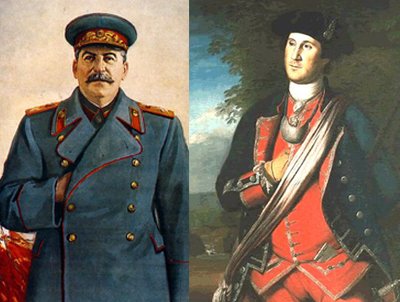
Has the course of History been directed by a small group of people with common interests? The paintings and pictures of the great men of the past centuries reveal a common thread which links them together. Is it a coincidence that many of them hid one of their hands when posing for a portrait? It seems unlikely. We’ll look at the Masonic origin of the “hidden hand” and the powerful men who used the sign in famous portraits.
leadhidden
Stalin and Washington – two opposing ideologies, one hand gesture
“Today’s thinking toward a democratic world state is neither a new trend nor an accidental circumstance; the work of setting up the background of knowledge necessary to the establishing of enlightened democracy among all nations has been carried on for many hundreds of years by secret societies.”-Manly P. Hall, Secret Destiny of America
Is there a hidden force behind the world events of the past centuries? Are the fall of European monarchies, the bringing forth of the Age of Enlightenment and our path towards a world democracy part of a great plan lead by a “hidden hand”? Before the advent of mass media, portraits depicting their leaders in majestic poses were the only artifacts people had. Do these portraits have an occult meaning?
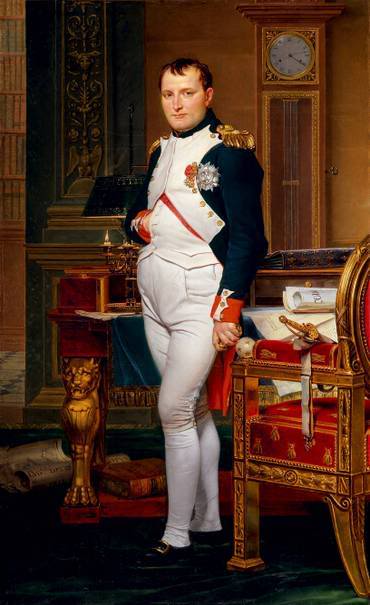
One of those poses is the “hiding of the hand”. I remember my history teacher trying to explain why Napoleon was often shown with a hand inside his shirt. The common explanation went along these lines:
“Many theories have been presented as to why Napoleon is traditionally depicted with his hand in his waistcoat. Some of these theories include: he had a stomach ulcer, he was winding his watch, he had an itchy skin disease, in his era it was impolite to put your hands in your pockets, he had breast cancer, he had a deformed hand, he kept a perfumed sachet in his vest that he’d sniff surreptitiously, and that painters don’t like to paint hands”
-Tom Holmberg
Unless all the individuals discussed in this article had stomach ulcer or deformed hands, the gesture of hiding one’s hand simply has to have a specific meaning. It does. Most of the people using this sign are proven (and often enthusiastic) members of the Freemasons. Considering the great importance of this gesture in Masonic rituals and the fact that all of the elite were either part of Freemasonry or knew of it, it is simply impossible that the recurrence of this sign could be the result of a coincidence. The “hidden hand” can, in fact, be found in the rituals of the Royal Arch Degree of Freemasonry and the world leaders that use this sign are subtly saying to other initiates of the order: “This is what I’m part of, this is what I believe in and this is what I’m working for”.


The Royal Arch Degree

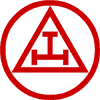
tripleTau
The Triple Tau
The Royal Arch Degree (the 13th degree of the Scottish Rite or the 7th degree of the York Rite) is also known as the Mason of the Secret. During this Degree, initiates are said to receive great Masonic truths.
“The members of this Degree are denominated companions, and are “entitled to a full explanation of the mysteries of the Order”; whereas in the former Degrees they are recognized by the common, familiar appellation of brothers, and kept in a state of profound ignorance of the sublime secret which is disclosed in this Chapter. This accords with the custom of Pythagoras, who thus distinguished his pupils. After a probation of five years, as stated before, they were admitted into the presence of the preceptor, called his companions, and permitted  to converse with him freely. Previous to the expiration of that term he delivered his instructions to them from behind a screen”
-John Fellows, Fellows’s Inquiry into the Origin, History, and Purport of Freemasonry
“If we pass on to the Royal Arch, we receive a wonderful accession of knowledge, and find every thing made perfect; for this is the nec plus ultra of Masonry, and can never be exceeded by any human institution.”
-George Oliver, Lectures on Freemasonry
It is during this degree that the initiate learns the sacred name of God.
“A Degree indescribably more august, sublime, and important than any which precede it, and is, in fact, the summit and perfection of ancient Masonry. It impresses upon our minds a belief in the being of a God, without beginning of days or end of years, the great and incomprehensible Alpha and Omega, and reminds us of the reverence which is due to His Holy NAME.”
-George Oliver, Historical Landmarks
This holy name is Jahbulon, a combination of words meaning “god” in Syriac, Chaldaic and Egyptian.
“JEHOVAH. Of the varieties of this sacred name in use among the different nations of the earth, three particularly merit the attention of Royal Arch Masons:
1. JAH. This name of God is found in the 68th Psalm, v. 4.
2. BAAL OR BEL. This word signifies a lord, master, or possessor, and hence it was applied by many of the nations of the East to denote the Lord of all things, and the Master of the world.
3. ON. This was the name by which JEHOVAH was worshiped among the Egyptians.”
-Malcolm C. Duncan, Duncan’s Masonic Ritual and Monitor
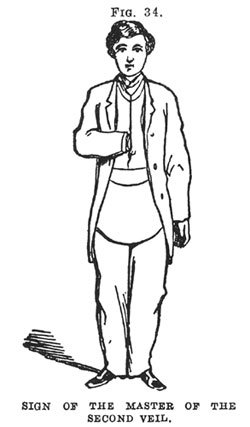
The initiation ritual to this degree re-enacts the return to Jerusalem of three Most Excellent Masons who were held captive in Babylon. I won’t go through the whole ceremony and symbolism but at one point, the initiate is asked to learn a secret password and a hand sign in order to go through a series of veils. The following image depicts the hand sign required to go through the second veil, as documented in Duncan’s Masonic Ritual and Monitor:
second_veil
“Master of Second Veil: “Three Most Excellent Masters you must have been, or thus far you could not have come; but farther you cannot go without my words, sign, and word of exhortation. My words are Shem, Japhet, and Adoniram; my sign is this: (thrusting his hand in his bosom); it is in imitation of one given by God to Moses, when He commanded him to thrust his hand into his bosom, and, taking it out, it became as leprous as snow. My word of exhortation is explanatory of this sign, and is found in the writings of Moses, viz., fourth chapter of Exodus”:
“And the Lord said unto Moses, Put now thine hand into thy bosom. And he put his hand into his bosom; and when he took it out, behold, his hand was leprous as snow”
-Malcolm C. Duncan, Duncan’s Masonic Ritual and Monitor
As stated above, this hand gesture is said to be inspired by Exodus 4:6. In this biblical verse, the heart (“bosom”) stands for what we are, the hand for what we do. It can thus be interpreted as : What we are is what we ultimately do. The symbolic significance of this gesture might explain the reason why it is so widely used by famous Masons. The hidden hand lets the other initiates know that the individual depicted is part of this secret Brotherhood and that his actions were inspired by the Masonic philosophy and beliefs. Furthermore, the hand that executes the actions is hidden behind cloth, which can symbolically refer to covert nature of the Mason’s actions. Here are some of the famous men who used this hand signal.

Napoleon Bonaparte

key-147-651
Napoleon, a known Mason in his study at the Tuileries, 1812
Napoleon Bonaparte (1769-1821) was a military and political leader of France whose actions shaped European politics in the early 19th century. He was initiated into Army Philadelphe Lodge in 1798. His brothers, Joseph, Lucian, Louis and Jerome, were also Freemasons. Five of the six members of Napoleon’s Grand Councel of the Empire were Freemasons, as were six of the nine Imperial Officers and 22 of the 30 Marshals of France. Bonaparte’s association with Masonry has always been played down in historical records. Masonic researcher J.E.S. Tuckett addresses the situation:
“It is strange that evidence in favor of the Great Napoleon’s membership of the Masonic Brotherhood has never been examined in detail, for the matter is surely one of interest, and – seeing the remarkable part that remarkable men played in the affairs of Europe, at a time when Continental Freemasonry was struggling out of chaos into regular order – it cannot be without an important bearing upon Masonic history”
In his essay on Napoleon and Masonry, Tuckett claims:
“There is incontestable evidence that Napoleon was acquainted with the nature, aims and organization of Freemasonry: that he approved of and made use of it to further his own ends”
-J.E.S. Tuckett, Napoleon I and Freemasonry (source)
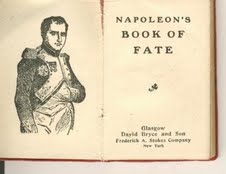
Napoleon was also said to be aided by occult powers. In 1813 he was defeated at Leipzip and behind him was  a “Cabinet of Curiosities” in which a Prussian officer discovered his Book of Fate and Oraculum. Originally this Oraculum was  discovered in one of the Royal tombs of Egypt during a French military expedition of 1801. The emperor ordered the manuscript to be translated by a famous German scholar and antiquarian. From that time onward, the Oraculum was one of Napoleon’s most treasured possessions. He consulted it on many occasions and it is said to have “formed a stimulus to his most speculative and most successful enterprises.”
Napolean's Book of Fate 002

Karl Marx

marx2
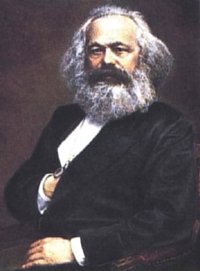
Karl Marx is known today to be the founder of modern Communism. Despite being denied by some Masons, Marx is said to have been a 32nd degree Grand Orient Freemason. Marx became the spokesman of the atheist and socialist movement of Europe. He planned the replacement of monarchies with socialist republics, with the next step conversion to communist republics.

George Washington

wahing
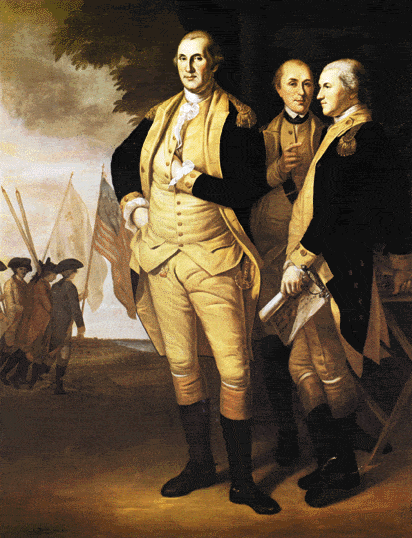
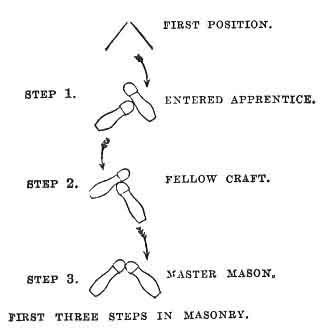
George Washington was one of the Founding Fathers of the United States and is considered to be the “most important American Mason”. Charles Willson Pealed produced this painting when Washington was 52 years old. Notice the position of Washington’s feet: they form an oblong square. The position of the feet are of utmost importance in Masonic symbolism. Compare this with this excerpt from Duncan’s Ritual Monitor:
masonicstpes

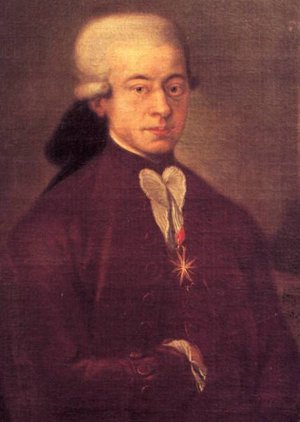
Wolfgang Amadeus Mozart

Mozart_c.1777
Wolfgang Amadeus Mozart is considered to be one of the most prolific and influential composers of music ever. He also was a Freemason and was initiated in the Austrian lodge Zur Zur Wohltatigkeit on Dec. 14th 1784. Mozart’s creations often incorporated important Masonic elements. The Magic Fluteopera was mainly based on Masonic principles.
“The music of the Freemasons contained musical phrases and forms that held specific semiotic meanings. For example, the Masonic initiation ceremony began with the candidate knocking three times at the door to ask admittance. This is expressed musically as a dotted figure: meanings. For example, the
DottedFigure.jpg
This figure appears in Mozart’s opera The Magic Flute in the overture, suggesting the opening of the Masonic initiation.”
- Katherine Thompson, The Masonic Thread in Mozart
The musical progression of The Magic Flute was based on the Golden Ratio (1,6180…), the proportion of everything that is considered divine by Mystery Schools.
Here are compositions created by Mozart for use in Masonic lodges:
  • Lied (song) “Gesellenreise, for use at installation of new journeymen”
  • Cantata for tenor and male chorus Die Maurerfreude (“The Mason’s Joy”)
  • The Masonic Funeral Music (Maurerische Trauermusik)
  • Two songs to celebrate the opening of “Zur Neugekrönten Hoffnung”
  • Cantata for tenor and piano, Die ihr die unermesslichen Weltalls Schöpfer ehrt
  • The Little Masonic Cantata (Kleine Freimaurer-Kantate) entitled Laut verkünde unsre Freude, for soloists, male chorus, and orchestra

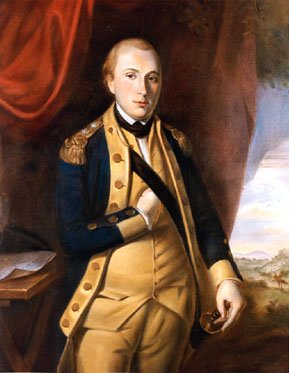
Marquis de Lafayette

lafayette
Marquis de Lafayette was a 33rd degree Freemason. According to Willam R. Denslow’s 10,000 Famous Freemasons, Lafayette was a French military officer who was a general in the American Revolutionary War and a leader of the Garde Nationale during the bloody French Revolution. Lafayette was also made an honorary Grand Commander of  the Supreme Council of New York. More than 75 Masonic bodies in the U.S. have been named after him, including 39 lodges, 18 chapters, 4 councils, 4 commanderies, and 7 Scottish rite bodies.

Salomon Rothschild

Salomon_Rothschild
Salomon Rothschild was the founder of the Viennese branch of the prominent Mayer Amschel Rothschild family. The most powerful family in the world has greatly influenced the policies of Germany, France, Italy and Austria. The Rothschilds are also the main players behind the creation of Zionism and the state of Israel.
The power of the Rothschilds went way beyond the confines of the Masonic lodge. They are said to be part of the 13 “Illuminati Bloodlines”. An analysis of the recently built Supreme Court of Israel (see article here) confirms the Rothschild’s embrace of Masonic symbolism.

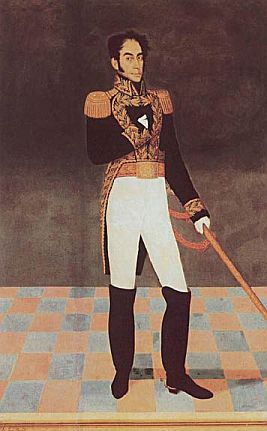
Simon Bolivar

Simon_Bolvar

Known as “El Libertador” (the Liberator), Bolivar is considered to be the “George Washington of South America”. He joined Freemasonry in Cadiz, Spain, received the Scottish Rite degrees in Paris and was knighted in a Commandery of Knights Templar in France in 1807. Bolivar founded and served as master of Protectora de las Vertudes Lodge No. 1 in Venezuela. The country of Bolivia is named after him. Bolivar also served as the president of Colombia, Peru and Bolivia in the 1820′s. He belonged to the Order and Liberty Lodge No. 2 in Peru.
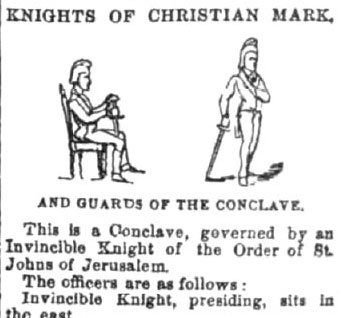
Notice in the image above the position of his feet (oblong square) and the checkerboard pattern of the floor, also Masonic. His stance might have been inspired by the Knights of Christian Mark Degree as depicted below in Richardson’s Monitor of Freemasonry:
conclave

Joseph Stalin

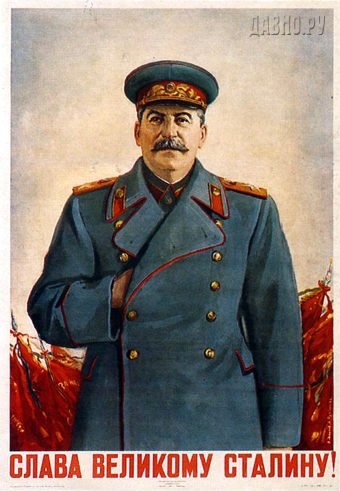
Posterstalin
Stalin’s reign of terror in the Soviet Union  lead to the deaths of millions of his own countrymen. He is often shown in pictures using the  hidden hand gesture. No official records have been found that prove Stalin’s initiation into Masonry. Of course, dictators such as Stalin tightly controlled  all information concerning themselves and their affairs, making it difficult to prove anything one way or the other. The hiding of his hand, however,  provides an initiate’s clue to his possible allegiance to an occult brotherhood.
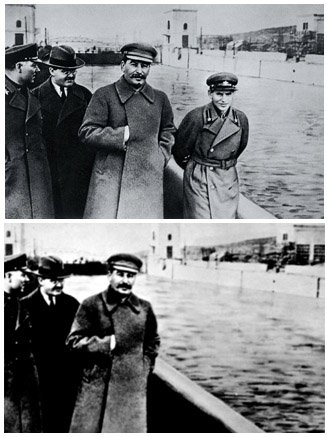
stalin12
After being shot in 1940, the young man on the right has been
edited out by Stalin’s people.

In Conclusion

As seen above, thee leaders using the “hidden hand” gesture had a great influence on world history and many were confirmed Masons. This gesture is an obvious yet widely overlooked detail which hints at the leader’s embrace of occult philosophy. By understanding this fact and by recognizing the IMMENSE influence these leaders had on the course of History, we can begin to realize the hidden force which is currently steering the world toward international democracy.
Members of these brotherhoods might have maintained different opinions and even adhered to different factions (communism vs. capitalism), but the fundamental philosophy, beliefs and ultimate goals are still the same: the coming of an “Age of Reason and Enlightenment”. Of course, any serious researcher is already aware of the role of Masonry in the unfolding of world history. The “hidden hand” gesture, so often used by historical figures is simply the outward expression of this little known fact. As  Confucius said, “Signs and symbols rule the world, not words nor laws.” These people’s words and policies will eventually be twisted and forgotten, but their image will remain for the ages.


“The Imaginarium of Doctor Parnassus” and Heath Ledger’s Sacrifice


“The Imaginarium of Doctor Parnassus” and Heath Ledger’s Sacrifice


Heath Ledger’s last movie is a mind-boggling one. From its enigmatic storyline to the mysteries surrounding its production, “The Imaginarium of Doctor Parnassus” deserves to be duly explored. An interpretation of its rich symbolism reveals to the viewers timeless esoteric truths as well as coded references to today’s occult cryptocracy. This article looks at the mystical meaning of the “The Imaginarium of Doctor Parnassus” and the sacrificial nature of Heath Ledger’s death.
It seems the last movies of actors who die prematurely are often heavily symbolic. A single viewing of  the trailer for The Imaginarium of Doctor Parnassus was sufficient to convince me of the movie’s deep esoteric undertones. Terry Gilliam’s productions have often dealt with occult themes, but this one seemed unusually flagrant. I was therefore looking forward to the movie’s reviews and the potential discussions it would engender. However, I found nothing but superficial blurbs and critiques talking about a “fantastic adventure” or something of the sort. So I watched the movie to see if I misjudged the trailer and, after the first minute and a half, all of my doubts evaporated. The movie begins with a man (Anton) dressed as Mercury (“Hermes” of the Greeks and “Thoth” of the Egyptians) announcing Dr. Parnassus, who is dressed as a monk, holding a lotus flower, a symbol of Eastern mysticism. Pretty esoteric. We’ll first look at the underlying meaning of the movie and follow with the strange symbols relating to Heath Ledger’s death.


The Esoteric Meaning of the Story

The premise of The Imaginarium of Doctor Parnassus conceals a meaning for those who, in the words of Anton playing Mercury, have “eyes to see and ears to hear”.   Here’s a quick summary of the movie.
“The Imaginarium of Doctor Parnassus is a fantastical morality tale, set in the present day. It tells the story of Dr. Parnassus and his extraordinary ‘Imaginarium’, a traveling show where members of the audience get an irresistible opportunity to choose between light and joy or darkness and gloom. Blessed with the extraordinary gift of guiding the imaginations of others, Dr. Parnassus is cursed with a dark secret. Long ago he made a bet with the devil, Mr. Nick, in which he won immortality. Many centuries later, on meeting his one true love, D.r Parnassus made another deal with the devil, trading his immortality for youth, on condition that when his first-born reached its 16th birthday he or she would become the property of Mr. Nick.  
Valentina is now rapidly approaching this ‘coming of age’ milestone and Dr. Parnassus is desperate to protect her from her impending fate. Mr. Nick arrives to collect but, always keen to make a bet, renegotiates the wager. Now the winner of Valentina will be determined by whoever seduces the first five souls. Enlisting a series of wild, comical and compelling characters in his journey, Dr. Parnassus promises his daughter’s hand in marriage to the man that helps him win. In this captivating, explosive and wonderfully imaginative race against time, Dr. Parnassus must fight to save his daughter in a never-ending landscape of surreal obstacles – and undo the mistakes of his past once and for all.”-IMDB
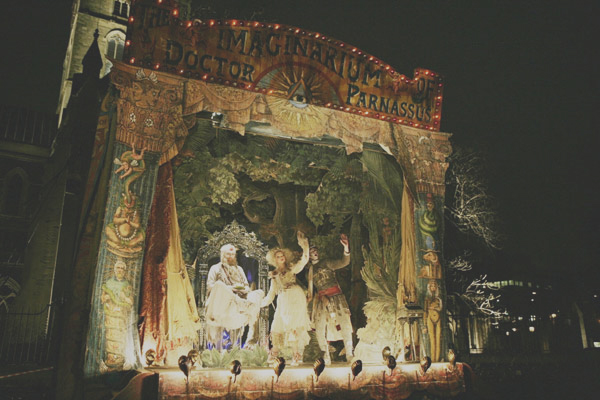
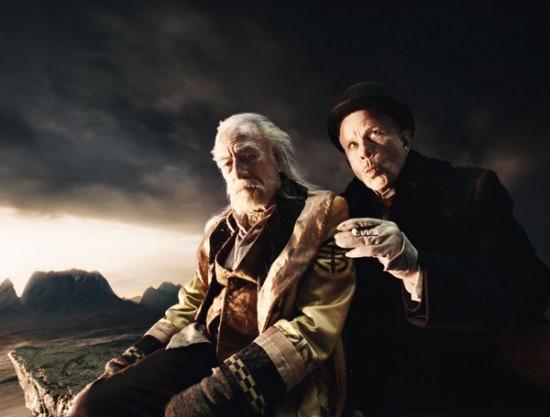
The storyline revolves around a classic Faustian theme, in which Dr. Parnassus makes various bets with the Devil (played by Tom Waits) throughout his life. Looking deeper into the symbolism of the story, Dr. Parnassus and his traveling show are a metaphor for the esoteric teachings transmitted through the ages via Mystery schools. He is a human manifestation of the “path to enlightenment” of the Buddhists or the “inner-Christ” of the Gnostics. By inviting people into the magic mirror, he transports them onto the spiritual plane where they can choose between spiritual fulfillment and enlightenment (represented by a pyramid or a ladder, depending on the person) or ignorance and materialism (represented by a pub or a sleazy motel). Dr. Parnassus says “he transmits the story that sustains the universe,” which is a poetic way of saying that he is the vehicle for the secret teachings leading to illumination. He provides the path that allows the communion between humanity and divinity. The entire symbolism surrounding Paranassus’ theater is inspired by the esoteric teachings of the ancient Egyptians, Greeks, Buddhists and other esoteric schools. The stage contains many interesting occult symbols.
From Janus, the two-faced Roman god to the Masonic twin pillars and the All-Seeing Eye, Dr. Paranassus’ stage reveals the spiritual nature of the theater
Parnassus’ name is also a reference to occult initiation. His name is derived from Mount Parnassus, the sacred mountain of the Dionysus, the Greek god of mystery religious rites (also known as the roman Bacchus). Mount Parnassus also contained the famed oracle of Delphi, the mystical site where people could obtain spiritual revelations.

Dealing with the Devil


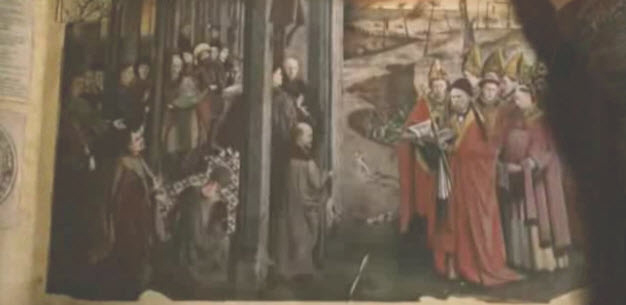
As stated above, the story of the immortal Dr. Parnassus is analogous with the evolution of the Mysteries throughout History. This story was not always perfect and numerous influences have altered its course. There is a constant exchange in the movie between Dr. Parnassus and the Devil and it ultimately becomes evident that they actually need each other in order to exist and to stay relevant. Through their back and forth, they reenact the ancient principle of duality, the constant struggle opposing good versus evil and light versus darkness. This concept is visually represented by the Masonic black and white checkerboard pattern. While explaining his dealings with the Devil to his daughter, Dr. Parnassus explains in coded terms the nature of his essence. It can be found within Buddhist monks, in Jesus Christ and even in Freemasonry. He describes his first bet with the Devil as a competition to see who could first attract twelve disciples. Dr. Parnassus shows his daughter a book containing symbolic images.
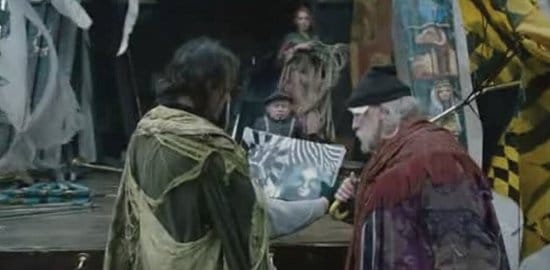
The Devil is here shown surrounded by clergymen. Parnassus says he uses the “necessities of danger, fear and the fabled bliss of ignorance” to attract disciples.
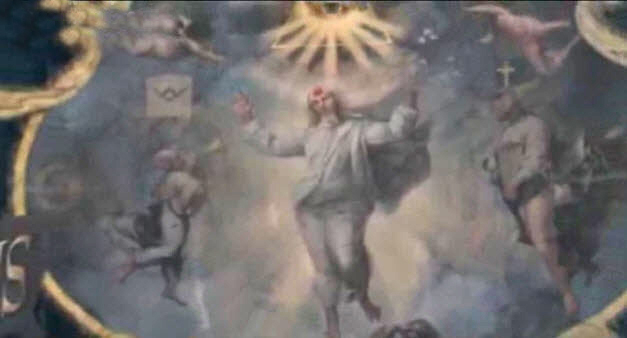
Parnassus teaches “the power of the imagination to transform and illuminate our lives”. He is here depicted as Jesus Christ with his third eye open, floating under the Eye of the Great Architect. Notice on the left a symbol that is very similar to a Masonic square and compass.
Parnassus won that first bet, but he was tricked: the Devil let him win. The Devil knew that, in due time, “nobody would want to hear Parnassus’ stories”. In other words, the Devil knew the world would spiral back into ignorance, ultimately finding itself in the spiritual state we are in today. Parnassus’ show (a metaphor for the path to Illumination) is now a strange novelty, a road-side curiosity that is ignored by most everyday people who are too busy to ponder on its teachings. Then comes Tony.

Tony Liar

Found by Parnassus’ traveling troupe hanging under a bridge, Tony Liar (whose name is based on British Prime Minister Tony Blair) may or may not have been sent by the Devil. Despite his mysterious past, Tony is integrated into to the show and he quickly uses his charming yet dishonest ways to attract more people to the show. He is, however, focused on generating more money and is not interested in people’s spiritual salvation. He finally convinces Parnassus to change the style of the show to make it more modern and to change the audience to make it more … rich.
To illustrate his point about being modern, Tony shows Parnassus a photo in a magazine of a girl making the “a-ok” sign in front of her eyes … interesting.
Tony tells Parnassus not to hide his “mind control thing”, to be bold and to reach the right kind of public. This is the result:
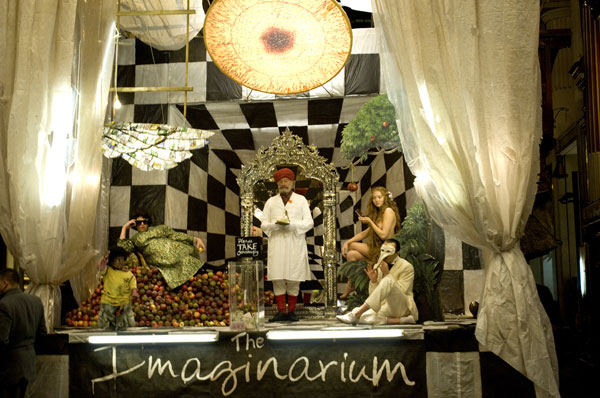
A tri-dimensional Masonic checkerboard pattern leads the way to the “magic mirror”, the gateway to the spiritual plane. Did Freemasonry “repackage” the ancient Mysteries in a way that would be attractive to the upper-class?
The new stage is set in an elegant shopping mall. There is also a change of philosophy: instead of asking for donations, there is box filled with money stating “Please Take Generously”. The bold marketing ploy pays off and those who experience the “other side of the mirror” come back totally fulfilled, leaving behind their money, fur coats and jewelry.
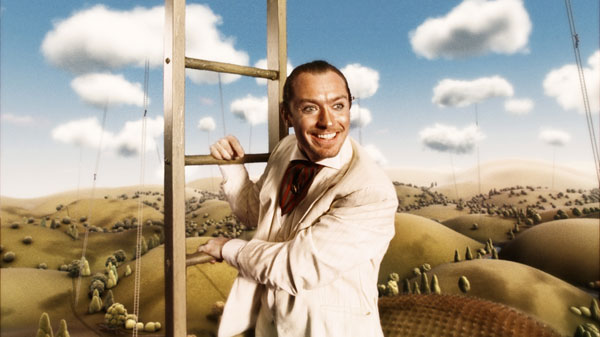
Tony himself finally experiences the joys of the spiritual plane and finds himself climbing the ladder to Illumination.
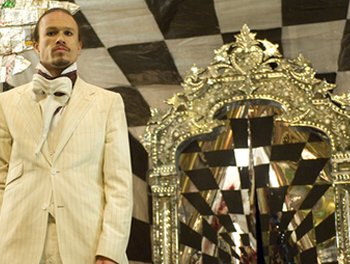
Tony is here played by Jude Law, one of the three actors who replaced Heath Ledger after his premature death.
His climb is stopped however by his troublesome past (the Russian mafia) catching up to him, and the ladder breaks. Spiritual enlightenment cannot be obtained by just anyone. He has however tasted the feeling of “being like a god”.

Heath Ledger’s Sacrifice

While The Imaginarium of Doctor Parnassus communicates an inspiring spiritual message, there is a rather grim side to the movie that relates to Heath Ledger’s death. The concept of duality is present within the movie itself where the tales of illumination are mixed with references to black magic and sacrificial death. Good and evil struggle again. The numerous references to death during the movie could be interpreted as a tribute to Heath Ledger, but, as Terry Gilliam states, none of the script was rewritten after the tragedy. Here is an excerpt of the director’s interview with Last Broadcast:
The film is terribly poignant film to watch now because of the loss of Heath.
Yes, it is.

And there are the references to death in the film that seem terribly poignant in the light of what happened. Did you re-emphasise any of that after his death?
The references to death were all in the original script, which people don’t understand. They all thought we had written this stuff after Heath had died and no, we didn’t change any of the words. And that to me is what’s so kind of scary and spooky – why was it so prescient? It seemed to be all about death, it’s so much of it.
Source
Not only there are many references to death, there are many references to sacrificial death. Knowing the odd circumstances in which Ledger lost his life, could his death be the result of a ritual sacrifice? Are there codes within the movie relating to it? This might sound improbable to the average person but, to the initiate of the occult practices of the entertainment industry, it is a definite possibility. The observations presented here might be coincidences or they might be signs placed on purpose. One thing is for sure: they are there. The first person that seemed freaked out by this was the director himself, who was apparently a friend of Ledger. In his interview with Sun Media, Gilliam stated:
“There are forces at work on this film, don’t get me into my mystical mode … but the film made itself and it was co-directed by Heath Ledger!”
Why is he implying that other forces were at work during the creation of this movie?

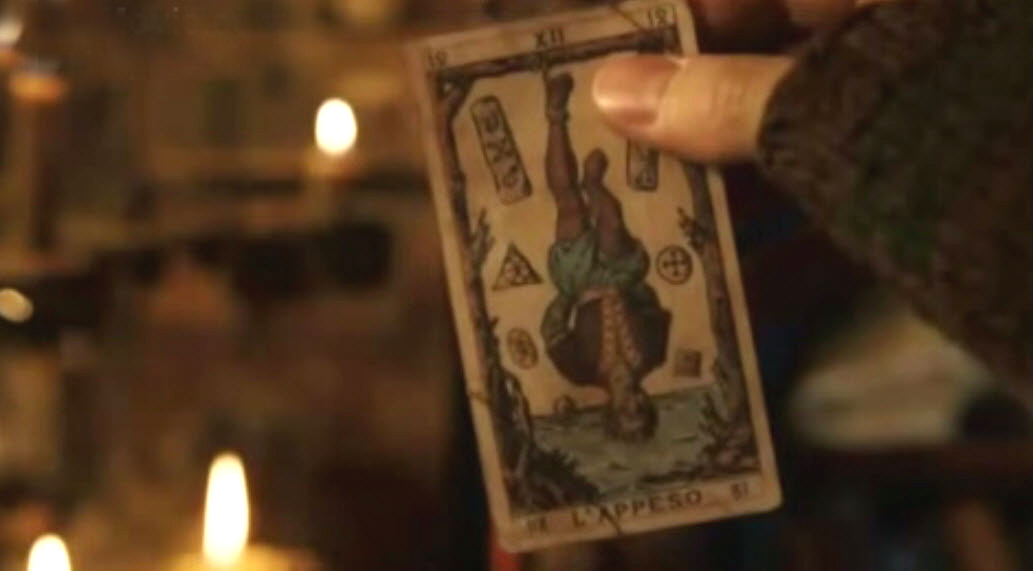
The Hanged Man

Right before the traveling troupe finds Tony hanging under a bridge, Dr Parnassus pulls out the Tarot card of the Hanged Man. It predicted what was about to happen but the occult significance of the card is even more relevant:
“Esoterically, the Hanged Man is the human spirit which is suspended from heaven by a single thread. Wisdom, not death, is the reward for this voluntary sacrifice during which the human soul, suspended above the world of illusion, and meditating upon its unreality, is rewarded by the achievement of self-realization.”
- Manly P. Hall, The Secret Teachings of All Ages
The Hanged Man indeed refers to the myth of the dying god who is committing the ultimate sacrifice in order to attain immortality.
“There is present in the rituals similarities of concepts or beliefs. In the ancient tradition it was believed that through the connection of the body and blood of the Slain God that the people became one with the deity. In the “Last Supper” Jesus declare that the bread and wine were his body and blood, which he gave up for the salvation of the people. Blood was believed to contain the life force. The death of the king freed the inner spirit. Through the distribution of his body and blood, heaven and earth were united and his vital energy renewed the kingdom.
The appearances of the Slain God have taken on various aspects throughout the ages. His images can be seen in the Jack-in-the-Green, the Hooded Man, the Hanged Man of the Tarot, the Lord of Vegetation, the Harvest, and the free untamed aspect of the forest.”
- Source
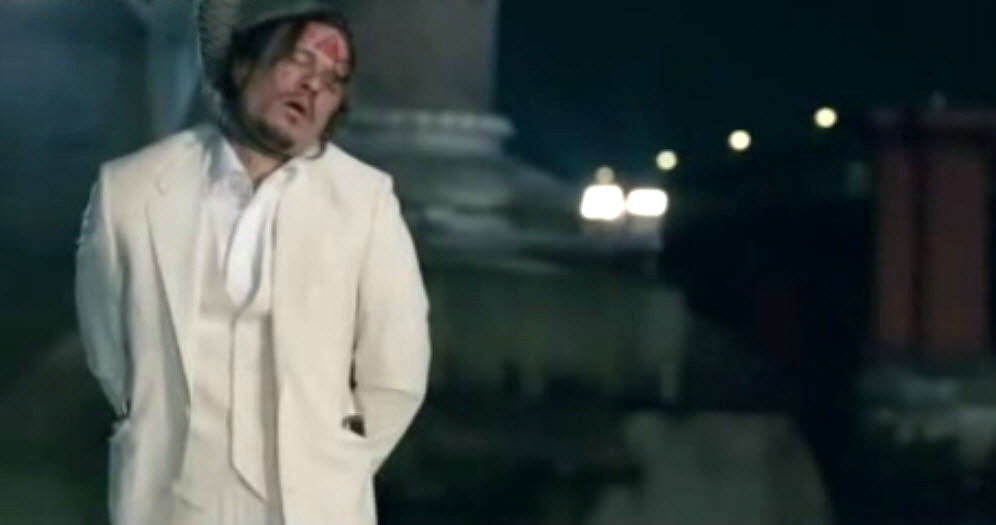
Anton and Valentina then find Tony hanging beneath Blackfriars Bridge.
Ledger’s previous movie was The Dark Knight in which he played The Joker – The Fool of the Tarot. Did The Fool evolve into the Hanging Man?
This scene is inspired by the actual 1982 hanging of Roberto Calvi (dubbed “God’s banker” due to his relations with the Vatican). The hanging took place under the exact same bridge. Although never publicly confirmed, there are strong theories that Roberto Calvi’s death was a symbolic and ritualistic murder carried out by the black masonic lodge called Propaganda Due, also referred to as P2. The name of the bridge is very significant:
“Mr. Calvi’s investigation indicates that his father was strangled, before his body was weighted and suspended underneath Blackfriars Bridge, probably by people who were in a small boat. The choice of bridge may have been significant: the P2 members referred to themselves as “frati neri” – black friars.”
-Source
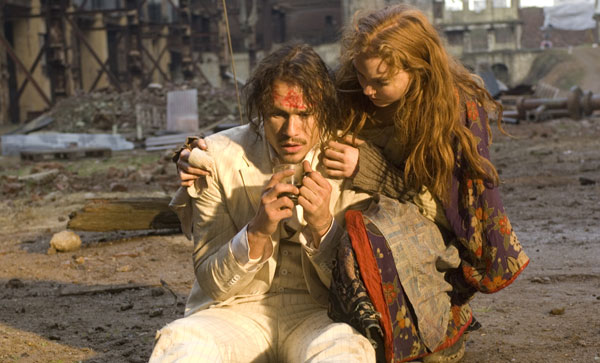
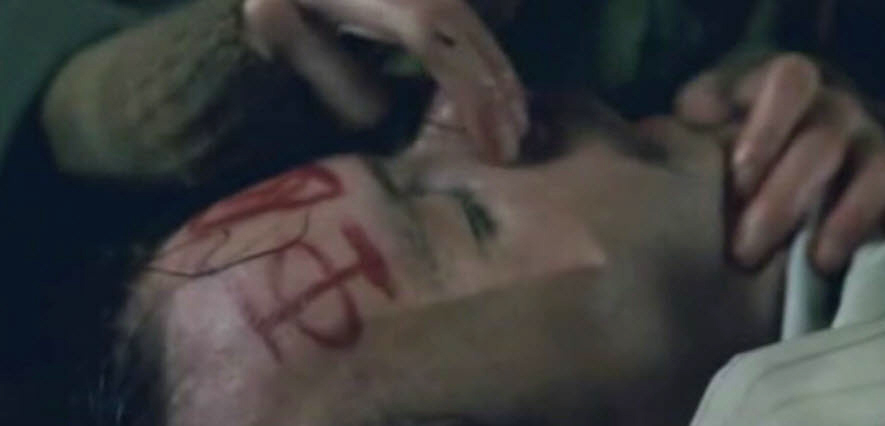
Tony’s forehead bears strange occult markings, as if to further the sense of ritualistic murder in the minds of the viewers.
Phi is a Greek letter representing the Golden Ratio, a mathematical proportion that is extremely important in Freemasonry.
Why did the directors pay homage to this symbolic murder?

Dying Young

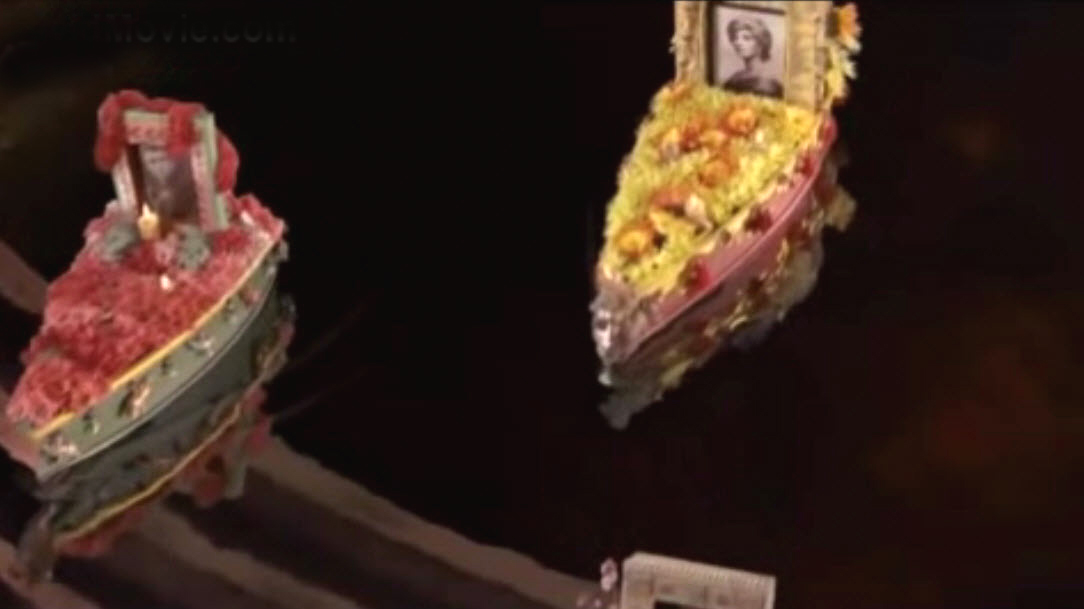
In an eerie scene where Tony (played by Johnny Depp) guides a rich woman through her fantasy world, three boats appear bearing the pictures of Rudolph Valentino, James Dean and Princess Diana, three public figures who died prematurely.
Tony urges the rich woman to follow their path and to embark on a gondola bearing the head of Anubis, the god of the Dead. The woman sees the pictures and says:
“All these people … they’re all dead.”
Tony replies:
“Yes … but immortal nevertheless. They won’t get old or fat. They won’t get sick or feeble. They are beyond fear because they are … forever young. They’re gods … and you can join them.”
He then adds:
“Your sacrifice must be pure.”
All of this is said by Johnny Depp, the actor who replaced Heath Ledger after his premature death. The least I can say is this: strange coincidence. The esoteric meaning of the scene alludes to the dying of the old self in order to give birth to the new, spiritual self. Spiritually, however, this metamorphosis is however obtained through self-sacrifice and personal work, not by dying young. The public figures on the boats all died in “mysterious” circumstances. What is the relation?
I wrote an article last year, Princess Diana’s Death and Memorial: The Occult Meaning, in which I explore the possible sacrificial nature of her death and the “goddess” symbolism surrounding her memorial. Did the same thing happen with Ledger?
Occultists believe that occult rituals, by definition, must have an audience. The greater the number of witnesses, the better, as they give those who execute the rituals more power and potency. Was Ledger’s death a mega-ritual?

In Conclusion

Many movies in Heath Ledger’s career have revolved around occult themes, whether The OrderThe Brothers Grimm or The Imaginarium of Dr Parnassus. Despite this last movie’s positive moral lesson, it almost seems to have been written with prior knowledge of his death. There is a definite aura surrounding this actor and the mysterious circumstances around his death only further this feeling. Terry Gilliam said about Heath:
“Everyone said he died young, but I think he was about 150 when he died. This was not a kid. There was wisdom there. I didn’t know where it came from – none of us knew – but everybody that was close to him says the same thing.”
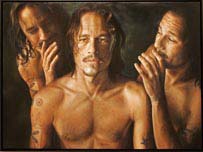
People close to Ledger observed a strange transformation in him during the filming of Batman: The Dark Knight. Shortly before his death, he posed for this artwork painted by his friend Vincent Fantauzzo.
The artist depicted Heath surrounded by two ‘mind spirits’ whispering into his ears. Vincent said the whispering spirits represent Heath’s inner thoughts. What was going on in his head? Was he victim of mind control or possession? Was he sacrificed by an occult brotherhood?  No positive answer can be given at this point and time. All I can say for now is Heath Ledger’s last line in the film, and his last ever as an actor: Don’t shoot the messenger.