.

.
Library of Professor Richard A. Macksey in Baltimore

POSTS BY SUBJECT

Labels

Tuesday, May 23, 2017

Joseph A. Kuhn : Dissecting Darwinism

Dissecting Darwinism


John Hunter, the acclaimed “father of scientific surgery,” understood human anatomy through a process of careful dissection. From 1750 to 1793, he revolutionized modern surgical anatomy through the dissection of thousands of human samples derived from fresh human cadavers, which came from fresh graves (1). He was credited with educating over 2000 surgeons globally based on the doctrine of observation, experimentation, and application of scientific evidence, rather than a reliance on potions, humors, and superstitions to manage disease. The early American surgeons who attended these highly desired anatomy courses included Philip Syng Physick, William Shippen, John Morgan, and many others who helped establish the foundations of American medical education.
John Hunter was also a brilliant biologist and naturalist, having dissected and stored thousands of animals and plants. His considerable samples represented the entire initial display of the Royal College of Surgeons Museum. In two lengthy volumes, entitled Essays and Observations on Natural History, Anatomy, Physiology, Psychology, and Geology, he identified the remarkable similarity of muscles and organs between various species. John Hunter proposed a gradual formation of species through mutation 70 years before Charles Darwin published his observations in On the Origin of the Species. Therefore, history reveals that surgeons are uniquely capable of gathering information, making observations, and reaching conclusions about scientific discoveries.

As the scientific community is faced with new challenges to time-honored conclusions regarding the origin of the species, the origin of humans, and evolution, it is appropriate to dissect this new corpus of information with fairness and modern knowledge. Hence, the purpose of this paper is to review the arguments that have been leveled against the concept of evolution as proposed by Charles Darwin and John Hunter, surgeon and biologist extraordinaire.
Since this review is offered by a physician and surgeon, it might be appropriate to provide evidence of qualification and credibility for such a scientific endeavor. Medicine is a field that attracts some of the brightest minds, based on competitive test scores and undergraduate performance. Modern premedical education commonly includes a typical bachelor's of science degree in biology, chemistry, mathematics, biochemistry, or molecular biology. Medical education includes 2 years of basic science education in molecular biology, biochemistry, biology, anatomy, physiology, and pharmacology, among other topics. Participation in clinical or basic research is common during medical education or residency.

 Physicians then continue their education by practical application of basic science into problem-solving situations with the human body. Regarding the human body, physicians also have an intimate and integrated knowledge of the complete interrelationships, biochemistry, and molecular processes involved with various systems. In fact, the physician represents the penultimate expert on applied molecular pathways as they relate to human conditions. Many surgeons, including this author, are actively involved with gene therapy, vaccine therapy, and the latest molecular targeting based on the incredible breakthroughs in our understanding of the science of DNA (24). Therefore, the physician is indeed an excellent source to dissect evolution based on modern science and applied medicine.

In a 2005 survey of 1472 physicians, almost 78% favored a belief in evolution as an explanation for the origin of the species (5). Among the nation's scientists and biologists, 99% believe in Darwinian evolution (6). The definition of evolution has changed over the years. However, the basic tenets of Charles Darwin suggested that random mutations occur and natural selection continually acts on the surviving mutation, leading to slight improvements and changes in species over time. Neo-Darwinism was coined in 1895 and reflected knowledge of reproduction and recombination, leading to potentially greater shifts in species. The “modern synthesis” of evolutionary thought was proposed in 1950 to incorporate the knowledge of genetics, systematics, paleontology, and other fields. Taken together, the basic concepts recognize that random mutations occur and natural selection continually acts on the surviving mutation, leading to improvements and changes in species over time. These mutations can occur gradually or rapidly via a term called saltation or punctuated evolution. This process of mutation and natural selection has been proposed to explain the descent from a common ancestor, even from the original prokaryocytes billions of years ago. On the basis of natural selection and time, it has been theorized that single cellular organisms may have arisen from a primordial mixture of ancient elements and energy.

Several academic organizations have developed guideline statements to promote Darwinian evolution (including neo-Darwinism, modern synthesis, and punctuated evolution) as the single basic principle to be taught in high schools, universities, and colleges (7). School systems have debated the educational merits of Darwinian evolution and have found themselves in various state and federal courts. In Kitzmiller v the Dover Area School District, the US District Court ruled in 2005, among other things, that the school board could not require teachers to denigrate or disparage the scientific theory of evolution (8). In 2010, the Texas State Board of Education accepted testimony for 3 days from scientists and citizens regarding the teaching of evolution. Representatives of the National Center for Science Education testified that teaching the weaknesses of evolution would unfairly mark future high school seniors as poorly prepared to compete for college positions based on an education that might be considered nonscientific (9). However, numerous other scientists, citizens, and educators brought forth evidence that emphasized the weaknesses of Darwinian evolution. Ultimately, the board took a controversial position and voted to require future textbooks in the state to explain the weaknesses and the strengths of Darwinian evolution.

Two specific strengths of Darwinian evolution are generally agreed upon:
  1. Species adapt to a change in environment (bird beak changes, bacterial resistance, fruit fly experiments). This is called microevolution.
  2. There is similarity in the DNA across species (called homology).
During the Texas State Board of Education testimony, weaknesses were raised about three issues:
  1. Limitations of the chemical origin of life data to explain the origin of DNA
  2. Limitations of mutation and natural selection theories to address the irreducible complexity of the cell
  3. Limitations of transitional species data to account for the multitude of changes involved in the transition
In the sections below, I discuss these three weaknesses and then provide some concluding thoughts on paradigm shift.

CHEMICAL ORIGIN OF LIFE

In 1953, the field of abiogenesis took a large step forward when Stanley Miller and Harold Urey reported that a collection of five simple amino acids could be formed from placing a combination of chemicals in a jar and subjecting the jar to energy in the form of electricity (10, 11). This experiment continues to be used in high school and college texts as the unquestioned fundamental explanation for the origin of life based on a purely natural process (12). Unfortunately, the experimental conditions of a low-oxygen, nitrogen-rich reducing environment have been refuted by many (1315). The experiment actually produces a racemic mixture of amino acids that would inhibit the production of useful proteins.

After Watson and Crick unveiled the double helix nature of DNA in 1953, the origin-of-life research began to focus on the nucleotides and the complex chemical processes that might create the energy for the primitive cell. Modern textbooks expand on the largely debunked Miller-Urey experiment and further propose that the nucleotides form together in a primitive environment with explanations that include the RNA world hypothesis (16), thermogenesis (17), and hypercycles (18). Unfortunately, the student is not taught that those theories still require complex and specified information contained in functioning proteins, which cannot be explained or self-generated (19). 
Furthermore, the student is not taught that the four nucleotides do not spontaneously form in nature (20). There is no self-organizing principle that would guide or facilitate alignment of nucleotides (21, 22). 
Any experimentally manufactured nucleotides are mixtures of L (left-oriented) and D (right-oriented) isomers. Since DNA is composed of only D isomers, the probability of alignment of thousands of specified D isomers becomes even more remote (23, 24). 
Even if there was a self-organizing pattern, the probability of even a short strand of nucleotides occurring in a precisely specified linear pattern that would code for even the smallest single-celled organism with approximately 250 genes has been calculated to be 1 in 10150—1 in 1070 less than the chance of finding a particular electron in the entire universe (25).

In addition to the lack of evidence for self-formation of proteins or nucleotides, the fundamental and insurmountable problem with Darwinian evolution lies in the remarkable complexity and inherent information contained within DNA (26). 

 Modern scientists have unraveled the incomparable elegance and protein-coding information of DNA over the past 50 years. The fundamental blueprint of the cell is found in the DNA, which is composed of four different nucleotides (adenine, cytosine, thymine, and guanine). The individual human cell has 5 billion nucleotides arranged in precise order, allowing for the coding and formation of 25,000 complex enzymes and proteins.

This protein development process involves at least 200 unique proteins and cofactors (Figure 1)


 Steps in protein synthesis. Reproduced with permission from Genentech's Access Excellence.

First, transcription involves the copying of the DNA into a matching strand of messenger RNA composed of similar nucleotides and slightly different sugar molecules. Second, the messenger RNA migrates out of the nucleus into the cytoplasm and is translated into a protein in a ribosome, which coordinates the delivery of a specific transfer RNA-amino acid moiety. A codon, composed of three specific nucleotides, allows for the integration of a single specific amino acid into a long series of amino acids, which then folds into a specific three-dimensional structure called a protein. The 25,000 enzymes and proteins being coded for in each cell of the human body have thousands of minute functions, including signal transduction from the surface, maintenance of specific electrolyte concentrations within very tight limits, storage and utilization of energy, manufacture of proteins, and cell division. In summary, the DNA within each cell is responsible for the production and processing of carefully orchestrated and interrelated functions within the cell. As an analogy, DNA far surpasses the complexity of the blueprints and production of a 30-story building with elevators, electricity, plumbing, computers, and air-conditioning.

Based on an awareness of the inexplicable coded information in DNA, the inconceivable self-formation of DNA, and the inability to account for the billions of specifically organized nucleotides in every single cell, it is reasonable to conclude that there are severe weaknesses in the theory of gradual improvement through natural selection (Darwinism) to explain the chemical origin of life. Furthermore, Darwinian evolution and natural selection could not have been causes of the origin of life, because they require replication to operate, and there was no replication prior to the origin of life.

IRREDUCIBLE COMPLEXITY OF CELLULAR SYSTEMS

The physician studies and understands the enormous complexity of the human body and the human cell. Some aspects of Darwinian evolution in the human body are readily agreed upon—for example, mutation and natural selection acting to influence malarial resistance, skin characteristics, and many other minor changes within the species. 
However, the origin of and explanation for the formation of complex organs remains unclear. Starting from a single germ-line cell, the DNA is sufficient to code for and control development of 50 trillion cells that organize into complex organs based on expression of different sections of DNA, leading to entirely different “factories” that have such diverse functions as the liver, the brain, the heart, and the eye.

Proponents of mutation and natural selection point to a scientific publication regarding eye evolution. Nilsson offered a simulation explaining how a light-sensitive spot with a light-absorbing layer gradually transitioned to a cup, then a hemisphere filled with a transparent substance, and then, with the ends brought together, an aperture (27). Natural selection would theoretically lead to a gradually improved species, which would evidently mate and create progressively better eyes, including the natural formation of a lens, a retina, and the neural transmission to the brain.

However, biochemists have shown that even a simple light-sensitive spot requires a complex array of enzyme systems. When light strikes the retina, a photon interacts with a molecule called 11-cis-retinal, which rearranges within picoseconds to trans-retinal. The change in the shape of the retinal molecule forces a change in the shape of the protein rhodopsin. The protein then changes to metarhodopsin II and sticks to another protein, called transducin. This process requires energy in the form of GTP, which binds to transducin. GTP-transducin-metarhodopsin II then binds to a protein called phosphodiesterase, located on the cell wall. This affects the cGMP levels within the cell, leading to a signal that then goes to the brain. 
The recognition of this signal in the brain and subsequent interpretation involve numerous other proteins and enzymes and biochemical reactions within the brain cells. Thus, each of these enzymes and proteins must exist for the system to work properly. Many other mathematical and logistical weaknesses to the Nilsson example of eye evolution have been uncovered (28). In summary, the eye is incredibly complex. Since it is unreasonable to expect self-formation of the enzymes in perfect proportion simultaneously, eye function represents a system that could not have arisen by gradual mutations.

The concept of irreducible complexity suggests that all elements of a system must be present simultaneously rather than evolve through a stepwise, sequential improvement, as theorized by Darwinian evolution (29). 
Within each individual cell, there are tens of thousands of additional interrelated complex actions, enzymatic steps, and processes that automatically maintain cellular homeostasis, protein transport, self-protection, and replication. The fact that these irreducibly complex systems are specifically coded through DNA adds another layer of complexity called “specified complexity” (30). 
 Geoffrey Simmons, MD, has presented 17 examples within the human body of irreducibly complex systems that could not have formed by sequential or simultaneous mutation, since all components must be present to work correctly (31). These infinitely complex systems include vision, balance, the respiratory system, the circulatory system, the immune system, the gastrointestinal system, the skin, the endocrine system, and taste. 
In addition, virtually every aspect of human physiology has regulatory elements, feedback loops, and developmental components that require thousands of interacting genes leading to specified protein expression. These functions and the corresponding specification of the DNA code are too inconceivably complex to have arisen by accidental mutation or change.

When John Hunter and Charles Darwin saw similarities in muscles and body structure across species, they had no knowledge of the enormous complexity inherent within those organs. 
In the 1850s, Hunter and Darwin might have accomplished the same simulation as Nilsson with the simple alignment of a series of eyes from less complex to complex and the assumption that some sort of gradual evolution over billions of years would be responsible. Modern scientists applying knowledge of the intrinsic complexity within each cell would understand that each sequential mutation in the DNA within the eyeball would require simultaneous mutations in bone structure, nerves, brain function, and hundreds of proteins and cell signaling pathways to make even the smallest change in only one organ system. 
Such changes would require far more than could be expected from random mutation and natural selection. Since these systems are irreducibly complex and individual mutations in one organ would not be beneficial for the organism, these random mutations in all aspects of vision would need to occur simultaneously. Therefore, the human body represents an irreducibly complex system on a cellular and an organ/system basis.

TRANSITIONAL SPECIES DATA

The transitional species from primitive primates to man have been illustrated in textbooks for over 100 years. These drawings form the visual imagery that supports Darwinian evolution for high school students, university students, medical students, and the public. 
However, honest dissent exists in the accuracy of most of the transitional prehominoids, with many found to be frauds or animal species. Reconstructions based on fragmentary and scattered bones, surface bones, and gross morphologic features are limited. 
Anomalous findings of stone tools, bones, and hundreds of other artifacts have suggested that Homo sapiens were actually present 2 to 7 million years ago (at the same time as early proposed transitional species) (32). 
Certainly, there has been no additional transitional mutant or species change from the first generally accepted Homo sapiens over 200,000 years ago. 
The DNA homology between ape and man has been reported to be 96% when considering only the current protein-mapping sequences, which represent only 2% of the total genome. However, the actual similarity of the DNA is approximately 70% to 75% when considering the full genome, including the previously presumed “junk DNA,” which has now been demonstrated to code for supporting elements in transcription or expression (33). 
The 25% difference represents almost 35 million single nucleotide changes and 5 million insertions or deletions (34). The ape to human species change would require an incredibly rapid rate of mutation leading to formation of new DNA, thousands of new proteins, and untold cellular, neural, digestive, and immune-related changes in DNA, which would code for the thousands of new functioning proteins. This rate of mutation has never been observed in any viral, bacterial, or other organism. 
The estimation for DNA random mutations that would lead to intelligence in humans is beyond calculation. Therefore, the recently discovered molecular differences between apes and humans make the prospect of simple random mutation leading to a new species of Homo sapiens largely improbable (35).
The 2004 transitional species between water- and land-based creatures (Tiktaalik roseae) was based on a recovered bone fragment representing the wrist structure that would be necessary for moving on land (36) (Figure 2). Even though this species has been disparaged by scientific circles, it is important to realize that any transition from a water-based organism to an air-breathing land-based organism would also require thousands of simultaneous mutations in the basic physiology of the eyes, nose, alimentary system, lungs, muscles, and bones. This would entail thousands of discrete mutations in the DNA, which would code for the underlying changes in the individual cellular systems and enzymes responsible for the changes. A transitional species change would also require a simultaneous change in another organism, allowing for reproduction and duplication of the markedly mutated DNA.
 
Figure 2
The Tiktaalik roseae proposed as the missing link between water-based and land-based organisms. Reprinted with permission from the New York Times.
 
The transitional species concept has been most extensively studied through invertebrate species of plants, shells, and mollusks in carefully preserved fossil fields in Japan, Malaysia, and Asia. Thousands of specimens were available at the time of Darwin. Millions of specimens have been classified and studied in the past 50 years. It is remarkable to note that each of these fossil beds shows a virtual explosion of nearly all phyla (35/40) of the animal kingdom over a relatively short period during the Cambrian era 525 to 530 million years ago (37) (Figure 3). Since that time, there has been occasional species extinction, but only rare new phyla have been convincingly identified (38). The seminal paper from paleoanthropologists J. Valentine and D. H. Erwin notes that the absence of transitional species for any of the Cambrian phyla limits the neo-Darwinian explanation for evolution (39).

Figure 3
The origin of the phyla: the fossil evidence. Contrary to both Darwinian gradualism and punctuated equilibria theory, the vast majority of phyla appear abruptly with low species diversity. The disparity of the higher taxa precedes the diversity of the ...
 
Finally, bacterial evolution or adaptation offers an excellent opportunity to see mutation in a species with rapid cell division. Evolutionary biology can be modeled over a relatively short time (30 years), while observing DNA mutations over 1020 generations (40). 
 This is analogous to observing mutations in man or any mammal over 200 million years. 
A recent review of numerous papers related to viral and bacterial evolution over the past 40 years revealed that the vast majority of mutations led to a loss or slight modification of function that conferred resistance or survival benefit (41). 
These specific mutations included simple deletions, substitutions, frame shift mutations, inversion, and insertion. No gain-in-function mutations were observed in any of the long-term bacterial evolution studies. There were only two gain-of-function mutations in the long-term viral evolution studies. The absence of mutations leading to a single new protein suggests the difficulty of using mutation to explain the development of numerous new proteins coded specifically by thousands of nucleotides in a precise order, interacting with numerous other enzymes in a simultaneous fashion to accomplish a single cellular action such as the cellular manufacture of a single nucleotide.

The complexity of creating two sequential or simultaneous mutations that would confer improved survival has been studied in the malaria parasite when exposed to chloroquine. The actual incidence of two base-pair mutations leading to two changed amino acids leading to resistance has been shown to be 1 in 1020 cases (42). To better understand this incidence, the likelihood that Homo sapiens would achieve any single mutation of the kind required for malaria to become resistant to chloroquine (a simple shift of two amino acids) would be 100 million times 10 million years (many times the age of the universe). This example has been used to further explain the difficulty in managing more than one mutation to achieve benefit.

In all fairness, there is convincing evidence, that is widely acknowledged, that random mutation and natural adaptation (Darwinian evolution) does occur within species, leading to minor changes in areas such as beak size, skin pigmentation, or antibiotic resistance. Some of these changes involve a simple biologic survival advantage for a population, without a mutation in DNA. Others might be influenced by a single deletion or insertion within the DNA strand. 
However, the modern evolution data do not convincingly support a transition from a fish to an amphibian, which would require a massive amount of new enzymes, protein systems, organ systems, chromosomes, and formation of new strands of specifically coding DNA. 

Even with thousands of billions of generations, experience shows that new complex biological features that require multiple mutations to confer a benefit do not arise by natural selection and random mutation. New genes are difficult to evolve. The bacteria do not form into other species. A reliance on gross morphologic appearances, as with fossils, drawings, and bone reconstructions, is severely inadequate compared to an understanding of the complexity of the DNA and coding that would have been required to mutate from a fish to an amphibian or from a primitive primate to a human.

PARADIGM SHIFT

In his landmark book, The Structure of Scientific Revolutions, Massachusetts Institute of Technology Professor Thomas S. Kuhn gave the term paradigm its contemporary meaning when he used it to describe universally recognized scientific achievements that, for a time, provide model problems and solutions to a community of practitioners (43). 
A paradigm shift can be heralded by the occurrence of “counterinstances or anomalies,” which represent exceptions of the logic or exaggerations of the evidence. 
According to Kuhn, these shifts lead to conflict, debate, and great resistance, even with accusations that the new theorists have ignored “science.” 
Examples of these gradual paradigm shifts, which began as chinks in the established armor of science, include Copernicus versus Ptolemy in astronomy, Lavoisier versus Priestly in gases, and Einstein versus Newton in relative dynamics.

The primary conflicts or anomalies with neo-Darwinian evolution lie in the failure of mutation and natural selection to account for the formation of DNA, the information of DNA, or the complexity of the human cell. 
In all fairness, many physicians, medical students, and college students have not been shown the weakness of Darwinian evolution. 
They haven't been shown the failure of the Miller-Urey experiments to explain DNA, RNA, or protein formation; the paucity of fossil data; or the refutations of transitional species based on a growing biochemical understanding of complex systems and the limits of DNA mutation to account for the formation of new DNA, new chromosomes, and therefore new species.
In contrast, how is it possible that the majority of National Academy of Science members (who should know the above weaknesses) fully believe that random mutation and natural selection can explain the origin of DNA and the subsequent generation of a vast array of protein systems within complex cells? It is possible that the biologist, the paleontologist, and the anthropologist are each studying a small portion of the picture and do not have the education and training to see the full picture. More likely, their previous research relies on the established paradigm of Darwinian evolution to provide structure for their work. As the limitations of existing paradigms become apparent, adoption of a new paradigm typically requires at least a full generation, since existing practitioners and scientists often hold on to the old paradigm.

When the Texas State Board of Education voted to recognize the weaknesses of Darwinian evolution in explaining the origin of the species, it was a result of 3 full days of intense debate and scientific dispute. In 2011, when new textbooks were presented to the State Board of Education, 9 out of 10 failed to provide the mandated supplementary curricula, which would include both positive and negative aspects of evolution (44). 
Moreover, several of the textbooks continued to incorrectly promote the debunked Miller-Urey origin of life experiment, the long-discredited claims about nonfunctional appendix and tonsils, and the fraudulent embryo drawings from Ernst Haeckel. In essence, current biology students, aspiring medical students, and future scientists are not being taught the whole story. Rather, evidence suggests that they continue to receive incorrect and incomplete material that exaggerates the effect of random mutation and natural selection to account for DNA, the cell, or the transition from species to species.

The Texas State Board of Education guidelines do not propose teaching any other alternatives to Darwinian evolution. Rather, the students of tomorrow and teachers of today should appropriately recognize that there are weaknesses that have been pointed out by reasonable scientists. 
In this dissection of Darwinism, we have cut into the weaknesses of the fossil evidence for human evolution, the failure of the fossil data to demonstrate substantial transition species, and the awareness of the sudden formation of most species in a short window of time, with no significant subsequent variation. More importantly, this physician-perspective article emphasizes the extreme impossibility of the natural formation or self-formation of billions of nucleotides in a specific sequence, allowing for the coding of RNA and proteins in a complex cell with thousands of interrelated and irreducibly complex functions. 
The article also enlightens the reader regarding the conflicts and difficulty of using natural selection and mutation to explain the simultaneous or sequential changes in cellular DNA, involving entirely new strands of DNA and thousands of new proteins, which are necessary for the formation of new species.
John Hunter and Charles Darwin were limited to gross observation of physical appearance. The human cell appeared to be a glob of jelly under a primitive microscope. Both scientists observed mutation and adaptation, which clearly exist today. 
For almost 150 years following their proposal, thousands of articles and biology departments across the world made observations based on the paradigm of random mutation and natural selection to account for changes within species. These changes are uncontested truths. 
 However, regarding the origin of the species and life (DNA), even Darwin commented, “If it could be shown that complex systems could not arise by small sequential steps, then my theory would completely break down.” 
Irreducibly complex systems involving thousands of interrelated specifically coded enzymes do exist in every organ of the human body. 
At an absolute minimum, the inconceivable self-formation of DNA and the inability to explain the incredible information contained in DNA represent fatal defects in the concept of mutation and natural selection to account for the origin of life and the origin of DNA. 
As new theories emerge that explain the origin of life, the inevitable emotional accusations of heresy and ignorance are not surprising in a period of scientific revolution. It is therefore time to sharpen the minds of students, biologists, and physicians for the possibility of a new paradigm.

References

1. Moore M. The Knife Man. New York: Broadway Books; 2005. pp. 42–43.
2. McLoughlin JM, McCarty TM, Cunningham C, Clark V, Senzer N, Nemunaitis J, Kuhn JA. TNFerade, an adenovector carrying the transgene for human tumor necrosis factor alpha, for patients with advanced solid tumors: surgical experience and long-term follow-up. Ann Surg Oncol. 2005;12(10):825–830. [PubMed]
3. Nemunaitis G, Jay CM, Maples PB, Gahl WA, Huizing M, Yardeni T, Tong AW, Phadke AP, Pappen BO, Bedell C, Allen H, Hernandez C, Templeton NS, Kuhn J, Senzer N, Nemunaitis J. Hereditary inclusion body myopathy: single patient response to intravenous dosing of GNE gene lipoplex. Hum Gene Ther. 2011;12(5):403–412. [PMC free article] [PubMed]
4. Olivares J, Kumar P, Yu Y, Maples PB, Senzer N, Bedell C, Barve M, Tong A, Pappen BO, Kuhn J, Magee M, Wallraven G, Nemunaitis J. Phase I trial of TGFb2 antisense GM-CSF gene-modified autologous tumor cell (TAG) vaccine. Clin Cancer Res. 2011;17(1):183–192. [PubMed]
5. Holistic Communications Decisions. Majority of physicians give the nod to evolution over intelligent design [press release]. Available at http://www.hcdi.net/news/PressRelease.cfm?ID=93; accessed August 24, 2011.
6. Martz L, McDaniel A. Keeping God out of class. Newsweek, June 29, 1987:22–23.
7. Faculty of Science, University of New South Wales. Intelligent design is not science—scientists and teachers speak out, October 20, 2005. Available at http://web.archive.org/web/20070811105349/http://www.science.unsw.edu.au/news/2005/intelligent.html; accessed August 24, 2011.
8. Kitzmiller v. Dover Area School District. In Wikipedia. Available at http://en.wikipedia.org/wiki/Kitzmiller_v._Dover_Area_School_District; accessed August 24, 2011.
9. National Center for Science Education. Science setback for Texas schools [press release]. Available at http://ncse.com/news/2009/03/science-setback-texas-schools-004708; accessed August 23, 2011.
10. Miller SL. A production of amino acids under possible primitive earth conditions. Science. 1953;117:528–529. [PubMed]
11. Miller SL, Urey C, Oró J. Origin of organic compounds on the primitive earth and in meteorites. J Mol Evol. 1976;9(1):59–72. [PubMed]
12. Mills G, Lancaster M, Bradley W. Origin of life and evolution in biology textbooks: a critique. In: Campbell J, Meyer S, editors. Darwinism, Design, and Public Education. East Lansing, MI: Michigan State University Press; 2003. pp. 207–219.
13. Thaxton CB, Bradley WL, Olsen RL. The Mystery of Life's Origin: Reassessing Current Theories. Vol. 42. New York: Philosophical Library; 1984. pp. 69–80.
14. Levine JS. The photochemistry of the paleoatmosphere. J Mol Evol. 1982;18(3):161–172. [PubMed]
15. Shapiro R. Origins: A Skeptic's Guide to the Creation of Life on Earth. New York: Summit Books; 1986.
16. Ma W, Yu C, Zhang W, Hu J. Nucleotide synthetase ribozymes may have emerged first in the RNA world. RNA. 2007;13(11):2012–2019. [PMC free article] [PubMed]
17. Muller AW. Thermosynthesis by biomembranes: energy gain from cyclic temperature changes. J Theor Biol. 1985;115(3):429–453. [PubMed]
18. Eigen M, Schuster P. The hypercycle. A principle of natural self-organization. Part A: Emergence of the hypercycle. Naturwissenschaften. 1977;64(11):541–565. [PubMed]
19. Joyce GF. RNA evolution and the origins of life. Nature. 1989;38:217–224. [PubMed]
20. Shapiro R. Prebiotic cytosine synthesis: a critical analysis and implications for the origin of life. Proc Natl Acad Sci U S A. 1999;96(8):4396–4401. [PMC free article] [PubMed]
21. Thaxton C, Bradley W, Olsen R. The Mystery of Life's Origin: Reassessing Current Theories. Dallas: Lewis and Stanley; 1992. pp. 5–8.
22. Kenyon D, Mills G. The RNA world: a critique. Origins and Design. 1996;17:9–16.
23. Yockey HP. A calculation of the probability of spontaneous biogenesis by information theory. J Theor Biol. 1977;67(3):377–398. [PubMed]
24. Mora PT. The folly of probability. In: Fox SW, editor. The Origins of Prebiological Systems and of Their Molecular Matrices. New York: Academic Press; 1965. pp. 39–64.
25. Dembski W. Design Inference. Cambridge, UK: Cambridge University Press; 1998. Eliminating chance through small probabilities; pp. 67–91. 175–223.
26. Meyer SC. Signature in the Cell. New York: Harper Collins; 2009. The double helix; pp. 58–84.
27. Nilsson DE, Pelger S. A pessimistic estimate of the time required for an eye to evolve. Proc Biol Sci. 1994;256(1345):53–58. [PubMed]
28. Berlinski D. A scientific scandal [commentary]. Seattle, WA: Discovery Institute Center for Science and Culture. Available at http://www.discovery.org/a/1408; retrieved September 12, 2011.
29. Behe MJ. Darwin's Black Box: The Biochemical Challenge to Evolution. New York: Free Press; 1996.
30. Meyer SC. Signature in the Cell: DNA and the Evidence for Intelligent Design. New York: HarperCollins; 2009. p. 365.
31. Simmons G. What Darwin Didn't Know: A Doctor Dissects the Theory of Evolution. Eugene, OR: Harvest Publishers; 2004.
32. Cremo MA, Thompson RL. Forbidden Archeology. San Diego, CA: Bhaktivedanta Institute; 1993.
33. Wells J. The Myth of Junk DNA. Seattle, WA: Discovery Institute Press; 2011.
34. Chimpanzee Sequencing and Analysis Consortium Initial sequence of the chimpanzee genome and comparison with the human genome. Nature. 2005;437(7055):69–87. [PubMed]
35. Durrett R, Schmidt D. Waiting for two mutations: with applications to regulatory sequence evolution and the limits of Darwinian evolution. Genetics. 2008;180(3):1501–1509. [PMC free article] [PubMed]
36. Luskin C. Tiktaalik roseae: where's the wrist? (updated). Evolution News and Views, July 14, 2008. Available at http://www.evolutionnews.org/2008/07/tiktaalik_roseae_wheres_the_wr008921.html; retrieved September 12, 2011.
37. Meyer SC, Ross R, Nelson P, Shien P. The Cambrian explosion: biology's big bang. In: Campbell J, Meyer SC, editors. Darwinism, Designs, and Public Education. East Lansing, MI: Michigan State University Press; 2003. pp. 323–401.
38. Stanley S. Macroevolution Pattern and Process. San Francisco, CA: Freeman Press; 1979. p. 39.
39. Valentine JW, Erwin DH. Interpreting great developmental experiments: the fossil record. In: Raff RA, Raff EC, editors. Development as an Evolutionary Process. New York: Alan R. Liss; 1987. pp. 74–96.
40. Linton A. Scant search for the maker. The Times Higher Education Supplement, April 20, 2001, Book Section, p. 29.
41. Behe MJ. Experimental evolution, loss-of-function mutations, and “the first rule of adaptive evolution.” Q Rev Biol. 2010;85(4):419–445. [PubMed]
42. Behe MJ. The Edge of Evolution. New York: Free Press; 2007. pp. 60–65.
43. Kuhn TS. The Structure of Scientific Revolutions. Chicago, IL: University of Chicago Press; 1970.
44. Discovery Institute's Center for Science and Culture. An Evaluation of Supplementary Biology and Evolution Curricular Materials Submitted for Adoption by the Texas State Board of Education. September 7, 2011. Retrieved from http://www.discovery.org/f/7711; accessed September 12, 2011.

David Berlinski : The Scientific Embrace of Atheism


The Scientific Embrace of Atheism

At sometime after the Russian cosmonaut Yuri Gagarin first entered space, stories began to circulate that he had been given secret instructions by the Politburo. Have a look around, they told him. Suitably instructed, Gagarin looked around. When he returned without having seen the face of God, satisfaction in high circles was considerable.
The commissars having vacated the scene, it is the scientific community that has acquired their authority. Richard Dawkins, Daniel Dennett, Stephen Weinberg, Vic Stenger, Sam Harris, and most recently the mathematician John Paulos, have had a look around: They haven't seen a thing. No one could have seen less.
It is curious that so many scientists should have recently embraced atheism. The great physical scientists -- Copernicus, Kepler, Galileo, Newton, Clerk Maxwell, Albert Einstein -- were either men of religious commitment or religious sensibility.
The distinguished physicist Steven Weinberg has acknowledged that this is what the great scientists believed: But we know better, he has insisted, because we know more.

This prompts the obvious question: Just what have scientists learned that might persuade the rest of us that they know better? It is not, presumably, the chemistry of Boron salts that has done the heavy lifting.

There is quantum cosmology, I suppose, a discipline in which the mysteries of quantum mechanics are devoted to the question of how the universe arose or whether it arose at all. 
This is the subject made popular in Stephen Hawking's A Brief History of Time. 
It is an undertaking radiant in its incoherence. Given the account of creation offered in Genesis and the account offered in A Brief History of Time, I know of no sane man who would hesitate between the two.

And there is Darwin's theory of evolution. It has been Darwin, Richard Dawkins remarked, that has made it possible to be an intellectually fulfilled atheist.

A much better case might be made in the other direction. It is atheism that makes it possible for a man to be an intellectually fulfilled Darwinist. In the documentary Expelled, one of those curious exercises in which some scientists, at least, say what they really think, Ben Stein interviews a number of Darwinian biologists eager to evade the evidence whenever possible or to ignore it when not. Rich in self-satisfaction, Dawkins appears at the film's end.

How did life on earth arise?
The question, Dawkins acknowledges, is very difficult.
Perhaps the seeds of life were sent here from outer space?
It could well be.
Or by a vastly superior intelligence?
Well, yes.
Questions and their answers follow one another, but in the end Stein says nothing. There is no absurdity Dawkins is not prepared to embrace so long as he can avoid a transcendental inference.

Beyond quantum cosmology and Darwinian biology -- the halt and the lame -- there is the solemn metaphysical aura of science itself. It is precisely the aura to which so many scientists reverently appeal. The philosopher John Searle has seen the aura. The "universe," he has written, "consists of matter, and systems defined by causal relations."
Does it indeed? If so, then God must be nothing more than another material object, a class that includes stars, starlets and solitons. If not, what reason do we have to suppose that God might not exist?

We have no reason whatsoever. If neither the sciences nor its aura have demonstrated any conclusion of interest about the existence of God, why then is atheism valued among scientists?

It takes no very refined analytic effort to determine why Soviet Commissars should have regarded themselves as atheists. They were unwilling to countenance a power higher than their own. Who knows what mischief Soviet citizens might have conceived had they imagined that the Politburo was not, after all, infallible?

By the same token, it requires no very great analytic effort to understand why the scientific community should find atheism so attractive a doctrine. At a time when otherwise sober individuals are inclined to believe that too much of science is too much like a racket, it is only sensible for scientists to suggest aggressively that no power exceeds their own.


David Berlinski is the author of the recently released The Devil's Delusion: Atheism and its Scientific Pretensions, as well as many books about mathematics and the sciences. A Ph.D. from Princeton University, he has taught at colleges and universities in the United States and France, and now lives in Paris. 

===============

Stephen C. Meyer : Not by chance: From bacterial propulsion systems to human DNA, evidence of intelligent design is everywhere

Not by chance: From bacterial propulsion systems to human DNA, evidence of intelligent design is everywhere

Stephen C. Meyer
 
National Post of Canada
December 10, 2005


Editor's Note: This article originally appeared in the December 1, 2005 edition of the National Post of Canada

Original Article

In December 2004 New Mexico Public Television scheduled, advertised and then, under pressure, canceled a documentary explaining the scientific case for a theory of biological origins known as intelligent design.

In the same month, a renowned British philosopher, Antony Flew, made worldwide news when he repudiated a lifelong commitment to atheism, citing among other factors, evidence of intelligent design in the DNA molecule.

Also in December, the ACLU filed suit to prevent a Dover, Penn. school district from informing its students about the theory of intelligent design.

In February, The Wall Street Journal reported that an evolutionary biologist with two doctorates had been punished for publishing a peer-reviewed scientific article making a case for this same theory.

More recently, the Pope, the President of the United States and the Dalai Lama have each weighed in on the subject.

But what is this theory of intelligent design? And why does it arouse such passion and inspire such apparently determined efforts to suppress it?

According to a spate of recent media reports, intelligent design is a new "faith-based" alternative to evolution-an alternative based entirely on religion rather than scientific evidence.

As the story goes, intelligent design is just creationism repackaged by religious fundamentalists in order to circumvent a 1987 Supreme Court prohibition against teaching creationism in the public schools.

Over the last year, many major U.S. newspapers, magazines and broadcast outlets have run stories repeating this same trope.

But is it accurate?

As one of the architects of the theory of intelligent design, and the director a research center that supports the work of scientists developing the theory, I know that it isn't.

The modern theory of intelligent design was not developed in response to a legal setback for creationists in 1987. Instead, it was first formulated in the late 1970s and early 1980s by a group of scientists-Charles Thaxton, Walter Bradley, Roger Olson, and Dean Kenyon-who were trying to account for an enduring mystery of modern biology: the origin of the digital information encoded along the spine of the DNA molecule.

In the book The Mystery of Life's Origin, Thaxton and his colleagues first developed the idea that the information-bearing properties of DNA provided strong evidence of a prior but unspecified designing intelligence. Mystery was published in 1984 by a prestigious New York publisher-three years before the Edwards v. Aguillard decision.

Even as early the 1960s and 70s, physicists had begun to reconsider the design hypothesis. Many were impressed by the discovery that the laws and constants of physics are improbably "finely-tuned" to make life possible. As British astrophysicist Fred Hoyle put it, the fine-tuning of numerous physical parameters in the universe suggested that "a superintellect had monkeyed with physics" for our benefit.

Nevertheless, only the most committed conspiracy theorist could see in these intellectual developments a concealed legal strategy or an attempt to smuggle religion into the classroom.

But what exactly is the theory of intelligent design?

Contrary to media reports, intelligent design is not a religious-based idea, but instead an evidence-based scientific theory about life's origins-one that challenges strictly materialistic views of evolution. According to Darwinian biologists such as Oxford's Richard Dawkins, livings systems "give the appearance of having been designed for a purpose." But, for modern Darwinists, that appearance of design is entirely illusory.

Why? According to neo-Darwinism, wholly undirected processes such as natural selection and random mutations are fully capable of producing the intricate designed-like structures in living systems. In their view, natural selection can mimic the powers of a designing intelligence without itself being directed by an intelligence.

In contrast, the theory of intelligent design holds that there are tell-tale features of living systems and the universe that are best explained by an intelligent cause.
The theory does not challenge the idea of evolution defined as change over time, or even common ancestry, but it does dispute Darwin's idea that the cause of biological change is wholly blind and undirected.

Either life arose as the result of purely undirected material processes or a guiding intelligence played a role. Design theorists favor the latter option and argue that living organisms look designed because they really were designed.

But why do we say this? What tell-tale signs of intelligence do we see in living organisms?

Over the last 25 years, scientists have discovered an exquisite world of nanotechnology within living cells. Inside these tiny labyrinthine enclosures, scientists have found functioning turbines, miniature pumps, sliding clamps, complex circuits, rotary engines, and machines for copying, reading and editing digital information-hardly the simple "globules of plasm" envisioned by Darwin's contemporaries.

Moreover, most of these circuits and machines depend on the coordinated function of many separate parts. For example, scientists have discovered that bacterial cells are propelled by miniature rotary engines called flagellar motors that rotate at speeds up to 100,000 rpm. These engines look for all-the world as if they were designed by the Mazda corporation, with many distinct mechanical parts (made of proteins) including rotors, stators, O-rings, bushings, U-joints, and drive shafts.

Is this appearance of design merely illusory? Could natural selection have produced this appearance in a neo-Darwinian fashion one tiny incremental mutation at a time? Biochemist Michael Behe argues 'no.' He points out that the flagellar motor depends upon the coordinated function of 30 protein parts. Yet the absence of any one of these parts results in the complete loss of motor function. Remove one of the necessary proteins (as scientists can do experimentally) and the rotary motor simply doesn't work. The motor is, in Behe's terminology, "irreducibly complex."

This creates a problem for the Darwinian mechanism. Natural selection preserves or "selects" functional advantages. If a random mutation helps an organism survive, it can be preserved and passed on to the next generation. Yet, the flagellar motor has no function until after all of its 30 parts have been assembled. The 29 and 28-part versions of this motor do not work. Thus, natural selection can "select" or preserve the motor once it has arisen as a functioning whole, but it can do nothing to help build the motor in the first place.


This leaves the origin of molecular machines like the flagellar motor unexplained by the mechanism-natural selection-that Darwin specifically proposed to replace the design hypothesis.

Is there a better alternative? Based upon our uniform and repeated experience, we know of only one type of cause that produces irreducibly complex systems, namely, intelligence. Indeed, whenever we encounter irreducibly complex systems--such as an integrated circuit or an internal combustion engine--and we know how they arose, invariably a designing engineer played a role.

Thus, Behe concludes--based on our knowledge of what it takes to build functionally-integrated complex systems--that intelligent design best explains the origin of molecular machines within cells. Molecular machines appear designed because they were designed.

The strength of Behe's design argument can be judged in part by the response of his critics. After nearly ten years, they have mustered only a vague just-so story about the flagellar motor arising from a simpler subsystem of the motor -a tiny syringe-that is sometimes found in bacteria without the other parts of the flagellar motor present. Unfortunately for advocates of this theory, recent genetic studies show that the syringe arose after the flagellar motor-that if anything the syringe evolved from the motor, not the motor from the syringe.

But consider an even more fundamental argument for design. In 1953 when Watson and Crick elucidated the structure of the DNA molecule, they made a startling discovery. The structure of DNA allows it to store information in the form of a four-character digital code. Strings of precisely sequenced chemicals called nucleotide bases store and transmit the assembly instructions--the information--for building the crucial protein molecules and machines the cell needs to survive.

Francis Crick later developed this idea with his famous "sequence hypothesis" according to which the chemical constituents in DNA function like letters in a written language or symbols in a computer code. Just as English letters may convey a particular message depending on their arrangement, so too do certain sequences of chemical bases along the spine of a DNA molecule convey precise instructions for building proteins. The arrangement of the chemical characters determines the function of the sequence as a whole. Thus, the DNA molecule has the same property of "sequence specificity" that characterizes codes and language. As Richard Dawkins has acknowledged, "the machine code of the genes is uncannily computer-like." As Bill Gates has noted, "DNA is like a computer program, but far, far more advanced than any software we've ever created."

After the early 1960s, further discoveries made clear that the digital information in DNA and RNA is only part of a complex information processing system-an advanced form of nanotechnology that both mirrors and exceeds our own in its complexity, design logic and information storage density.

Where did the digital information in the cell come from? And how did the cell's complex information processing system arise? Today these questions lie at the heart of origin-of-life research. Clearly, the informational features of the cell at least appear designed. And to date no theory of undirected chemical evolution has explained the origin of the digital information needed to build the first living cell. Why? There is simply too much information in the cell to be explained by chance alone. And the information in DNA has also been shown to defy explanation by reference to the laws of chemistry. Saying otherwise would be like saying that a newspaper headline might arise as the result of the chemical attraction between ink and paper. Clearly "something else" is at work.

Yet, the scientists arguing for intelligent design do not do so merely because natural processes-chance, laws or the combination of the two-have failed to explain the origin of the information and information processing systems in cells. Instead, they also argue for design because we know from experience that systems possessing these features invariably arise from intelligent causes. The information on a computer screen can be traced back to a user or programmer. The information in a newspaper ultimately came from a writer-from a mental, rather than a strictly material, cause. As the pioneering information theorist Henry Quastler observed, "information habitually arises from conscious activity."

This connection between information and prior intelligence enables us to detect or infer intelligent activity even from unobservable sources in the distant past. Archeologists infer ancient scribes from hieroglyphic inscriptions. SETI's search for extraterrestrial intelligence presupposes that information imbedded in electromagnetic signals from space would indicate an intelligent source. As yet, radio astronomers have not found information-bearing signals from distant star systems. But closer to home, molecular biologists have discovered information in the cell, suggesting--by the same logic that underwrites the SETI program and ordinary scientific reasoning about other informational artifacts--an intelligent source for the information in DNA.

DNA functions like a software program. We know from experience that software comes from programmers. We know generally that information-whether inscribed in hieroglyphics, written in a book or encoded in a radio signal-always arises from an intelligent source. So the discovery of information in the DNA molecule, provides strong grounds for inferring that intelligence played a role in the origin of DNA, even if we weren't there to observe the system coming into existence.

Thus, contrary to media reports, the theory of intelligent design is not based upon ignorance or religion but instead upon recent scientific discoveries and upon standard methods of scientific reasoning in which our uniform experience of cause and effect guides our inferences about what happened in the past.

Of course, many will still dismiss intelligent design as nothing but warmed over creationism or as a "religious masquerading as science." But intelligent design, unlike creationism, is not based upon the Bible. Design is an inference from biological data, not a deduction from religious authority.

Even so, the theory of intelligent design may provide support for theistic belief. But that is not grounds for dismissing it. To say otherwise confuses the evidence for a theory and its possible implications.
Many scientists initially rejected the Big Bang theory because it seemed to challenge the idea of an eternally self-existent universe and pointed to the need for a transcendent cause of matter, space and time. But scientists eventually accepted the theory despite such apparently unpleasant implications because the evidence strongly supported it. Today a similar metaphysical prejudice confronts the theory of intelligent design.
Nevertheless, it too must be evaluated on the basis of the evidence not our philosophical preferences or concerns about its possible religious implications. Antony Flew, the long-time atheistic philosopher who has come to accept the case for design, insists correctly that we must "follow the evidence wherever it leads."


http://www.discovery.org/a/3059 
============================

Definition of Intelligent Design

Definition of Intelligent Design

What is intelligent design?

Intelligent design refers to a scientific research program as well as a community of scientists, philosophers and other scholars who seek evidence of design in nature. The theory of intelligent design holds that certain features of the universe and of living things are best explained by an intelligent cause, not an undirected process such as natural selection. Through the study and analysis of a system's components, a design theorist is able to determine whether various natural structures are the product of chance, natural law, intelligent design, or some combination thereof. Such research is conducted by observing the types of information produced when intelligent agents act. Scientists then seek to find objects which have those same types of informational properties which we commonly know come from intelligence. Intelligent design has applied these scientific methods to detect design in irreducibly complex biological structures, the complex and specified information content in DNA, the life-sustaining physical architecture of the universe, and the geologically rapid origin of biological diversity in the fossil record during the Cambrian explosion approximately 530 million years ago.

See New World Encyclopedia entry on intelligent design.

Is intelligent design the same as creationism?

No. The theory of intelligent design is simply an effort to empirically detect whether the "apparent design" in nature acknowledged by virtually all biologists is genuine design (the product of an intelligent cause) or is simply the product of an undirected process such as natural selection acting on random variations. Creationism typically starts with a religious text and tries to see how the findings of science can be reconciled to it. Intelligent design starts with the empirical evidence of nature and seeks to ascertain what inferences can be drawn from that evidence. Unlike creationism, the scientific theory of intelligent design does not claim that modern biology can identify whether the intelligent cause detected through science is supernatural.
Honest critics of intelligent design acknowledge the difference between intelligent design and creationism. University of Wisconsin historian of science Ronald Numbers is critical of intelligent design, yet according to the Associated Press, he "agrees the creationist label is inaccurate when it comes to the ID [intelligent design] movement." Why, then, do some Darwinists keep trying to conflate intelligent design with creationism? According to Dr. Numbers, it is because they think such claims are "the easiest way to discredit intelligent design." In other words, the charge that intelligent design is "creationism" is a rhetorical strategy on the part of Darwinists who wish to delegitimize design theory without actually addressing the merits of its case.

Is intelligent design a scientific theory?

Yes. The scientific method is commonly described as a four-step process involving observations, hypothesis, experiments, and conclusion. Intelligent design begins with the observation that intelligent agents produce complex and specified information (CSI). Design theorists hypothesize that if a natural object was designed, it will contain high levels of CSI. Scientists then perform experimental tests upon natural objects to determine if they contain complex and specified information. One easily testable form of CSI is irreducible complexity, which can be discovered by experimentally reverse-engineering biological structures to see if they require all of their parts to function. When ID researchers find irreducible complexity in biology, they conclude that such structures were designed.

https://www.blogger.com/blogger.g?blogID=3597615088639238232#editor/target=post;postID=5929228796824133050

In Evolutionary Literature, Researchers Habitually Slip in Teleological Language

In Evolutionary Literature, Researchers Habitually Slip in Teleological Language

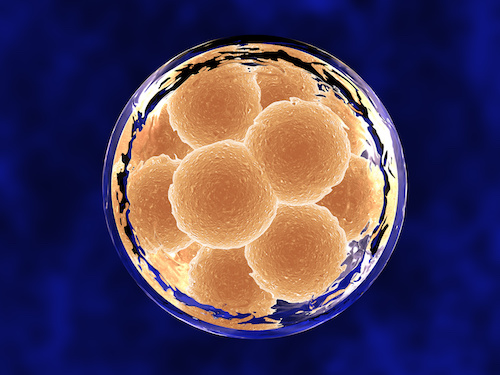
12 Cell Embryo Inside Membrane


How would you explain the evolution of a small set of genes that are expressed for but a few brief hours — when we consist of only 8-16 cells — in a finely tuned choreography unique to placental mammals?

The answer, of course, is to use teleological language. That is because the evolutionary explanation is so transparently unrealistic. Thus, in a Science Daily article, Oxford University’s Ignacio Maeso explains:
It was really shocking to find these genes are only read for a pulse of a few hours in our entire lifetime.

They are found on chromosome 19, known to be an unstable part of our genome. Think of it as a bubbling cauldron of DNA, with individual bits of DNA being added and taken away, occasionally forming whole new genes. At the dawn of placental mammals, 70 million years ago, these genes emerged and were grabbed by evolution to perform a new task, acting to control what cells do in the earliest stages of development.

Grabbed by evolution to perform a new task”: As often happens, the combination of passive voice and infinitive form tells the tale.
The teleology is not a mere slip-up. As we have documented many times, it is a common thread running throughout the genre of evolutionary literature. It is needed to make sense of the data, because evolution doesn’t.
Not too surprisingly, teleological language appears in the original research journal paper in BMC Biology as well. To wit:
A small number of lineage-specific tandem gene duplications have occurred, and these raise questions concerning how evolutionarily young homeobox genes are recruited to new regulatory roles. For example, divergent tandem duplicates of the Hox3 gene have been recruited for extra-embryonic membrane specification and patterning in dipteran and lepidopteran insects, a large expansion of the Rhox homeobox gene family is deployed in reproductive tissues of mouse, and duplicates of TALE class genes are expressed in early development of molluscs.
Two of the evolutionists’ favorite words are “recruited” and “deployed.”
They sound so active, despite, once more, the passive voice. And note the teleology slipped in, in the form of a prepositional phrase (“for…specification and patterning”), a construction typically used to indicate a subject’s purpose or objective.

What better way to obviate the rather awkward problem that, if evolution is true, all biological variation must be random with respect to fitness (a claim that, by the way, has been falsified so many times we stopped counting), and thus without objective or purpose.
Evolutionists nonetheless continue to spread this fake news.


https://www.evolutionnews.org/2017/03/in_evolutionary/
==================

Monday, May 22, 2017

M. Little : Cold Fusion: Fact or Fantasy?


Journal of Scientific Exploration, Vol. 23, No. 4, pp. 407–409, 2009
0892-3310/09

Cold Fusion: Fact or Fantasy?

MARISSA E. LITTLE AND SCOTT R. LITTLE

EarthTech International, Inc. at Institute for Advanced Studies at Austin
11855 Research Boulevard, Austin, TX 78759

e-mail: marissa@earthtech.org

When Professors Martin Fleischmann and Stanley Pons made their initial
announcement about cold fusion in 1989, the scientific community was unusually
open toward incredible discoveries. A few years earlier a team of scientists had
announced the discovery of high temperature superconductors. Alex Muller
and Georg Bednorz were considered outsiders in the area of superconductor
research, their laboratory had no reputation in the fi eld, and they provided no
theoretical explanations. These facts, combined with previous failed attempts by
dedicated superconductor researchers, caused the announcement to be received
with skepticism. However, within a few short weeks nearly every replication
of the experiment was successful and improvements had been made (Nowotny &
Felt, 1997). In an almost parallel set of circumstances, Fleischmann and Pons,
neither of whom were specialists in the fi eld of nuclear physics, announced their
extraordinary results with no theoretical underpinning. But at this point the stories
diverge. Most of the efforts to replicate their experiment failed and the furor died
almost as quickly as it started (Simon, 2002).
One possible explanation for this turn of events is that cold fusion is not real.
In this case, the positive results obtained by numerous researchers (LENR-CANR
Library, n.d.) over the past 20 years would have to be due to some combination of
measurement error, misinterpretation of results, or even confi rmation bias, which
is “. . . the inclination to recruit and give weight to evidence that is consistent with
the hypothesis in question, rather than search for inconsistent evidence that could
falsify the hypothesis” (Risen & Gilobich, 2007). While this may not seem likely
due to the volume of published positive results, it should be noted that there are
countless null experiments that have remained unpublished. Several null results
were published shortly after the announcement when interest in cold fusion was
widespread (Browne, 1989), but the vast majority of null results after the initial
announcement have fallen victim to the “fi le drawer effect,” a phenomenon
that causes less emphasis to be placed on papers that prove the status quo. The
research behind these papers is simply stored in a fi le drawer and it never reaches
publication status. In an effort to combat this effect, we are belatedly publishing
pertinent null results in this issue of the Journal.

The other possible explanation is that cold fusion is real but diffi cult to
reproduce for reasons that are yet to be fully understood. Fleischmann and Pons
did not provide a complete specifi cation for the experiment. Subsequent efforts to
discover this specifi cation have not resulted in the usual narrowing of experimental parameters accompanied by increased reproducibility and strength of effect.
Instead, the cold fusion parameter space has exploded into an assortment of
loosely related methods and phenomena. In contrast to the original experiment,
which involved electrolysis of heavy water with a Pd cathode, cold fusion
experiments now include light water electrolysis, a variety of cathode materials,
gas-loaded metals, ultrasound cavitation, exploding wires, high-temperature
plasmas, etc. (Storms, 2007). This diversity can be optimistically interpreted as
evidence that the phenomenon is robust and rather reproducible. But it also can
be a symptom of confi rmation bias: evidence of cold fusion is found in any
suffi ciently complicated experiment.
It is quite diffi cult to judge which of these two scenarios is true. The fi eld of
cold fusion suffers greatly from the Experimenter’s Regress—a term coined by
Harry Collins (1981). Experimenter’s regress has two pertinent consequences in
this situation. First, “it is impossible to know by objective criteria alone whether
one or another experiment has been performed competently. Thus, rather than
providing an unambiguous way out of controversial affairs, experiments can only
serve to reinforce the apparent confl ict” (Saulson, 2001). This aspect of experimenter’s regress does not allow conclusions to be drawn about the positive results from cold fusion experiments, nor about the null results. One is unable to
determine the merit of an experiment if the expected outcome is not known. If
cold fusion is real, then the experiments with positive results should be lauded as
well performed. However, if cold fusion is nothing but the result of measurement
errors, then the null experiments were obviously correctly performed. Because of
the controversial nature of the claims, the results cannot be interpreted objectively.
Additionally, experimenter’s regress, combined with confi rmation bias, leads a
person into a feedback loop where they assume that the results obtained are the
correct ones since it is diffi cult to determine otherwise. This further polarizes
the two sides as experimenters with positive results become more convinced of
the veracity of cold fusion and experimenters with null results become more
convinced of the fantasy of cold fusion.
All doubts could be put to rest by the development of a commercial energy
source based on cold fusion. But before this development can begin, a robust
demonstration experiment is required to convince scientists, engineers, and investors.
A cold fusion cell that produced enough power to run itself would certainly
suffi ce. Several researchers have claimed such large quantities of excess heat; a
self-sustaining device should be possible even with the ineffi ciency of converting
heat to electricity. But no such device exists.
A cold fusion experiment that reproducibly produced strong, unambiguous
evidence of nuclear reactions would be the next best thing. Martin Fleischmann
lamented the lack of such an experiment in his opening remarks at the Seventh
International Conference on Cold Fusion (ICCF-7) in 1998. Apparently, this
situation has not changed in the ensuing decade. Some cold fusion researchers
will claim to have such experiments in hand but the world has not yet seen the
expected consequences, namely large-scale investment and research in cold
fusion. Possibly some researchers are keeping their success a secret. Solving the
world’s energy problems would certainly bring both fame and fortune.
It should therefore come as no surprise that the mainstream scientifi c community
still does not accept cold fusion as a means of creating nuclear reactions.
This situation will persist until a robust demonstration experiment is developed
and publicized. If no such experiment ever appears, cold fusion will slowly fade
away and become nothing more than a footnote in the history of science.
About the Authors: Marissa and Scott Little work at EarthTech International,
a company dedicated to investigating new energy ideas. We have spent countless
hours on cold fusion experiments, with a great deal of emphasis on accurate
calorimetric measurements (Little et al., 2008). Despite this effort, we have never
seen a successful cold fusion experiment. We are still dedicated to this fi eld and
watch for new announcements with anticipation. Unfortunately, the null results
obtained in our laboratory have fostered the undeserved reputation that we
are trying to disprove cold fusion. Nothing could be further from the truth. This
reputation has lessened the interests of other scientists in being open and cooperative with us. However, our laboratory remains open and we remain optimistic that someday we will have the opportunity to make measurements on an experiment that irrefutably demonstrates the phenomenon known as cold fusion.

References

Browne, M. W. (1989, 3 May). Physicists debunk claim of a new kind of fusion. New York Times.
Collins, H. M. (1981). Son of seven sexes: The social destruction of a physical phenomenon. Social
Studies of Science, 11(1), 33–62. doi: 10.1177/030631278101100103.
LENR-CANR Library. (n.d.). Available at: http://www.lenr-canr.org.
Little, S. R., Luce, G. A., & Little, M. E. (2008). MOAC—A High Accuracy Calorimeter for Cold
Fusion Studies. Presented at the 14th International Conference on Condensed Matter Nuclear
Physics. Available at: http://www.earthtech.org/experiments/ICCF14_MOAC.pdf.
Nowotny, H., & Felt, U. (1997). After the Breakthrough: The Emergence of High-Temperature
Superconductivity as a Research Field. Cambridge: Cambridge University Press.
Risen, J., & Gilobich, T. (2007). Informal logical fallacies. In Sternberg, J., Roediger, H. L., &
Halpern, D. F. (Eds.), Critical Thinking In Psychology. Cambridge: Cambridge University Press.
Saulson, P. R. (2001). Life inside a case study. In Labinger, J. A., & Collins, H. M. (Eds.), The One
Culture?: A Conversation about Science. Chicago: The University of Chicago Press.
Simon, B. (2002). Undead Science: Science Studies and the Afterlife of Cold Fusion. Piscataway:
Rutgers University Press.
Storms, E. (2007). The Science of Low Energy Nuclear Reaction: A Comprehensive Compilation
of Evidence and Explanations about Cold Fusion. Singapore: World Scientifi c Publishing Co.
Pte. Ltd.

REGINALD FIREHAMMER : Religion and Absolute Moral Values


The Liberal Institute
ANALYSIS IN DEPTH

Religion and Absolute Moral Values
 
by REGINALD FIREMAMMER
 
Religious people frequently claim religion is necessary because without it there would be no absolute moral values. They explain it by saying things like "without absolute moral values mankind would be morally rudderless," or "without absolute moral values mankind has no fixed direction by which to set their moral compass." While such expressions result in mixed metaphors, there is an important truth in them. Without absolute moral principles mankind truly is morally more mixed up than religion's metaphors. The peculiar thing is, while it is primarily the religious who are clamoring these days for a return to higher moral standards and true moral values, what the religious provide as absolute moral values is neither moral nor absolute.


God's Laws are Arbitrary, not Absolute

When the religious talk about absolute moral principles, they are referring to what they call "God's laws." God's laws are absolute, they say, because God is...well God, and whatever God says is absolute, because He says it. This may seem like a circular argument, but it isn't, because it is not presented as an argument at all. To the religious, it is an autoschediastic asserveration. Since you probably do not know what those words mean, you may be tempted to accept on faith that they are true -- that is how faith usually works. At the risk of endangering your faith, I will tell you autoschediastic asserverations are "self-listing truths," which means truths which are obvious, or what the bad philosophers call a priori knowledge.
(Note: A priori knowledge is the kind of knowledge you have without learning anything. It is the kind of knowledge people have if they receive their education in any modern public (government) school.) 

The problem with "obvious truths" is they are mostly incorrect. They are not the same thing as "common sense" which, as a matter of fact, should make us very suspicious of any so-called "obvious truths," especially those that contradict plain facts. Take, for example, the so called "obvious truth" that whatever God says is absolute. 

Since absolute means always true under all conditions, irrespective of anyone's wish or will nothing that depends on any authority's choice or declaration, whether that authority is a human or a god, is absolute. Anything that depends on anyone's whim, choice, or declaration is arbitrary and contingent. All dictated law is arbitrary because a dictator is not bound by any law or principle (else he could not dictate) and may declare, by fiat, anything he chooses. It is also contingent because it is not determined facts, but the whim or mood of the dictator at the moment the declaration is made and, of course, the dictator is free to change the "law" whenever a new whim or mood strikes him. Anyone who knows much about the history of religion, particular the Judaeo/Christian varieties, knows God frequently changes His mind -- which means His absolute laws are only absolute temporarily. 


True Moral Principles Absolute

True moral principles are neither arbitrary (dictated or pronounced by the fiat) nor contingent (dependent on any agencies, whims, or moods). Moral principles, like all truth, are determined by the nature of reality itself; and, like all truth, are discovered, not decided or chosen by anyone, not even God.

Those who claim there are no objectively discoverable moral values mean they have not discovered any. Human beings have a specific nature and live in a world of a specific nature and it is these facts that determine the moral principles by which human beings must conduct their lives to live successfully and happily in this world. 


Morality Determined by Principles, Not Codes

The moral systems of the religions all consist of moral codes which are nothing more than lists of prescriptions (things we must do) and proscriptions (things we must not do). While many of the things on these lists are things a moral individual would observe, no moral code can possibly be a good ethical system for at least three reasons:
  • Moral principles and a moral code are opposites and contradictory. Moral values are not commandments, they are principles which one uses to judge which actions are morally right in any given circumstance. Morality pertains only to choice. A commandment eliminates choice. Those who accept the authority of commandments (or the dictator who issues them) have removed themselves from the sphere of morality; they exchanged choice for obedience, surrendering their choice to the will of the authority.
  •  
  • A Code of any kind takes the place of judgement. Choices are made by applying principles to circumstances to determine the appropriateness of an action. Principles enable one to determine consequences and to base choices on the reality of which actions will produce which results. A moral code eliminates the very essence of moral choice, judgement, by dictating action in all circumstances without regard to consequences or reason. 
  •  
  • A Code that does not cover every possible circumstance (no code can) provides no means of determining behavior in those cases not covered. There will always be more situations in the life of any human being requiring choices with moral consequences than any code, however extensive, will ever cover. With only a moral code and no moral principles, the individual is left with no moral guidance whatsoever in most of the moral issues of life.
When actual moral codes are examined their limitations as moral guides becomes apparent. The most common and well known of religious moral codes is the Ten Commandments of the Jewish and Christian Scriptures. The Ten Commandments are presumed to be absolute, at least in the abstract. In practice, however, there is some question about this presumption.


The Ten Commandments

Except for two of the ten commandments, all are prohibitions, that is, "thou shalt nots." Of the two that are not prohibitions, almost no one keeps the first, "remember the sabbath day, to keep it holy,"; and the second, "honour thy father and thy mother," while loosely observed, is not even possible to many people, whose parents have passed away or who, for various reasons, have no idea in the world who their mother and father are. It is odd that an absolute moral code would include a requirement that, at least for some people, is not only impossible to keep, but totally without meaning. 

Another odd thing about the ten commandments is that there are not ten. In addition to the two "thou shalts" there are seven "thou shalt nots" summarized as follows: thou shalt not (1) kill, (2) steal, (3) lie, (4) make up your own religion, (5) fornicate, (6) covet, or (7) swear. But seven "thou shalt nots" plus two "thou shalts" only add up to nine. To get ten you must either turn the "make up your own religion" commandment into two, "have no other gods," and "make no graven images," as the Protestants do, or turn the "covet" commandment into two, "do not covet your neighbors house" and "do not covet your neighbor's wife," as the Catholics do. There really are only nine commandments, but ten seems much more impressive and significant, so why worry about exact truth when we're talking about God and absolute moral principles? 

These nine commandments, passed off as ten, are touted as the source and foundation of all Western civilization and the moral code that made America what it is today. One would expect anything responsible for so much would be very profound. When we examine these "ten" commandments, however, particularly the prohibitive commandments (you shouldn't kill, steal, lie, make up your own religion, fornicate, covet, or swear) there is not one profound thought among them.
They might seem profound to some aboriginal tribe in some backwater third-world nation, but to those who have spent their lives wrestling with moral issues in a modern advanced country like the United States, the assertion that murder, theft, and promiscuity are wrong are hardly earthshaking revelations. They are such simple concepts they are assumed everywhere there is civilization and intelligence. Even though they are regularly violated, their violation is always "justified" by some supposed "political necessity" allowed in the name of some kind of "rights" or excused as some kind of social or psychological "necessity" (they can't help it), and the justification is always vehemently argued. Even in their violation, their validity is admitted, else there would be no attempt to justify their violation. There is really nothing particularly profound about them. 

As for the other two prohibitions, do not covet or swear, far from being profound they are inane. To covet something only means to desire something which belongs to someone else. A desire itself cannot be immoral, even a desire, that if fulfilled, would be immoral. A wrong desire is only a temptation. What virtue is there in not doing wrong if one is never tempted to do wrong in the first place? So long as one only desires what another has, and neither murders them to get it, or steals it in some other way, there is nothing immoral in the desire. There is frequently a perfectly moral way to acquire the desired object anyway. 

Coveting is not only moral it is an absolute necessity to the economy of a free society. If no one ever "coveted" anything there could be no economy as we know it, or any other kind of economy for that matter. The local grocery, hardware, or drug store owners are our neighbors. If none of us ever coveted what is their property we would never go to their stores to purchase anything. It is only because we covet our neighbor's food (in his grocery store) or our neighbor's lawn mower (in his hardware store) or our neighbor's medicine (in his drug store) that we go to their stores and purchase the things we covet. 

Nevertheless, those who accept the ten commandments as an absolute moral code will swear that it is wrong to covet. They will also explain to you that the ten commandments do not prohibit what we normally call "swearing," only taking God's name in vain is prohibited. What they will not explain is what that means, because they are very likely to have a bumper sticker that reads "God is my co-pilot," and see nothing vain in that use of God's name. We are left wondering what in God's name they mean by swearing. 


Some Commandments More Absolute Than Others

Maybe the most peculiar thing of all about the ten commandments is that those who insist most vehemently they are absolute do not themselves regard them as absolute. If the commandments are absolute it would be no more immoral to break one of the commandments than another. 

In the United States this was, at one time, taken quite seriously. It was felt the dictum to observe the Sabbath was just as important as the prohibition against stealing. In most places "blue laws" were passed to prevent Sunday (the Christian substitute for the Sabbath) from being desecrated. Today the blue laws are all but gone, and while some Christians do sincerely believe they ought to be brought back, none of them are seeking laws to put people in jail for working on Saturday or Sunday or whatever the latest change to that absolute unchangeable law is. 


Missing From the Ten Commandments

The point of ethics is to tell us how we ought to live in this world. One of the first things one notices about the ten commandments is, except for the two mentioned, they are all negative. It's fine to tell us what we should not do but the real question of ethics is what should we do? To that question the ten commandments provide no answer. 

If you tried to live strictly by the ten commandments the only thing you would be required to do is honor your parents and spend Saturday doing nothing (to keep it holy). The ten commandments do not require you to do anything else, and so long as you never kill anyone, steal, lie, make up your own religion, fornicate, covet, or swear, you are perfectly moral. Of course, you won't be worth a blessed thing to yourself or anyone else in the world and will starve to death if someone else does not undertake to feed you but, according to the ten commandments, those, apparently, are not moral issues. 

Perhaps the most blatant contradiction of the absoluteness of the ten commandments is the way Jews and Christians, especially those who truly understand and practice their religions faithfully, live their lives. I do not mean they "break" the commandments, although they observe some more loosely than others. On the contrary, in their day-to-day lives they exhibit a decency, reasonableness, and moral rectitude that is much higher than simply observing the ten commandments would produce. Most are productive, self-supporting, honest, ambitious, responsible, and reasonable people who seek to excel and achieve the highest levels of virtue and accomplishment that they are able. In spite of their outward declaration of a belief in an absolute code they live by an absolute principle that "to do less than your best is a sin." 

This is not to be taken as an endorsement of Christianity or any other religion. With extremely few exceptions almost all religionists embrace and promote some form of superstition. Nevertheless, there are degrees of dangerousness in superstition. 

A Christian of the Reformed branch is much to be preferred to that anti-religious movement called Humanism for example. The Reformed Christians believe their God predestines the majority of mankind to eternal torment in hell but that hell, at least, is in the next world. In this world these same Reformed Christians are great defenders of individual liberty and moral values. The collectivist, statist, altruist, anti-moral, pseudo-intellectual ideology of the Humanists, however, if actually put into practice, would make a hell out of this world, here and now. 


REGINALD FIREHAMMER is the founder
and editor of The Autonomist


http://www.liberalinstitute.com/ReligionAndAbsoluteMoralValues.html