.

.
Library of Professor Richard A. Macksey in Baltimore

POSTS BY SUBJECT

Labels

Wednesday, June 7, 2017

Greenpeace : a skillfully managed business


Unafraid to break international laws, Greenpeace is the largest and one of the most radical environmental activist groups in the world.


At A Glance

Greenpeace is the largest environmental activist organization in the world with offices in 40 countries and annual revenue topping $368 million. Learn more about Greenpeace’s radical work:


Background

shutterstock_143026276-2


Founded in 1970 in Vancouver, Greenpeace started out as a collection of individuals concerned with U.S. nuclear testing in Alaska and frustrated with the Sierra Club’s lack of action on the issue. Originally called the “Don’t Make a Wave Committee” and backed by Quakers and peaceniks, the group gained recognition and success for its anti-nuclear campaign.
By the 1980s, Greenpeace had established itself as a major non-governmental organization (NGO) with a vast funding network that paralleled a multi-national corporation. As its funding grew, so did its radicalism, to the point where it now campaigns against all coal, oil, natural gas, nuclear, and hydroelectric power – together making up 95 percent of U.S. energy use. [MS1]

Greenpeace is now the largest environmental organization in the world with annual revenues of $368 million, an international supporter base of some 24 million, and what Forbes magazine describes as “a skillfully managed business” with full command of “the tools of direct mail and image manipulation – and tactics that would bring instant condemnation if practiced by a for-profit corporation.”

Greenpeace’s transformation from a loose group of anti-nuclear peaceniks into a big-moneyed organization has centered on using junk science to try to fundamentally change our way of life. It has alienated many of its original founders leading to numerous high level defections, most notably co-founder Patrick Moore: “Ultimately, a trend toward abandoning scientific objectivity in favor of political agendas forced me to leave Greenpeace in 1986.”


Funding

shutterstock_92143561


Putting the “Green” in Greenpeace

According to Greenpeace’s 2012 annual report, it raised $368 million from fundraising alone, largely from international sources:
  • German donors gave $70 million;
  • U.S. donors gave $40 million; and
  • Switzerland, the Netherlands, and the Nordic countries as a whole round out the top five largest sources of donations.
Greenpeace has also accepted mid-six-figure grants from the shadowy Tides Foundation.
Greenpeace spent approximately one-third of this revenue on fundraising expenditures. It spent a further one-sixth of income on administrative expenses, leaving approximately half of its total revenue to dedicate to its campaigns and campaign support. Greenpeace earns a “C” grade from the independent charity watchdog CharityWatch. However, investigative reporting has challenged this official financial breakdown (see next section).
Though it likes to portray itself as a scrappy environmentalist organization against wealthy corporations, in reality Greenpeace’s operation is bigger than many of the world’s biggest multi-national corporations. For example, Greenpeace’s revenue is greater than some of the world’s richest sport franchises including the Arsenal soccer club ($336 million)Boston Red Sox ($272 million), and L.A. Lakers ($212 million). It is also bigger than what are thought to be the biggest trade associations including the American Petroleum Institute ($203 million)  and the U.S. Chamber of Commerce ($214 million).


Only 6% of Revenue to Field Operations, 60% to Salaries

Undercover reporting by a French journalist under the pen name Olivier Vermont uncovered numerous revealing facts when secretly working at Greenpeace. Vermont spent 10 months working at Greenpeace after presenting himself as an unemployed photographer willing to serve as a volunteer. He ended up serving as an unpaid secretary giving him widespread access to confidential information.
In addition to uncovering Greenpeace’s collusion with government and industry, his access to secret financial accounts found that a meager six percent of revenue went to field operations while 11 percent went to legal expenses to attack the organization’s critics and defend members who had run afoul with the law.

According to classified documents he obtained, an astounding 60 percent of the organization’s revenue went to salaries. And, when Greenpeace France had a deficit of roughly $400,000 in the mid-1990s, the leaders nevertheless decided to raise their salaries from $300,000 to $500,000 in one year.

Vermont also found huge golden parachutes offered to recently departing employees on the condition they never speak to the press.
 Australian Paul Gilding, the former director of Greenpeace Sydney and former executive director of Greenpeace International, received $160,000 when he left.
 Doug Faulkner, fundraising leader for 13 years, got $200,000 when he was let go and signed the “confidentiality clause.”
Since 1993, Greenpeace has paid over $600,000 in four confidentiality clauses – indicating at best, blatant disregard of donor intent, and at worst, a calculated campaign to keep damning information out of public hands.


Conflicts of Interest

Greenpeace receives yearly mid-six figure donations from the David and Lucile Packard Foundation (the Packard from computer giant Hewlett-Packard), according to Foundation Search. Given Greenpeace’s campaign against the electronics industry, accepting this donation appears rather hypocritical. Considering that the campaign savagely went after Apple, a top competitor of HP, while calling HP a “green leader,” accepting this donation raises ethical questions.
Tech consultant Daniel Eran claims that Greenpeace’s ranking of HP first and Apple worst is questionable:
If Greenpeace were at all interested in anything other than getting donations to maintain its status quo, it would challenge cheap PC dumpers on their efforts to shoot out disposable, garbage PCs that have a two year lifespan, not grandstand for the two biggest companies that produce the majority of the world’s cheap PCs while they vilify Apple.


Tax Fraud Allegations

Greenpeace has also been accused of tax fraud. It has been on the receiving end of complaints by Public Interest Watch (PIW) which complained to the Internal Revenue Service that Greenpeace USA tax returns were inaccurate and in violation of the law. Though the IRS conducted an extensive review and concluded in December 2005 that Greenpeace USA continued to qualify for its tax-exempt status, the Canadian and New Zealand offshoots have not been so lucky–both lost their protected statuses. Revenue Canada, the Canadian IRS, said Greenpeace’s activities have “no public benefit” and that its lobbying to shut down industries could send people “into poverty.”


Agenda of Alarmism

shutterstock_112407275


Press Release Gaffe

Greenpeace tries to maintain the façade of a scientific organization, but its true intentions as an alarmist one were exposed when it accidentally preemptively released a press release in Philadelphia in 2006 that said, “In the twenty years since the Chernobyl tragedy, the world’s worst nuclear accident, there have been nearly [FILL IN ALARMIST AND ARMAGEDDONIST FACTOID HERE].” (No, really–that’s Greenpeace’s exact language.)
The final report warned of plane crashes and reactor meltdowns. Though Greenpeace tried to play this gaffe off as a joke, it was clear that it had accidentally revealed its modus operandi as an alarmist organization not concerned with a sober treatment of evidence and fact. This incidence epitomizes most of Greenpeace’s work as a fear-peddling, anti-science organization.


Staged Animal Slaughters

Icelandic journalist Magnus Gudmundsson’s documentary Survival in the High North highlights evidence from Danish journalist Leif Blaedel that Greenpeace staged an animal torture scene in one of its propaganda films. Blaedel highlights gruesome scenes of kangaroo slaughter, which Australian court records confirmed were faked by its producers, in the film Goodbye Joey. The records further show the film’s fraudulence was a matter of public record in 1983, but Greenpeace continued to send it out on request for at least another three years, the last known time being to Blaedel himself.
Similar accusations have also been made against Greenpeace’s Canadian seal hunt videos that graphically show baby seals killed and skinned alive. Inuit leaders have testified that the method in which the seals in the video were slaughtered is not consistent with how the animals are traditionally killed nor is the implication that they are skinned alive in the process. Canadian Gustave Poirier was the film crew’s guide across the ice. Under oath, he later testified before a Canadian Parliamentary Commission that he had been paid by the Greenpeace film crew to torture and flay the seal alive in front of the camera. According to 60 Minutes, such fake footage ultimately destroyed the sealing industry and thousands of livelihoods in the process..


Admission of Wildly Overstated Claims

Greenpeace’s alarmism was also exposed live on the BBC in 2009 when its outgoing leader Gerd Leipold was forced to admit that Greenpeace’s wild claim that Arctic ice would completely melt by 2030 was a mistake. Pressed on the physical impossibility of such a development, Leipold admitted that his organization’s claim that the Arctic will be ice-free by 2030 is mistaken: “I don’t think it will be melting by 2030… That may have been a mistake.”
BBC reporter Stephen Sackur accused Leipold and Greenpeace of releasing “misleading information” and using “exaggeration and alarmism,” to which Leipold defended Greenpeace’s record of “emotionalizing issues” in order to scare the public into Greenpeace’s way of thinking.


Lying to Generate Publicity

In 1995, Greenpeace held an exhibition in Austria and Germany displaying a tree trunk that was supposedly from a protected old-growth forest in Finland in order to further its incorrect campaign about the destruction of protected ancient forests. The Finnish Administration of Forests revealed that the tree was in fact from a normal forest, had not been cut but had crashed over a road during a storm, and accused Greenpeace of theft.
Greenpeace did not dispute these claims but sheepishly replied that the tree had fallen down because the protective forest around it had been clearcut, and that they wanted to highlight the fate of old forests in general, not the fate of one particular tree. This episode, like many other similar ones, highlights Greenpeace’s willingness to twist the truth in order to advance its agenda.


Unrealistic Energy Agenda

shutterstock_146609414

Greenpeace believes that the only energy sources we should include in our energy portfolio are renewable resources such as wind and solar. Rather than merely opposing just the use of fossil fuels, Greenpeace opposes nuclear power and large-scale hydropower. Currently, “Greenpeace-approved” energy sources contribute less than 5% of the power in the United States, and adoption of their unrealistic energy policy would mean disaster for family budgets and the economy.
If Greenpeace opposes all fossil fuels as “dirty,” it should favor nuclear energy as a way of producing reliable energy without producing carbon emissions. Yet the organization says, “Greenpeace has always fought – and will continue to fight – vigorously against nuclear power.”
The extreme position that wind and solar can produce all the energy the world needs is opposed by even the most fervent climate change scientists. Four of the world’s top climate change scientists sent a letter to politicians and environmental groups stating, “Realistically, they [renewable energy sources] cannot on their own solve the world’s energy problems.” Instead, the scientists call for an increased use of nuclear power to meet the worlds’ growing energy needs.
Greenpeace also opposes large-scale hydropower projects. Hydropower is the world’s largest source of renewable energy, providing roughly 16 percent of the world’s electricity. It is also the only renewable energy source that can produce electricity 24 hours per day—not just when it’s sunny or windy.


Fear-Mongering For Profit

shutterstock_165315332


“Save the Whales” as a Red Herring

Greenpeace works very hard to maintain its romantic image as a group committed to saving the whales because its true atavistic, anti-growth goals turn off many potential donors. Greenpeace is happy to use the emotional impact of the slaughter of these noble creatures as a red herring to raise funds and recruit members that further its broader, more polarizing campaigns.
The irony here is that Greenpeace is not even opposed to whaling in the first place. In 2008, Paul Watson, an early member of Greenpeace and later Founder and President of the controversial Sea Shepherd Conservation Society, declared “pirates” by a federal court, penned a scathing commentary about the “fraud” of Greenpeace’s Save the Whales campaign:
Enough is enough, the Greenpeace fraud about saving the whales must be exposed. For years, I have been tolerating their pretense of action and watching them rake in tremendous profits from whaling… Greenpeace makes more money from anti-whaling than Norway and Iceland combined make from whaling. In both cases, the whales die and someone profits.
Greenpeace, he argues, uses the emotional tug of whales being slaughtered to pull in donations and recruit members. But while Greenpeace has used this tactic successfully to pull in hundreds of millions of dollars over the course of its more than 40 years in existence, it has not succeeded in stopping whalers from continuing their harvest.
In 1997, Watson had Greenpeace investigated by the National Marine Fisheries Service of the United States for participating in a whale hunt. Greenpeace crewmembers on the Arctic Sunrise actually towed a slaughtered bowhead whale to shore as a favor for the Inupiat whalers in the Bering Sea. In doing so, he claims they violated both U.S. and international law. The incident was reported widely in the Alaskan media and the whalers used the incident to ridicule Greenpeace at the 1997 International Whaling Commission meeting in Monaco. Such hypocrisy is evident in many of Greenpeace’s positions.


Tuna Hyperbole

Building off its “successful” whale campaign, Greenpeace has followed a similar strategy with tuna, twisting the truth to frighten retailers and shoppers about the tuna industry. For example, it claims that the tuna industry has massively overfished the bluefin tuna; however, bluefin is not used in U.S. canned tuna. Greenpeace also hits out at the industry for what it claims is the vast amount of by-catch that occurs in the course of fishing, yet scientific evidence shows that by-catch only makes up 1-2% of total catch.


Vandalism for Climate Change

In 2007, six Greenpeace protesters were arrested for breaking into a power station in the UK, climbing the 200 meter smokestack, painting the name Gordon on the chimney, and causing an estimated $50,000 in damage. At the trial, the Greenpeace protesters admitted to trying to shut the station down, but argued that they were legally justified because they were trying to prevent climate change from causing greater damage to property elsewhere around the world. Almost as incredible as the argument was the fact that the court bought it and acquitted the protestors.[MS2]
Such a judgment sets a dangerous precedent giving Greenpeace carte blanche to continue its illegal and destructive fear-peddling. Both The Daily Telegraph and The Guardian described the acquittal as embarrassment to country.


Anti-Science Activism

shutterstock_78635179-2


Genetically Modified Organisms  (GMOs)

GMOs, or genetically improved foods, are foods such as corn or soy that have been modified with modern technology to have a certain trait, such as drought resistance or beta carotene (the precursor to Vitamin A). Despite the promise and safety of this technology, Greenpeace has been a leading NGO calling for the rejection of GMOs, going so far as to coin the term “FrankenFood.”
The scientific community is united in its consensus regarding the safety of GMOs with the premier scientific body in the U.S., the National Academy of Sciences, calling them safe, noting that after billions of meal served, “no adverse health effects attributed to genetic engineering have been documented in the human population.”
More relevant to Greenpeace’s supposed environmental mission, the Academy has also found GMOs to be better for the environment, noting that such crops had reduced insecticide use, reduced use of the most dangerous herbicides, increased the frequency of conservation tillage and no-till farming, reduced carbon emissions, reduced soil runoffs, and improved soil quality: “Generally, [GMOs] have had fewer adverse effects on the environment than [non-GMOs].”
Greenpeace has taken its opposition to GMOs to extreme levels, committing illegal acts to thwart their progress. Greenpeace members broke into the Australian scientific research organization CSIRO and destroyed a GMO wheat plot specially designed to have a low glycemic index, potentially benefitting millions of diabetics. The sentencing judge, Justice Hilary Penfold, accused Greenpeace of exploiting junior members to avoid potential punishments themselves.
According to Dr. Michael Mbwille of the Food Security Network, “Greenpeace prints and circulates these lies faster than the Code Red virus infected the world’s computers. If we were to apply Greenpeace’s scientifically illiterate standards universally, there would be nothing left on our tables.”
While Greenpeace’s alarmism and fear-peddling may be immoral, its opposition to GMOs is also dangerous. GMOs such as Golden Rice – rice engineered with high levels of beta carotene – have the power to reverse malnutrition in the developing world, where each year 2 million children die and 500,000 go blind from Vitamin A deficiencies. Scientists are excited about the potential of GMOs like golden rice to ameliorate these problems.
But Greenpeace has consistently sought to end GMO use in developing countries. For example, in famine-stricken Zambia it contends that the U.S. “should follow in the European Union’s footsteps and allow aid recipients to choose their food aid, buying it locally if they wish.” According to Greenpeace, “This practice can stimulate developing economies and creates more robust food security.”
Dr. C.S. Prakash, who is the director of the Center for Plant Biotechnology Research, articulates the threat that Golden Rice and GMOs in general pose for Greenpeace: “Critics condemned biotechnology as something that is purely for profit, that is being pursued only in the West, and with no benefits to the consumer. Golden Rice proves them wrong, so they need to discredit it any way they can.”


DDT

Greenpeace also maintains a dangerous opposition to DDT, which is one of the most important tools for fighting the deadly spread of malaria in the developing world. Malaria is estimated to kill 1.2 million people each year despite the fact that DDT had almost eliminated it, as it had previously done in the U.S. and other developed countries, before its use was banned.
Greenpeace has been a leading opponent of DDT, joining with 260 environmental groups “demanding action to eliminate” DDT and its sources. Like many environmentalist groups, Greenpeace was widely influenced by Rachel Carson’s 1962 book Silent Spring that illustrates the negative effects DDT can have on animal and plant life. As it turns out, however, nowhere in her book did Carson call for the unilateral suspension of chemical insecticides; she simply questioned their arbitrary and unrestricted use. As Greenpeace defector Dr. Patrick Moore points out, “It was not Rachel Carson who was unreasonable, but rather the extremists who used her writings to further a zero tolerance agenda.”
As late as 2000 Greenpeace continued lobbying the United Nations to rule out the use of DDT against malaria. Only under great humanitarian pressure has it walked back its dogmatic opposition to DDT in the case of malaria control, now claiming, “Greenpeace was never opposed to the use of malaria control.” Dr. Moore says this claim is “one of the most blatant examples of historical revisionism I have encountered.”


Chlorine in Water

Chlorine in drinking water is widely considered to be one of the great public health achievements of the 20th century, killing the microorganisms within it, and making it drinkable. It is credited with virtually eradicating water-borne diseases such as cholera. Chlorine also provides the earth’s population with 85 percent of all pharmaceuticals and vitamins. Despite these facts, and broad support of water chlorination from the scientific community, Greenpeace maintains a fundamentalist opposition to its use. According to Greenpeace’s Joe Thornton, “There are no uses of chlorine which we regard as safe.” It maintains a wholesale rejection of “the use, export, and import of all organochlorines, elemental chlorine, and chlorinated oxidizing agents.”
Opposition to chlorine was the final straw for Greenpeace founding member Dr. Patrick Moore, who left the organization in 1986 when it decided to support a universal ban on chlorine in drinking water. Moore argues that Greenpeace today is motivated by politics rather than science and that none of his “fellow directors had any formal science education.” Nowhere is this better exemplified than with Greenpeace’s rejection of chlorine.


Flame Retardants

Several years ago, Greenpeace began going after electronics, specifically the chemicals used in their formation. Greenpeace condemned the entire industry, saying that no company was doing enough to keep toxic chemicals out of consumer electronics. It viscerally went after Apple for using a small amount of toxic flame retardant, tetrabromobisphenol A, a chemical widely credited with preventing hundreds of deaths each year from electric fires and that has never been shown to be harmful to humans.
In October of 2005, a panel of scientific experts from Europe, the EU Scientific Committee on Health and Environmental Risks (SCHER), reported to the European Commission that TBBPA presents no risk to human health and indicated no need for risk reduction measures.
According to Biochemical Pharmacology professor Alan Boobis, “The plastics used in TV and computer housings are hard and dense so that substances used in their construction have little opportunity to be released. [Fire Retardants] have essentially no tendency to move from the solid state into a gas form, and thus are unlikely to be released into the air around the computer or TV. Monitoring studies have confirmed that TVs and computers are not significant emission sources.”


Bisphenol A

Another chemical that has recently found its way into the Greenpeace crosshairs is bisphenol A, otherwise known as BPA. BPA is a building block of polycarbonate plastics and epoxy resins used in nearly every industry, including the construction of plastic water bottles and food storage containers. According to Greenpeace and anti-chemical activists, BPA is a “gender-bender” that mimics the female hormone estrogen and can be “linked” to a host of unpleasant medical conditions ranging from cancer to early onset puberty and dreaded “man boobs.” Once again, however, the hysteria failed to match reality. According to the FDA:
Consumers should know that, based on all available evidence, the present consensus among regulatory agencies in the United States, Canada, Europe, and Japan is that current levels of exposure to BPA through food packaging do not pose an immediate health risk to the general population, including infants and babies.
The FDA’s rejection of Greenpeace’s claims is consistent with the scientific community’s rejection of Greenpeace’s science in general: 96 percent of toxicologists believe that Greenpeace overstates chemical health risks.


https://www.biggreenradicals.com/group/greenpeace/
=================

How green and peaceful really is Greenpeace?


Coffee House

How green and peaceful really is Greenpeace?


5 February 2015
For the best part of half a century Greenpeace’s constant campaigning on environmental issues has been an almost unmitigated success. Its effectiveness has brought it both astonishing wealth and almost unimpeded access to decision-makers. During this time, it has had what amounts to a free pass from the media, its claims and methods rarely questioned by credulous environmental correspondents.
But are the wheels finally coming off? Looking back over the last few years it’s easy to get that impression: an organisation that once seemed untouchable has found itself having to answer some very sharp questions about the way it behaves and operates.

As far back as 2010, Gene Hashmi, Greenpeace’s boss in India, found himself at the centre of a worldwide uproar, after publishing what appeared to be a warning to the group’s opponents: ‘We know where you live. We know where you work. And we be many. And you be few.’

Reasonable people might have waved it all aside as an aberration. But if they did, then their minds would surely have been concentrated by a disturbing incident a few days ago when somebody, writing in the comments section of the Guardian website, threatened the Conservative peer Lord Ridley with beheading. Subsequent inquiries suggest that the perpetrator was a Greenpeace activist and sometime Guardian writer.

But it is not just these hints of violent undercurrents that have started to take the gloss off Greenpeace’s reputation. Just a few weeks ago it hit the headlines again when some of its activists caused irreparable damage to the Nazca Lines World Heritage site in Peru as part of an extraordinarily irresponsible publicity stunt. And as Greenpeace’s leadership moved heaven and earth to keep the identities of the perpetrators out of the hands of Peruvian law enforcement officials, we could almost see the group’s reputation crumbling before our very eyes.

And it doesn’t stop there. Who can forget the uproar when it was discovered that these pillars of the anti-capitalist movement had lost a small fortune in foreign exchange speculation? Or that a Greenpeace director was commuting to work in Amsterdam by air from the tax haven of Luxembourg?

Hypocrisy among the green fraternity is nothing new, but word that Greenpeace is also willing to play fast and loose with the facts is now starting to get around. In January, Professor Anne Glover, a former chief scientific adviser to the EU, stood down from her role, after a number of groups, including Greenpeace, successfully lobbied for the post to be abolished. On Tuesday, Glover told Today programme listeners that many of those within the group know that the things they say about genetic modification of crops are untrue. 

As if to emphasise the point, a former boss of Greenpeace UK recently admitted that in his time in office, while he was running campaigns against genetic modification of crops, he actually believed that a blanket ban was not appropriate.
While Glover was talking about the GM debate, her remarks would have applied equally well to many of Greenpeace’s other campaigns, such as those against the oil and gas industries.

It’s not as if the public hasn’t been warned that this is how Greenpeace (and, for that matter, many of the other major green NGOs) operate. As far back as 2007, after another Greenpeace publicity stunt, the science writer Martin Robbins described the group as:
‘an NGO that thinks it is acceptable to lie to the public, to lie to bloggers and journalists, and to then intimidate writers with threatening emails warning of legal action.’
Yet despite this, environmental groups like Greenpeace still enjoy privileged access to ministers, with Ed Davey in particular having a regular slot in his diary to hear their views. One shudders to think what they are telling him.

And the unquestioning attitude towards green groups is not without cost. As I noted in a recent report for the Global Warming Policy Foundation, environmental policies are having devastating unintended consequences, particularly on the poor and the developing world. Perhaps if difficult questions had been asked before the world implemented some of Greenpeace’s cock-eyed policy ideas – biofuels for example – a great deal of human misery would have been avoided. Let’s hope that people in positions of power take notice of what Professor Glover is telling them.
Andrew Montford writes extensively on global warming at Bishop Hill and is also the author of several reports for the Global Warming Policy Foundation.


https://blogs.spectator.co.uk/2015/02/how-green-and-how-peaceful-really-is-greenpeace/

Greenpeace’s trail of darkness: developing nations fight back.


Greenpeace’s trail of darkness: developing nations fight back.

Thankfully more people are taking a stand against Greenpeace. Let’s hope this opposition only continues to grow in the name of free trade and freer people.


Raheem_photo12-greyscale-146x153
Raheem Kassam
On 18 October 2011 14:27

In almost every corner of the world, there’s a Greenpeace activist working to limit food production, stop energy development or bullying a sovereign nation to stifle economic development in favour of their ideological goals.
To boot, government officials, most recently William Hague, erroneously call the group’s radical forestry work “important,” a strange description for a group constantly mired in criminal activities. One must find it curious that the Cameron government would be supportive of such a hostile organization.
For a long time their often criminal campaign stunts have drawn substantial media attention, but, unfortunately, little resistance.
Until now.
Last week, John Sauven, the director of Greenpeace UK, was refused entry by Indonesian officials after landing in the country on his way to further the organization’s deforestation initiatives. Officials at Jakarta International rejected his visa and deported him the same day with a very clear message: Greenpeace is not welcome in Indonesia.
Maryoto Sumadi, spokesman for Indonesia’s Immigration Department, put it best, saying, “We have good reasons for blacklisting him… It is the right of our country, just like any country, to deny entry to people in accordance with our national interests."
Indonesia’s Ministry of Justice and Human Rights also commented on the expulsion of the UK Greenpeace chief. According to ministry spokesman Gonjang Raharjo, Sauven “has cornered the Indonesian government several times, portraying it in a negative light through bad campaigns.”
Indonesia’s Government has taken another stand against Greenpeace; and kudos to it. The British Government’s continued support of Greenpeace – an organisation that freely violates laws across the world – is beyond shameful.
Greenpeace is also coming under new fire in the U.S. for its sinister activities around the world. The pro-trade Consumers Alliance for Global Prosperity, a non-profit organisation that fights against Green injustice, has just launched DarkPeace, a new campaign that rightfully takes Greenpeace to task for its unethical actions.
The Alliance makes the case that Greenpeace “leaves a trail of hunger and poverty everywhere it goes.” If you want to see the real consequences of the NGO’s work, definitely watch the video below. [UNAVAILABLE]
Indeed, this trail of darkness is long and winding. Which actually begs the question, how does Greenpeace fly its directors around the world and send its activists into countless countries like Indonesia to lobby its radical agenda? In large part, it has European governments to thank.
Greenpeace International is based in Holland and in 2010 the Dutch Postcode Lottery gave Greenpeace Southeast Asia £540,900.
This money goes to Greenpeace international chapters and their global campaigns whether they be in the UK, U.S. or Southeast Asia where it has gone directly to attacking economic development as well as bankrolling its piracy operations afloat the Rainbow Warrior, Greenpeace’s warship vessel notorious for its illegal intrusion on private property throughout the world.


Incidentally, Greenpeace just launched its Rainbow Warrior III last week, a ship that costs nearly £21,000,000 funded by Dutch taxpayers, and this organisation’s new vehicle to protest companies everywhere.
It’s no secret that Greenpeace and its other cohorts have made developing countries – places that are resource-rich, socio-economically dynamic, yet still poor – ground zero for their biased environmental campaigns. One may argue that the reason for this is that these countries possess great biodiversity or are home to that last remaining endangered insect that everyone will miss if it goes extinct.
But in reality, Greenpeace loathes growth in developing world economies because stronger industries in Indonesia, China, South Africa or Malaysia offer stiffer competition to firms based in London or Berlin and their host governments – those who happen to fund Greenpeace’s operations.
Thankfully more people are taking a stand against Greenpeace. Let’s hope, moreover, this opposition only continues to grow in the name of free trade and freer people.


Raheem Kassam is the Executive Editor of The Commentator and Campaigns Director for The Henry Jackson Society. He tweets at @RaheemJKassam.

http://www.thecommentator.com/article/548/greenpeace_s_trail_of_darkness_developing_nations_fight_back/page/2

JAMES DELINGPOLE: ‘Global Warming’ Is a Myth, Say 58 Scientific Papers in 2017

JAMES DELINGPOLE: ‘Global Warming’ Is a Myth, Say 58 Scientific Papers in 2017

by James Delingpole 

6 Jun 2017

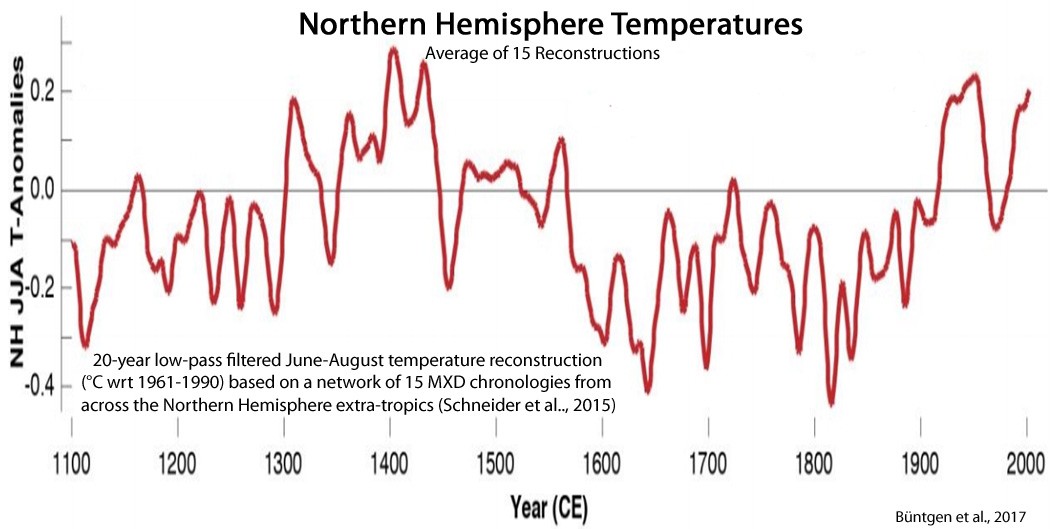
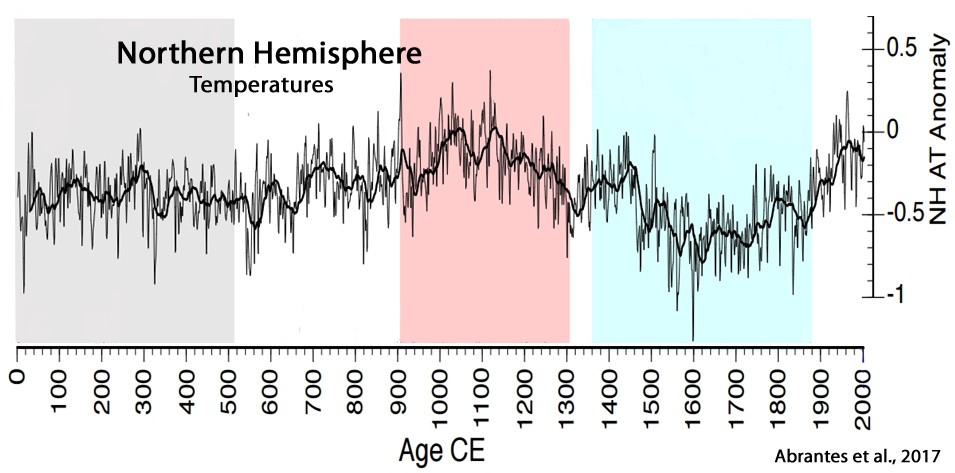
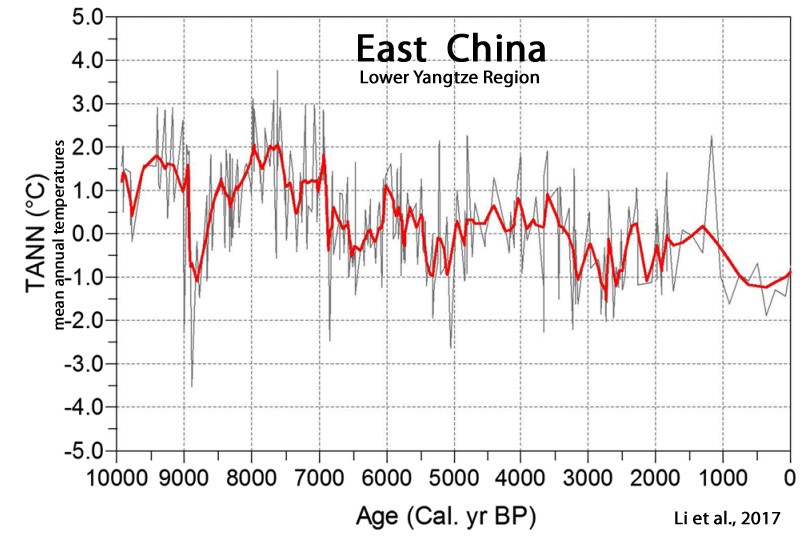
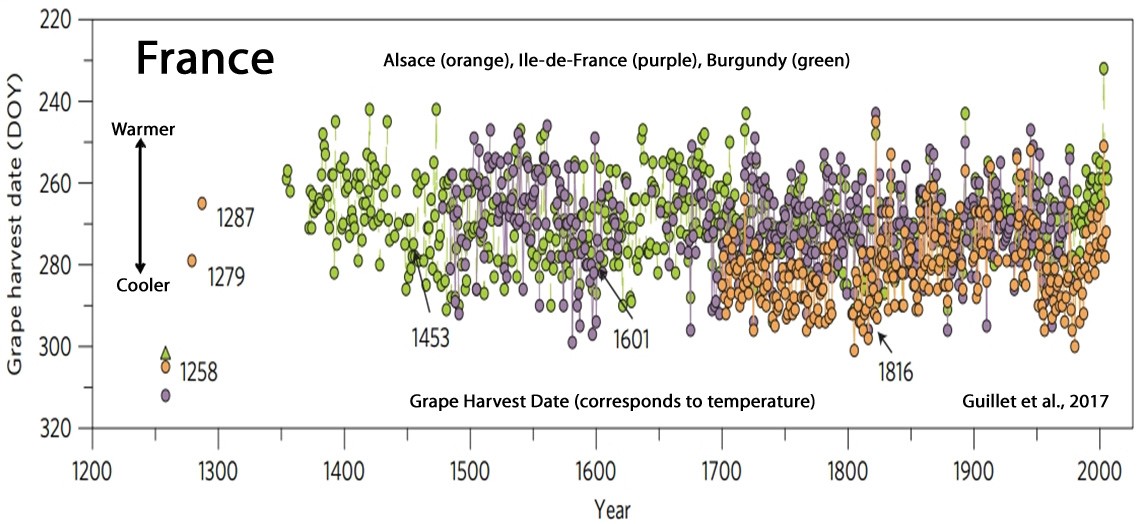
“Global warming” is a myth — so say 80 graphs from 58 peer-reviewed scientific papers published in 2017.

In other words, the so-called “Consensus” on global warming is a massive lie. And Donald Trump was quite right to quit the Paris agreement which pretended that the massive lie was true.

By “global warming” these papers don’t, of course, mean the mild warming of around 0.8 degrees Celsius that the planet has experienced since the middle of the 19th century as the world crawled out of the Little Ice Age. Pretty much everyone, alarmists and skeptics alike, is agreed on that.

Rather, they mean “global warming” in the sense that is most commonly used today by grant-troughing scientists, and huxter politicians, and scaremongering green activists, and brainwashed mainstream media (MSM) environmental correspondents. “Global warming” as in the scary, historically unprecedented, primarily man-made phenomenon which we must address urgently before the icecaps melt and the Pacific islands disappear beneath the waves and all the baby polar bears drown.
What all these papers argue in their different ways is that the alarmist version of global warming — aka Catastrophic Anthropogenic Global Warming (CAGW) — is a fake artefact.


That is, all these different experts from around the world — China, Russia, Canada, the U.S., Italy, etc. — have been looking closely at different aspects of the global warming puzzle in various regions and on different timescales and come to the conclusion in irreproachable, peer-reviewed scientific ways that there is no evidence to support the global warming scare story.

Late 20th century and early 21st century global warming, they show, is neither dramatic, nor unusual, nor scary.

Here, as collated by Kenneth Richard at No Tricks Zone, are just some of the charts to prove it.

Büntgen et al, below, shows that temperatures in the northern hemisphere were warmer in the early 1400s than they are today


Abrantes et al (below) confirms the traditional view — which Michael Mann tried to dismiss with his discredited Hockey Stick chart — that the Medieval Warming Period was warmer than anything we have experienced in our own era.


Here’s one from Li et al showing that China was much warmer 8,000 years ago


Here’s an unusual one from Guillet et al suggesting that there’s nothing new about wildly early or late grape harvests through the centuries:


And on and on it goes — there are 80 graphs in all, each showing in its different way why the scare about global warming has been horribly overdone because the evidence just doesn’t support its being unusual or a problem. Several of the papers note that the primary influence on warming appears to be solar activity. Few, if any, entertain the notion that carbon dioxide levels have much to do with it.

The intellectually corrupt and mendacious alarmist science establishment — I’m thinking, for example, of my personal bete noir, the left-wing political activist and Nobel-prizewinning geneticist Sir Paul Nurse, former president of the Royal Society — would have us believe that climate skepticism is a minority activity, the preserve of a few cranks, championed only by people who don’t do the science. But this is just ugly propaganda.

Here are dozens of reputable scientists from around the world with no axe to grind collaborating on studies which all corroborate, independently and rigorously, the increasingly respectable view that “man-made global warming” just isn’t a thing.
Not that it ever was a thing, really.
This debate — as I argue at some length in Watermelons — was always about left-wing ideology, quasi-religious hysteria, and “follow the money” corruption, never about “science.”
Still, it’s always a comfort to know that “the science” is on our side too.
They do so hate that fact, the Greenies.


http://www.breitbart.com/big-government/2017/06/06/delingpole-global-warming-is-myth-58-scientific-papers-2017/
==============

Tuesday, June 6, 2017

Pamela Geller : Post-Terror Dawah

Pamela Geller: Post-Terror Dawah


by Pamela Geller

 6 Jun 2017


You can set your watch to it. In the wake of every jihad terror attack, no matter how heinous and horrifying, in come the washerwomen with buckets of dirty water working double time to scrub and censor the motive from the attack.

No matter the monstrosity, nothing changes. If the torn, dismembered bodies of little girls at an Ariana Grande concert were not a game-changer, then nothing will move the conquered and the unmovable. 

Not only do we, the victims, have to clean up the flesh and bone and blood running down the pavement, we must subject ourselves to endless dawah (proselytizing) for Islam on mind-numbing news shows on the BBC, CNN, MSNBC, and the like. 


FOX is lost. Sunday morning, Fox and Friends had on dissembler Mubin Shaikh. He said, “we must never equate Islam and terrorism.” The hosts nodded gravely. There is nowhere on TV you can get reality.

One of the three London Bridge jihadi attackers said, according to a neighbor, “I’m ready to do whatever I need to do in the name of Allah. I am ready in the name of Allah to do what needs to be done, including killing my own mother.”

What further proof does anyone need? Why the madness and irrational denial? Sixteen years after 9/11 and over thirty thousand deadly Islamic attacks, according to the website thereligionofpeace.com, this is where we are?

Prime Minister Theresa May and every major media news outlet insists jihadis have “perverted” and/or “hijacked” Islam. How have they perverted it? They cite Quranic texts and teachings chapter and verse. They follow the hadith, Muhammad’s example.
Harun Khan, who leads the Muslim Council of Britain, said, “I am appalled and angered by the terrorist attacks at London Bridge and borough market, in my home city. These acts of violence were truly shocking and I condemn them in the strongest terms.” 
Is that so? What have Khan and his coreligionists — who allege that this is a misunderstanding of Islam — done to combat it? 
With the Islamic State energetically recruiting young Muslims in the U.S., that is a significant problem.
The Sun says that Ramadan is meant for devotion and peace. Since when?
As Robert Spencer has noted:
A jihad group explained it back in 2012: ‘The month of Ramadan is a month of holy war and death for Allah. It is a month for fighting the enemies of Allah and God’s messenger, the Jews and their American facilitators.’ Referring to a jihad attack that happened at that time, the message continued: ‘One of our groups aided by Allah managed to bomb a bus full of Jewish tourists, plunderers of holy lands, after careful tracking. The holy war is not confined to a particular arena and we shall fight the Jews and the Americans until they leave the land of Islam.’
You won’t hear much about these scenes from the London jihad slaughter from the enemedia:

–”‘He just stepped outside the bar for a second and a man ran up to him and said: “This is for my family, this is for Islam”, and stuck a knife straight in him. He’s got a seven-inch scar going from his belly round to his back,’ Elizabeth O’Neill told reporters outside King’s College hospital.”

–”[The van was] probably travelling at about 50 miles an hour” … “and then hit about five or six people,” said BBC reporter Holly Jones.
–”According to another witness, Eric, the men inside jumped out once the van crashed and ‘ran towards the people that they nearly ran over’…. ‘[Then] they literally just started kicking them, punching them, they took out knives… it was a rampage really,’ he said.”

–One man, Gerard, said he saw a woman being stabbed “10 or 15 times.” Another witness, Eric, told the BBC the men were shouting “This is for Allah.”

Nor will you hear much about the words spoken to a mother in London before a jihadi plunged a knife into her son’s stomach: “This is for Islam.”

Will we ever learn their motive?

One of the jihadis who attacked London with two coreligionists before being shot dead by police deceived his neighbors into thinking he was a great guy, a good neighbor. 
He played football with their children on the nearby field.
Secretly, he had a devout, destructive hatred, and he frequently changed his appearance in preparation of unleashing a deadly Islamic attack on the capital city, during which seven people died and up to 50 were injured last night.

One of the London jihadi was turned in twice, once by a neighbor and another time by a friend. Why wasn’t anything done? Perhaps because law enforcement did not want to appear to “islamophobic” or “racist” (even though Islam is not a race).


Pamela Geller is the President of the American Freedom Defense Initiative (AFDI), publisher of PamelaGeller.com and author of The Post-American Presidency: The Obama Administration’s War on America and Stop the Islamization of America: A Practical Guide to the Resistance. Follow her on Twitter here. Like her on Facebook here.


http://www.breitbart.com/big-government/2017/06/06/pamela-geller-post-terror-dawah/
==============

Soeren Kern : Germany: Surge in Stabbings and Knife Crimes

  • Not only are knife-related crimes surging, but the perpetrators and victims of such crimes are increasingly younger and increasingly female.
  • Germany's knife-crime problem is being exacerbated by its lenient judicial system, in which offenders receive relatively light sentences, even for serious crimes. In many instances, individuals who are arrested for knife-related crimes are released after questioning from police. This practice allows criminal suspects to continue committing crimes with virtual impunity.
  • More than 1,600 knife-related crimes were reported in Germany during just the first five months of 2017 — an average of 300 such crimes each month, or ten a day.
A Syrian migrant was stabbed to death in northern Germany by another Syrian because he was eating ice cream during Ramadan. The murder — which occurred in broad daylight in a busy pedestrian shopping area in Oldenburg and caused great consternation among local citizens — is not just the latest example of Sharia law being enforced on German streets. The crime also highlighted the growing epidemic of knife violence in Germany.

Knives, axes and machetes have become weapons of choice for criminals in Germany, which has some of the strictest gun laws in Europe. Knives are not only being used to carry out jihadist attacks, but increasingly to commit homicides, robberies, home invasions, sexual assaults, honor killings and many other kinds of violent crime.


(Images source: Pixabay)

Reliable statistics on knife violence in Germany do not exist.
A search of German police blotters, however, shows that during the past ten years the number of knife-related crimes in Germany has increased by more than 1,200%. 
Around 4,000 such crimes were reported to police in 2016, up from just 300 in 2007.
It is also impossible to determine how many of these knife crimes involved migrants. Increased censorship by the police and the media, aimed at stemming anti-immigration sentiments, makes the public incapable of knowing the names and national origins of many perpetrators or victims.
The surge in knife-related violence in Germany does, however, coincide with Chancellor Angela Merkel's decision to allow in some two million migrants from Africa, Asia and the Middle East.  
The number of reported knife crimes in Germany jumped by 600% during the past four years — from about 550 in 2013 to nearly 4,000 in 2016.
Police reports show that both migrants and non-migrants are responsible for the increase in knife crimes in Germany. Merkel's open-door migration policies appear to have set in motion a self-reinforcing cycle of violence in which more and more people are carrying knives in public — including for self-defense. Her policies appear to be leading to more and more stabbings, especially when alcohol is involved.
Not only are knife-related crimes surging, but the perpetrators and victims of such crimes are increasingly younger and increasingly female:
  • In Bochum, a 19-year-old woman stabbed two boys, aged 12 and 13 years. Police said the three had been arguing when the woman pulled out a knife. The boys ran away and tried to hide in a parking garage, but the woman pursued and attacked them.
  • In Soest, a 16-year-old boy stabbed a 17-year-old classmate seven times in the chest in a dispute over a girl. The victim was hospitalized with life-threatening injuries to his heart. The assailant was released after a psychiatrist persuaded prosecutors that he could not be held responsible for his actions because he acted in the "heat of passion" (im Affekt).
  • In Essen, two boys, aged 11 and 13, pulled a knife on a 20-year-old woman in an effort to rob her of her cellphone. She resisted and called police, who detained the attackers.
  • In Wuppertal, a "southern looking man" (südländisches Erscheinungsbild) stabbed a 13-year-old boy after he looked at his attacker supposedly "the wrong way."
  • In Kirchdorf, a "southerner" (südländische Erscheinung) pulled a knife on a 12-year-old girl.
  • In Nachrodt-Wiblingwerde, a group of teenagers drew a knife on a 17-year-old girl after she "provoked" them.
  • In Berlin-Neukölln, a 16-year-old boy was stabbed during an altercation with a 32-year-old man.
  • In Neumünster, a 15-year-old stabbed a 19-year-old after two groups of teenagers got into an altercation.
  • In Gevelsberg, a "dark-skinned" man (dunkelhäutig) stabbed a 14-year-old girl near the central train station as she was walking home.
Some knife attacks appear to have political or religious motives:
  • In Hanover, a 16-year-old German-Moroccan girl stabbed a police officer in the neck with a kitchen knife. Police said the incident, which occurred at the central train station, was the first jihadist attack in Germany inspired by the Islamic State. "The perpetrator did not display any emotion," a police spokesperson said. "Her only concern was for her headscarf. She was concerned that her headscarf be put back on properly after she was arrested. Whether the police officer survived, she did not care."
  • In Prien am Chiemsee, an Afghan man stabbed to death an Afghan woman who had converted to Christianity. The attacker ambushed the woman as she was exiting a grocery store with her two children.
  • In Munich, a man shouting "Allahu Akbar" and "infidels must die" stabbed one person to death and slashed three others in an attack at a train station.
  • In Würzburg, on a train, an Afghan asylum seeker shouting "Allahu Akbar" attacked five people with an axe.
  • In Oberhausen, a man shouting "Allahu Akhbar" stabbed a 66-year-old woman and a 57-year-old man who were picnicking.
Knife attacks are also common during brawls involving feuding ethnic groups:
  • In Gelsenkirchen, gangs of Syrian and Lebanese youths got into a mass knife fight in the city center. Police said that the level of violence was "brutal."
  • In Mülheim, around 80 members of two rival Lebanese clans got into a knife fight in the center of the city. It took hundreds of police, armed with machine guns, dogs and helicopters, more than three hours to restore order.
  • In Hanover, members of two rival Kurdish clans got into a knife fight in front of the central train station.
  • In Mainz-Gonsenheim, several people were stabbed during a mass brawl between Syrians and Iranians.
  • In Dortmund, an immense brawl ensued after a member of one ethnic group pulled a knife on someone from another ethnic group.
  • In Neumünster, a 15-year-old stabbed a 19-year-old after two groups of teenagers from feuding ethnic groups got into an altercation.
  • In Gütersloh, two men were stabbed and seriously wounded during a fight between two feuding ethnic groups.
  • In Leipzig, an Iraqi man was stabbed and seriously injured during a massive brawl in front of a Kebab restaurant. When police tried to intervene, the mob attacked them with bottles and stones
  • In Hamm-Herringen, two men were stabbed and seriously wounded during a fight between two feuding ethnic groups.
Other knife attacks are seemingly random:
  • In Hamburg, a 16-year-old boy and his 15-year-old girlfriend were walking along the banks of the Alster, a lake in the heart of the city, when a stranger ambushed them from behind and plunged a knife into his back. The attacker then pushed the girl into the water and walked away. The girl survived but the boy died. The suspect, a "southern-looking" (südländischer Erscheinung) man in his early twenties, remains at large. Police say the victims were not robbed and there is no evident motive for the crime: they said that the suspect appears to have randomly stabbed the boy just because he felt like it.
  • In Bremen, a 29-year-old man was randomly stabbed and seriously wounded at the Waterfront shopping center. The entire facility was closed after the attack.
  • In Dessau-Roßlau, two Syrian asylum seekers randomly stabbed two German female passersby in a pedestrian zone in broad daylight.
  • In Düsseldorf, a man brandishing a machete randomly stabbed an 80-year-old man in the Kalkum district. He remains at large.
  • In Wrohm, an Eritrean migrant randomly stabbed a 51-year-old woman.
Knife-related incidents are also becoming increasingly common on public transport hubs:
  • In Hamburg-Billstedt, two brothers were stabbed during a robbery at the Legienstraße subway station.
  • In Frankfurt, two "presumably East Europeans" (mutmaßlich Osteuropäer) wielding knives attacked commuters at the "Bonames Mitte" subway station.
  • In Dortmund-Bochum, two feuding ethnic groups got into a knife fight on the S-1 line.
  • In Dresden, a man carrying a 20-centimer (8-inch) knife was arrested at the central train station.
  • In Schönefeld, a man randomly pulled a knife on a traveler at the airport. It remains unclear how the perpetrator passed the knife through airport security.
  • In Baden-Baden, a man wielding a knife threatened passengers on a train.
Knives appear to be the weapon of choice in so-called honor killings:
  • In Kiel, a German-Turkish man stabbed to death his estranged Turkish wife in front of a daycare center.
  • In Bocholt, a Lebanese man stabbed to death his Moroccan wife, the mother of his three children, because he thought she wanted to divorce him.
  • In Scheeßel, an Iraqi man stabbed to death his wife. Police described the murder as an honor killing.
  • In Ahaus, a Nigerian asylum seeker stabbed to death a Hindu woman after she seemingly offended his honor by rejecting his romantic advances. The woman was employed at the asylum shelter where her attacker lived.
  • In Hanover-Mühlenberg, a Serbian man stabbed his ex-girlfriend after she ended their relationship and had begun seeing someone else.
  • In Berlin, a 32-year-old Bosnian man stabbed to death his former girlfriend after she ended their abusive relationship.
  • In Hanau, a Syrian refugee stabbed to death his 30-year-old sister, who was 23 weeks pregnant and was accused of having brought shame to her family. Her unborn child also died in the attack.
  • In Freiburg, a Syrian asylum seeker stabbed his wife, a Kurdish Christian who had moved out of the couple's apartment, but had returned to collect some personal belongings.
  • In Köln-Buchheim, an Iraqi man stabbed to death his 19-year-old daughter because he did not approve of her boyfriend. The man may never face justice; he is believed to have fled to Iraq.
  • In Bonn, a Palestinian brandishing a "Rambo knife" and shouting "Allahu Akbar" tried to behead a doctor. The attacker's 19-year-old son had complained about the doctor's treatment for a fractured leg. The man, holding the doctor down on the floor, said: "Apologize to my son. Go down on your knees and kiss his hand."
Germany's knife-crime problem is being exacerbated by its lenient judicial system, in which offenders receive relatively light sentences, even for serious crimes. In many instances, individuals who are arrested for knife-related crimes are released after questioning from police. This practice allows criminal suspects to continue committing crimes with virtual impunity.
In Berlin, for example, a migrant who stabbed and seriously injured another migrant after he refused to give him alcohol and drugs was released and financially compensated because no witnesses to the crime could be found.

Also in the German capital, investigators discovered that Anis Amri, the 24-year-old suspect in the December 2016 Berlin terrorist attack in which 12 people died, had been involved in a knife-fight in the city's Neukölln district in July 2016, but police failed to arrest him. Had Amri been deported, as he should have been, the Berlin attack possibly could have been prevented.

According to Arnold Plickert, the deputy national chairman of the GdP police union, much of the knife-violence in Germany can be attributed to certain segments of society that live according to their own rules, not those of the German state. In an interview with knife-blog.com, a German forum for knife enthusiasts, he said:
"We are monitoring a specific target group, which mainly consists of young males who are armed in everyday life and basically are dedicated to armed confrontation. We see this particularly in large Arab families, Lebanese clans, for whom knives are standard gear. Knives are also basic equipment for career criminals and members of youth gangs."
Plickert also noted changes in German society, including a growing disrespect for police and rescue workers: "From my point of view, I can say that the inhibition threshold to the use of violence has significantly decreased."

Meanwhile, more than 1,600 knife-related crimes were reported in Germany during just the first five months of 2017 — an average of 300 such crimes each month, or ten a day. Notable knife-related incidents during the month of May include:

In Freiburg, a Turkish man stabbed another Turk sitting in the passenger seat of a car stopped at a traffic light.
In Karlsruhe, a Somali asylum seeker stabbed another Somali asylum seeker. Police said the attack was an act of revenge: the stabbing victim had recently stabbed the stabber.
In Aachen, a North African man pulled a knife on a security guard at a grocery store after he was caught shoplifting.
In Schwerin, a Syrian man pulled a knife on another Syrian man in a dispute over a 15-year-old girl who is not Syrian.
In Gelsenkirchen, a 20-year-old pulled a knife on a 46-year-old man during a traffic incident.
 In Bad Oldesloe, four teenagers pulled a knife and robbed a 61-year-old man.
In Wiesbaden, a "southern-looking" man pulled a knife and tried to rob a man at a sports complex.
In Hofheim, a man with an "Eastern European accent" pulled a knife and tried to rob a store.
In Peine, an asylum seeker from Sudan stabbed and seriously wounded an asylum seeker from the Ivory Coast.
In Kassel, a Syrian migrant stabbed a Turkish man during a dispute over money.
In Bad Reichenhall, a man stabbed another man in the neck during an altercation at a bar.
In Bühl, a man stabbed several people at a public swimming pool.
In Wiesbaden, a man was stabbed and seriously wounded during an altercation at a city park.
In Augsburg, two men were stabbed by a random attacker at a grill fest.
In Hamburg, an unknown assailant stabbed a migrant from Guinea-Bissau.
In Rheine, two men speaking German with a French accent pulled a knife on a woman and robbed her.
In Berlin, a man stabbed and seriously wounded his former girlfriend and her new partner during an altercation at a restaurant in Waidmannslust.
In Duisburg, a man pulled a knife on a cashier at a supermarket.
In Salzgitter, a man stabbed another man in a restaurant.
In Freiburg, an Eastern European-looking man (osteuropäisch) stabbed a 15-year-old boy during an altercation at a restaurant. In Danndorf, three men were stabbed during an altercation over drugs.
In Mölln, a man stabbed a co-worker in the back.
In Michelstadt, a man stabbed another man during an altercation.
In Essen, a man pulled a knife on his wife at the central train station.
In Karlsruhe, a man was stabbed by his girlfriend's former boyfriend.
In Cologne-Ostheim, a 16-year-old student pulled a knife on his classmates and teacher.
In Neuenburg, two men were stabbed during an altercation at a restaurant.
In Kassel, a man was stabbed in the neck during an altercation at a café.
In Dortmund, a man was robbed at knifepoint at the central bus station.
In Cottbus, members of Syrian gang stabbed five Germans.
In Lich, a man was stabbed during an altercation.
In Kassel, a man was randomly stabbed by a man with a "southern appearance" (südländisches Äußeres).
In Preetz, a man pulled a knife on shoppers at a supermarket.
In Dortmund, two men were stabbed during an altercation in the city center.
In Frankfurt-Schwanheim, a man wielding a knife robbed a local post office.
In Pforzheim, a 53-year-old Tajik man stabbed to death his 50-year-old wife at her place of employment, a Christian daycare center. It remains unclear if the woman was a convert to Christianity.
 In Wardenburg, an Iraqi man stabbed to death his wife, the mother of his five children, while she was asleep in her bed.
In Tübingen, a man was stabbed and seriously injured at the central train station during an altercation.
In Hamburg-St. Georg, two men were stabbed and seriously injured near the train station.
In Berlin-Wedding, two brothers were stabbed during an altercation with another man at a Kebab restaurant.
In Kreuztal, a 53-year-old man was stabbed and seriously wounded during an altercation at his home.
In Lübeck, a 21-year-old man was stabbed and seriously injured during an altercation between two groups near the central bus station.
In Diez, a woman stabbed a man in the back.
In Ründeroth, a 17-year-old was stabbed and seriously wounded at a local festival.
In Neuendettelsau, an Ethiopian asylum seeker stabbed his girlfriend in the stomach at a restaurant after she allegedly "provoked" him. The woman, five months pregnant, survived but the unborn baby died.
Soeren Kern is a Senior Fellow at the New York-based Gatestone Institute. Follow him on Facebook and on Twitter.