.

.
Library of Professor Richard A. Macksey in Baltimore

POSTS BY SUBJECT

Labels

Showing posts with label DENMARK. Show all posts

Monday, September 18, 2017

Judith Bergman : Islamic Rules in Danish Schools

  • The Nord-Vest Private School in Copenhagen, came under investigation by Danish authorities during an unannounced visit after teaching materials were found extolling and encouraging young people to commit jihad. Luqman Pedersen, a Danish convert to Islam, admitted to the authorities that the school wishes to create a parallel Muslim society.
  • Two former teachers at the Nord-Vest school described how the children at the school spoke of Danes in terms of "them and us". In a school poetry contest, several of the children composed poems that detailed their wish to beat up and break the legs and hands of the "Danish pigs".
  • "I teach religion, but I was not allowed to teach Christianity. Instead, a visiting imam from Iraq taught Christianity... I could imagine that some of the boys I taught could have been radicalized," a teacher said. The teachers tried to alert both politicians and authorities to some of the problems they had witnessed, but no one would listen.
Some Muslim schools in Denmark appear to be employing anti-Semitic teachers, enforcing gender inequality, employing violence against students, offering poor education in general, and teaching jihad.

There are 26 Muslim schools in Denmark. While they operate independently of the public schools, the state sponsors them heavily -- as it does other independent schools in Denmark -- covering 75 % of their budget. The demand for Muslim schools in Denmark has grown in the last decade, as Muslim schools have increased their number of pupils by almost 50% since 2007; they now cater to almost 5,000 pupils. (It is unknown, however, how many Muslim children learn in the so-called "Koran schools," where Islam and Arabic are taught after school to those children who do not attend a Muslim day school. Koran schools -- as revealed in the Danish TV documentary "Sharia in Denmark") -- are not under any supervision from state or municipal authorities).

Danish educational authorities are currently investigating seven Muslim schools for failing to follow the laws of independent schools, including the requirement that they prepare the students for life in Danish society, and teaching them about democracy and gender equality. That amounts to more than one quarter of all Muslim schools. The first Muslim school opened in Denmark in 1980. Nearly forty years later, Danish politicians appear to be only beginning to comprehend or take seriously the challenges that several of these schools present to Danish society.

Danish news outlets exposed some of those challenges this summer:
The school leader at Al Quds School in Copenhagen, Waleed Houji, posted anti-Semitic images from the Muslim terrorist organization Hamas on his Facebook profile. A class teacher at that same school, Naji Dyndgaard, a convert, wrote anti-Semitic posts on Facebook.

Another school, the Iqra School, is being investigated by Danish school authorities for not preparing children to become part of Danish society. The school's former deputy leader, imam Shahid Mehdi, ran a website telling Muslims not to have non-Muslim friends. The school also told its students that having a boyfriend or girlfriend was forbidden.

The Nord-Vest Private School in Copenhagen came under investigation by Danish authorities during an unannounced visit after teaching materials were found extolling jihad and encouraging young people to wage it.

The school is also being investigated for the sale of its buildings to Ali Laibi Jabbar in December 2016 -- Jabbar is a leading member of the Almuntadar Muslim association in Malmö, Sweden, which is a part of Iranian Ayatollah Ali al-Sistani's organization, the Imam Ali foundation. Jabbar claims he only bought the buildings for investment purposes. At the beginning of September, the former leader of the school, Luqman Pedersen, a Danish convert to Islam, admitted to the authorities that the school wishes to create a parallel Muslim society; he also told them that the plan of the new buyer is to transform the buildings into an Islamic cultural center, which would include the school.

Two former teachers at the Nord-Vest school, Henriette Baden Hesselmann and Gitte Luttinen Ørnkow, described how the children at the school spoke of Danes in terms of "them and us". In a school poetry contest in 2008, several of the children composed poems that detailed their wish to beat up and break the legs and hands of the "Danish pigs". The former teachers described a school culture of intimidation and violence, with the head of the school board yelling at the students in Arabic and beating them. The former teachers added that all their students admitted that they were also beaten at home.
The Jew-hatred was unmistakable, as the geography teacher discovered when he almost had to give up teaching a lesson about Israel due to the students' hostility. Another teacher was told not to draw stars in the children's books as a way of showing the children that they had done well, since the star was reminiscent of the Star of David.
The girls were not allowed to participate in swimming lessons, sports, or music lessons.
One of the former teachers said:
"In general, large portions of the teaching were censored. I teach religion, but I was not allowed to teach Christianity. Instead, a visiting imam from Iraq taught Christianity... I could imagine that some of the boys I taught could have been radicalized."
The teachers tried to alert both politicians and authorities to some of the problems they had witnessed, but no one would listen.

Following these revelations, several Danish opposition parties, including the Social Democrats, now wish to outlaw Muslim schools completely. According to Mette Frederiksen, leader of the Social Democratic party:
"...it's not a good idea with Muslim schools. When you are a child in Denmark, it is incredibly important that you grow up in Danish culture and Danish everyday life. No matter how you spin it, an independent school based on Islam is not part of the majority culture in Denmark... Nor do I like the lack of equality in schools and these very hateful words against our Jewish minorities. It emphasizes that we have parallel societies."
The government, however, is not enthusiastic; it says it fears that closing the schools would be unconstitutional and contravene the European Convention on Human Rights.
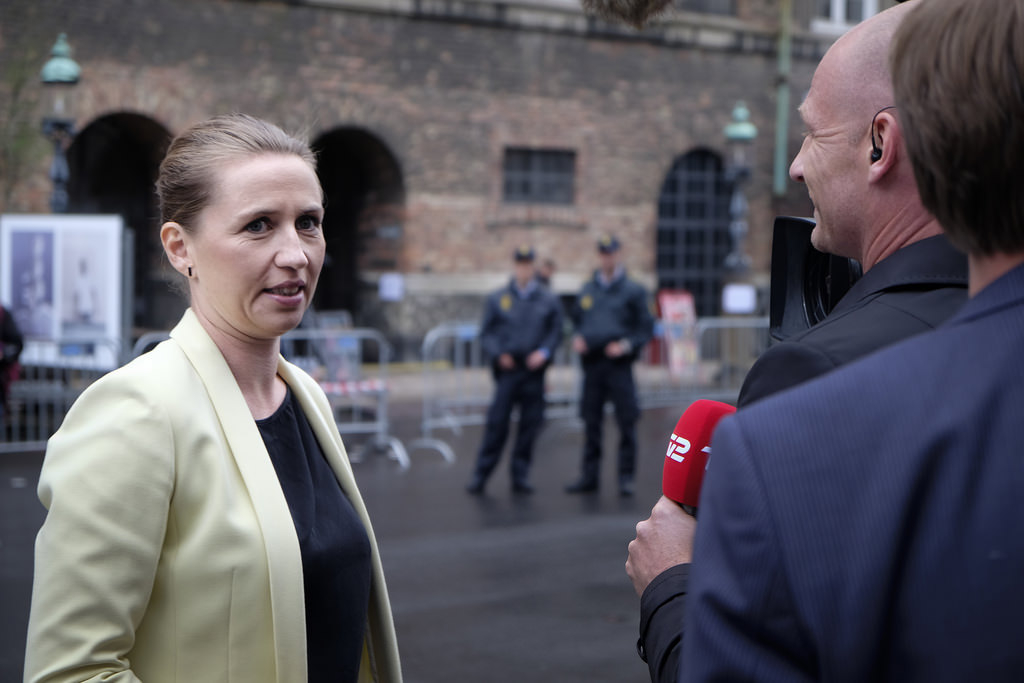

Mette Frederiksen, leader of Denmark's Social Democratic party, says "When you are a child in Denmark, it is incredibly important that you grow up in Danish culture and Danish everyday life... an independent school based on Islam is not part of the majority culture in Denmark... Nor do I like the lack of equality in schools and these very hateful words against our Jewish minorities." (Image source: News Oresund/Flickr)
Judith Bergman is a columnist, lawyer and political analyst.

Monday, May 15, 2017

Judith Bergman : Jihad in Denmark


  • Danish Minister of Justice Søren Pape hopes to solve the issue by prosecuting the imam. However, Danish politicians appear to miss the critical fact that there is clearly a thirsty audience for sermons like this.
  • This sermon is a call to violence against Jews.
  • As the Quran cannot be changed, it is crucial to make more broadly known what is in it, so at least people can see the facts confronting them, to help them determine what choices they might care to make for their own future and that of their children.
In 2015, Omar El-Hussein listened to the imam Hajj Saeed, at the Hizb-ut-Tahrir- linked Al-Faruq-mosque in Copenhagen, decry interfaith dialogue as a "malignant" idea and explain that the right way, according to Mohammed, is to wage war on the Jews. The next day, El-Hussein went out and murdered Dan Uzan, the volunteer Jewish guard of the Jewish community, as he was standing in front of the Copenhagen synagogue. El-Hussein had also just murdered Finn Nørgaard, a film director, outside a meeting about freedom of speech.

Two years later, nothing has changed. A visiting imam from Lebanon at the Al-Faruq mosque, Mundhir Abdallah, is preaching to murder Jews:
"[Soon there will be] a Caliphate, which will instate the shari'a of Allah and revive the Sunna of His Prophet, which will wage Jihad for the sake of Allah, which will unite the Islamic nation after it disintegrated, and which will liberate the Al-Aqsa Mosque from the filth of the Zionists, so that the words of the Prophet Muhammad will be fulfilled: 'Judgement Day will not come until the Muslims fight the Jews and kill them. The Jews will hide behind the rocks and the trees, but the rocks and the trees will say: 'Oh Muslim, oh servant of Allah, there is a Jew behind me, come and kill him.' ..."
The "words of the Prophet" are from a well-known hadith, number 6985.
Far from hiding this incitement, the mosque posted the sermon, delivered on March 31, on the YouTube page of Al-Faruq Mosque on May 7. The invaluable research organization, MEMRI, translated it.

A reporter from Danish TV channel TV2 news, who recently spent two hours around the Al-Faruq mosque, could not find a single Muslim willing to condemn the imam.

 "I don't think he meant anything bad by it," said Bayan Hasan, a female student. Another Danish Muslim, Mohammed Hussein, incorrectly replied, "According to Islam, Muslims are not allowed to kill". The Quran verse 8:12, to mention one of many examples, says otherwise: "...I will cast terror into the hearts of those who disbelieved, so strike [them] upon the necks and strike from them every fingertip."

Denmark's Minister of Integration, Inger Støjberg, called on the mosque and all Muslims in Denmark to condemn the sermon. "If this had happened in a Danish church, it would not have been necessary to ask people to condemn it. It would have been automatic", she said.

Muslim organizations and imams have, in fact, been completely quiet on the matter. One leading imam, Naveed Baig, from the Danish Islamic Center, simply dismissed the sermon: "Islam as a religion cannot be anti-Semitic, as Islam itself is a Semitic religion", he said.

The Quran and the hadiths are in fact brimming with anti-Semitism, not to mention exhortations to kill Jews and other "infidels", and calls for jihad (war in the cause of Islam) -- a fact of which Naveed Baig is doubtless well aware.

According to the Quran, people who refuse to acknowledge Allah as the one true god are unbelievers destined for hell: "Verily Allah has cursed the unbelievers and prepared for them a blazing fire" (Quran 33:64). Muslims therefore are superior to all others:
"Ye are the best of peoples, evolved for mankind... believing in Allah... If only the People of the Book had faith, it were best for them: among them are some who have faith, but most of them are perverted transgressors." (Quran 3:110).
"Soon shall we cast terror into the hearts of the unbelievers... their abode will be the fire: And evil is the home of the wrong-doers." (Quran 3:151).
As for specific passages about the Jews, the Quranic passages 5:60 and 7:166 talk of the Jews being cursed and transformed by Allah into apes and pigs: "...those who incurred the curse of Allah and his wrath, those of whom some he transformed into apes and swine, those who worshipped evil..." This is the reason Jews today in large parts of the Muslim world are commonly called apes and pigs. Furthermore, "Jews and pagans [are] among the worst of the enemies of the believers". (Quran 5:82).
The Jews are described as hypocrites (Quran 2:14), and "slayers of His [Allah's] messengers" (Quran 2:61), who are "cunning" and "hate to see your success and rejoice if any misfortune befalls you" (Quran 3:120). These examples constitute only a part of the innumerable examples in the Quran and the hadiths, not to mention the writings of Islamic scholars.

Therefore, there is nothing unusual about imams calling for the murder of Jews in certain mosques, even in the West. In Canada, for example, in 2016, at Montreal's Dar Al-Arqam Mosque, an imam recited the same hadith about stones and trees asking Muslims to come and kill Jews hiding behind them.

In Denmark, however, among politicians, news of the sermon generated the usual "shock". Minister of Justice Søren Pape said it is "insane" that people such as the imam "exist in Denmark": "It is deeply unsympathetic," he said. "These are medieval thoughts and it makes me very sad that in Denmark in 2017 there are still people who really have not evolved further."

Other Danish politicians reacted with similar degrees of "shock" -- appearing utterly surprised by basic tenets of Islam, which have only been public for 1400 years.

Søren Pape hopes to solve the issue by prosecuting the imam. In December 2016, Denmark introduced a new provision in the penal code aimed at religious preachers. It is known in Denmark as the "imam provision," as it is, in practice, mainly aimed at imams. According to the provision, speaking approvingly of terror, murder, rape, violence, incest, pedophilia, coercion and polygamy, whether at private or public events, is prohibited and punishable by fine or prison of up to three years.
The "imam provision" exists in addition to the general provision in the penal code, according to which it is prohibited and punishable by fine or prison publicly to threaten, insult or demean a group of persons because of their race, skin color, national or ethnic origin, faith or sexual orientation.
However, even if a Danish court should succeed in convicting the imam, Danish politicians appear to miss the critical fact that there is clearly a thirsty audience for sermons like this.

The Danish Jewish Community reported the imam to the police. Jewish community leader Dan Rosenberg told the newspaper Politiken: "We are concerned that weak and impressionable people may perceive this kind of preaching as a clear call to violence and terror against Jews." This sermon, however, is not a question of "perception": This sermon is a call to violence against Jews.

Danish Jews also have more reasons to feel threatened. In October 2015, a Danish girl, then 15, converted to Islam and immediately planned to bomb the Jewish school in Denmark (in addition to a plan to bomb her own school). Her mother, who was concerned about the girl's new behavior, desperately sought to alert the Danish authorities. The Danish police intelligence service (PET), told the mother not to worry, and assured her that her daughter would not "do anything", despite being told that her daughter was "desperate" to wage jihad. According to the mother:
"The only advice I got was to do with the food. They thought that if [my daughter] refused to eat pork and I insisted on making it for dinner, then I would have to make two separate dinners."
A few months after her daughter's conversion, in January 2016, the mother found a stash of chemicals in her basement and a note where her daughter had written the name of the Jewish school and its opening hours, and the words "jihad" and "Allah is great". The girl also apparently looked up to Omar El-Hussein, the terrorist who killed Dan Uzan and Finn Nørgaard, and even took his name as her own. After finding the chemicals, the mother reported the girl to the police. The girl is considered so dangerous that she spent part of her detainment in solitary confinement. Her trial recently ended; sentencing is expected mid-May.

As the Quran cannot be changed, it is crucial to make more broadly known what is in it, so at least people can see the facts confronting them, to help them determine what choices they might care to make for their own future and that of their children.


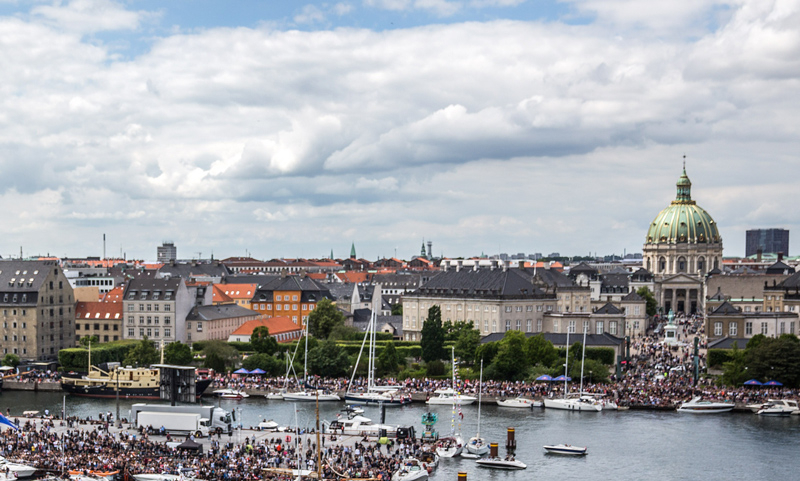
Copenhagen, Denmark. (Image source: Romina Amato/Red Bull via Getty Images)
Judith Bergman is a writer, columnist, lawyer and political analyst.

Thursday, April 13, 2017

Judith Bergman : Mockeries of Justice in Denmark


  • An appeal would have sent a signal to potential terrorists that Danish authorities look sternly upon logistical assistance to terrorists, and will do everything in their power to pursue justice.
  • The only one at risk of actual harm is Lars Hedegaard himself: his attempted murderer remains at large. "I have resorted to making the suspected assassin's name as well-known as possible in self-defense."
  • It is deeply disturbing, not only for the victims, but for all citizens, when the courts so clearly divorce themselves from pursuing what most citizens would perceive as justice, and instead appear to favor those who seek to harm society.
  • Refusing to implicate Omar El-Hussein's friends in his terrorism, despite their obvious contributions to his terror deeds, and fining the victim of a terrorist attack for publicly naming his would-be murderer, who escaped justice by fleeing the country, inevitably appears like a mockery of justice, not its fulfillment.

If the legal system in Denmark is anything to go by, being an accessory to murder is just fine. Attackers are protected to the hilt; their victims are left unprotected and fined.

In February 2015, the terrorist Omar El-Hussein murdered Danish film director Finn Nørgaard in front of café Krudttønden in Copenhagen. Later that night, he killed a Jewish guard in front of the Copenhagen synagogue. Danish police shot and killed El-Hussein during the subsequent manhunt.

Four men assisted El-Hussein after he killed the film director: They helped him get rid of the murder weapon, gave him fresh clothes and bought him a new bag, which he used to store the gun used to kill the Jewish guard. They also met with him several times in different places around Copenhagen in the five hours leading up to the murder of the Jewish guard. One of those places was an internet café, where El-Hussein googled for information about the synagogue. The four men were charged with complicity in the terrorist act against the synagogue.

At the end of September, the Danish District Court acquitted all four of the terrorism charge. The district court found no evidence that the men knew of El-Hussein's plans to attack the synagogue, when they met with him after his attack at Krudttønden. Instead, the four men were convicted of minor charges, such as threats and violence against prison staff, weapons possession in particularly aggravating circumstances, and possession of illegal ammunition. Three of the men were free to go after the sentencing, as their 18 months in custody meant that they had already served their sentences, which were sixty days, six months, two and a half years and three years respectively. One of the four men has already declared his intention to sue the Danish state for damages amounting to 1 million Danish kroner (USD $150,000) for the 18 months he spent in custody. The prosecution has decided that it will not appeal the verdict, which is therefore final.

Appealing the verdict might have been the appropriate thing to do, even if there were little chance of having the ruling reversed. An appeal would have sent a signal to potential terrorists that Danish authorities look sternly upon logistical assistance to terrorists and will do everything in their power to pursue justice.
 Considering that European countries are likely to experience many more terrorist attacks in the future, the Danish court and the prosecution both sent a deeply troubling signal to future terrorists and their helpers, as well as Danish society as a whole.

This is not the only recent Danish court case to be sending the wrong kind of signals. In September, the Danish High Court upheld the District Court's decision to fine the Danish writer, Lars Hedegaard, 10,000 Danish kroner (USD $1500) for publishing the name of a terrorist, "BH," who attempted to murder Hedegaard in his own home in February 2013. BH subsequently fled from Denmark, but was arrested in Turkey. Denmark wanted him extradited, but instead Turkey released BH in what was most likely a prisoner exchange with the Islamic State, in 2014.

Hedegaard published the name of his would-be assassin in his book, Attentatet ("The Assassination"), on Facebook, and on a Swedish website. This, the Danish courts ruled, was in breach of a court order suppressing the name of the terrorist.
The name of a defendant in a criminal case may be suppressed if public communication of the name is likely to endanger someone's safety or cause unnecessary harm. Ostensibly, the court upholds the court order suppressing the suspected terrorist's name in order to protect the family of the suspect.
The name, however, was already out in the press at the time of the court order and has been mentioned countless times by others on Facebook and elsewhere. Furthermore, the only one at risk of actual harm is Lars Hedegaard himself: his attempted murderer remains at large. This was indeed why he publicized the name: "I have resorted to making the suspected assassin's name as well-known as possible in self-defense, on the grounds that it increases the chances that he will be apprehended," Hedegaard explained.

In a Kafkaesque form of inverted justice, the High Court disregarded this commonsense argument and instead maintained that Hedegaard should pay the fine, adding insult to injury by claiming that there was no need on the grounds of self-defense for Hedegaard to publicize the name of the man who tried to kill him.
Indeed, the High Court found that the fine should be considerably higher than the 10,000 kroner that the District Court had ruled that Hedegaard should pay.

Graciously, the High Court decided not to raise the fine, because of the "mitigating" circumstance that Hedegaard had been the target of a murder attempt. How magnanimous of them!


Denmark's high court upheld a fine levied against Lars Hedegaard, because he wrote the name of the man who tried to murder him, in violation of a court order suppressing the name of the terrorist, who is still at large and wanted by police.

The Danish authorities did not stop there. A number of activists, in solidarity with Hedegaard, went ahead and published the name themselves. Some of them showed up during Hedegaard's court case wearing T-shirts with the name of the suspected terrorist. The Danish court spent taxpayer money charging some of those activists for wearing those T-shirts. Several others -- the publisher of Hedegaard's book, an artist who painted BH's name on a painting, a priest who mentioned the name in an article in a Danish newspaper and others -- were also charged with breaching the court order.

It is deeply disturbing, not only for the victims, but for all citizens, when the courts so clearly divorce themselves from pursuing what most citizens will perceive as justice, and instead appear to be favoring those who seek to harm society. 
Refusing to implicate Omar El-Hussein's friends in his terrorism, despite their obvious contributions to his terrorist activities, and fining the victim of a terrorist attack for publicly naming his would-be murderer, who escaped justice by fleeing the country, inevitably appears like a mockery of justice, not its fulfillment.
Judith Bergman is a writer, columnist, lawyer and political analyst.
===================

Wednesday, April 5, 2017

Giulio Meotti : Self-Censorship: Free Society vs. Fear Society

  • "The drama and the tragedy is that the only ones to win are the jihadists." — Flemming Rose, who published the Mohammed cartoons in 2005, as cultural editor of Jyllands-Posten newspaper.
  • "Why the f*ck did you say yes to appear on stage with this terrorist target, are you stupid? Do you have a secret death wish? You have grandchildren now. Are you completely out of your mind? It's okay if you want to die yourself, but why are you taking the company through all this?" — The managers of Jyllands-Posten, to Flemming Rose.
  • "We are also aware that we therefore bow to violence and intimidation." — Editorial, Jyllands-Posten.
  • "I do not blame them that they care about the safety of employees. I have bodyguards 24 hours a day. However, I believe that we must stand firm. If Flemming shuts his mouth, democracy will be lost." — Naser Khader, a liberal Muslim of Syrian origin who lives in Denmark.
In the summer of 2005, the Danish artist Kåre Bluitgen, when he met a journalist from the Ritzaus Bureau news agency, said he was unable to find anyone willing to illustrate his book on Mohammed, the prophet of Islam. Three illustrators he contacted, Bluitgen said, were too scared. A few months later, Bluitgen reported that he had found someone willing to illustrate his book, but only on the condition of anonymity.
Like most Danish newspapers, Jyllands-Posten decided to publish an article about Bluitgen's case. To test the state of freedom of expression, Flemming Rose, Jyllands-Posten's cultural editor at the time, called twelve cartoonists, and offered them $160 each to draw a caricature of Mohammed. What then happened is a well-known, chilling story.
In the wave of Islamist violence against the cartoons, at least two hundred people were killed. Danish products vanished from shelves in Bahrain, Qatar, Yemen, Oman, the UAE and Lebanon. Masked gunmen stormed the offices of the European Union in Gaza and warned Danes and Norwegians to leave within 48 hours. In the Libyan city of Benghazi, protesters set fire to the Italian consulate. Political Islam understood what was being achieved and raised the stakes; the West did not.
An Islamic fatwa also forever changed Flemming Rose's life. In an Islamic caricature, his head was put on a pike. The Taliban offered a bounty to anyone who would kill him. Rose's office at the newspaper was repeatedly evacuated for bomb threats. And Rose's name and face entered ISIS's blacklist, along with that of the murdered editor of Charlie Hebdo, Stéphane Charbonnier.

Less known is the "white fatwa" that the journalistic class imposed on Rose. This brave Danish journalist reveals it in a recently published book, "De Besatte" ("The Obsessed"). "It is the story of how fear devours souls, friendships and the professional community," says Rose. The book reveals how his own newspaper forced Rose to surrender.

"The drama and the tragedy is that the only ones to win are the jihadists," Flemming Rose told the Danish newspaper Weekendavisen.

The CEO of Jyllands-Posten, Jørgen Ejbøl, summoned Rose to his office, and asked, "You have grandchildren, do not you think about them?"

The company that publishes his newspaper, JP/Politikens Hus, said: "It's not about Rose, but the safety of two thousand employees."

Jorn Mikkelsen, Rose's former director, and the newspaper's business heads, obliged him to sign a nine-point diktat, in which the Danish journalist accepted, among other demands, "not participating in radio and television programs", "not attending conferences", "not commenting on religious issues", "not writing about the Organization of the Islamic Conference" and "not commenting on the cartoons".
Rose signed this letter of surrender during the harshest time for the newspaper, when, in 2010-2011, there were countless attempts on his life by terrorists, and also attempts on the life of Kurt Westergaard, illustrator of a cartoon (Mohammed with a bomb in his turban) that was burned in public squares across the Arab world. Westergaard was then placed on "indefinite leave" by Jyllands-Posten "for security reasons."


Is democracy lost? Eleven years after Jyllands-Posten published the Mohammed cartoons, the newspaper has a barbed-wire fence two meters high and one kilometer long. Kurt Westergaard, the illustrator who drew one of the cartoons (left), lives in hiding in a fortress, and Flemming Rose (right), the editor who commissioned the cartoons, has fled to the United States.

In his book, Rose also reveals that two articles were censored by his newspaper, along with an outburst from the CEO of the company, Lars Munch: "You have to stop, you're obsessed, on the fourth floor there are people who ask 'can't he stop?'".

Rose then drew more wrath from his managers when he agreed to participate in a conference with the equally targeted Dutch parliamentarian, Geert Wilders, who at this moment is on trial in the Netherlands for "hate speech." Rose writes:
He starts yelling at me, "Why the f*ck did you say yes to appear on stage with this terrorist target, are you stupid? Do you have a secret death wish? You have grandchildren now. Are you completely out of your mind? It's okay if you want to die yourself, but why are you taking the company through all this?"
Jyllands-Posten also pressured Rose when he decided to write a book about the cartoons, "Hymne til Friheden" ("Hymn to Freedom"). His editor told him that the newspaper would "curb the harmful effects" of the book by keeping its publication as low-key as possible. Rose was then threatened with dismissal if he did not cancel two debates for the tenth anniversary of the Mohammed cartoons (Rose, in fact, did not show up that day at a conference in Copenhagen).

After the 2015 massacre at Charlie Hebdo, Rose, no longer willing to abide by the "diktat" he was ordered to sign, resigned as the head of the foreign desk of Jyllands-Posten, and now works in the U.S. for the Cato Institute think-tank. The former editor of Jyllands-Posten, Carsten Juste, who was also blacklisted by ISIS, confirmed Rose's allegations.

Rose writes in the conclusion of his book: "I'm not obsessed with anything. The fanatics are those who want to attack us, and the possessed are my former bosses at Jyllands-Posten."

Rose's revelations confirm another familiar story: Jyllands-Posten's surrender to fear. Since 2006, each time its editors and publishers were asked if they still would have published the drawings of Mohammed, the answer has always been "no." This response means that the editors had effectively tasked Rose with writing the newspaper for fanatics and terrorists thousands of kilometers away. Even after the January 7, 2015 massacre at the weekly Charlie Hebdo in Paris, targeted precisely because it had republished the Danish cartoons, Jyllands-Posten announced that, out of fear, it would not republish the cartoons:
"We have lived with the fear of a terrorist attack for nine years, and yes, that is the explanation why we do not reprint the cartoons, whether it be our own or Charlie Hebdo's. We are also aware that we therefore bow to violence and intimidation."
A Danish comedian, Anders Matthesen, said that the newspaper and the cartoons were to blame for the Islamist violence -- the same official position as the entire European political and journalistic mainstream.
A year ago, for the 10th anniversary of the affair, instead of the cartoons, Jyllands-Posten came out with twelve white spaces. These white spaces represent what Rose, in his previous book, called "Tavshedens tiranni" ("The Tyranny of Silence"). Naser Khader, a liberal Muslim of Syrian origin who lives in Denmark, wrote:
"I do not blame them that they care about the safety of employees. I have bodyguards 24 hours a day. However, I believe that we must stand firm. If Flemming shuts his mouth, democracy will be lost."
Is democracy lost? The headquarters of Jyllands-Posten today has a barbed-wire fence two meters high and one kilometer long, a door with double lock (as in banks), and employees can only enter one at a time by typing in a personal code (a measure that did not protect Charlie Hebdo). Meanwhile, the former editor, Carsten Juste, has withdrawn from journalism; Kurt Westergaard lives in hiding in a fortress, and Flemming Rose, like Ayaan Hirsi Ali, fled to the United States.
Much, certainly, looks lost. "We are not living in a 'free society' anymore, but in a 'fear society'", Rose has said.
Giulio Meotti, Cultural Editor for Il Foglio, is an Italian journalist and author.
=================