.

.
Library of Professor Richard A. Macksey in Baltimore

POSTS BY SUBJECT

Labels

Showing posts with label SOUTH AFRICA. Show all posts

Sunday, August 23, 2020

Could America Become Like South Africa?


Could America Become Like South Africa?

Dan Roodt, American Renaissance, July 10, 2020

After my latest article on American Renaissance, some commenters wondered whether the calamity that befell white South Africans could repeat itself in America. In light of current events, and with some qualifications, I would say “yes.” I nevertheless hope that Americans can learn from our mistakes and avoid our fate of being subject to black rule.

To borrow a phrase from quirky French novelist, Michel Houellebecq, we are witnessing an “ideological revolution.” Christianity supplanting paganism was such a revolution, as was the rise of Islam in the seventh century. More recently, the various communist cults of Marx, Lenin, Mao, Castro, Pol Pot, Mengistu Mariam and others gave us a glimpse of modern ideological revolutions, in which an idea is foisted on the population and dissidence often means imprisonment or death.

I just got a message in my inbox from Flickr, which offers cloud-based storage for photographs. “CEO and Chief Geek,” Don McAskill wrote: “Photographs have continually shown us that systemic racism against black people in America is real. We will stand against that racism however we can. Protecting black lives shouldn’t be divisive. It’s not an ‘issue.’ For our black community, it’s a matter of living and dying.”

Mr. McAskill notes that black photographers and those “who are creating and documenting recent activity around fighting racial injustice” will get free Flickr Pro accounts. He adds: “[W]e believe photography has the power to change the world, and we believe this moment, this movement, is historic.”

Major tech companies in the US have by now pledged an estimated $1 billion to $2 billion to BLM. I am reminded that a few hundred million dollars dished out by Sweden to South Africa’s ANC helped topple our old government, despite its powerful military and police. Propaganda, or what military strategists call “winning the hearts and minds of the enemy,” is often more powerful than the force of arms. In the words of Sun Tzu: “[T]o fight and conquer in all your battles is not supreme excellence; supreme excellence consists in breaking the enemy’s resistance without fighting.”

During the 1980s, the last South African president to offer any resistance to Marxists and Africanists was P.W. Botha. He coined the term, “total onslaught” to describe the offensive against us, which included cross-border terrorism, inciting riots and sedition, economic and financial sanctions, and — most important — propaganda.

PW Botha Stamp

Credit Image: Paasikivi / Wikimedia

Many white Americans probably think they need guns to fight this war. We also thought we needed guns — and tanks and helicopters and fighter planes. Because of boycotts, we couldn’t buy all the weapons we wanted, but we developed the best artillery in the world. Our G5 and G6 cannons could strike at distances of 120 km, and could fire tactical nuclear warheads. However, in the end, we were conquered without a single cannon shot. Naturally, there was violence: bloodshed, terrorism and so on. We fought the Russians and the Cubans in Angola, but there was never an actual war on South African soil. The real battle was non-military, psychological, and ideological.

There are remarkable similarities between Black Lives Matter and the former Anti-Apartheid Movement that laid South Africa low. In fact, one could draw a line from the Anti-Vietnam War movement to Anti-Apartheid and then to Black Lives Matter. Many of the same people, institutions and media have been involved in all three.

White “racists,” black victims

One of the most obvious ideas of all anti-white groups is that whites are racists and blacks are victims. This is dogma even when statistics show that whites, as in South Africa and America, are overwhelmingly the victims of black violence and not the other way round. White depravity now includes a whole panoply of invisible, implied, and even unconscious racisms. In both the US and South Africa, racial disparities in education, wealth, and even measured IQ between blacks and whites are ascribed to oppression.

White Silence

Credit Image: Chris Roberts / American Renaissance

In addition, the so-called “whiteness” ideology propagated by universities claims that to be white is a condition that must be cured. If whites are to have a racial identity, it is to be one of apology and certainly not pride. Black racial identity, on the other hand, almost by definition includes anti-white animus. As Jericho Brown, the Pulitzer-prize winning poet of 2020 put it: “No such thing as good white people.” As a white admirer of Brown notes, “even the most well-meaning white person, eager to implicate themselves whenever possible, does so to make themselves more comfortable with their privilege.”

Oh, yes. Privilege. Presumably even a jobless South African white, unemployable because of his race and languishing in one of our white squatter camps, would still have “white privilege” if only because other whites might feel sorry for him. Whites are not supposed to sympathize with other whites, only with blacks. Liberals are good at this: They dismiss South Africa’s vicious farm murders as an “extreme-right issue.” “Crime affects everyone,” they say.

Use Your White Privilege for Good

Baltimore Women’s March Gathering Rally at War Memorial Plaza in Baltimore, MD on January 20th, 2018. (Credit Image: Elvert Barnes / Wikimedia)

Americans are the new South Africans

Within South Africa, many whites blame our current troubles on F.W. de Klerk’s betrayal. He sold us out by capitulating to the ANC, and there is certainly some truth in that. However, it is only over the past few years that the full details of the “total onslaught” against South Africa in the 1980s have emerged. An international network of leftists, financed by governments, churches, and NGOs were part of a constant media campaign to undermine the South African government.

Much of what we see now in relation to the Trump administration looks similar. Most of the mainstream media, not only in America but globally, scorn Donald Trump and his white supporters. Americans are the new South Africans that everybody loves to hate. When I catch a glimpse of TV in France, the Netherlands, or the UK, journalists and commentators fulminate against American “racism” and “police brutality.” If anyone ever mentions black crime rates, it is to explain them away by “slavery and centuries of oppression.” Just as everything that is bad in South Africa is still called a “legacy of apartheid,” liberals will be blaming American whites long after they are a minority.

The United Nations played a key role in the demise of white South Africa, and that organization is profoundly hostile to Donald Trump. On June 19, it blasted the United States:

The UN’s top rights official, Michelle Bachelet, is to spearhead efforts to address systemic racism against people of African descent by law enforcement agencies, the Human Rights Council decided on Friday. The resolution — decided unanimously without a vote — follows a rare Urgent Debate in the Council earlier in the week, requested by the African group of nations, following the death of George Floyd in the US state of Minnesota.

As they did with South Africa, “some delegates [called] for an international probe to investigate killings of black people in America, and violence against demonstrators.”

UN Women Michelle Bachelet

Michelle Bachelet, whose 2014 – 2018 tenure as President of Chile oversaw the mass importation of black Haitians. (Credit Image: UN Women/Catianne Tijerina)

Recently, the undeceived French author and commentator Eric Zemmour noted that BLM riots had broken out in many countries, except that in some, such as Germany, they were “running late.” This is like Lenin’s notion of “uneven development,” with the communist revolution at “different stages” in different countries. The West is being conquered, but more quickly in some places than in others.

South Africa is the Western country that leads the pack. We got the most extreme forms of black supremacy and cultural Marxism, but the ANC regime is showing so many signs of weakness it may have almost passed the low point. Elsewhere in the West, including America, the anti-white movement is still ascendant. If the US gets a Democrat president and Senate, it will be nearly “game over” for whites. There would be a flood of immigrants as well as legalization of uncounted millions of illegals who would become instant Democrats. Whites could then face what we face in South Africa: exclusion from jobs, government contracts, and from majority-ownership of companies.

A top-down movement

The current movement associated with Black Lives Matter is — at least for whites — top-down, driven by elites in government, academia, and the media. Again, South Africa is an instructive example of how that works.

Until the early 1980s, very few blacks opposed the South African government. More than 90 percent of South Africans had never heard of the ANC or the South African Communist Party. The only people involved in the so-called “struggle against apartheid” were Marxist professors at the English-speaking universities (Afrikaans universities were conservative and had almost no non-white students), a handful of journalists, and student radicals.

The same thing is happening in America. A recent Pew Research poll found that only 6 percent of Americans had attended a BLM rally or protest, but 46 percent of that group were white. Young, college-educated, Democrat-voting women were especially overrepresented.

White Silence = White Violence

June 1, 2020, New York. (Credit Image: © John Lamparski / SOPA Images via ZUMA Wire)

America’s corporate elites solidly back BLM, and media support for an anti-white revolution is unwavering. On the Fourth of July, Donald Trump reflected the views of many whites when he said: “Angry mobs are trying to tear down statues of our Founders, deface our most sacred memorials and unleash a wave of violent crime in our cities. Their goal is not a better America, their goal is the end of America.” The entire Washington Post editorial board united to call this “an obscene misinterpretation” of the movement, and fretted that the president had “plumbed new depths of depravity.”

Black mobs serve as “stormtroopers”

Rioting and looting mobs can be seen as “stormtroopers” for the liberal cause, just as they were 50 years ago in South Africa.

I recently got a letter from a white Afrikaner lady who was present at the outbreak of the infamous Soweto riots, which I wrote about here under the title, “Soweto — the true story of 16 June 1976.” Most, if not all black riots are destructive, nihilistic, and contradictory in message, if there is a “message” at all. But such riots serve a very important function in that they create “political theatre,” which in turn provides “teachable moments” for journalists and politicians to tell us about black victimhood and white racism.

Soweto riots

June 6, 1976 – Riots In Soweto, the African township outside Johannesburg. (Credit Image: © Keystone Press Agency / Keystone USA via ZUMAPRESS.com)

The first person to be killed in Soweto was Dr. Melville Edelstein, a liberal Jewish man who was in charge of social work in Soweto. He became a victim of the very people he was trying to help. His name was all but airbrushed out of history, except for making the case that “apartheid made black protesters kill him.” White racism forces blacks to commit crimes they would otherwise never consider. The virtually unknown South African Communist Party, flush with Swedish cash, saw an opportunity.

The Soweto riots are now grandiloquently known as “the Soweto Uprising.” Edelstein’s death, burnt schools and offices, and looted shops and beer halls are now venerated as “heroic deeds by oppressed black youth.” Since the death of George Floyd, this pattern is being repeated in America and even in Europe.

Lady Obama in South Africa

Jun. 22, 2011 – Soweto – Michelle Obama carrying flowers with Antoinette Sithole at the Hector Pieterson Memorial in Soweto, Johannesburg, South Africa, 22 June 2011. Antoinette Sithole is the sister of Hector Pieterson, who was shot by police during the “student uprising in Soweto,” to which the Hector Pieterson Memorial is dedicated. (Credit Image: © UPPA / ZUMAPRESS.com)

Why do blacks riot? This is a question that has been researched in South Africa in days gone by. Books written about it by Afrikaner analysts and anthropologists have been removed as “apartheid ideology” or “racist literature,” so we don’t know what they said. A few years ago a friend in Cape Town sent me a little volume by Laurens van der Post, The Dark Eye of Africa (1955), consisting of a lecture van der Post gave in Switzerland. He suggested delicately that the African propensity for irrational mob violence has deep psychological roots and that cultural interaction between Europe and Africa has not always been successful. (van der Post’s term “dark eye,” is a translation from the Javanese mata kelap, which means to run amok and kill everyone in sight.)

I suspect blacks riot for two reasons. The first is their combination of low average IQ and a relative inability to defer gratification. This leads to a smash-and-grab mentality that is reflected in high rates of violent crime. I suspect blacks in Western societies also riot as an expression of hatred for whites, whom they recognize, consciously or not, as capable of living in a superior way.

Whatever their motive, black rioters function as stormtroopers for the far left. Herbert Marcuse already wrote in the 1960s that the Western working class had been co-opted by capitalism and had become “reactionary.” In An Essay On Liberation (1969), he put his hopes for “revolutionary action” in disaffected youth, (feminist) women, and blacks, specifically praising the capacity of American blacks to undermine Western civilization.

He wrote:

Thus the blacks “take over” some of the most sublime and sublimated concepts of Western civilization, desublimate them, and redefine them. For example, the “soul” (in its essence lily-white since Plato), the traditional seat of everything that is truly human in man, tender, deep, immortal — the word which has become embarrassing, corny, false in the established universe of discourse, has been desublimated and in this transsubstantiation, migrated to the Negro culture: they are soul brothers, the soul is black, violent, orgiastic; it is no longer in Beethoven, Schubert, but in the blues, in jazz, in rock ‘n roll, in “soul food.” Similarly, the militant slogan “black is beautiful” redefines another central concept of the traditional culture by reversing its symbolic value and associating it with the anti-color of darkness, tabooed magic, the uncanny. (pp. 36-37)

Today the liberal elite have adopted Marcuse’s precepts. They are hostile to working-class whites and deride Trump voters as “rednecks” who do not understand progressivism preached in the universities and the media. Today we clearly see the workings of what Marcuse called the “black, violent, orgiastic” soul. Violent mobs are advancing the liberal program of creating a climate of disorder and even revolution so that radical progressives can come to power. It worked in South Africa. Could it work in America, or even in Europe?

Friday, August 11, 2017

John Derbyshire: Premature But True—My Prediction Of South Africa’s Collapse. Let’s Admit Some White Refugees!

John Derbyshire: Premature But True—My Prediction Of South Africa’s Collapse. Let’s Admit Some White Refugees!


John Derbyshire
July 14, 2017,
http://www.vdare.com/articles/john-derbyshire-premature-but-true-my-prediction-of-south-africas-collapse-lets-admit-some-white-refugees
[Excerpted from the latest Radio Derb, now available exclusively through VDARE.com]


The big issue in Europe is the ongoing invasion from Africa and the Middle East. If G-20 protestors were going to take to the streets and throw Molotov cocktails last weekend, THAT should have been their target. THAT’S the existential threat, the threat to Europe’s future–the future these millennials will have to live in. But that’s not what the G-20 protestors were protesting. Their target: CAPITALISM? We’re coming up to the hundredth anniversary of Lenin overthrowing capitalism in Russia. How’d THAT work out?
Sometimes the world just doesn’t make sense.


Of all of Africa’s 54 nations, only one is a member of the G-20. That would be South Africa (although Guinea and Senegal were guest participants at this year’s summit).

South Africa’s an interesting study. For race realists, it’s also a disconcerting one.
When the blacks took over 23 years ago, we all assumed the country would quickly collapse into economic destitution and tribal warfare, with the white people of South Africa counted as one of the tribes. 

The joke going around at the time was: Q—What’s the difference between South Africa and Zimbabwe? A—About five years.

That was 23 years ago. South Africa’s still up and running, under black-run government all this time. Some humility is called for here among race realists. Some.

Sure, South Africa has its problems, as all countries have. They have 27 percent unemployment, with widespread serious poverty, including a big poverty-stricken white underclass. [Tough times for white South African squatters, by Finbarr O’Reilly, Reuters, March 26, 2010]Levels of corruption are, well, African.

The crime rate is tremendous. South Africa’s homicide rate is in the low-to-middle thirties per hundred thousand. That puts South Africa in the world’s top ten, up there with Jamaica, Honduras, and Guatemala—although not in quite the same league as America’ own St. Louis, Baltimore, and Detroit, all of which have broken fifty per hundred thousand.

A lot of the problems are First World-ish, though. South Africa actually has the ultimate status symbol among First World national vexations: an immigration problem.

The country is doing so well–by African standards, that is–that it’s plagued by illegal aliens from other African countries. There are frequent black-on-black anti-immigration riots. There was a nasty one earlier this year:
The latest anti-immigrant sentiments were set off in a neighborhood south of Johannesburg called Rosettenville, where residents burned down a dozen houses that they said were being used by Nigerians as drug dens and brothels. [South Africa Anti-Immigrant Protests Turn Violent, By Norimitsu Onishi, NYT, February 24, 2017]
Reading South African news outlets, it’s surprising how many immigration stories there are. Random headline from this week: Crackdown Halves Number Of Foreigners With Temporary Residence Permits. [By Farren Collins, Timeslive.co.za, July 10, 2017].

For a further claim to First World status, South Africa also has declining fertility, now just above replacement level.

The country’s politics are quite sane by African standards. Given the current levels of hysteria in Washington, D.C., it’s even tempting to say, “by American standards”…but let’s not over-egg the pudding here.

True, it’s a de facto one-party state, with the ANC, the African National Congress, holding power all 23 of these years. The ANC has quite distinct right and left wings, though, economically speaking: a pro-business wing and a pro-labor wing, who bicker constantly. There are significant opposition parties that did well in last year’s municipal elections. One of them won control of Pretoria, one of South Africa’s three capital cities.
(South Africa has three capital cities, one for each constitutional branch: legislature, executive, judiciary. Pretoria’s the executive capital. This seems to me a very good idea, that could be usefully adopted by the U.S.A. Why do we have all three branches located in Washington, D.C.?)

So, hey, we could just as well be talking about Denmark here!
Well, not quite. South Africa adopted the crony-capitalist economic model. Well-paid do-nothing government jobs are dominated by blacks, while the white and Asian–mostly Indian–business classes are left alone to make money. It’s not a bad model–Malaysia’s made it work for coming up to fifty years.

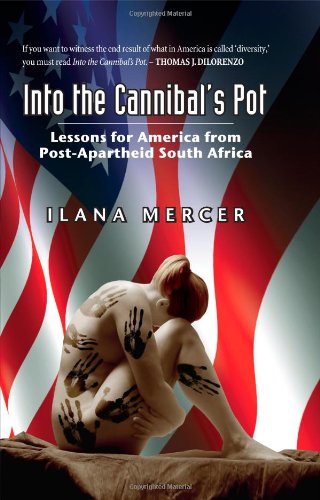
South Africa has its own particular issues, though–the issues spelled out in Ilana Mercer’s 2011 book Into the Cannibal’s Pot.

Fertility may be down towards replacement level, but as any demography buff will tell you, that leaves a huge “bulge” from the previous higher rates to work its way through the age cohorts.
Millions of young black South African adults are jobless. They are rallying to Julius Malema’s new Economic Freedom Fighters (EFF) party, which is Castro-ist in economics and fiercely anti-white.
The ruling ANC is becoming more anti-white to protect its left flank against the EFF.

At an ANC party conference last week the most hotly debated issue was whether white assets should be expropriated with or without compensation. Nobody seemed to think that white assets should not be expropriated.

So while race realists should admit they were too pessimistic back in 1994, I for one am not about to eat crow. As a model of multiracial harmony, South Africa will likely soon lose the little luster it had.

Four years ago here at VDARE.com I quoted that quip about South Africa being five years ahead of Zimbabwe, and said it should be filed under the heading “true but premature,” like videophones.
I stand by that judgment.

White South Africans, get out of there.
Maybe President Trump can include them in next year’s refugee quota (which should otherwise be set at zero).


John Derbyshire [email him] writes an incredible amount on all sorts of subjects for all kinds of outlets. (This no longer includes National Review, whose editors had some kind of tantrum and fired him. ) He is the author of We Are Doomed: Reclaiming Conservative Pessimism and several other books. He’s had two books published by VDARE.com: FROM THE DISSIDENT RIGHT (also available in Kindle) and From the Dissident Right II: Essays 2013. His writings are archived at JohnDerbyshire.com.

Tuesday, August 8, 2017

‘Bury them alive!’: White South Africans fear for their future as horrific farm attacks escalate

http://www.news.com.au/finance/economy/world-economy/bury-them-alive-white-south-africans-fear-for-their-future-as-horrific-farm-attacks-escalate/news-story/3a63389a1b0066b6b0b77522c06d6476

‘Bury them alive!’: White South Africans fear for their future as horrific farm attacks escalate

Robert Lynn and Susan Howarth were tortured at their farm in South Africa.

LAST month, British woman Sue Howarth and her husband Robert Lynn were woken at 2am by three men breaking into a window of their remote farm in Dullstroom, a small town in the northeast of South Africa, about 240km from the nearest capital city.

The couple, who had lived in the area for 20 years, were tied up, stabbed, and tortured with a blowtorch for several hours. The masked men stuffed a plastic bag down Mrs Howarth’s throat, and attempted to strangle her husband with a bag around his neck.
The couple were bundled into their own truck, still in their pyjamas, and driven to a roadside where they were shot. Mrs Howarth, 64, a former pharmaceutical company executive, was shot twice in the head. Mr Lynn, 66, was shot in the neck.
Miraculously he survived, and managed to flag down a passer-by early on Sunday morning. Mrs Howarth, who police said was “unrecognisable” from her injuries, had multiple skull fractures, gunshot wounds and “horrific” burns to her breasts.
“Sue was discovered amongst some trees, lying in a ditch,” writes Jana Boshoff, reporter for the local Middelburg Observer newspaper. “Her rescuers managed to find her by following her groans of pain and then noticing drag marks from the road into the field.
“Her head was covered with a towel. Her eyes were swollen shut. She was partially clothed with just scraps of her shirt remaining. Her breasts and upper body was bloody. The plastic bag, shoved down her throat, took some effort to remove because her jaw was clamped down tightly.
“How she managed to breathe with the bag in her throat remains a mystery. One of her rescuers later recalled how Sue was unresponsive except for the constant groaning. Whilst the man ran back to the road to see if an ambulance has not arrived yet, she managed to curl one of her arms around her breasts in a last attempt to protect herself.”
She was rushed to hospital and placed on life support, but died two days later. Due to her British nationality, her murder attracted an unusual amount of overseas media attention.

Robert Lynn managed to survive the attack.

Mr Lynn shows how he was tortured with a blowtorch. Picture: ITV News
Mr Lynn shows how he was tortured with a blowtorch. Picture: ITV


In any other country, such a crime would be almost unthinkable. But in South Africa, these kinds of farm attacks are happening nearly every day.
This year so far (2017), there have been more than 70 attacks and around 25 murders in similar attacks on white farmers.

Earlier this month, for example, 64-year-old Nicci Simpson was tortured with a power drill during an attack involving three men at her home on a farm in the Vaal area, about two hours drive from Johannesburg.
When paramedics arrived, they found three dead dogs, and the woman lying in a pool of blood, spokesman Russel Meiring told News24. “They used a drill to torture her,” police spokesman Lungelo Dlamini said.
Official statistics on farm attacks are non-existent, due to what human rights groups have described as a “cover-up” by the notoriously corrupt — and potentially complicit — South African government.

The most reliable numbers are released by the Transvaal Agricultural Union, which represents commercial farmers, and civil rights group AfriForum.

According to the TAU, last year (2016) there were 345 attacks resulting in 70 deaths — the highest death toll since 2008. In 2015 there were 318 attacks resulting in 64 deaths, and the year before there were 277 attacks resulting in 67 deaths.
In total, between 1998 and the end of 2016, 1848 people have been murdered in farm attacks — 1187 farmers, 490 family members, 147 farm employees, and 24 people who happened to be visiting the farm at the time.

While South Africa has one of the highest rates of violent crime anywhere in the world, the attacks on white farmers are no ordinary crimes.

In a 2014 report, “The Reality of Farm Tortures in South Africa”, AfriForum wrote that “the horror experienced during farm tortures is almost incomprehensible”.

“The well-known ‘blood sisters’ from the South African company Crimescene-cleanup have rightly indicated that, in their experience, farm tortures are by far the most horrific acts of violence in South Africa,” the report said.
“They are of the opinion that the term ‘farm murders’ is misleading and that the terms ‘farm terror’ and ‘farm tortures’ are more suitable.”

An image of an elderly farm attack victim uploaded to Facebook.
An image of an elderly farm attack victim uploaded to Facebook.Source:Facebook
Human rights groups say the number of attacks is increasing.
 Human rights groups say the number of attacks is increasing.Source:Facebook

While sometimes farmers and their families are tortured to obtain information, such as the whereabouts of keys to the safe, human rights groups say the excessive brutality may be intended to send a message to the general farming community — get out of our country.

Victims are often restrained, harmed with weapons such as machetes and pitchforks, burned with boiling water or hot irons, dragged behind vehicles and shot. Female victims are often raped during attacks.

AfriForum warns that the attacks are becoming increasingly sophisticated, military-style raids, but says community farm watch groups and sharing of information on WhatsApp and Facebook were thwarting a “significant” number.

The three men responsible for killing Mrs Howarth — Themba William Yika, Nkosinathi Yika and Lucas Makua — were arrested soon after, and more than 150 farmers turned up to demonstrate outside court.

But any form of justice is incredibly rare, and white farmers are increasingly questioning their future.

The number of white farmers in South Africa has halved in a little over two decades to just 30,000. Thousands more farms are up for sale.

“The farmers live in fear, because being a farmer in South Africa is the most dangerous occupation in the world,” Henk van de Graaf, spokesman for the TAU, told Swedish newspaper Nya Tider last year.

“The average murder ratio per 100,000 or the population in the world is nine, I believe. In South Africa, it is 54. But for the farming community it is 138, which is the highest for any occupation in the world.”

Since 2007, at the direction of the government, South African police have stopped releasing statistics about the race of the victims. Monitoring group Genocide Watch says the cover-up has been exacerbated by American and European governments, which have “remained silent about the problem, reinforcing the campaign of denial”.

The rise in farm attacks has been blamed on increasingly anti-white hate speech, particularly from the ruling African National Congress.

The home of Robert Lynn and Susan Howarth. Picture: ITV News
Security footage uploaded to Facebook by Intelligence Bureau SA.
Security footage uploaded to Facebook by Intelligence Bureau SA.Source:Facebook


In 2010, high-profile ANC member Julius Malema sang “Shoot the Farmer, Kill the Boer”, which Genocide Watch describes as “once a revolutionary song, but now an incitement to commit genocide”.

Malema was convicted for hate speech and the singing of the song was banned, but just seven months later president Jacob Zuma sang the song himself at an ANC event, in direct contempt of the judge’s ruling.

Malema was later kicked out the ANC, forming his own Marxist party, the Economic Freedom Fighters, which is now the third-largest party in parliament. Recently, Malema has been travelling the country urging black South Africans to take back land from “Dutch thugs”.

“People of South Africa, where you see a beautiful land, take it, it belongs to you,” Malema was quoted in The Telegraph as telling parliament.

Perhaps in response to populist pressure from Malema, Zuma earlier this month called for the confiscation of white-owned land without compensation. Zuma urged the “black parties” in the parliament to unite to form the two-thirds majority that would be needed to make the necessary change to the country’s constitution.
Last week, during a debate in parliament about the farm attacks, an ANC MP shouted “Bury them alive!” while MP Pieter Groenewald was speaking about the plight of white farmers.

“This is proof that the utterances of political leaders could lead to violence and murders and that the issue of farm murders is of little importance to the ANC,” AfriForum’s head of community safety, Ian Cameron, said in a statement afterwards. “Certain members of the ANC were chatting during the debate and not listening nor partaking at all.”

While right-wing groups have claimed South Africa is experiencing “white genocide”, Genocide Watch disputes that characterisation. According to the group’s founding president, Dr Gregory Stanton, “early warnings of genocide are still deep in South African society, though genocide has not begun”.

South Africa president Jacob Zuma. Picture: Mujahid Safodien/AFP
South Africa president Jacob Zuma. Picture: Mujahid Safodien/AFPSource:AFP
Economic Freedom Fighters leader Julius Malema.
Economic Freedom Fighters leader Julius Malema.Source:AFP


“The fact that farm murders do not comply with the legal definition of genocide in no way renders the crisis that white farmers in particular face in South Africa as less imminent,” AfriForum deputy CEO Ernst Roets wrote in a report this month.
“It is important to note that not all who are murdered on farms are white people. On the other hand, it is equally important to note that black farmers are not subjected to the same levels of torture as their white counterparts.”

Australian rice farmer Graeme Kruger, who emigrated from South Africa to New Zealand in 1997 before coming to Australia in 2012, said an increasing number of white farmers were getting out.
“I would like to say, I certainly have never been and was never a supporter of the apartheid regime, and I certainly didn’t immigrate because I wanted to get away from South Africa,” said Kruger, now executive director of the Ricegrowers’ Association of Australia.

“We supported and openly celebrated the changes. But equally what is happening now is not right. To me it’s about humanity. Whether it’s the old apartheid regime or black-on-black violence or xenophobia, leaders need to be very careful with their positions and inciting violence towards anyone.”

Kruger’s family, like many, has been touched by violence. “My wife’s aunt — it wasn’t a farm situation — they broke in through the roof, stole her TV, tied her up with cords and she was killed,” he said.

Asked whether he feared South Africa would become another Zimbabwe, where white farmers have all but been driven out, Kruger was uncertain.

“My family back in South Africa have chosen not to [get out], and they love living there,” he said. “They have a very hopeful, pragmatic view, but they are also concerned.

“South Africans have got this undying ability to believe in the bigger picture, and I’m talking about many blacks. There are lots of wonderful people of all colours that believe all of this stuff is wrong.

“The question I would ask, given the rhetoric, is there a future for farming in South Africa? It’s not just about, is there a future for white farmers. It’s three times more dangerous to be a farmer than it is to be a policeman. It’s sad — it’s not what we want.”
frank.chung@news.com.au

JEWS AND SOUTH AFRICA


South Africa's tribes

Have you ever wondered why so many South African Whites see Jews as the good guys? It derives I imagine from the support - totally self-interested support - that Israel afforded the apartheid regime for many years. Saffers could also identify with Israel's  'the whole world against us' laager mentality. Understandable. But hopelessly misguided. Because Jews have been South Africa's Monomorium santschii.

Their presence in significant numbers took place as late as the turn of the 19th/20th century, fleeing 'persecution' in Eastern Europe. Since then they have done as they've done in every White country. Amass economic and political power. And destroy the people that gave them refuge.

In South Africa they had an advantage unavailable elsewhere: A vast non-White majority. This provided priceless weapons, the fig leaf of 'democracy' (only really nasty people are against democracy) and a vast army of natives to provide the numbers and muscle for White disempowerment.  
 
Naturally it took time to achieve this democracy. A lot of softening up was required along the way. And the position was complicated by the geopolitical requirement to support Israel. But once the demise of apartheid became inevitable Israel, South African Jews generally not only deserted the sinking ship but turned around to gnaw viciously at the doomed hull.

As George Galloway explains here, every safe house he stayed in while agitating for the end of White rule in South Africa was Jewish-owned.  The ANC/SACP composite mirrored the NAACP in that it was controlled by Jews with a few dumb blacks (a tautology?) pushed to the front for the optics. The media duly turned on a dime while Nadine Gordimer became an international celebrity and Nobel Laureate with her depictions of bad Whites and good blacks.

The Boers/Afrikaners 
came in for special treatment, portrayed as the dumb, brutal enforcers of apartheid, useless for anything other than farming, policing and soldiering. And it still goes on.  In fact it's gone into overdrive. There's now a whole array of Jewish on-line publications such as the Daily Maverick, the likes of which appear to focus their bile on Afrikaners and everything to do with their culture. This is not in the least surprising in that Afrikaners represent the quintessential bete noir - if you'll pardon the expression - for Jews. Because they're White, Christian, industrious, have their own language, culture, military tradition and a very strong 'tribal' identity.

Oy vey. Only Jews can have such things. Otherwise there'll be another Holocau$t™.

That's why Nadine Gordimer suggested Whites be blended out and everyone become Coloureds. I wonder does she have the same in mind for South African Jews?  What do you think? My friends now tell me that a new Jewish-Black Business Alliance has been formed with the inherent objective of  further marginalising Whites, especially Afrikaners. I imagine the new body will see blacks providing the brainpower, strategic thinking and pocketing the lion's share of any ensuing shekels, while Jews......oh wait.

The catastrophic state into which the country has fallen - or more accurately been pushed - is  a stark reminder of the fate awaiting Whites once Jews succeed in making us minorities in our own lands.

Be warned.
 
==============
 

Comment from a South African Jewish reader

A reader from South Africa has written a comment (at the end of this thread) The following is an excerpt:

I have lived in South Africa for 68 years, I am Jewish but unfortunately I or any of my friends did not manage to own any gold or diamond mines. Quite a few of them however did start businesses which succeeded in employing many white and black south africans, affording them the opportunity of educating their children as well as putting food on the table.

It's amazing how today as in the past, any problem which arises finishes up being the fault of the Jews. We must surely be the "chosen people", chosen to be blamed, chosen to be killed, chosen to be chased out of any place they might make their home.Of course there were people like Slovo, Kasrils, Goldreich etc. who supported the abolishment of apartheid but were outnumbered by the jews who were not involved and just wanted to be left alone in the status quo unfortunately. Their thinking being that whatever happens we'll be blamed as seems to be the case now. The majority voted against the National party although there were a few who did.
"

Here let me expand on my response to his comment. First I know and have always acknowledged that not all Jews are engaged in the war against White civilisation. In fact maybe it's only a minority amongst them.  
However, Jews are overwhelmingly over-represented in every movement working towards this end. Briefly I'm referring to feminism, cultural relativism, bogus equality theories, affirmative action, open borders (for White countries only) the degradation of art and entertainment. And here's another point. They are overwhelmingly under-represented among those of us fighting back.  
Specifically in regards to South Africa...while spending two semesters in SA (at Wits and UCT) in 1994 and 1995 I got to know at least ten Jews. Looking back I think that not one of them was enthusiastic or hopeful about the emerging Rainbow Nation. 
Yet the masterminds and controllers of the ANC-lead war against White South Africa were Jewish. Just as with the NAACP in America this 'black' organisation was in reality a Jewish operation with a few token melanin-enhanced faces shoved up front for the optics. It was founded by KGB agent Ruth First (wife of Joe Slovo), Dennis Goldberg, Lionel Bernstein, Arthur Goldreich and Bob Hepple. Jews have more control over the banking system now - both the Central Bank and the commercial banks - than they did under White rule, and several Jews are or have been in the Cabinet, three of them sit on the Supreme Court and they headed up the police and railway services. All despite representing a minuscule proportion of the population. 
In summary Jews - or at east the elite Jews - have precipitated the fall of White South Africa and have profited greatly from that fall.
So dear reader/commentator, what can we make of this? My proposal is the same as that recommended in an earlier post. 
'You might as well give up trying to bamboozle those whites who already understand the nature of the Jewish attack on our people. That game is up, the evidence is overwhelming, and awareness is only going to grow from here. The horse is already out of the barn. The Jews had a good thing going, but as usual allowed their hatred and arrogance to get the better of them.
   
However, what you can do, if you are Jewish and if you are actually sincere, is work within the Jewish community to call off the dogs. You can work with them in a way that we can’t. Next time you are tempted to chastise the goyim, chastise your own instead. Persuade THEM, those who are doing harm, as opposed to US, who are simply pointing out the reality of the situation in a bid to salvage what we can out of the increasing wreckage of our own tribe.' 


So thanks for your comment my friend. I accept your sincerity and wish you well. And hopefully you'll give my words some consideration.
 
==================
 

HIV and AIDS in South Africa

https://www.avert.org/professionals/hiv-around-world/sub-saharan-africa/south-africa

HIV and AIDS in South Africa


South Africa has the biggest and most high profile HIV epidemic in the world, with an estimated 7 million people living with HIV in 2015. In the same year, there were 380,000 new infections while 180,000 South Africans died from AIDS-related illnesses.1
South Africa has the largest antiretroviral treatment (ART) programme globally and these efforts have been largely financed from its own domestic resources. The country now invests more than $1.5 billion annually to run its HIV and AIDS programmes.2
However, HIV prevalence remains high (19.2%) among the general population, although it varies markedly between regions.3 For example, HIV prevalence is almost 40% in Kwazulu Natal compared with 18% in Northern Cape and Western Cape.4

Key affected populations in South Africa


South Africa's National Strategic Plan 2012-2016 identifies a number of key affected populations that are at risk of HIV transmission.5


Men who have sex with men (MSM) and HIV in South Africa


HIV prevalence among men who have sex with men (sometimes referred to as MSM) in South Africa is now estimated at between 22% and 48%. HIV prevalence among men who have sex with men varies geographically but it is reported to have risen by more than 10% in Johannesburg, Cape Town and Durban.6

Many men who have sex with men still face high levels of social stigma and homophobic violence due to traditional and conservative attitudes. As a result, men who have sex with men find it difficult to disclose their sexuality to healthcare workers, limiting their access to HIV services.7
However, there is evidence that attitudes are changing. In 2013 a study found that only 32% of South Africans said homosexuality should be accepted by society.8 A more recent study in 2016 found 55% of South Africans would accept a gay family member; 51% said gay people should have the same human rights as others; and two thirds supported keeping the constitutional protections against discrimination on the basis of sexual orientation.9
However, the same study also found that 72% of people said same-sex sexual activity was morally wrong. 18% either had, or would consider, verbally abusing someone who is not gender conforming – and nearly 10% had, or would consider, physically abusing them.10
South Africa remains the only country in sub-Saharan Africa where gay rights are formally recognised.11 Moreover, national policies strongly emphasise equity, social justice and forbid discrimination based on sexual orientation. These are prerequisites for the provision of HIV services for men who have sex with men, as well as other members of the lesbian, gay, bisexual and transgender community. As a result, South Africa has the potential to provide a leading role in the improvement of HIV service provision for men who have sex with men throughout sub-Saharan Africa.12


Sex workers and HIV in South Africa


Nationally, HIV prevalence among sex workers is estimated at 59.6% although this varies between areas, with prevalence estimated at 72% in Johannesburg, 54% in Durban and 40% in Cape Town.13 14 In 2010, sex work accounted for an estimated 19.8% of all new HIV infections in South Africa.15
Female sex workers are particularly affected, with studies finding HIV prevalence among this group to range from 40% to 88%, significantly higher than among women in the general population (14.4%).16 17In particular, young female sex workers (under 25) carry a heavy HIV burden, highlighting the need for focused interventions for sex workers from an early age.18
Sex workers in South Africa face high levels of stigma and discrimination and are restricted by the laws under which they work. Moreover, many sex workers also inject drugs, exacerbating their vulnerability to HIV infection.19
Educational organisations have reported difficulties in delivering HIV prevention services to sex workers due to ongoing police harassment. One study found that up to 70% of women who sold sex had experienced abuse by the authorities:20
The police officer raped me, then the second one, after that the third one did it again. I was crying after the three left without saying anything. Then the first one…let me out by the back gate without my property. I was so scared that my family would find out.
-Female sex worker, Cape Town21
In light of these issues, the South African National AIDS Council (SANAC) has launched South Africa's National Sex Worker HIV Plan, 2016-2019, which aims to ensure equitable access to health and legal services for sex workers.22


People who inject drugs (PWID) and HIV in South Africa


Data on HIV prevalence among people who inject drugs (sometimes referred to as PWID) in South Africa is very limited and, where it does exist, is based on small sample sizes. In 2015, an estimated 19.4% of people who inject drugs in South Africa were living with HIV.23 However, people who inject drugs account for a comparatively low 1.3% of new HIV infections.24
A 2015 study of people who inject drugs in five South African cities found 32% of men and 26% of women regularly shared syringes and other injecting equipment and nearly half reused needles.25
People who inject drugs are also associated with other high-risk behaviours such as sex work and unsafe sexual practices. For example, the above study reported fewer than half of those surveyed used a condom during their last sexual encounter.26


Children and orphans and HIV in South Africa


In 2013, an estimated 360,000 children (aged 0 to 14) were living with HIV in South Africa. From 2002 to 2012, HIV prevalence declined among children, due mainly to programmes to prevent mother-to-child transmission of HIV (PMTCT).27 The scaling up of antiretroviral treatment (ART) has reduced child mortality by 20%.The scaling up of antiretroviral treatment has reduced child mortality by 20%.28
More than 2.3 million children in South Africa have been orphaned by HIV and AIDS.29 Orphans are particularly vulnerable to HIV transmission; they are often at risk of being forced into sex, have sex in exchange for support, and typically become sexually active earlier than other children.30
The National Strategic Plan 2012-2016 aims to lessen the impact of HIV on orphans, vulnerable children and youth by ensuring they have access to vital social services, including basic education.31


Women, adolescent girls and HIV in South Africa


A 2012 survey found HIV prevalence among South African women was nearly twice as high as men. Rates of new infections among women aged 15-24 were more than four times greater than that of men the same age, and this age group accounted for 25% of new infections in South Africa.32
Poverty, the low status of women and gender-based violence (GBV) have been cited as reasons for the disparity in HIV prevalence between genders, with GBV attributable to an estimated 20–25% of new HIV infections in young women.33 34
Intergenerational relationships - between older men and younger women - are also seen to be driving a cycle of infections. Sexual partnering between young women and older men, who might have acquired HIV from women of a similar age, is a key factor driving transmission. Expansion of treatment and combination prevention strategies that include interventions to address age-disparate sexual partnering is crucial to reducing HIV incidence.35


Case Study: Sugar daddies

Lebogang Motsumi was 27 when she was infected with HIV by a “sugar daddy” – a man significantly older than her who was capable of showering her with the gifts she believed she needed to fit in with her friends and feel more accepting of herself. She was reluctant to use a condom because she feared being perceived as promiscuous by men and felt she was “not in control” of the situation when she was with her sexual partners.
Now a mother, Motsumi says she wishes she had received more information at home and at school about risky sexual behaviour, and is using her experience to advocate non-judgemental, face-to-face conversations with young people about relationships with older men.36

HIV testing and counselling (HTC) in South Africa


The launch of the national HIV counselling and testing (HTC) campaign in April 2010 resulted in a remarkable increase in the number of people accessing testing. Between 2008 and 2012, annual HIV testing increased from an estimated 19.9% to 37.5% among men, and from 28.7% to 52.6% among women. The higher testing figures seen among women have been attributed to the added effect of the PMTCT programme, which enables women to access HIV testing services during antenatal appointments.37
South Africa developed an HCT revitalisation strategy in 2013, which focused on the private sector, farms and those in higher education. This strategy set a target of 10 million HIV tests to be carried out by 2015, of which 9.5 million were achieved, taking the total number of HIV tests since the 2010 campaign began to 35 million.38

In South Africa, the link has been made between an individual’s socio-economic background and the likelihood they will test for HIV. Those who have taken an HIV test and know their status are more likely to have a higher level of education, be employed, have accurate HIV knowledge and a higher perception of risk.39
Another determining factor is whether an individual lives in an urban or rural setting. One study revealed that people living in rural areas are only half as likely to have been tested as those in urban areas.40
In May 2015, the Pharmacy Council of South Africa lifted a ban preventing pharmacies from selling take-home HIV testing kits. It is hoped this will encourage more people to test for HIV.
"There are many people who want to test and who do not want to interface with the healthcare system. We believe the more people testing, the better. Let's get as many people to test as possible.41

Antiretroviral treatment (ART) in South Africa

infographic showing number of people recieving antiretroviral treatement between 2009 and 2014  in South Africa (2014)

South Africa has the largest ART programme in the world. In April 2014, more than 3 million people were receiving ART, which equates to 47% of people living with HIV in the country. In 2012, just 31.2% of people living with HIV were on ART.42
South Africa’s accomplishments in expanding its ART programme can be attributed to a number of initiatives including its 2010 HTC campaign mentioned above and changes to its policy on when a person living with HIV is eligible for treatment.43

South Africa has kept in step with World Health Organization (WHO) guidelines, which previously recommended treatment initiation should be based on a person’s CD4 count. CD4 cells fight germs and infections and are attacked by HIV, which generally means the lower a person’s CD4 count, the more HIV has advanced. In 2013, South Africa changed the CD4 level at which people could start ART from 200 to 350, making more people eligible for treatment. By the end of 2014, it increased the level to 500, expanding eligibility further.44

In 2015, WHO released guidelines recommending people living with HIV be offered ART immediately following diagnosis, regardless of CD4 count. South Africa has began implementing this recommendation also known as ‘test and treat’.45


HIV prevention programmes in South Africa


The current National Strategic Plan 2012-2016 is framed primarily around the UNAIDS vision of "zero new HIV infections, zero discrimination and zero AIDS-related deaths." It has also committed to "zero new infections due to mother-to-child transmission."46 47
In December 2015 South Africa became the first country in sub-Saharan Africa to fully approve pre-exposure prophylaxis (PrEP), the use of antiretroviral drugs to protect HIV-negative people from HIV before potential exposure to the virus. It is currently investigating the uptake and impact of PrEP on young women and girls in high HIV prevalence areas.48


Prevention of mother-to-child transmission (PMTCT)


The current NSP aims to reduce mother-to-child transmission (MTCT) of HIV rates to under 2% at six weeks after childbirth and less than 5% at 18 months by 2016.49
Over the past decade, the country has made great progress in this area due largely to improvements in the choice of ARVs and the widespread accessibility of the PMTCT programme.50
It is widely believed that South Africa has reached a point where the elimination of paediatric HIV is possible.51
In 2015, more than 95% of HIV-positive pregnant women received antiretroviral medicine to reduce the risk of MTCT. As a result, MTCT of HIV in South Africa has fallen to 1.5%  - meeting the current NSP target.52 In 2009 there were 56,500 new annual HIV infections among children, by 2010 this had fallen to 15,000, rising to 16,000 in 2013.53
Maternal mortality looks to be declining but at a much slower rate. South Africa’s current target is to reduce its maternal mortality rate by three quarters between 1990 and 2015, from 150 deaths per 100,000 live births to 38/100,000. Initially, this rate increased but is now declining with the last estimate measured at 141/100,000.54


Condom use and distribution


South Africa has responded to its HIV epidemic with a rapid expansion of its condom programme. Male condoms are widely available and the female condom programme is one of the biggest and most established in the world.55
Between 2007 and 2010, the distribution of male condoms increased by 60%, from 308.5 million to 495 million a year. However, in terms of condoms per person this only represents a small increase (from 12.7 in 2007 to 14.5 in 2010). In the same period, the number of female condoms distributed increased from 3.6 million to 5 million. However, it is widely acknowledged that female condoms are not as readily available as they should be.56
Condom distribution targets for 2016 are set at 1 billion male condoms and 25 million female condoms, with 2015 distribution levels at 723 million male condoms and 20.7 million female condoms.57
However, in recent years condom usage has fallen. In 2008, 85% of 15-24 year old males reported using a condom during their last sexual encounter – by 2012, this had fallen to 68%. Condom use among men aged 25-49 also decreased, from 44% to 36%. The same survey reported that 53% of participants had never used condoms.58


Voluntary medical male circumcision (VMMC)


In 2010, research emerged from sub-Saharan Africa suggesting that voluntary medical male circumcision (VMMC) can reduce the risk of female-to-male HIV transmission by up to 60%.59
This led the South African government to rapidly roll out a national VMMC programme, which aimed to reach 80% of HIV-negative men (4.3 million) by 2016.
By April 2011, more than 150,000 circumcisions had been conducted with an estimated one new HIV infection averted for every five VMMCs.60 The VMMC programme in South Africa has mostly been well received with 78% of women preferring their partner to be circumcised according to the 2011 youth sex survey.61 The 2016 circumcision rate remains stable with 50-79% of eligible men reached.62


HIV education


The HIV and AIDS Life Skills Education Programme was implemented in all public primary and secondary schools in South Africa from 2000 onwards. HIV education now comes under the Integrated School Health Programme (ISHP), which aims to make youth-friendly, sexual and reproductive health (SRH) services accessible in school, enrich HIV prevention efforts and support young people who are HIV negative to remain so. However, the percentage of schools implementing the ISHP has dropped significantly from 160% in 2013 to 20% in 2014.63

Factors include a shortage of teacher training on SRH issues and resistance from some schools due to the subject matter.64
High dropout rates in schools also compromise effective HIV and sex education. It has been suggested that prevention programmes should focus on younger children while more of them are in education and before they become sexually active.65


HIV awareness


In South Africa, there have been a number of HIV awareness campaigns. The 2012 National Communication Survey on HIV/AIDS found the country's HIV communication programmes were having a positive effect, particularly on youth (aged 15-24), with an increase in condom usage, uptake of HTC and male circumcision. By contrast, knowledge around safe breastfeeding practices among pregnant mothers living with HIV remains low.66 The main HIV awareness campaigns include:
The main HIV awareness campaigns include:
  • loveLife
Since 1999, the loveLife campaign has used a range of media to reduce new HIV infections among young people aged 12-19. It engages with youth through outreach and support programmes facilitated by peer educators and runs youth centres providing SRH information, clinical services and skills development 67
  • Soul City and Soul Buddyz
Soul City and Soul Buddyz were two government multi-media campaigns targeting adults and children respectively.
Soul City broadcast TV dramas and radio programmes to primetime audiences, reaching 70% of over 16s, including 65% of rural people and 50% without any formal education. The initiative led to a significant increase in HIV knowledge and encouraged positive behaviour change.68
Soul Buddyz was judged to be the most successful family television show produced in South Africa. 67% of 8-12 year olds watched, read or listened to Soul Buddyz (about four million children).69
  • MTV Shuga
MTV Shuga is a mass-media behaviour-change campaign that aims to improve the SRH of young people and is funded by a range of international and national donors. It began in 2009 and centres around an awarding-winning TV series, supported by radio, digital, social media and mobile elements.
Series 1 and 2 were set in Kenya and Series 3 and 4 in Nigeria, but it has global appeal and has been shown by 169 broadcasters around the world. It has reached more than 719 million households and connected with more than 42 million people on social media.70
Series 5 is due to be set in South Africa and will begin production in September 2016. It will be funded by South Africa’s Ministry of Basic Education, PEPFAR (The US President’s Emergency Plan for AIDS Relief), Marie Stopes International and Positive Action.71


HIV and tuberculosis (TB) in South Africa


South Africa has the world's sixth largest tuberculosis (TB) epidemic. The HIV epidemic in South Africa fuels the TB epidemic because people living with HIV are at a far higher risk of developing TB due to their weakened immune system. It is estimated that 60% of people living with HIV in South Africa are also co-infected with TB.72
The TB cure rate has improved in recent years. Between 2010 and 2011, the number of people living with HIV who received TB treatment nearly tripled, from 146,000 in 2010 to 373,000 in 2011.73 This dipped to 337,000 in 2014, failing to meet the national target of 450,000.74
We cannot fight AIDS unless we do much more to fight TB.
- Nelson Mandela75]


HIV funding in South Africa


South Africa largely funds its HIV and AIDS programmes domestically, only receiving 20% of its HIV funding from external sources.76 However, based on its National Strategic Plan 2012-2016 targets, the gap between funding requirements and available funding for HIV is expected to grow. This is due in part to the country’s middle income status which is leading to a reduction in funding from external donors. Its commitment to enrol people who test positive for HIV onto treatment immediately after diagnosis may also become a factor.77
In recent years South Africa has been working hard to negotiate better prices for ARVs, having previously been paying more than most other low and middle income countries despite having the world’s largest procurement programme.
In 2013, through a more competitive bidding process, South Africa managed to reduce the cost of buying ARVs to the lowest price anywhere in the world. This resulted in a 53% reduction in spending on ART for South Africa.78


The future of HIV and AIDS in South Africa


South Africa has made great strides in tackling its HIV epidemic in recent years and now has the biggest HIV treatment programme in the world. Moreover, these efforts are now largely funded from South Africa's own resources.
HIV prevention initiatives are having a significant impact on mother-to-child transmission rates in particular, which are falling dramatically. New HIV infections overall have fallen by half in the last decade, however, there are still too many.
While the short term financing of South Africa's HIV epidemic is secure, in the longer term, the government needs to explore other strategies in order to sustain and expand its progress.

Last updated:
06 June 2017