.

.
Library of Professor Richard A. Macksey in Baltimore

POSTS BY SUBJECT

Labels

Showing posts with label Psychology. Show all posts

Wednesday, May 10, 2017

Andrew Anglin : The scourge of male feminism in the WN movement

The scourge of male feminism in the WN movement


Male feminists refuse to explain why a book—written by a woman for women about BDSM is now the best-selling book of all time. I get a lot of hate from white knights (who should really be called “male feminists”) for my straightforward commentary on the collective behavior of women.
The fact that women are sexually aroused by the idea of rape and abuse is extremely difficult for a lot of men to process. In particular, men have a hard time processing this in relationship to the female obsession with flooding the West with men who are shockingly prone to rape and abuse of women.
However, although I have laid out my arguments for this phenomenon in great detail, as of yet, no male feminist has bothered to give a counter-argument. Instead, they attack me personally, claim I must have some personal problem, or else I wouldn’t even care about the data which supports my claims.
It doesn’t matter what people think of me. If I was concerned about the opinions that random anonymous people on the internet have of me, I would have chosen a different profession. My concern is with the concept itself, that of shaming men who dare question the behavior of women.
By attacking me, these male feminists are sending a message to all men: if you question women, we will turn against you, we will insult and attack your masculinity. This is called “Man-Shaming.” It is the same exact system that the Jews used to silence men opposed to homosexuality: “If you’re against the gays, you must secretly be one yourself.”
The reason that white men will shame other white men with feminist garbage is that they themselves are emotionally incapable of dealing with the fact that their girlfriends and wives (or their objects of romantic interest) are not the princesses they imagine them to be.
This is objectively true. If they simply disagreed based on data, they would present counter-arguments and relevant data. Instead, they personally attack the man making the argument that causes them to feel the uncomfortable emotions.
I am absolutely disgusted by the idea that white men are willing to shame other white men, to question their virility and masculinity, in order to protect their own fragile emotions. This needs to stop. Man-shamers within the white nationalist movement are inhibiting free and open discussion of ideas, which can only be good for our enemies.
Beyond this, they are also creating a narrative that will harm men who are trying to have successful relationships with women. In order to have a successful relationship with a woman, a man must understand that they are fundamentally non-loyal (as opposed to disloyal), amoral (as opposed to immoral) and have a strong need to be dominated and controlled (in the modern system, where this need is not being fulfilled because men have been taught to treat women as “equals” with “valuable input,” their desire to be dominated and controlled expresses itself through pathological sexual desire).

I take criticism well


I am very good with criticism, and am fine with the idea that I might be wrong about certain things. I don’t consider myself infallible, and am always open to discussion and debate. However, because the feminist arguments are emotional and not based on data or logic, they do not engage in constructive criticism or debate, instead resorting to name-calling: woman-hater, MGTOW, etc.
All insults, no data or logic. My point, continually, has been that these concepts have nothing to do with me, and attacking me for presenting the concepts shows that the attacker lacks a rational, data-based defense.
I understand that this is a sensitive issue for many men, and I do my best to understand men where they are. I believe that the bonds between men are what make up the foundation of any society, and so I do my best to remain as sympathetic to the men who are taken in by feminism as the men who are able to acknowledge that they are victims of the Jewish-feminist agenda.
Nevertheless, it is the male feminists who are in the wrong, and who are harming others with their man-shaming agenda. Attack me all you want. It doesn’t matter. I care about my brothers, and sticking up for my brothers. We are all victims of feminism, whether we acknowledge it or not. All you have to do is look around you. In all likelihood, your own mother destroyed your life and the life of your father, for no explainable reason. Your friends have family members [who] have had their lives destroyed by women.
You are told that “somewhere out there” there are women who are different. But you keep looking, and you do not find them.

For the sake of the movement


It is very important to our personal lives that we understand women and their behavior. But our personal lives, individually, are irrelevant in the face of our agenda. And our agenda suffers very greatly if we do not take a realistic approach to the female issue. For one, if we allow women to assert influence on the movement, it will never go anywhere.
Perhaps even more importantly, we want this movement to expand, and we are not going to do that by being a movement of a bunch of losers who can’t get women. As such, it is important to me to teach men to be the kind of men who are successful with women, and the kind of man who fantasizes about women as princesses is not the kind of man who is successful with women.
The ironic thing about all of this is that while I am accused by the male feminists of “alienating women” and “limiting our movement to men only,” I am in fact doing the opposite of this. The only women who are ever going to truly feel adamantly about right-wing politics are women who do so because they have a boyfriend or a husband who is involved in the movement.
Women do not have moral convictions and do not have ideologies. These are masculine concepts. All philosophers understood this fact (literally, all of them, so there is no need to cite an individual philosopher here).
Given that women do not naturally possess their own beliefs, they adopt the beliefs of who they view as their natural physical protector. So in our modern situation, women adopt the beliefs of the state. The way we will get women “into the movement” is by getting girlfriends for the men already in the movement. Not by trying to cater an ideological message to women.
Single women who get involved in the movement do it either to find a man, or for attention whoring/funding purposes (in certain cases, they may also find it fashionable). Not because they were moved by a logical or ideological argument. As the woman exists for the sole purpose of producing children, her entire orientation is geared towards gathering resources and/or acquiring a man/men who will gather resources for her.
As such, the way to get women involved in the movement is very simple: Create a movement of men who are desirable to women. The female partners of those men will then, by default, be involved in the movement.
Male feminists are inhibiting our ability to do this, by attempting to shame men who take on a character that is attractive to women. Men who “respect women” are not attractive to women. They are viewed as weak and pathetic. That is not the kind of movement we want.

You cannot compare this to leftism


One cannot say “we have to follow the pattern of the leftists and recruit single women into our movement ” because the concepts are totally different. Women are naturally drawn to leftism, for innumerable reasons. In part, it is because they are natural communists.
One should read the ancient Greek play Assemblywomen by Aristophanes, about women taking over the government (or at least the Wikipedia synopsis of it). In 391 BC, this man was able to predict that women, if given the chance create a government, would institute communism. This is because women do not have the ability to gather their own resources, so they prefer that they are distributed based on “equality” rather than merit.
In the play, the women also dissolve the family, and require that the most attractive men be forced to have sex with all of the women in the city, so that unattractive women are also able to have a chance to mate with attractive men. It has always been understood that the sexuality of women is deranged by any male, moral standard.
Modern leftism is also satisfying the sexual desires of women by importing men whom they find sexually desirable. They manipulate weak, beta males (the type of males who are drawn to leftism to begin with) into helping them import brown people who they view as sexually dominant.
 

Blaming Jews for the behavior of women isn’t helping anything


There is a saying: “the only thing worse than a white knight is a white knight who blames Jews for the behavior of women.”
This is accurate. Of course, Jews should be blamed for the liberation of women. It was, on the whole, their idea. However, the behavior of women is the behavior of women. As I mentioned above, men in the 4th century BC understood that women, if given the chance, would do exactly what they are doing now.
If Jews released thousands of tigers out onto the streets of New York City, and they started mauling people, you would say “Jews are responsible for the fact that these tigers are mauling people on the street,” but you would not say “Jews are responsible for the fact that tigers are natural predators.” Claiming that Jews are responsible for the behavior of modern women simply confuses the issue.
Jews are responsible for creating a culture in which the worst, primitive instincts of women are celebrated as virtue, and the natural male desire to protect women is redirected into protecting her ability to indulge in these destructive, primitive behavior patterns.

Man-Up


It is time to act like men, and to take responsibility for the situation we are in, which includes taking responsibility for our women. Claiming that women are not a problem is simply a way of passing off male responsibility.
Our movement needs to be sexy. We want men to look at us, and say “that’s something I want to be a part of.” A huge part of that is being something that is attractive to women. And women are not attracted to men who “respect women.”
Call out the man-shamers for what they are: subversives who are harming this movement in order to fulfill a sad emotional need to believe in the virtue of women.

https://chechar.wordpress.com/

Wednesday, March 8, 2017

Michael Moore : Psychopathology in Religious Ideation: The Case of Death by Proxy

Psychopathology in Religious Ideation: The Case of Death by Proxy (2013)

Michael Moore

Though there is no unequivocal evidence for a causal relationship between religiosity and psychopathology, a large body of data suggests a connection between these two phenomena. (For some of the controversial research findings, see my paper with Daniela Kramer titled "We are Too Weak to Walk Unaided.") Some of this data is anecdotal: "The association of unusual emotional states and psychic experiences with religion is of great antiquity and undoubtedly antedates any documentary evidence" (Rosen 1968, 48-49).[1] The emotional states include seizures, trances, hallucinations, and other abnormal behavior (Rosen 1968, 49). In her Introduction Karen Armstrong similarly mused: "Had the visions and raptures of the saints also been a mere mental quirk?" (1993, xviii-xix). Yet there is no lack of "documentary evidence," either. Consider, for instance, the 18th-century practice of self-castration in Eastern Russia to atone for the sexuality of Adam and Eve (Menninger 1938), and its repetition in the United Kingdom in the 1960s as "an offering to God" (Kushner 1967). Or take the case of Kenneth Pickett, an extremely religious Jehovah's Witness who killed his former wife because he thought that she was in another relationship, which was forbidden in his interpretation of the Bible. Now jailed for life, Pickett justified the killing by saying that he saved his former wife from sin (Bennett 2009). No wonder that Nietzsche spoke of "that strange and sickly world into which the Gospels lead us—a world apparently out of a Russian novel, in which the scum of society, nervous maladies and 'childish' idiocy keep a tryst" (1895/1918, 96).[2]

DSM-IV (APA 2000) makes a distinction between bizarre and nonbizarre delusions. Though both types indicate psychotic disorders, the former are symptomatic of schizophrenia (especially 295.30 or paranoid type schizophrenia), while the latter serve as the major diagnostic criteria of delusional disorder [paranoid disorder] (297.1). The authors of DSM-IV admit that cultural factors often make it difficult to determine whether a given delusion is bizarre or nonbizarre. Take, for instance, the Capgras delusion, the belief that your relatives have been replaced by impostors. Or take the Cotard delusion, the belief that you have died (Young, Leafhead, and Szulecka 1994). Are they bizarre or nonbizarre? Given this ambiguity, I leave it to readers to decide whether the following phenomena "involve situations that can conceivably occur in real life" (APA 2000, 324).

Consider the case of Aelius Aristides (Rosen 1968, 110-121). This 2nd-century Greek sophist and orator was gravely ill when he decided to put himself under the care of Asclepius, the god of healing in Greek mythology. He lived in Asclepius' shrine and received commands from the god in his dreams for about ten years, prescribing for himself painful and apparently nonsensical treatments. Among other methods, Aristides practiced "sacrificial substitution," identical to pars pro toto ("part taken for the whole") rites once performed on the Nicobar Islands and in Tonga (Tylor 1958, 486). Asclepius demanded that in order to avert death, Aristides sacrifice a finger, later permitting the offering of a ring in place of the finger. When this did not suffice, Aristides (or was it Asclepius?) raised the stakes: He believed that two children of his foster sister died in his stead. Aristides' religious delusion is a good example of the dilemma concerning bizarreness: Though delusional, his ardent following of his god's unconventional treatment methods was culturally accepted, and therefore nonbizarre, in his social environment (Rosen 1968, 120; see also Spiro 1987).

Another delusional believer in death by proxy was Spanish-born Rabbi Yosef Caro, a highly influential Jewish scholar of the 16th century. While living in Salonika, Caro recorded in a diary the messages he received during nightly visitations by a celestial mentor (his Maggid). R. J. Zwi Werblowsky (1962, p. 8) refers to this document as "an intimate diary, recounting a life-time of mystical, if not pathological, experiences," finding great resemblance to the manifestations reported by Caro of "mediumistic states and trances" and of automatic speech (Werblowsky 1962, 22). The Maggid rebuked him in practically every communication for having eaten or drank too much, for having slept half an hour between prayers, and for having had unclean thoughts: "Beware of food and drink and bodily pleasures. Whenever you experience pleasure at eating or drinking, meditate on the repulsiveness of food as it is chewed and even more on its repulsiveness as it is evacuated from the body" (Werblowsky 1962, 163). Another command had to do with studying the Talmud: "always return to the study of my Mishnayoth [part of the Talmud] and never separate your thoughts from them, even for a single moment" (Werblowsky 1962, 267). This injunction is reminiscent of John Dollard and Neal Elgar Miller's "Mrs. A," who was obsessed by the thought that her heart would stop unless she counted the beats; this kept her from having sexual thoughts that caused her great anxiety (Dollard and Miller 1950).
As in the case of Aristides (see above), Caro's delusion escalated:
You have thought of improper things, wherefore you have been condemned to death. But I, the Mishnah, have interceded for you, as also did Jacob Tur, Moses Maimonides, Rashi ... and they redeemed you from death. Your sentence was commuted to illness instead, and also many worthy people were substituted for you. (Werblowsky 1962, 150)
The dead included his first wife (of five wives) and three children. When his wife miscarried, Caro recorded the Maggid's interpretation: "the pregnancy was true and God would not have withdrawn his gift ... even if your sins would have warranted it. But because you were sentenced to death, God, in the abundance of his mercy, wanted to redeem you and put the pregnancy in your place" (Werblowsky 1962, 132).

From Greek orator, through Jewish scholar, I now move to Carl Jung, the famous Swiss psychiatrist and psychoanalyst, founder of the school of analytical psychology. Jung strongly believed not only in God, but also in synchronicity—"temporally coincident occurrences of acausal events" (Jung 1952/1993). In his Foreword to the 2010 edition of Jung's Synchronicity: An Acausal Connecting Principle, S. Shamdasani writes that Jung regained his soul "by enabling the rebirth of a new image of God in his soul and developing a new worldview in the form of a psychological and theological cosmology." As a child Jung was greatly influenced both by his father—a Protestant pastor—and his mother, who suffered from severe depression and had visions of nightly visitations by spirits. In his memoires Jung (1965) related that one night he had seen a luminous figure coming from his mother's room, with a head detached from the neck and floating in the air in front of the body.
During a serious illness Jung had a mystical vision of his physician, Dr. H:
Suddenly the terrifying thought came to me that Dr. H. would have to die in my stead[3].... In actual fact I was his last patient. On April 4, 1944—I still remember the exact date—I was allowed to sit up on the edge of my bed for the first time since the beginning of my illness, and on this same day Dr. H. took to his bed and did not leave it again.... Soon afterward he died of septicemia" (Jung 1965, 293).[4]
The delusions of Aristides, Caro, and Jung involving death by proxy belong to a broader class of religious practices that border on the psychopathological.

Scapegoating is a very old sacrificial practice, vividly described in Leviticus 16:10 (ca. 6th century BCE): "the goat, on which the lot fell to be the scapegoat, shall be presented alive before the Lord, to make an atonement with him, and to let him go for a scapegoat into the wilderness." This was also an accepted practice in ancient Greece, where a human or animal scapegoat (the pharmakos) was killed either in an annual rite for the purification of the people, or in times of famine, plague, or drought, to appease the angry deities (Rosen 1968, 85). Here are two examples of ritual scapegoating that have survived in modern times:

On one day of the year the Bhotiyas of Juhar [aka Shaukas], in the Western Himalayas, take a dog, intoxicate him with spirits and ... chase and kill him with sticks and stones, and believe that, when they have done so, no disease or misfortune will visit the village during the year. (Frazer 1959, #458) 

The Jewish New Year's Rite of Caparot [Ransoms] consists of saying three times, holding a fowl above one's head: "I have found a ransom. This is my change, this is my compensation, this is my redemption. This hen (cock for males) is going to be killed, while I shall enter upon a good, happy and peaceful life. (Sephath Emeth n. d., 301) 

In Violence and the Sacred (1972) the French historian and philosopher René Girard hypothesized that both archaic religion and ritual sacrifice originated in the victimization process: when a crisis occurs, the group selects an arbitrary victim who is brutally eliminated. This act serves as a psychological relief for the group, which now regards the victim as a miracle-worker, for peace has been regained:

The victim has become sacred. A myth is created, and subsequent acts of sacrifice are ritual repetitions of the original event. (See Moore 1977 regarding the parataxic nature of this act, that is, seeing causal relationships between logically unrelated events.)[5]
Those, described above, who believe in death by proxy have gone a step further: overwhelmed by anxiety, they delude themselves into believing that a divine power has taken such an interest in them that another human being can be sacrificed in their stead. Their condition comes closest to what DSM-IV (APA 2000) has labeled delusional disorder—grandiose type.[6]

Notes

[1] William James, the son of a Swedenborgian theologian and a member of the Theosophical Society, admitted the psychotic and neurotic origins of religious fervor, but claimed that they were irrelevant. No wonder he treated Nietzsche with disdain: "Poor Nietzsche's antipathy [toward saints] is itself sickly enough" (1902/1963, 373).

[2] See also Novalis' "Fragmente und Studien 1799-1800": "It is marvelous enough that the association of voluptuousness, religion, and cruelty has not attracted the attention of men to their close kinship and common tendency" (1968, 568).

[3] In The Maccabean Martyrs as Saviours of the Jewish People, Jan Willem Van Henten mentions several cases in Greek tragedy (especially in Euripides), as well as in Roman history, where there is "vicarious death," but these are all cases where a person willingly sacrifices him or herself in order to save others.

[4] A literary example of death by proxy appears in Virginia Woolf's Mrs. Dalloway. According to Manly Johnson, Woolf originally intended for Clarissa Dalloway to kill herself, and created the character of Septimus Smith (whom the heroine never meets and who commits suicide) to serve as a "dark double" who takes upon himself this act of desperation.

[5] Christian theology is largely founded on Jesus' vicarious death ("Substitute Sacrifice"). An often quoted verse is 2 Corinthians 5:21: "For God made Christ, who never sinned, to be the offering for our sin..." See also Matthew 21:28: "The son of man came ... to give his life a ransom for many."

[6] In the 4th edition of the Diagnostic and Statistical Manual of Mental Disorders, the diagnostic criteria for this type include delusions of inflated worth, power, knowledge, identity, or special relationship to a deity or famous person (APA 2000, 329).

References
American Psychiatric Association (APA). Diagnostic and Statistical Manual of Mental Disorders (4th ed.). Washington, DC: American Psychiatric Association, 2000.
Armstrong, Karen. A History of God: The 4,000-year quest of Judaism, Christianity and Islam. New York: Ballantine Books, 1993.
Bennett, Michael. "Man Jailed for Life Over 'Religious' Killing." The West Australian. November 6, 2009.
Dollard, John and Neal Elgar Miller. Personality and Psychotherapy: An Analysis in Terms of Learning, Thinking and Culture. New York, NY: McGraw-Hill, 1950.
Frazer, James G. The New Golden Bough, ed. Theodor H. Gaster. New York, NY: New American Library, 1959. [Originally published 1890.]
Girard, René. La Violence et le Sacré. Paris, France: Grasset, 1972.
James, William. The Varieties of Religious Experience. New Hyde Park, NY: University Books, 1963. [Originally published 1902.]
Johnson, Manly. Virginia Woolf. New York, NY: Frederick Ungar Publishing Co., 1973.
Jung, Carl G. Memories, Dreams, Reflections, ed. Aniela Jaffe. New York, NY: Vintage, 1965.
Jung, Carl G. Synchronicity: An Acausal Connecting Principle. Bollingen, Switzerland: Bollingen Foundation, 1993. [Originally published 1952.]
Kushner, A. W. "Two Cases of Auto-Castration Due to Religious Delusions." British Journal of Medical Psychology. Vol. 40, Issue 3 (September 1967): 293-298.
Menninger, Karl. A. Man Against Himself. New York, NY: Harcourt, 1938.
Moore, Michael. "Symbolic Burning and the Modern Sacrifice." International Journal of Symbology, Vol. 8, No. 1 (March 1977): 94-102.
Moore, Michael and Daniela Kramer. "We are Too Weak to Walk Unaided: A Family Therapist View of the Pathogenic Aspects of Prayer" (2000). The Secular Web. <http://www.infidels.org/library/modern/michael_moore/weak.html>.
Nietzsche, Friedrich. The Antichrist, trans. H. L. Mencken. New York, NY: Knopf, 1918. [Originally published 1895.]
Novalis (Friedrich von Hardenberg). "Fragmente und Studien 1799-1800." Schriften, Vol. 3. Stuttgart, Germany: Kohlhammer, 1968.
Rosen, George. Madness in Society: Chapters in the Historical Sociology of Mental Illness. New York, NY: Harper & Row, 1968.
Sephath Emeth (Speech of Truth) Prayer Book. New York: Hebrew Publishing Co., n.d.
Spiro, Melford E. (1987). "Religious Systems as Culturally Constituted Defense Mechanisms." In Culture and Human Nature: Theoretical Papers of Melford E. Spiro, ed. Benjamin Kilborne and L. L. Langness. Chicago, IL: University of Chicago Press, 1987: 145-160.
Tylor, Edward B. Religion in Primitive Cultures. New York, NY: Harper & Brothers, 1958. [Originally published 1871.]
Van Henten, Jan Willem. The Maccabean Martyrs as Saviours of the Jewish People. Leiden, Netherlands: Brill, 1997.
Werblowsky, R. J. Zwi. Joseph Karo: Lawyer and Mystic. Oxford, UK: Oxford University Press, 1962.
Young, Andrew W., Leafhead, Kate M., and T. Krystyna Szulecka. "The Capgras and Cotard Delusions." Psychopathology, Vol. 27, No. 3-5 (May-September 1994): 226-231.
================
https://infidels.org/library/modern/michael_moore/psychopath.html


Tuesday, October 16, 2012

Symbols & Psyche


Symbols & Psyche: Exploring Gateways to Realms of Knowledge, Power & Understanding

OTZ CHAIMBy JAMES WASSERMAN

—

The Muggle world is filled with symbols. From Coke cans to McDonald’s arches, IBM computers to Apple Macintoshs, from flags to emblems and medals, to the endless variety of product packaging, modern culture is brimming with images. Open the Yellow Pages of your phone book – with the emblematic pair of walking fingers – and you will find a myriad of professional logo designers and artists, many of whom have trained at colleges whose crests may date back a century or more.
Walk or Don’t Walk based on a traffic light flashing a message designed to prevent you from being run over by a car – whose distinctive hood ornament differentiates it from its competitors, and which is fuelled by different brands of gasoline whose identity may be apprehended from afar while travelling at high speed. Look at the dashboard and you can ascertain operational norms, be warned of engine trouble, and learn by iconic means about the vehicle and its amenities.
We live in a world filled with visual identifiers intended to convey meaningful information at a glance without the need for words.Heraldry, the distinctive symbols of noble warrior families, traces back to the Middle Ages, when grand tournaments were held with jousts between heavily-armoured knights wearing visors. Since individuals were unrecognisable in such gear, unique coats-of-arms were designed to identify the combatants to fans and foe alike. Taverns and inns, village blacksmiths, printers and publishers, all manner of craftsmen and merchants were as recognisable in villages and cities a thousand years ago, as they are in today’s hyper-illuminated metropolitan areas and quieter rural main streets.However, there is another level of symbolism that goes beyond the merely commercial, socially informative, or technologically useful.
And that is the universe of sacred symbols, whose resonance in the archetypal levels of the human psyche can cause spiritual change and expand consciousness beyond the confines of mundane reality. Symbols that serve as gateways to realms of knowledge, power, and understanding that inform and control life on earth, and, presumably, the after-death state of non-physical life as well. Symbols that can open the mind to communication with spiritual beings who welcome the opportunity to interact with human consciousness. Symbols that confirm to the aspiring student the nature of the truths he or she seeks.
Symbols are the alphabet of the Law of Correspondence. This universal principle acknowledges the inter-connection of all things with all other things, the existence of multiple relationships within Nature’s kaleidoscopic richness.
In The Mystery Traditions, I quoted the following statement by Titus Burckhardt from his book Alchemy, “True symbolism depends on the fact that things which may differ from one another in time, space, material nature, and many other limitative characteristics, can possess and exhibit the same essential quality.”
This article will briefly examine two symbols of great importance to human life. I hope the reader may gain an insight into the richness of the subject and an appreciation for the multiplicity of ideas involved in the study of symbolism. I also hope it may suggest a means by which other symbols may be explored.

The Circle

Let us then begin with the Circle, a symbol of unity, wholeness, and completeness – a figure that seems to contain all within itself. Yet, conversely, it defines and delineates space. Thus it is simultaneously an image of distinction, separation, and difference – setting boundaries between that which is within and that which is without. It is a barrier against intrusion, offering a cocoon of protection within which growth may occur in safety – the egg wherein the babe may take form and mature, the magical circle in which spiritual progress may be made.
The circle is traditionally a symbol of the Sun. To understand the derivation of this association, one need only look up at the sky. With a point in the centre, the circle is the glyph of the Sun in the alphabet of astrology. Its astrological zoomorph is the male lion, king of beasts, powerful, ravenous, swift, courageous, triumphant, regal. He is filled with a self-confidence that allows for the enjoyment of leisure, a kind of benign self-indulgence or laziness that springs from an understanding of his role in the aptly-named pride, or family of lions, over which he rules.
The Sun is a symbol of resurrection. Each day it rises from the depths of night to gradually illumine the world. Through the course of the day it waxes in power and pulses with life-giving heat. Its radiance sustains the growth of crops and the activities of all species on earth. As the day draws to a close and the light of the sun diminishes, it sends forth rays of magnificent colour that herald its decline and descent, its apparent death as it is about to be swallowed by the dragon of night. And yet on the morrow it comes forth again, bursting the chains of its imprisonment, rising to herald the new dawn. It is the embodiment of continuity and hope, of the possibility of life beyond death, and of triumph in adversity.
The Sun is a symbol of the self and of self-consciousness. It represents the unique individuality of each being. As he stands out among the luminaries of heaven, so is each of us the centre of our own universe. While it may not be quite politic to express it in words, each of us feels that he or she is the centre around which the world, as we know it, revolves. The Book of the Law expresses this image beautifully in the passage, “In the sphere I am everywhere the centre, as she, the circumference, is nowhere found.” While there are many who like to imagine themselves as amorphous ripples in a universal continuum, Nature herself rebels against this fantasy. The Sun is her proof.
In the world’s mythology, the Sun is the archetypal essence of numerous deities who span all cultures while sharing the same identity.
Ra in the Egyptian pantheon is hawk-headed. The hawk is far-seeing, inhabits the very heights of the celestial environment, is swift as a beam of light, able to penetrate all darkness and depths to snatch forth his nourishment from the myriad of creatures over whom he reigns. Ra is the creator god, both the spark that enlivens the world and the sustaining energy that keeps it alive. Ra was the first and most powerful of the gods; like the Sun, his role is that of prominence, leadership, and dominion.
The Sun subsumes the resurrection gods, the saviours who act as mythic intercessors between Deity and humanity. The Sun is the eye of God monitoring its creation – prominently, unavoidably, consistently omnipresent in our world that we may learn the lesson of our own essence. The Sun is the link, the representative, the prince, vice-regent, and son of God – visible representative of the Invisible Father of all. As such, he is Jesus, Adonis, Bacchus, Krishna, Apollo, even the Buddha. His death is suffered as an inspiration to us of a life beyond, offering the promise of victory over the chthonic states of non-existence.

The Tree of Life

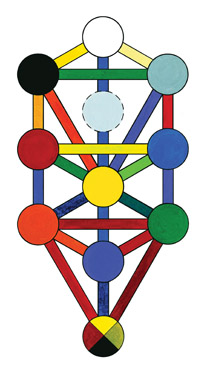
In the diagram of the Tree of Life (page 16) – the traditional esoteric geometric representation of the mystic totality of existence – the Sun is the number six, the Sephira, or sphere, of Tiphareth, Beauty. Tiphareth stands in the balance, midway between the topmost sphere of Kether, the Crown – the Point, the first manifestation of the Infinite – and the bottom sphere of Malkuth, the Kingdom – the world of three-dimensional physical reality in which we live. Tiphareth occupies the central of the three pillars of the Tree of Life, the Middle Pillar, surrounded on either side by the Pillars of Mercy and Severity.
As the Sun is Tiphareth, the number six, its geometrical figure is the hexagram. The hexagram further exemplifies the nature of the Sun as intercessor or balance point between above and below, heaven and earth, God and man. The hexagram is formed by the union of the ascending male triangle of Fire, and the descending female triangle of Water. The number six, or hexad, was called “the Perfection of Parts” by Pythagoras. This reminds us that Tiphareth (Beauty) is the sphere of Harmony. And harmony is produced by the joining together of distinct, and, in some cases, discordant elements, to produce a unified and aesthetically pleasing whole. Pythagoras observed that the number six is the first mixture of odd and even, being the multiplication of two by three. The Pythagoreans designated odd numbers as male, and even numbers as female. Thus, we are reminded once again that the number six and the hexagram represent the union of male and female, the harmony upon which all creation relies.
The Sun’s metal is gold, the luminous and most beautiful of all, whose value has been an unchanging indicator of wealth and a medium of exchange for millennia. A visit to any fine Egyptian collection, in either a museum or the pages of a book, will show the prominence of gold as the chosen metal of pharaonic iconography and architecture. Similarly, gold was the metal chosen for most of the ritual implements in the Temple of Solomon. It was also used to cover the sacred Ark of the Covenant. Medieval and Renaissance Europe used gold liberally in churches, shrines, and palaces, as did the Aztec, Mayan, Indian, and Chinese royalty and priesthood. Gold is the ultimate symbol of the perfection reached by the alchemist – who removes in countless stages the myriad of impurities that make up lead, and allows for its transformation and refinement into the king of metals.
In the body, the Sun is the heart, symbolically the single most important organ. The heart is the central pumping station of the blood, the essence of life. All survival and health depend on its regular and consistent motion. Long regarded as the seat of courage, the heart was torn from the chest of enemies and eaten by ancient warriors, that they might increase their own strength by ingesting the essence of worthy opponents. Colloquially we speak of a person “with heart” to describe the motivation and self-discipline necessary to pursue a course of success in life. The heart denotes sincerity, the appreciation of the essence of the self in action. It is also the symbolic seat of love, the motivating force that sustains the world through generation.
Among the parts of the Soul in the Qabalah, the Sun is one of six of the ten Sephiroth that compose the intellect, known as theRuach. Here again, the Sun acts as an intercessor between the higher levels of the soul (the Self, Life Force, and Intuition) and its lowest aspect (the Animal Soul of Nature). The Intellect weighs and analyses, decides on the appropriate response to stimulation from above and below. It acts as the mediator between “heaven” and “earth.”
On the level of spiritual experience, the Sun is a symbol of the magical virtue of Devotion to the Great Work, the path by which an aspirant may reach the heights of spiritual potential. The stage of initiation represented by Tiphareth, the sphere of the Sun, is known as the Knowledge and Conversation of the Holy Guardian Angel. This may loosely be understood as the point at which the upward motion of the soul is met with a profound response from the higher reaches of Divinity. A direct interaction occurs in the consciousness of the aspirant that allows for an understanding of one’s continuing mission, the reality of one’s faith in the quest, and the nature of the tasks and obligations under which one is to continue. Such an interaction is a perfect expression of the symbol set we began exploring with the Circle.

The Moon

In order to balance this Solar meditation, let us now turn to the Moon. She is represented by various glyphs in the astrological alphabet because of the several stages of her passage during the twenty-eight days of the lunar cycle from New to Full Moon. However the Crescent is the Moon’s standard astrological symbol.
The Moon is the unconscious self. It represents the hidden parts of the psyche from which spring moods, emotions, dreams, and intuition. The depths of the soul are the very realm of images. The unconscious mind is the wellspring of magic and witchcraft – in which the hidden forces of nature are brought into operation by direct appeal from the hidden forces of the self. (On a practical level, to access such deeper levels of consciousness, the rational intellect must be enlisted to help strategise a means to bypass itself.) The Moon is the symbol of universality, the collective unconscious, the pleroma, wherein the individual self is united with the universal life stream.
The Moon traditionally represents the Goddess, the complement of the solar male deity. In Egypt, she is Isis, the Enchantress. Isis is a complex deity who is identified as the mate of both Ra and Osiris, Lord of the Underworld. She is variously known as the daughter and mistress of Ra, and wife and sister of Osiris. (Osiris may be considered the nocturnal aspect of Ra – the Sun god beneath the horizon, Lord of the realm of death. Symbols, as the reader may have noticed, tend to run together. Their fluidity and tendency toward transmutation are among their lessons.)
The Moon is further identified with goddesses such as Persephone, whose tenure in the Underworld is balanced by her time on earth. Diana, the beautiful virgin goddess of the hunt, is another lunar archetype, as is Mary, Athene, Vesta, Kuan Yin, Astarte, Inanna, and Kali. The symbols of the Moon and Venus run in close parallel (as do those of the Sun and Mars), so one can easily include Hathor, Venus, and Aphrodite, as well as darker feminine archetypes such as Lilith, Ereshkigal, Hecate, and Ashtoreth.
Like the phases of the Moon, the Female archetype is intimately associated with time and the rhythms of life – from the tidal patterns of the ocean to the menstrual cycle. The natural threefold aspect of the feminine archetype is traditionally associated with menstruation: the virginal youth, wife and mother, and crone. Many calendars are lunar-based, among them the Jewish and Muslim calendars in use today.
The Moon is a symbol of fecundity in her identification with the Woman, the ark of life sailing through the seas of time. Moon cycles also regulate planting and harvesting, and thus she is identified with nourishment and sustenance.
On a physical level, the Moon reflects the light of the Sun at night. It is described as a “dead” planet, that is, one without a measurable active core. While these facts are aspects of the feminine archetype, particularly that of the Hag or Crone phase and the dark side of the witch power, there is a great deal more to consider. The Moon is the nocturnal complement of the Sun. How she illuminates the night may be of less immediate importance than the fact that she does. Walking through the countryside by the light of the Moon, it matters little whether the light that guides us is reflected or intrinsic.
On the Tree of Life, the Moon is Yesod, the Foundation, the ninth Sephira. Yesod is also located on the Middle Pillar, directly below Tiphareth, and directly above the physical world of Malkuth, the tenth Sephira. Yesod completes the geometric symmetry of the preceding Sephiroth, while Malkuth hangs like a pendant from the Tree.
Yesod is the world of images and ideas (angels) just prior to their incarnation in the matter and form of Malkuth. The Moon is of the Formative World, Yetzirah, the realm of causes behind the veil of physical life, the astral plane whose vibratory undulations inform the world of substance.
Yesod is the number nine, the number of months of pregnancy. Reducible to three, nine is the first square of an odd number. (Three is “the first and proper joining together of unities,” that is, it is the extension from Point, to Line, to Plane, self-contained in and of itself.) Nine was called “Ocean” or “Horizon” by the Pythagoreans because it is the height of numbers: to go further to ten is only a return to one. Nine is the natural limit of number.
The Moon’s metal is silver, the other traditional coin of the realm, defender of value, medium of exchange, and symbol of the beauty of the mineral world – shining and luminous, of pure composition.
In the body, the Moon is the genitals, the organs of generation, and the sensual, instinctive, insistent fire of those passions on which lives and kingdoms are both built and destroyed. An unruly world of excess which may be channelled through initiation to become the engine of manifestation and great power.
On the level of spiritual experience, the Moon is associated with the magical virtue of Independence. How interesting that after discussing her universality and identity with the unconscious mind – as well as the characterisation of the Moon as “the reflection” of the Sun – she would be identified with Independence. Perhaps the lesson here is that as Yesod is the Foundation, the Work can only take place within the individual. We must learn to separate the many strands of inherited and environmental tendencies in order to uncover our true and unique natures.
While we have explored several aspects of these two important symbols, we have only touched the surface. It would be possible to write volumes on the archetypal symbolism of the Sun and Moon. By looking at the teachings implicit in the Circle and Crescent, we have entered a world, nay a universe, of magic, astrology, mythology, religion, morality, psychology, astronomy, biology, physics, and history. Most importantly, we have glimpsed a path by which men and women may achieve the ultimate goals of our lives – spiritual attainment, universal consciousness, oneness with God, and the accomplishment of the Great Work.
Pedestrians may still safely cross the street in obedience to lights flashing with signs of upraised hands or stick figures in motion. Let us conduct our own ascent to the cosmic reaches of Eternity through the sacred symbols of Initiation.

.

JAMES WASSERMAN is a lifelong student of esotericism. His writings include The Mystery Traditions: Secret Symbols and Sacred Art; Aleister Crowley and the Practice of the Magical Diary; An Illustrated History of the Knights Templar; Secret Societies: Illuminati, Freemasons, and the French Revolution; and The Secrets of Masonic Washington: Signs, Symbols, and Ceremonies at the Origin of America’s Capital. His Chronicle Books edition of The Egyptian Book of the Dead: The Book of Going Forth by Day features the full-color Papyrus of Ani with integrated English translation. The Templars and the Assassins: The Militia of Heavenhas thus far been published in six languages. His controversial The Slaves Shall Serve: Meditations on Libertydefines political freedom as a spiritual value. James and his wife Nancy launched The Weiser Concise Guides, a series of books on basic occultism. You can find him online at www.studio31.com orwww.jameswassermanbooks.com. He lives in New York City with his wife Nancy.
The above article appeared in New Dawn No. 116 (Sept-Oct 2009).

Friday, June 4, 2010

Mind Control Theories and Techniques used by Mass Media


Mind Control Theories and Techniques used by Mass Media

Apr 28th, 2010 | By Vigilant | Category: Vigilant Reports - http://vigilantcitizen.com/?p=3571
Mass media is the most powerful tool used by the ruling class to manipulate the masses. It shapes and molds opinions and attitudes and defines what is normal and acceptable. This article looks at the workings of mass media through the theories of its major thinkers, its power structure and the techniques it uses, in order to understand its true role in society.

Most of the articles on this site discuss occult symbolism found in objects of popular culture. From these articles arise many legitimate questions relating to the purpose of those symbols and the motivations of those who place them there, but it is impossible for me to provide satisfactory answers to these questions without mentioning many other concepts and facts. I’ve therefore decided to write this article to supply the theoretical and methodological background of the analyzes presented on this site as well as introducing the main scholars of the field of mass communications. Some people read my articles and think I’m saying “Lady Gaga wants to control our minds”. That is not the case. She is simply a small part of the huge system that is the mass media.

Programming Through Mass Media

Mass media are media forms designed to reach the largest audience possible. They include television, movies, radio, newspapers, magazines, books, records, video games and the internet. Many studies have been conducted in the past century to measure the effects of mass media on the population in order to discover the best techniques to influence it. From those studies emerged the science of Communications, which is used in marketing, public relations and politics. Mass communication is a necessary tool the insure the functionality of a large democracy; it is also a necessary tool for a dictatorship. It all depends on its usage.
In the 1958 preface for A Brave New World, Aldous Huxley paints a rather grim portrait of society. He believes it is controlled by an “impersonal force”, a ruling elite, which manipulates the population using various methods.
“Impersonal forces over which we have almost no control seem to be pushing us all in the direction of the Brave New Worldian nightmare; and this impersonal pushing is being consciously accelerated by representatives of commercial and political organizations who have developed a number of new techniques for manipulating, in the interest of some minority, the thoughts and feelings of the masses.”
- Aldous Huxley, Preface to A Brave New World
His bleak outlook is not a simple hypothesis or a paranoid delusion. It is a documented fact, present in the world’s most important studies on mass media. Here are some of them:

Elite Thinkers

WALTER LIPPMANN

Walter Lippmann, an American intellectual, writer and two-time Pulitzer Prize winner brought forth one of the first works concerning the usage of mass media in America. In Public Opinion (1922), Lippmann compared the masses to a “great beast” and a “bewildered herd” that needed to be guided by a governing class. He described the ruling elite as “a specialized class whose interests reach beyond the locality.” This class is composed of experts, specialists and bureaucrats. According to Lippmann, the experts, who often are referred to as “elites,” are to be a machinery of knowledge that circumvents the primary defect of democracy, the impossible ideal of the “omnicompetent citizen.” The trampling and roaring “bewildered herd” has its function: to be “the interested spectators of action,” i.e. not participants. Participation is the duty of “the responsible man”, which is not the regular citizen.
Mass media and propaganda are therefore tools that must be used by the elite to rule the public without physical coercion. One important concept presented by Lippmann is the “manufacture of consent”, which is, in short, the manipulation of public opinion to accept the elite’s agenda. It is Lippmann’s opinion that the general public is not qualified to reason and to decide on important issues. It is therefore important for the elite to decide ”for its own good” and then sell those decisions to the masses.
“That the manufacture of consent is capable of great refinements no one, I think, denies. The process by which public opinions arise is certainly no less intricate than it has appeared in these pages, and the opportunities for manipulation open to anyone who understands the process are plain enough. . . . as a result of psychological research, coupled with the modern means of communication, the practice of democracy has turned a corner. A revolution is taking place, infinitely more significant than any shifting of economic power. . . . Under the impact of propaganda, not necessarily in the sinister meaning of the word alone, the old constants of our thinking have become variables. It is no longer possible, for example, to believe in the original dogma of democracy; that the knowledge needed for the management of human affairs comes up spontaneously from the human heart. Where we act on that theory we expose ourselves to self-deception, and to forms of persuasion that we cannot verify. It has been demonstrated that we cannot rely upon intuition, conscience, or the accidents of casual opinion if we are to deal with the world beyond our reach.”–Walter Lippmann, Public Opinion
It might be interesting to note that Lippmann is one of the founding fathers of the Council on Foreign Relations (CFR), the most influential foreign policy think tank in the world. This fact should give you a small hint of the mind state of the elite concerning the usage of media.
“Political and economic power in the United States is concentrated in the hands of a “ruling elite” that controls most of U.S.-based multinational corporations, major communication media, the most influential foundations, major private universities and most public utilities. Founded in 1921, the Council of Foreign Relations is the key link between the large corporations and the federal government. It has been called a “school for statesmen” and “comes close to being an organ of what C. Wright Mills has called the Power Elite – a group of men, similar in interest and outlook shaping events from invulnerable positions behind the scenes. The creation of the United Nations was a Council project, as well as the International Monetary Fund and the World Bank.”
- Steve Jacobson, Mind Control in the United States
Some current members of the CFR include David Rockefeller, Dick Cheney, Barack Obama, Hilary Clinton, mega-church pastor Rick Warren and the CEOs of major corporations such as CBS, Nike, Coca-Cola and Visa.

CARL JUNG

Carl Jung is the founder of analytical psychology (also known an Jungian psychology), which emphasizes understanding the psyche by exploring dreams, art, mythology, religion, symbols and philosophy. The Swiss therapist is at the origin of many psychological concepts used today such as the Archetype, the Complex, the Persona, the Introvert/Extrovert and Synchronicity. He was highly influenced by the occult background of his family. Carl Gustav, his grandfather, was an avid Freemason (he was Grand Master) and Jung himself discovered that some of his ancestors were Rosicrucians. This might explain his great interest in Eastern and Western philosophy, alchemy, astrology and symbolism. One of  his most important (and misunderstood) concept was the Collective Unconscious.
“My thesis, then, is as follows: In addition to our immediate consciousness, which is of a thoroughly personal nature and which we believe to be the only empirical psyche (even if we tack on the personal unconscious as an appendix), there exists a second psychic system of a collective, universal, and impersonal nature which is identical in all individuals. This collective unconscious does not develop individually but is inherited. It consists of pre-existent forms, the archetypes, which can only become conscious secondarily and which give definite form to certain psychic contents.”
- Carl Jung, The Concept of the Collective Unconscious
The collective unconscious transpires through the existence of similar symbols and mythological figures in different civilizations. Archetypal symbols seem to be embedded in our collective subconscious, and, when exposed to them, we demonstrate natural attraction and fascination. Occult symbols can therefore exert a great impact on people, even if many individuals were never personally introduced to the symbol’s esoteric meaning. Mass media thinkers, such as Edward D. Bernays, found in this concept a great way to manipulate the public’s personal and collective unconscious.


EDWARD  BERNAYS

Edward Bernays is considered to be the “father of public relations” and used concepts discovered by his uncle Sigmund Freud to manipulate the public using the subconscious. He shared Walter Lippmann’s view of the general population by considering it irrational and subject to the “herd instinct”. In his opinion, the masses need to be manipulated by an invisible government to insure the survival of democracy.
“The conscious and intelligent manipulation of the organized habits and opinions of the masses is an important element in democratic society. Those who manipulate this unseen mechanism of society constitute an invisible government which is the true ruling power of our country.
We are governed, our minds are molded, our tastes formed, our ideas suggested, largely by men we have never heard of. This is a logical result of the way in which our democratic society is organized. Vast numbers of human beings must cooperate in this manner if they are to live together as a smoothly functioning society.
Our invisible governors are, in many cases, unaware of the identity of their fellow members in the inner cabinet.”
- Edward Bernays, Propaganda
Bernay’s trailblazing marketing campaigns profoundly changed the functioning of American society. He basically created “consumerism” by creating a culture wherein Americans bought for pleasure instead of buying for survival. For this reason, he was considered by Life Magazine to be in the Top 100 most influential Americans of the 20th century.

HAROLD LASSWELL

In 1939-1940, the University of Chicago was the host of a series of secret seminars on communications. These think tanks were funded by the Rockefeller foundation and involved the most prominent researchers in the fields of communications and sociological studies. One of these scholars was Harold Lasswell, a leading American political scientist and communications theorist, specializing in the analysis of propaganda. He was also of the opinion that a democracy, a government ruled by the people, could not sustain itself without a specialized elite shaping and molding public opinion through propaganda.
In his Encyclopaedia of the Social Sciences, Lasswell explained that when elites lack the requisite force to compel obedience, social managers must turn to “a whole new technique of control, largely through propaganda.” He added the conventional justification: we must recognize the “ignorance and stupidity [of] … the masses and not succumb to democratic dogmatisms about men being the best judges of their own interests.”
Lasswell extensively studied the field of content analysis in order to understand the effectiveness of different types of propaganda.  In his essay Contents of Communication, Lasswell explained that, in order to understand the meaning of a message (i.e. a movie, a speech, a book, etc.), one should take into account the frequency with which certain symbols appear in the message, the direction in which the symbols try to persuade the audience’s opinion, and the intensity of the symbols used.
Lasswell was famous for his media analysis model based on:
Who (says) What (to) Whom (in) What Channel (with) What Effect
By this model, Lasswell indicates that in order to properly analyze a media product, one must look at who produced the product (the people who ordered its creation),  who was it aimed at (the target audience) andwhat were the desired effects of this product (to inform, to convince, to sell, etc.) on the audience.
Using a Rihanna video as an example, the analysis would be as follows: WHO PRODUCED: Vivendi Universal; WHAT: pop artist Rihanna; TO WHOM: consumers between the ages of 9 and 25; WHAT CHANNEL: music video; and WHAT EFFECT: selling the artist, her song, her image and her message.
The analyzes of videos and movies on The Vigilant Citizen place a great importance on the “who is behind” the messages communicated to the public. The term “Illuminati” is often used to describe this small elite group covertly ruling the masses. Although the term sounds quite caricatured and conspiratorial, it aptly describes the elite’s affinities with secret societies and occult knowledge. However, I personally detest using the term “conspiracy theory” to describe what is happening in the mass media. If all the facts concerning the elitist nature of the industry are readily available to the public, can it still be considered a  “conspiracy theory”?
There used to be a variety of viewpoints, ideas and opinions in popular culture. The consolidation of media corporations has, however, produced a standardization of the cultural industry. Ever wondered why all recent music sounds the same and all recent movies look the same? The following is part of the answer:

Media Ownership

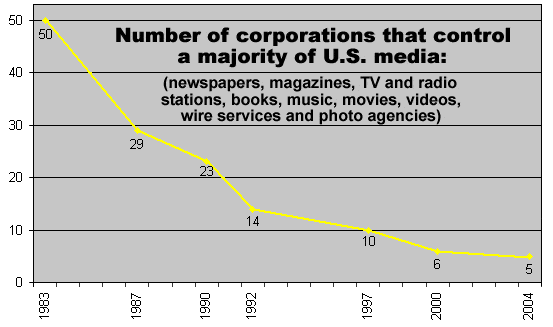
As depicted in the graph above, the number of corporations owning the majority of U.S. media outlets went from 50 to 5 in less than 20 years. Here are the top corporations evolving around the world and the assets they own.
“A list of the properties controlled by AOL Time Warner takes ten typed pages listing 292 separate companies and subsidiaries. Of these, twenty-two are joint ventures with other major corporations involved in varying degrees with media operations. These partners include 3Com, eBay, Hewlett-Packard, Citigroup, Ticketmaster, American Express, Homestore, Sony, Viva, Bertelsmann, Polygram, and Amazon.com. Some of the more familiar fully owned properties of Time Warner include Book-of-the-Month Club; Little, Brown publishers; HBO, with its seven channels; CNN; seven specialized and foreign-language channels; Road Runner; Warner Brothers Studios; Weight Watchers; Popular Science; and fifty-two different record labels.”- Ben Bagdikan, The New Media Monopoly
AOL Time Warner owns:
  • 64 magazines, including Time, Life, People, MAD Magazine and DC Comics
  • Warner Bros, New Line and Fine Line Features in cinema
  • More than 40 music labels including Warner Bros, Atlantic and Elektra
  • Many television networks such as WB Networks, HBO, Cinemax, TNT, Cartoon Network and CNN
  • Madonna, Sean Paul, The White Stripes
Viacom owns:
  • CBS, MTV, MTV2, UPN, VH1, Showtime, Nickelodeon, Comedy Central, TNN, CMT and BET
  • Paramount Pictures, Nickelodeon Movies, MTV Films
  • Blockbuster Videos
  • 1800 screens in theaters through Famous Players
“Disney ownership of a hockey team called The Mighty Ducks of Anaheim does not begin to describe the vastness of the kingdom. Hollywood is still its symbolic heart, with eight movie production studios and distributors: Walt Disney Pictures, Touchstone Pictures, Miramax, Buena Vista Home Video, Buena Vista Home Entertainment, Buena Vista International, Hollywood Pictures, and Caravan Pictures.
The Walt Disney Company controls eight book house imprints under Walt Disney Company Book Publishing and ABC Publishing Group; seventeen magazines; the ABC Television Network, with ten owned and operated stations of its own including in the five top markets; thirty radio stations, including all the major markets; eleven cable channels, including Disney, ESPN (jointly), A&E, and the History Channel; thirteen international broadcast channels stretching from Australia to Brazil; seven production and sports units around the world; and seventeen Internet sites, including the ABC group, ESPN.sportszone, NFL.com, NBAZ.com, and NASCAR.com. Its five music groups include the Buena Vista, Lyric Street, and Walt Disney labels, and live theater productions growing out of the movies The Lion King, Beauty and the Beast, and King David.”
- Ibid
The Walt Disney Company owns:
  • ABC, Disney Channel, ESPN, A&E, History Channel
  • Walt Disney Pictures, Touchstone Pictures, Hollywood Pictures, Miramax Film Corp., Dimension andBuena Vista International
  • Miley Cyrus/ Hannah Montana, Selena Gomez, Jonas Brothers
Vivendi Universal owns:
  • 27% of US music sales, labels include: Interscope, Geffen, A&M, Island, Def Jam, MCA, Mercury, Motown and Universal
  • Universal Studios, Studio Canal, Polygram Films, Canal +
  • Numerous internet and cell phone companies
  • Lady Gaga, The Black Eyed Peas, Lil Wayne, Rihanna, Mariah Carey, Jay-Z
Sony owns:
  • Columbia Pictures, Screen Gems, Sony Pictures Classics
  • 15% of US Music sales, labels include Columbia, Epic, Sony, Arista, Jive and RCA Records
  • Beyonce, Shakira, Michael Jackson, Alicia Keys, Christina Aguilera
A limited number of actors in the cultural industry means a limited amount of viewpoints and ideas making their way to the general public. It also means that a single message can easily saturate all forms of media to generate consent (i.e. “there are weapons of mass destruction in Iraq”).
The Standardization of Human Thought
The merger of media companies in the last decades generated a small oligarchy of media conglomerates. The TV shows we follow, the music we listen to, the movies we watch and the newspapers we read are all produced by FIVE corporations. The owners of those conglomerates have close ties with the world’s elite and, in many ways, they ARE the elite. By owning all of the possible outlets having the potential to reach the masses, these conglomerates have the power to create in the minds of the people a single and cohesive world view, engendering a “standardization of human thought”.
Even movements or styles that are considered marginal are, in fact, extensions of mainstream thinking. Mass medias produce their own rebels who definitely look the part but are still part of the establishment and do not question any of it. Artists, creations and ideas that do not fit the mainstream way of thinking are mercilessly rejected and forgotten by the conglomerates, which in turn makes them virtually disappear from society itself. However, ideas that are deemed to be valid and desirable to be accepted by society are skillfully marketed to the masses in order to make them become self-evident norm.
In 1928, Edward Bernays already saw the immense potential of motion pictures to standardize thought:
“The American motion picture is the greatest unconscious carrier of propaganda in the world today. It is a great distributor for ideas and opinions. The motion picture can standardize the ideas and habits of a nation. Because pictures are made to meet market demands, they reflect, emphasize and even exaggerate broad popular tendencies, rather than stimulate new ideas and opinions. The motion picture avails itself only of ideas and facts which are in vogue. As the newspaper seeks to purvey news, it seeks to purvey entertainment.”
– Edward Bernays, Propaganda
These facts were flagged as dangers to human freedom in the 1930’s by thinkers of the school of Frankfurt such as Theodor Adorno and Herbert Marcuse. They identified three main problems with the cultural industry. The industry can:
  1. reduce human beings to the state of mass by hindering the development of emancipated individuals, who are capable of making rational decisions;
  2. replace the legitimate drive for autonomy and self-awareness by the safe laziness of conformism and passivity; and
  3. validate the idea that men actually seek to escape the absurd and cruel world in which they live by losing themselves in a hypnotic state self-satisfaction.
The notion of escapism is even more relevant today with advent of online video games, 3D movies and home theaters. The masses, constantly seeking state-of-the-art entertainment, will resort to high-budget products that can only be produced by the biggest media corporations of the world. These products contain carefully calculated messages and symbols which are nothing more and nothing less than entertaining propaganda. The public have been trained to LOVE its propaganda to the extent that it spends its hard-earned money to be exposed to it. Propaganda (used in both political, cultural and commercial sense) is no longer the coercive or authoritative communication form found in dictatorships: it has become the synonym of entertainment and pleasure.
“In regard to propaganda the early advocates of universal literacy and a free press envisaged only two possibilities: the propaganda might be true, or it might be false. They did not foresee what in fact has happened, above all in our Western capitalist democracies — the development of a vast mass communications industry, concerned in the main neither with the true nor the false, but with the unreal, the more or less totally irrelevant. In a word, they failed to take into account man’s almost infinite appetite for distractions.”
– Aldous Huxley, Preface to A Brave New World
A single piece of media often does not have a lasting effect on the human psyche. Mass media, however, by its omnipresent nature, creates a living environment we evolve in on a daily basis. It defines the norm and excludes the undesirable. The same way carriage horses wear blinders so they can only see what is right in front of them, the masses can only see where they are supposed to go.
“It is the emergence of mass media which makes possible the use of propaganda techniques on a societal scale. The orchestration of press, radio and television to create a continuous, lasting and total environment renders the influence of propaganda virtually unnoticed precisely because it creates a constant environment. Mass media provides the essential link between the individual and the demands of the technological society.”
– Jacques Ellul
One of the reasons mass media successfully influences society is due to the extensive amount of research on cognitive sciences and human nature that has been applied to it.

Manipulation Techniques

“Publicity is the deliberate attempt to manage the public’s perception of a subject. The subjects of publicity include people (for example, politicians and performing artists), goods and services, organizations of all kinds, and works of art or entertainment.”
The drive to sell products and ideas to the masses has lead to an unprecedented amount of research on human behavior and on the human psyche. Cognitive sciences, psychology, sociology, semiotics, linguistics and other related fields were and still are extensively researched through well-funded studies.
“No group of sociologists can approximate the ad teams in the gathering and processing of exploitable social data. The ad teams have billions to spend annually on research and testing of reactions, and their products are magnificent accumulations of material about the shared experience and feelings of the entire community.”
- Marshal McLuhan, The Extensions of Man
The results of those studies are applied to advertisements, movies, music videos and other media in order to make them as influential as possible. The art of marketing is highly calculated and scientific because it must reach both the individual and the collective consciousness. In high-budget cultural products, a video is never “just a video,” Images, symbols and meanings are strategically placed in order to generate a desired effect.
“It is with knowledge of the human being, his tendencies, his desires, his needs, his psychic mechanisms, his automatisms as well as knowledge of social psychology and analytical psychology that propaganda refines its techniques.”
– Propagandes, Jacques Ellul (free translation)
Today’s propaganda almost never uses rational or logical arguments. It directly taps into a human’s most primal needs and instincts in order to generate an emotional and irrational response. If we always thought rationally, we probably wouldn’t buy 50% of what we own. Babies and children are constantly found in advertisements targeting women for a specific reason: studies have shown that images of children trigger in women an instinctual need to nurture, to care and to protect, ultimately leading to a sympathetic bias towards the advertisement.
.


Strange old 7up ad using the cuteness of babies
Sex is ubiquitous in mass media, as it draws and keeps the viewer’s attention. It directly connects to our animal need to breed and to reproduce, and, when triggered, this instinct can instantly overshadow any other rational thoughts in our brain.

Subliminal Perception

What if the messages described above were able to reach directly the viewers’ subconscious mind, without the viewers even realizing what is happening? That is the goal of subliminal perception. The phrase subliminal advertising was coined in 1957 by the US market researcher James Vicary, who said he could get moviegoers to “drink Coca-Cola” and “eat popcorn” by flashing those messages onscreen for such a short time that viewers were unaware.
“Subliminal perception is a deliberate process created by communications technicians, by which you receive and respond to information and instructions without being consciously aware of the instructions”
– Steve Jacobson, Mind Control in the United States
This technique is often used in marketing and we all know that sex sells.
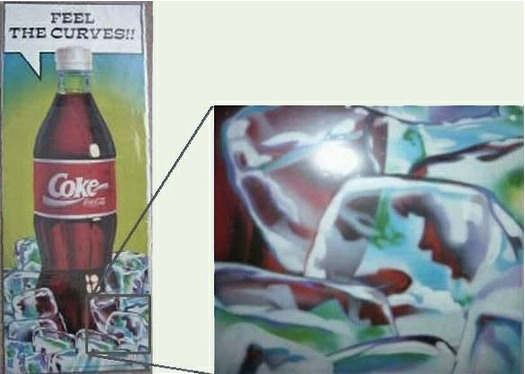
Although some sources claim that subliminal advertising is ineffective or even an urban myth, the documented usage of this technique in mass media proves that creators believe in its powers. Recent studies have also proven its effectiveness, especially when the message is negative.
” A team from University College London, funded by the Wellcome Trust, found that it [subliminal perception] was particularly good at instilling negative thoughts. There has been much speculation about whether people can process emotional information unconsciously, for example pictures, faces and words,” said Professor Nilli Lavie, who led the research. We have shown that people can perceive the emotional value of subliminal messages and have demonstrated conclusively that people are much more attuned to negative words.”
- Source
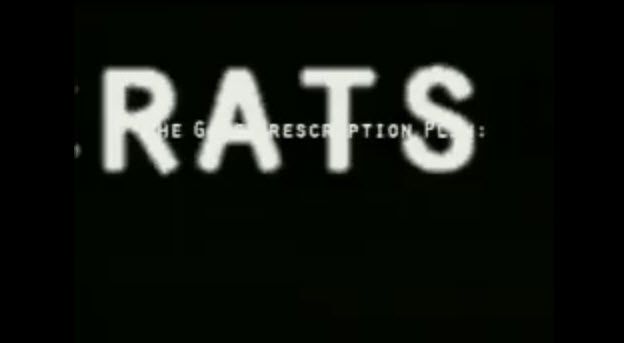
A famous example of subliminal messaging in political communications is in George Bush’s advertisement against Al Gore in 2000.
Right after the name of Gore is mentioned, the ending of the word “bureaucrats” – “rats” – flashes on the screen for a split second.
The discovery of this trickery caused quite a stir and, even if there are no laws against subliminal messaging in the U.S., the advertisement was taken off the air.
As seen in many articles on The Vigilant Citizen, subliminal and semi-subliminal messages are often used in movies and music videos to communicate messages and ideas to the viewers.

Desensitization

In the past, when changes were imposed on populations, they would take to the streets, protest and even riot. The main reason for this clash was due to the fact that the change was clearly announced by the rulers and understood by the population. It was sudden and its effects could clearly be analyzed and evaluated. Today, when the elite needs a part of its agenda to be accepted by the public, it is done through desensitization. The agenda, which might go against the public best interests,  is slowly, gradually and repetitively introduced to the world through movies (by involving it within the plot), music videos (who make it cool and sexy) or the news (who present it as a solution to today’s problems). After several years of exposing the masses to a particular agenda, the elite openly presents the concept the world and, due to mental programming, it is greeted with general indifference and is passively accepted. This technique originates from psychotherapy.
“The techniques of psychotherapy, widely practiced and accepted as a means of curing psychological disorders, are also methods of controlling people. They can be used systematically to influence attitudes and behavior. Systematic desensitization is a method used to dissolve anxiety so the the patient (public) is no longer troubled by a specific fear, a fear of violence for example. [...] People adapt to frightening situations if they are exposed to them enough”.
– Steven Jacobson, Mind Control in the United States
Predictive programming is often found in the science fiction genre. It presents a specific image of the future – the one that is desired by the elite – and ultimately becomes in the minds of men an inevitability. A decade ago, the public was being desensitized to war against the Arab world. Today, the population is gradually being exposed to the existence of mind control, of transhumanism and of an Illuminati elite. Emerging from the shadows, those concepts are now everywhere in popular culture. This is what Alice Bailey describes as the “externalization of the hierarchy”: the hidden rulers slowly revealing themselves.


Occult Symbolism in Pop Culture


Metropolis – a movie by the elite, for the elite?
Contrarily to the information presented above, documentation on occult symbolism is rather hard to find. This should not come as a surprise as the term “occult”, literally means “hidden”. It also means “reserved to those in the know” as it is only communicated to those who are deemed worthy of the knowledge. It is not taught in schools nor is it discussed in the media. It is thus considered marginal or even ridiculous by the general population.
Occult knowledge is NOT, however, considered ridiculous in occult circles. It is considered timeless and sacred. There is a long tradition of hermetic and occult knowledge being  taught through secret societies originating from ancient Egyptians, to Eastern Mystics, to the Knights Templar to modern day Freemasons. Even if the nature and the depth of this knowledge was most probably modified and altered throughout the centuries, mystery schools kept their main features, which are highly symbolic, ritualistic andmetaphysical. Those characteristics, which were an intricate part of ancient civilizations, have totally been evacuated from modern society to be replaced by pragmatic materialism. For this reason, there lies an important gap of understanding between the pragmatic average person and the ritualistic establishment.
“If this inner doctrine were always concealed from the masses, for whom a simpler code had been devised, is it not highly probable that the exponents of every aspect of modern civilization – philosophic, ethical, religious, and scientific-are ignorant of the true meaning of the very theories and tenets on which their beliefs are founded? Do the arts and sciences that the race has inherited from older nations conceal beneath their fair exterior a mystery so great that only the most illumined intellect can grasp its import? Such is undoubtedly the case.”
- Manly P. Hall, Secret Teachings of All Ages
The “simpler code” devised for the masses used to be organized religions. It is now becoming the Temple of the Mass Media and it preaches on a daily basis extreme materialism, spiritual vacuosity and a self-centered, individualistic existence. This is exactly the opposite of the attributes required to become a truly free individual, as taught by all great philosophical schools of thought. Is a dumbed-down population easier to deceive and to manipulate?
“These blind slaves are told they are “free” and “highly educated” even as they march behind signs that would cause any medieval peasant to run screaming away from them in panic-stricken terror. The symbols that modern man embraces with the naive trust of an infant would be tantamount to billboards reading, ‘This way to your death and enslavement,’ to the understanding of the traditional peasant of antiquity”
- Michael A. Hoffman II, Secret Societies and Psychological Warfare

In Conclusion

This article examined the major thinkers in the field of mass media, the media power structure and the techniques used to manipulate the masses. I believe this information is vital to the understanding of  the “why” in the topics discussed on The Vigilant Citizen.  The  “mass population” versus “ruling class” dichotomy described in many articles is not a “conspiracy theory” (again, I hate that term), but a reality that has been clearly stated in the works of some of the 20th century’s most influential men.
Lippmann, Bernays and Lasswell have all declared that the public are not fit to decide their own fate, which is the inherent goal of democracy. Instead, they called for a cryptocracy, a hidden government, a ruling class in charge of the “bewildered herd.” As their ideas continue to be applied to society, it is increasingly apparent that an ignorant population is not an obstacle that the rulers must deal with: It is something that is DESIRABLE and, indeed, necessary, to insure total leadership. An ignorant population does not know its rights, does not seek a greater understanding of issues and does not question authorities. It simply follows trends. Popular culture caters to and nurtures ignorance by continually serving up brain-numbing entertainment and spotlighting degenerate celebrities to be idolized. Many people ask me: “Is there a way to stop this?” Yes, there is. STOP BUYING THEIR CRAP AND READ A BOOK.
“If a nation expects to be ignorant and free, it expects what never was and never will be.”
- Thomas Jefferson

RELATED DOCUMENTATION

 Download “Propaganda” By Edward L. Bernays free E-book in pdf fromknowledgefiles.com