

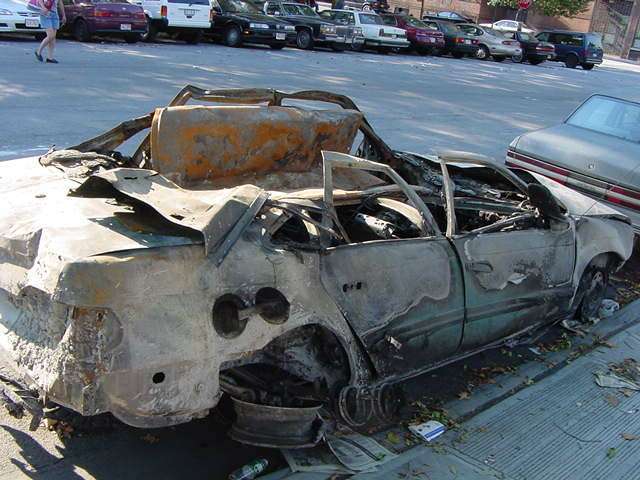
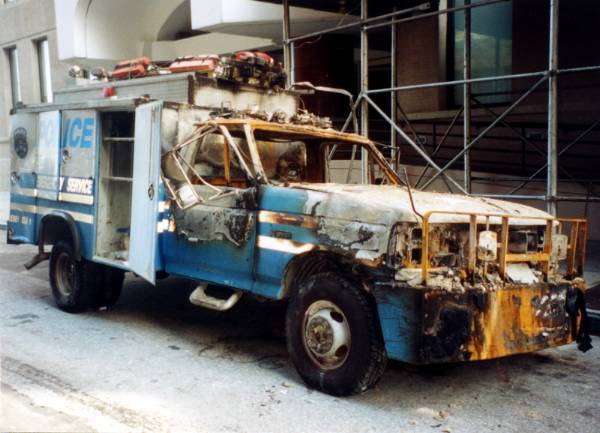
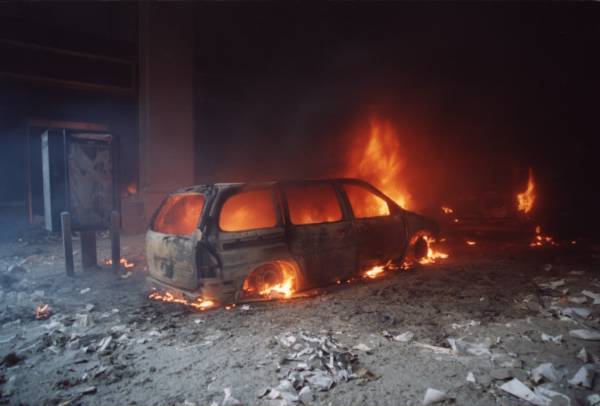
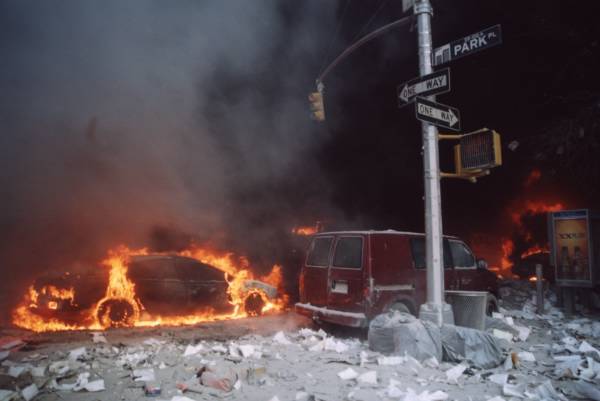
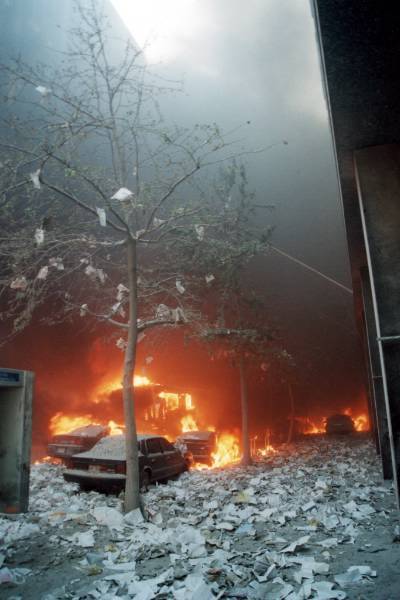
A reported 1400 vehicles were damaged on 9/11. These vehicles had peculiar patterns of damage and some were as far away as FDR Drive (about 7 blocks from the WTC, along the East River). Vehicles had missing door handles for example, windows blown out, window frames deformed, melted engine blocks, steel-belted tires with only the steel belts left, and vehicle front ends destroyed with little or no effect on the back end of the vehicles. What could have caused such extraordinary damage? Portions of cars burned while paper nearby did not.
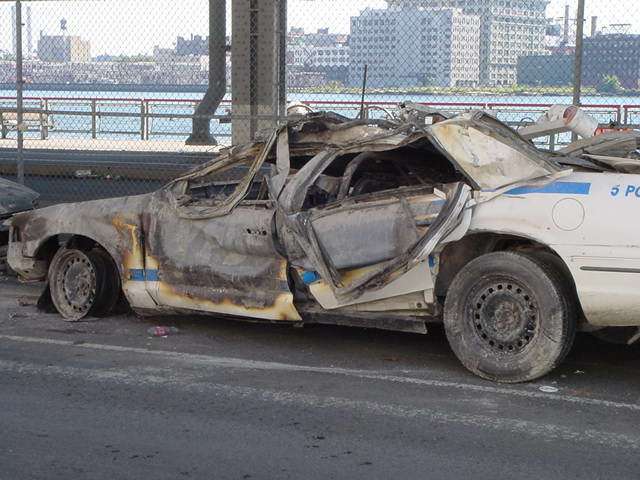 | |
| Figure 64. Peculiar wilting of car doors and deformed window surrounds on FDR Drive. |
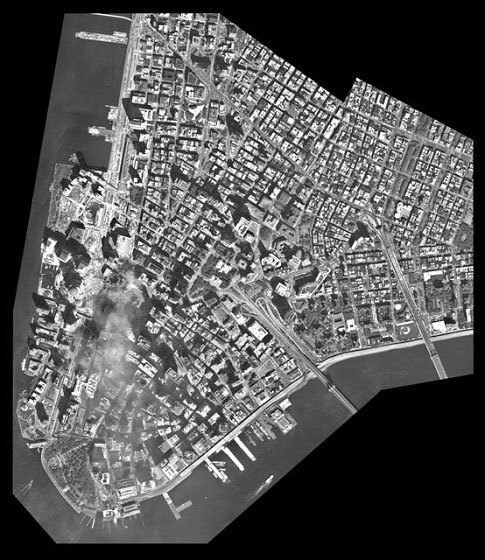 | |
| Figure 65. Map of lower Manhattan shows the WTC and FDR Drive a half mile or more apart. Arial view of lower Manhattan. |
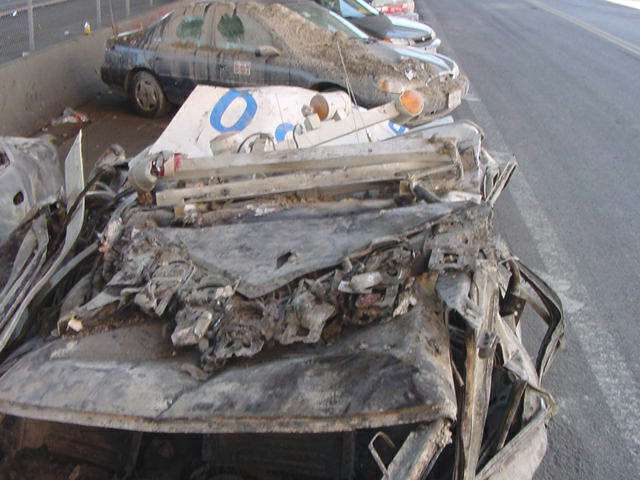
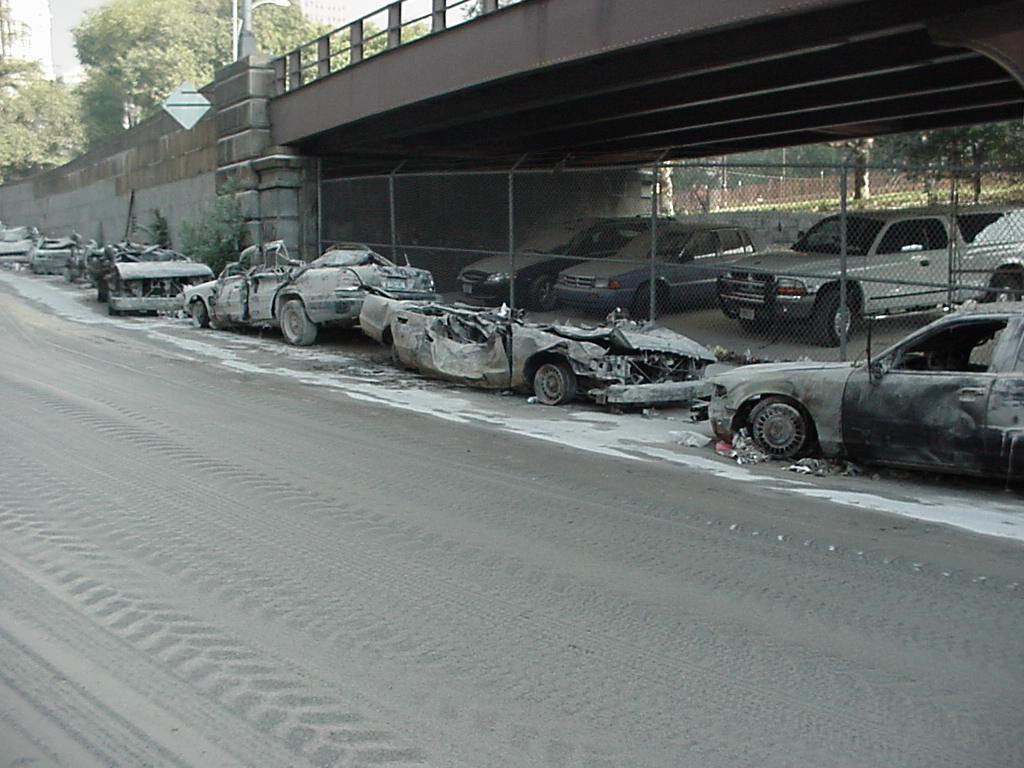
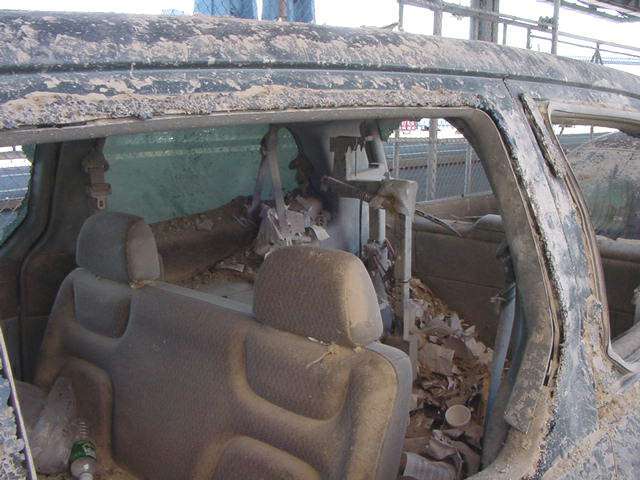
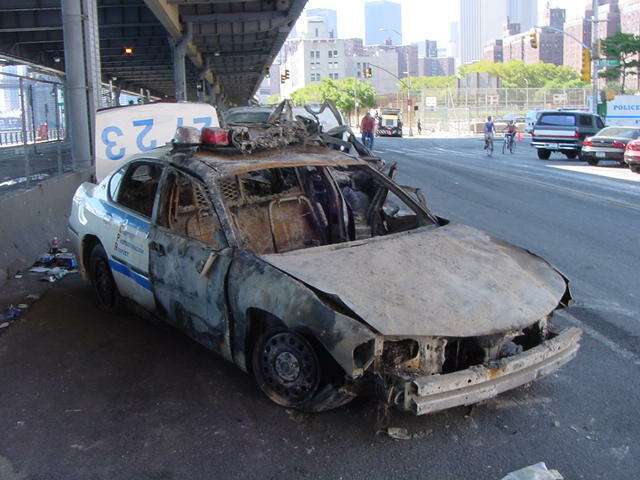
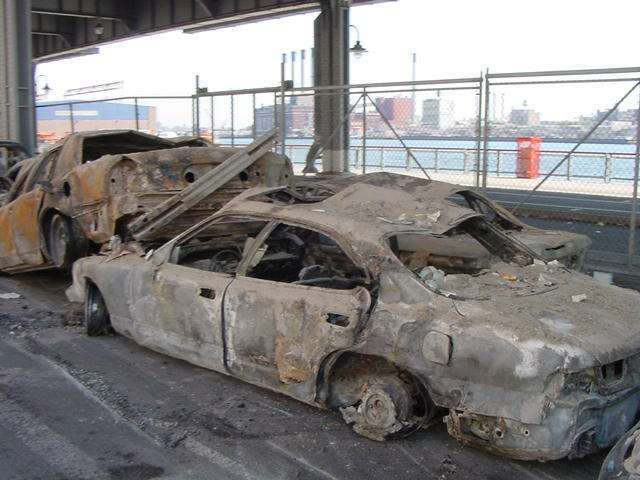
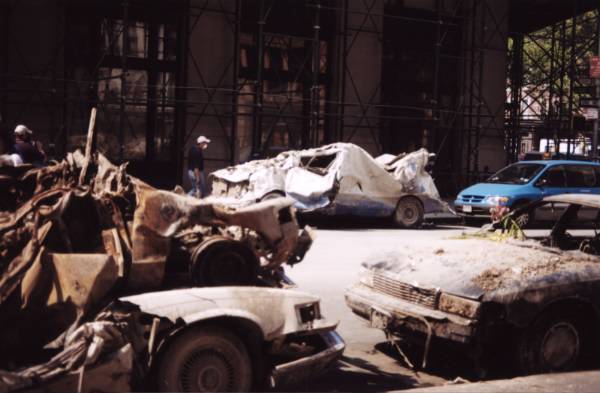
Many vehicles had their outer surface peeled away like a sardine can. In some instances, clearly there is more than peeling paint was involved. It appears that the sheet metal delaminated as though something caused the material to melt or disintegrate at a certain depth. In some cases it appears that there was more heat damage inside than outside and vice versa.
 | 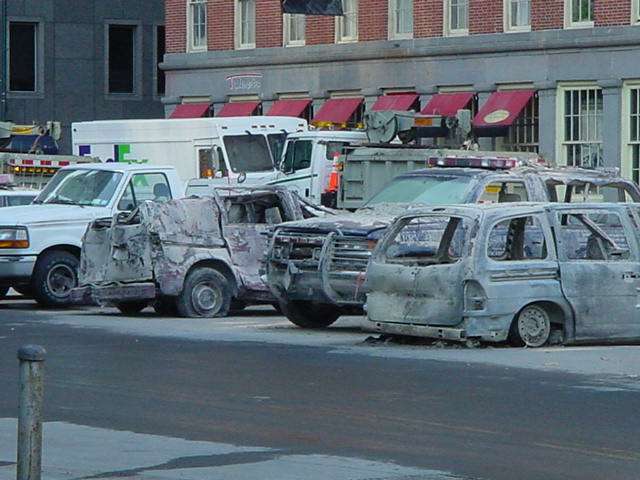 |
| Figure 71. What happened to the axles, wheels, and tires? On the doors, it appears that a heavy layer of paint peeled down from the top, yet the paint on the lower part of the doors has not been peeled away. Wow did the wheel get under the rear suspension? | Figure 72. The car with the flat tire appears to have "wilted" from heat, from the top down, leaving a peeling appearance on the back end. The SUV on its right is missing all its window glass except for the windshield. The vehicle on the far right has no trace of tires, no door handles, no tail lights, and no windows. Why? |
 |  |
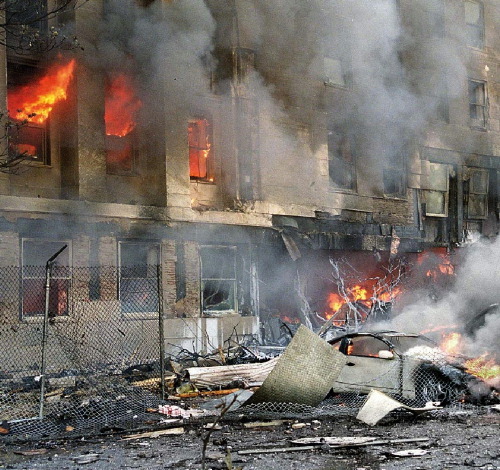 | 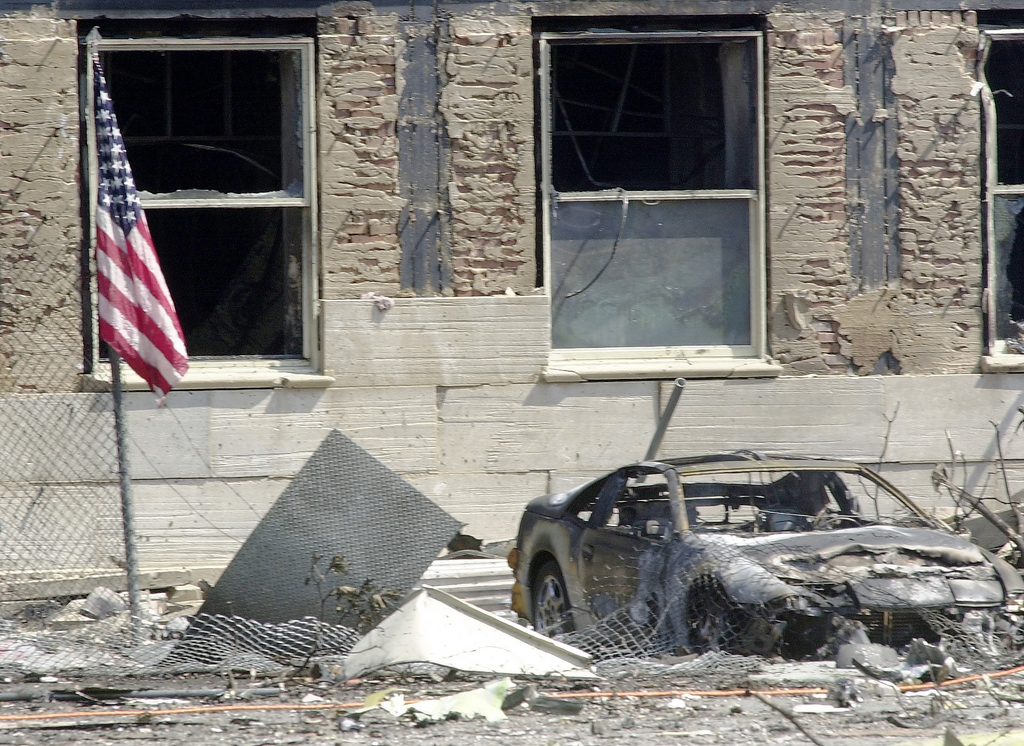 |
| Figure 75. Oddly enough, there were also toasted cars at the Pentagon on 9/11. | Figure 76. This is the same vehicle shown in the previous figure after the fires were extinguished. Why is the passenger door burned? Note how the hood is curled up. |
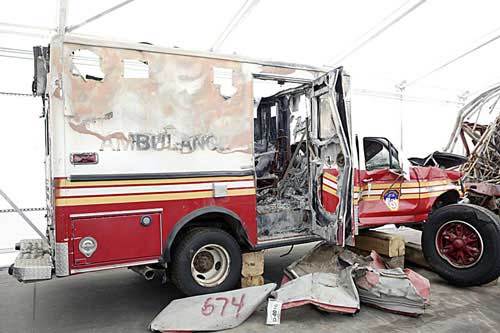
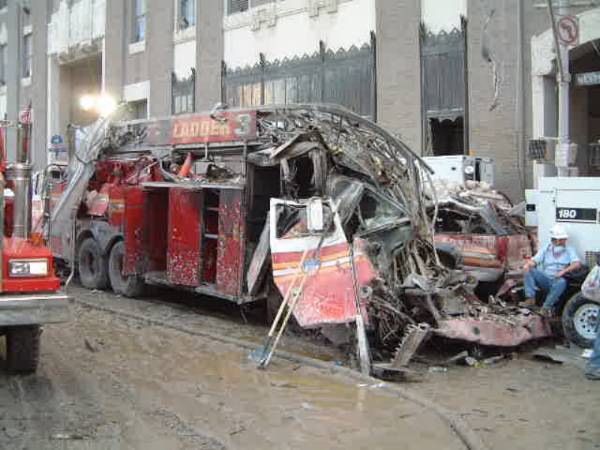
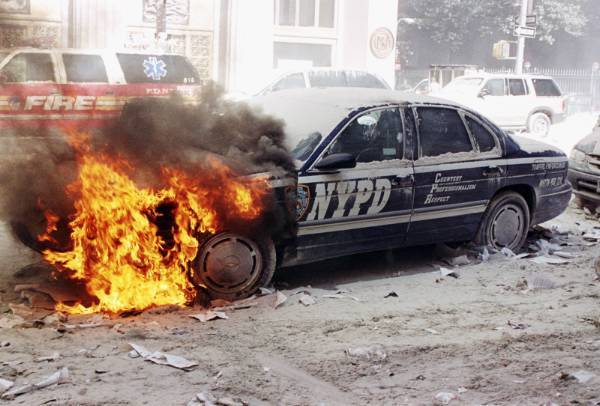
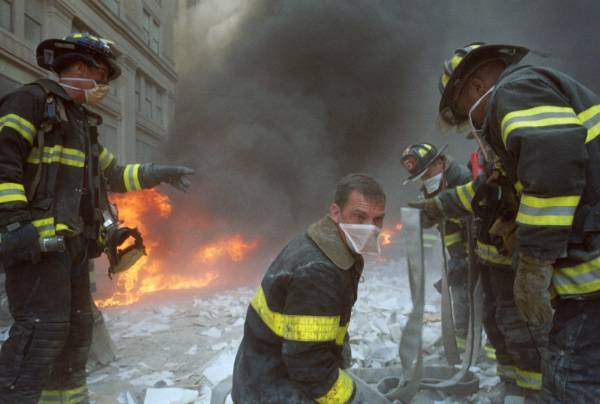
The pictures below document a wide variety of damage to vehicles, including total incineration of vehicles, toasted and disappeared engine blocks, steel-belted tires with no rubber and only steel belts, deformed wheels, missing grills, broken and missing vehicle windows and mirrors, no door handles, wilted doors, and unburned paper next to burning cars.
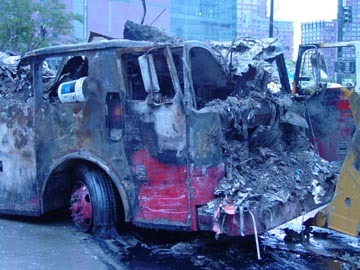 | 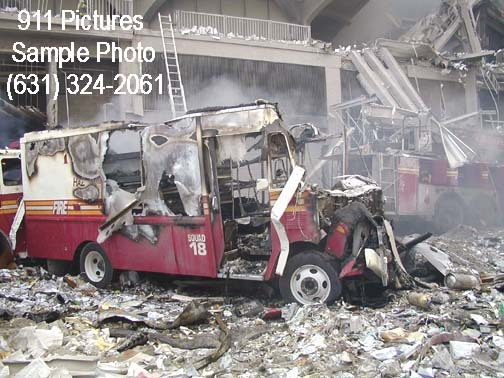 |
| Figure hazmat. A FDMY Hazmat truck in front of WTC6 on West Street. The remaining upper part of the truck has been peeled and evaporated in areas. The upper part of the cab is gone and the engine block seems to have disappeared. The photo was taken on 9/11 after WTC1 disappeared but before WTC7 collapsed. (9/11/01) | |
 |  |
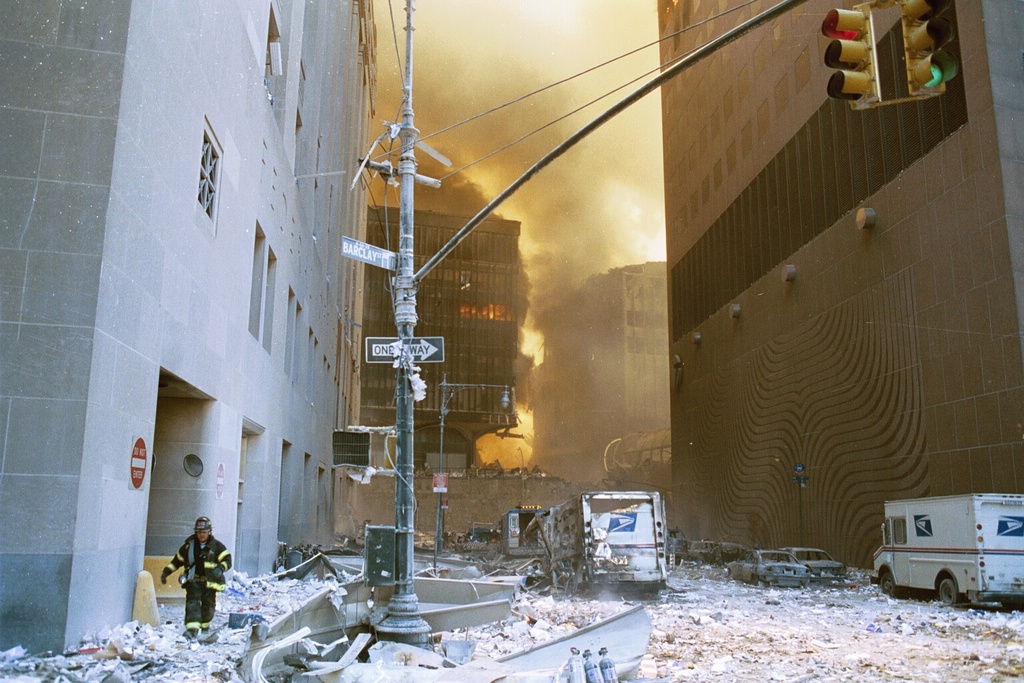 | 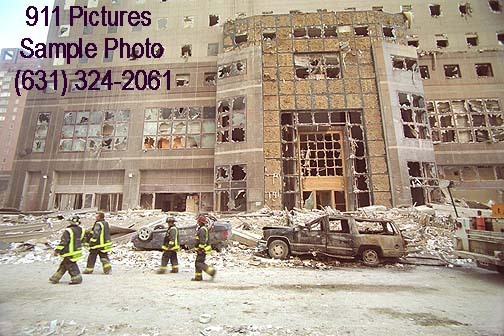 |
| Figure 77. The mail truck parked on the left side of the street looks burnt. Why? (Click on photo for enlarged view.) The building on the left is the USPS Federal Building and on the right is WTC7. WTC5 is on fire at the end of the street. Why? If this area is hot enough for spontaneous combustion, why isn't the paper on fire? The cars on the right side of the street are also toasted. | Figure flip. Why is this car upside down? A burned out SUV with missing windows and toasted front end is parked in front of WFC2 on West Street but will not be moving under its own power. (9/12/01) |
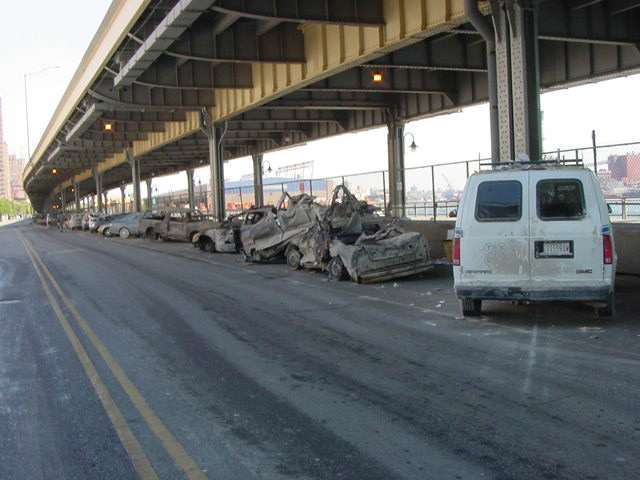 | 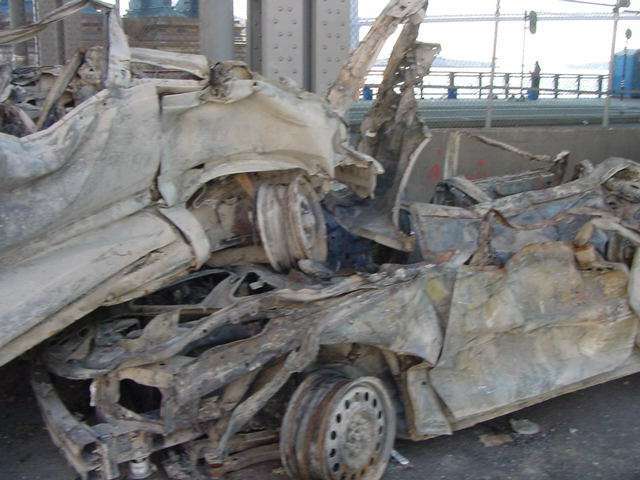 |
| Figure 66(a). Cars along FDR drive were randomly toasted. These cars are at least 1/2 mile away from the WTC. Note the waviness of the tire tracks. What happened? | Figure 66(b). Wheels appear to have steel-belts from the tires still on them. |
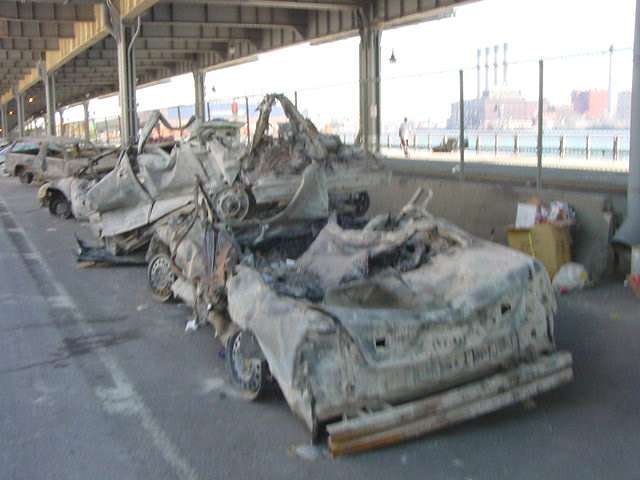 | 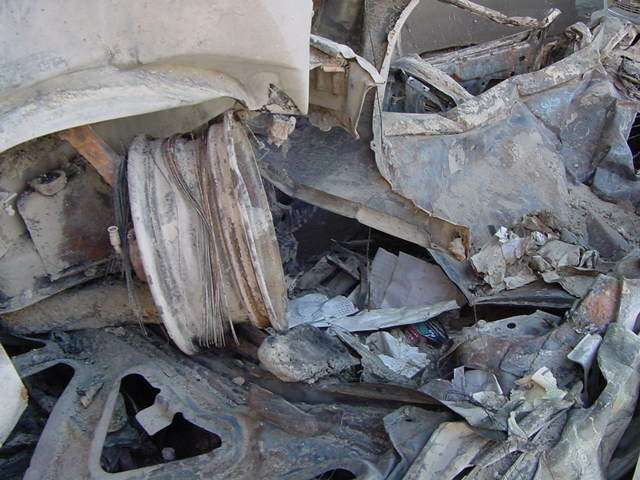 |
| Figure 66(c). Did one car run under the other during the event or were they stacked after the event? The marks in the pavement suggest they were pushed to the side of the road. | Figure 66(d). The remains of a steel-belted tire without the rubber. This is a close-up of the figure above. |
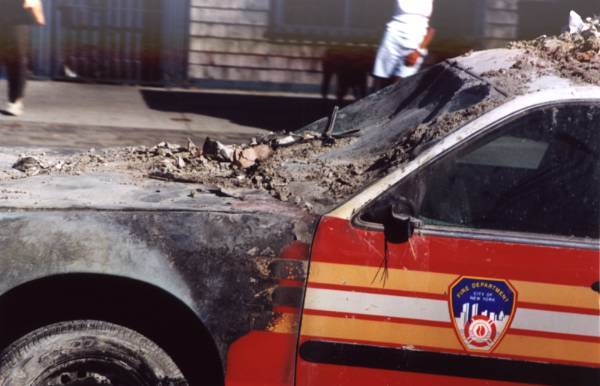 | 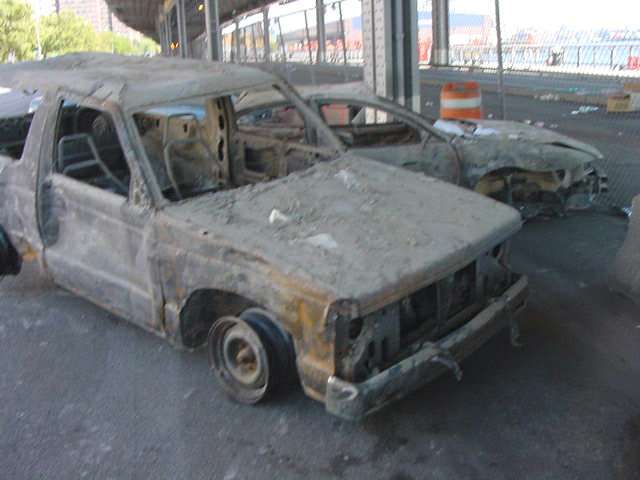 |
| Figure 66(f). While the bodies of these toasted vehicles still exist, they've been incinerated. All of the softer materials inside and out have disappeared. | |
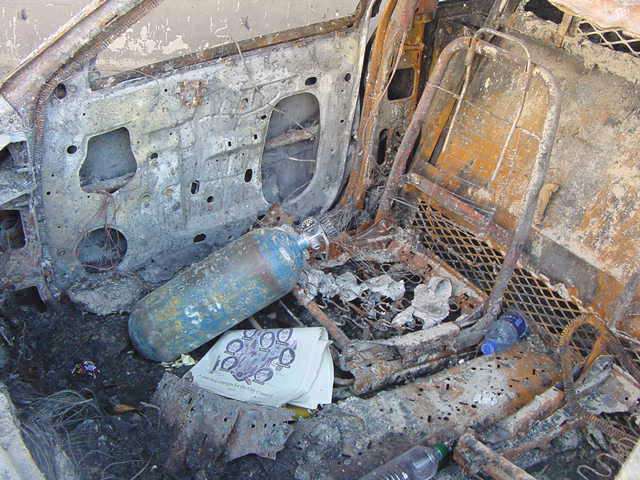 | 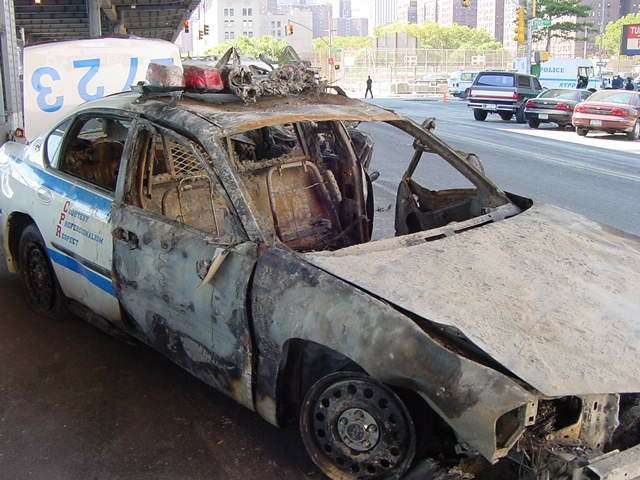 |
| Figure 66(k). This Toasted Interior was consumed except for the fire extinguisher. | |
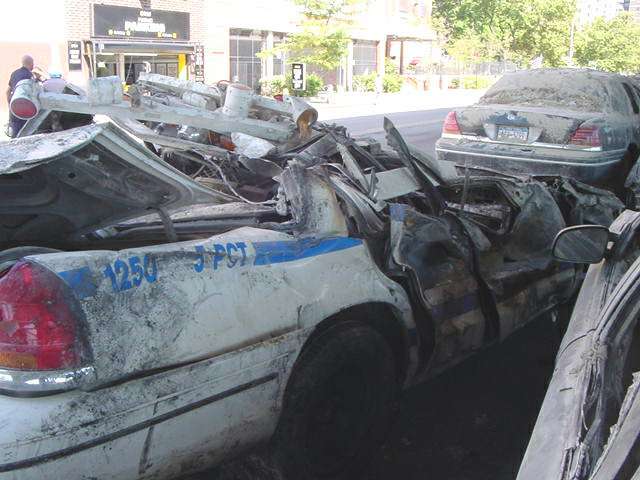 | 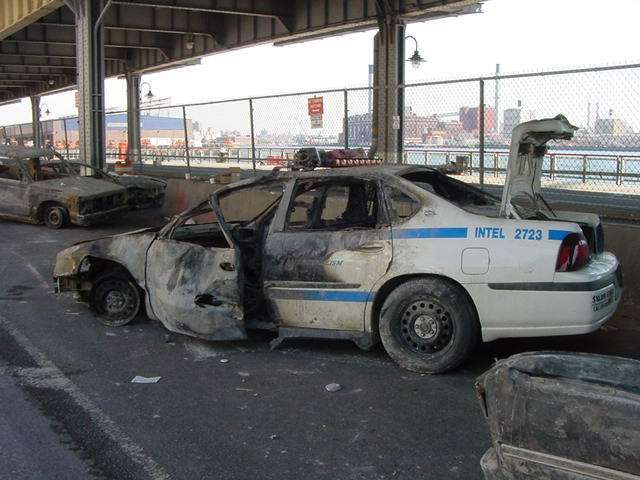 |
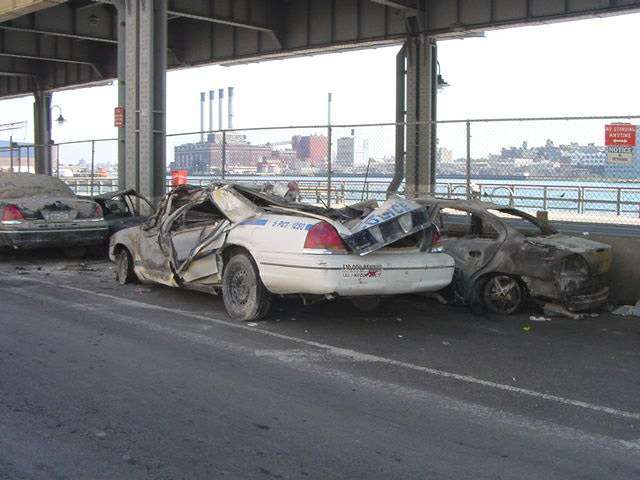
| Figure 66(m). What happened to the top half of car 1250? The doors are crinkled up, but the rear tire looks OK. | Figure 66(n). There is extensive damage to the front of car 2723, including no door handle on the driver's door. There is an unusual, unburned circular area on the rear door. |
- Towed?
In the debate over toasted cars ignited by this article, some have argued that the wrecked vehicles on FDR drive were damaged at the WTC and were loaded up and transported and dumped on FDR drive for storage. First, there is no evidence that this was done. Second, it makes no sense to load up wrecks, transport them, only to dump them in a busy thoroughfare for storage. These wrecks would have had to be picked up yet again and transported again. If vehicles were truly moved from the WTC to FDR Drive, we wonder why WTC steel beams were not stacked up on FDR drive, as well, if it was such a good storage area. Third, governments may be stupid, but we doubt they could be this inefficient. If reported, it would have been a minor scandal. Fourth, we might be wrong about the facts here, but it looks like the motive for this speculation about shifting wrecks around lower Manhattan is to protect the official story or thermite story or other pet theories. We fail to see any other explanation for such a "forced" interpretation for these photographs. Fifth, marks on the roadway suggest that some of these vehicles were pushed to the side of the roadway until they could be removed. This is a more natural explanation for why some of the cars appear to have been moved from where they were damaged rather than all the way from the WTC.
 | 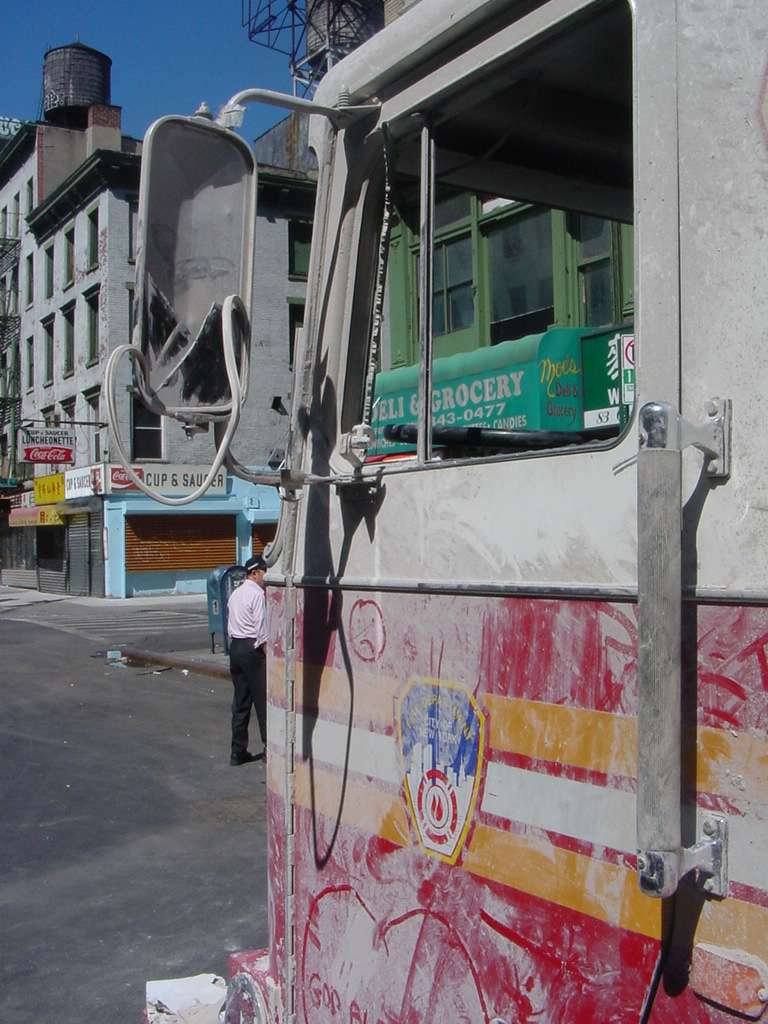 |
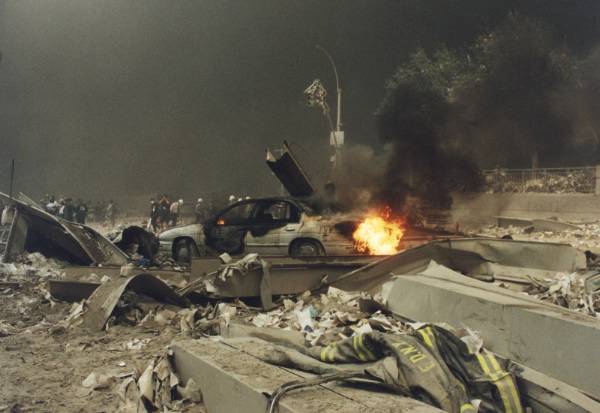
| Figure 66(o). Why doesn't the paper burn? | Figure 66(p). No window? What happened to the rear-view mirror? |
 |  |
| Figure 66(q). Why is the rubber window gasket hanging outward? | Figure 66(r). Sans windows. (But nice tire!) |
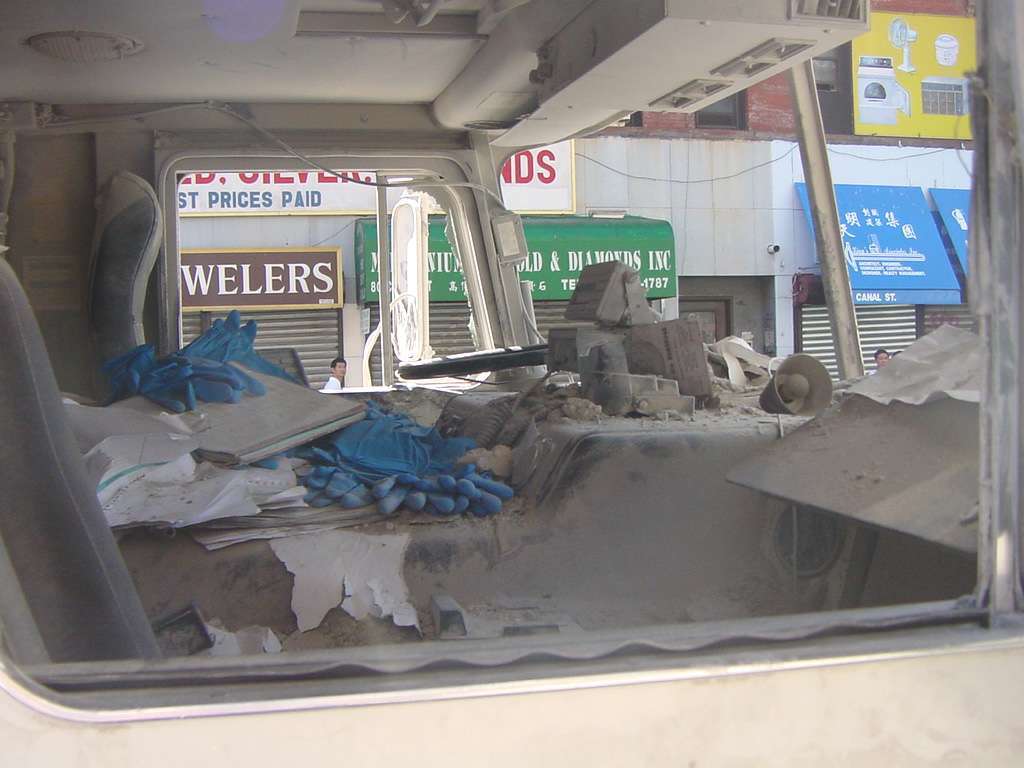 | 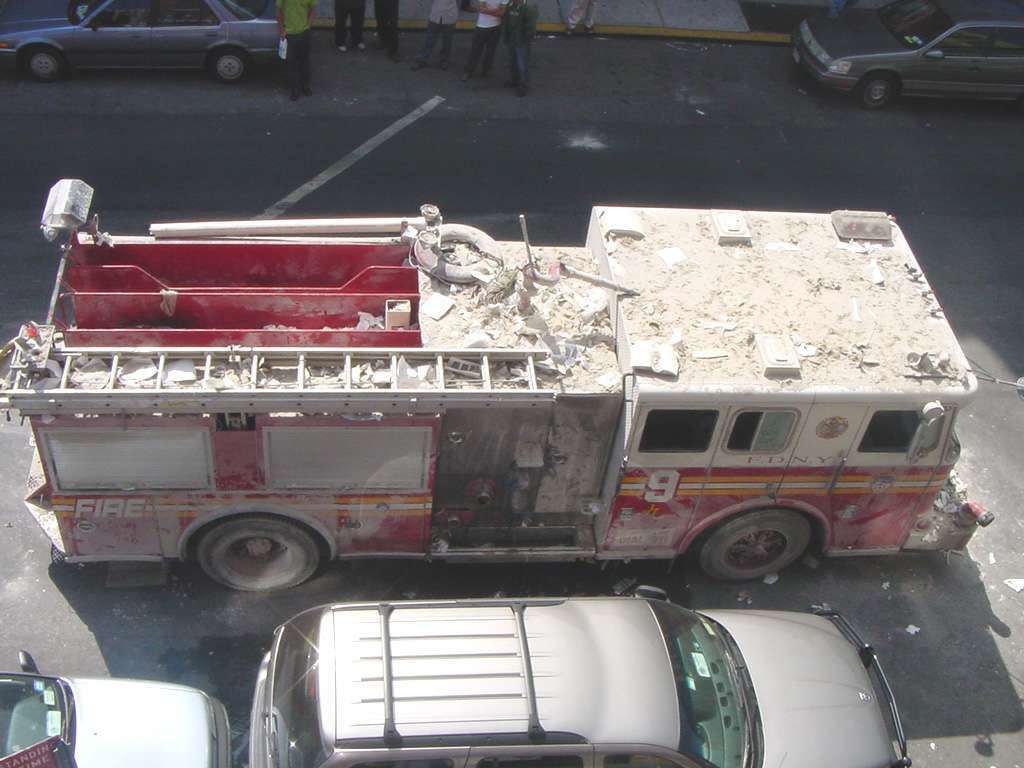 |
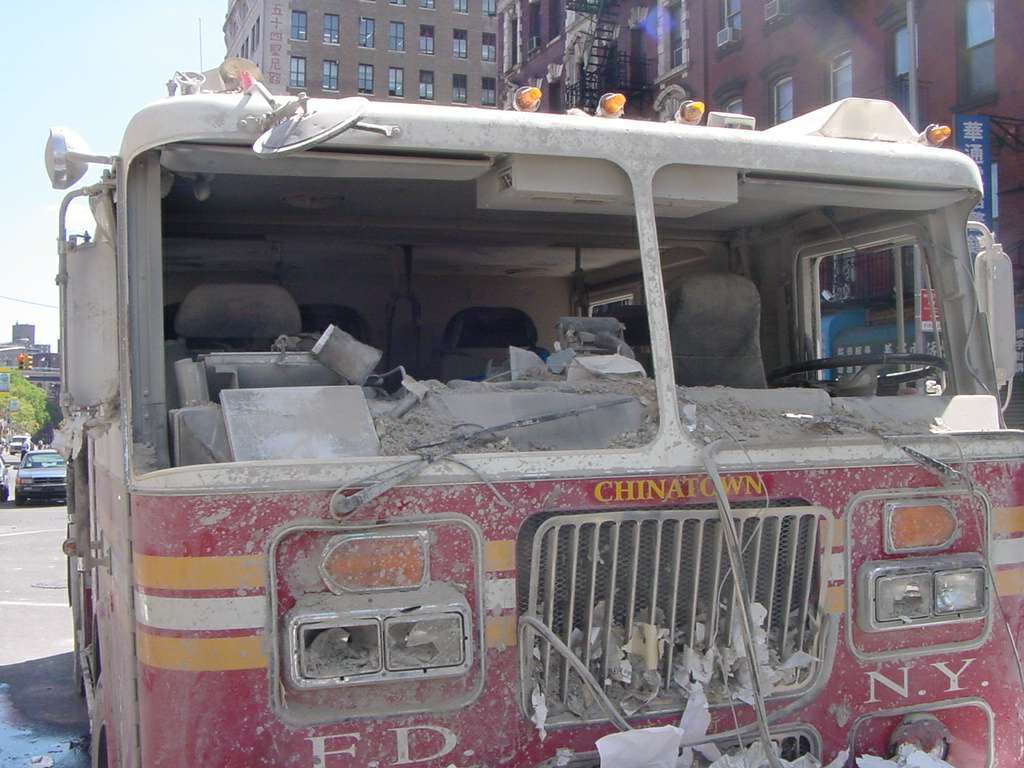
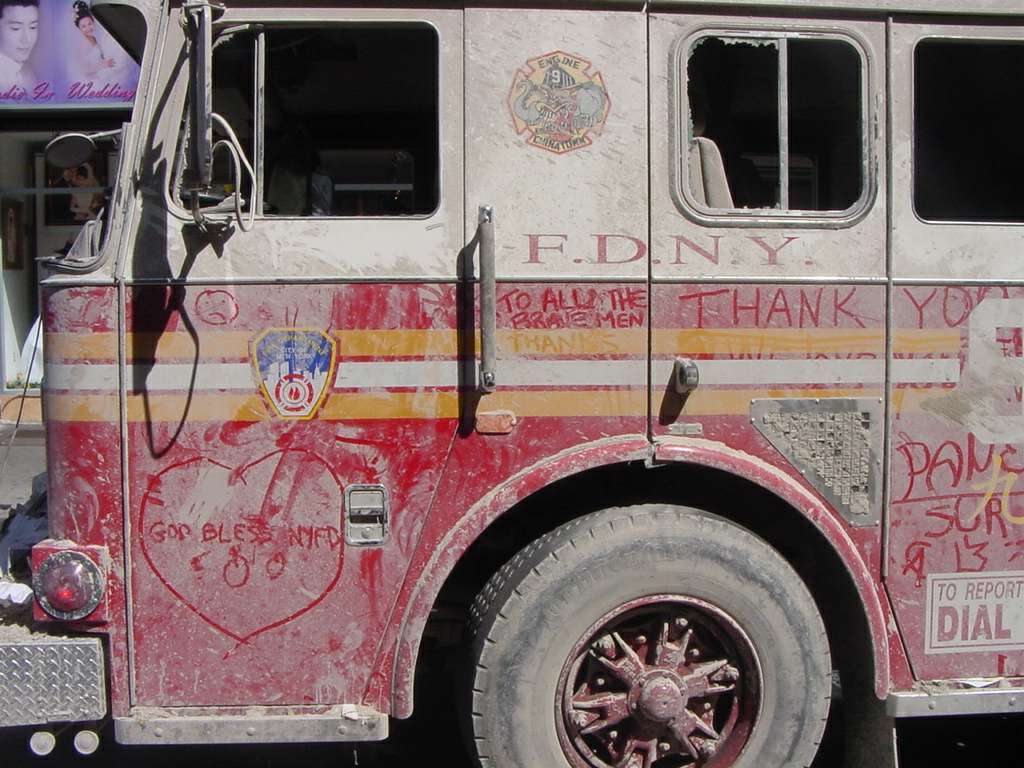
| Figure 66(s). Why is the paper shredded but nothing else apparently disturbed? | Figure 66(t). What blew out the windows without damaging the rest of the fire truck? |
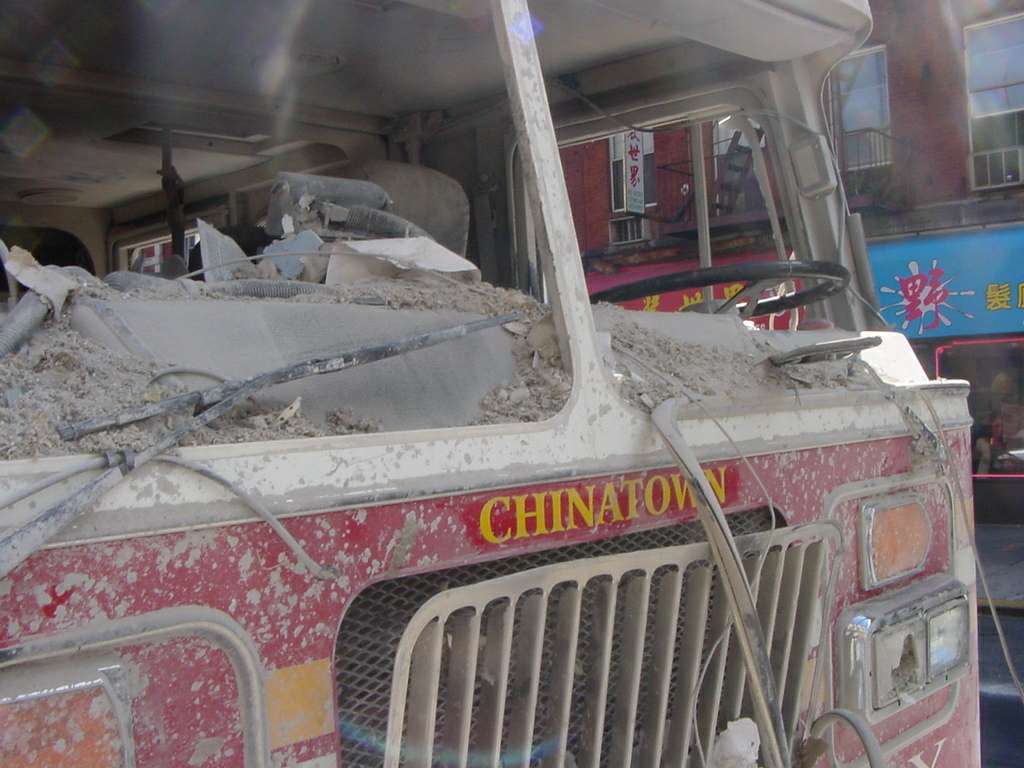 | 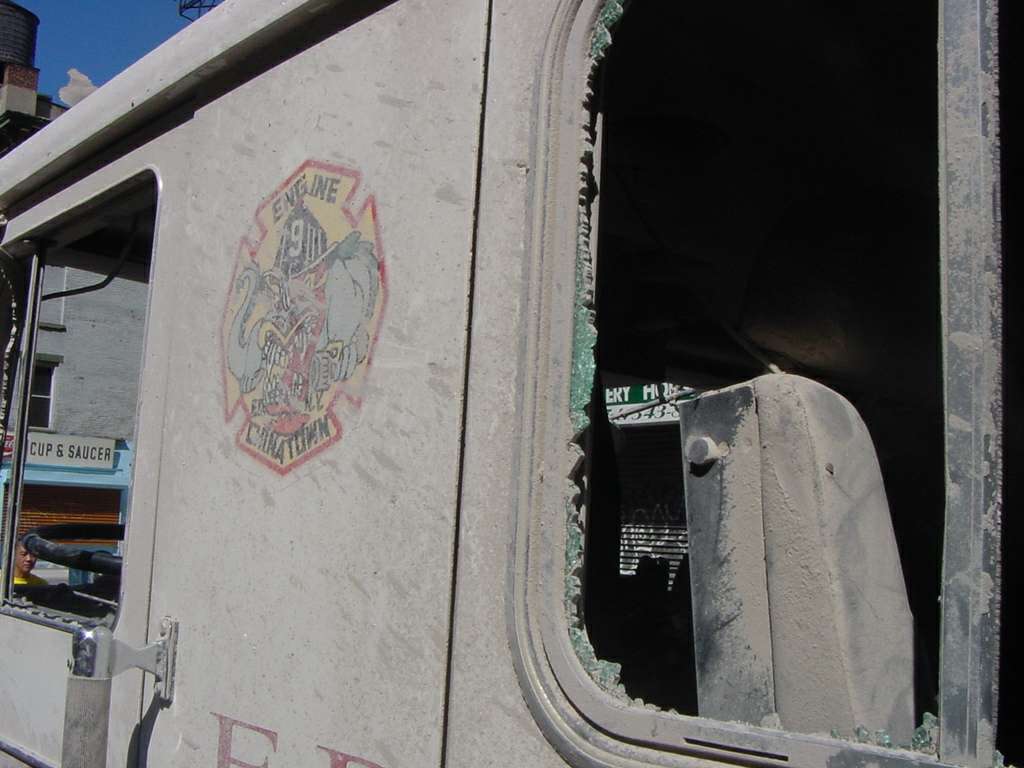 |
| Figure 66(u). The window gasket is on the outside. What blew out the windows? What dislodged the front grill? | Figure 66(v). It didn't blow out just the middle portion of the windows; it blew out the windows all the way back to the frame where it was mounted. |
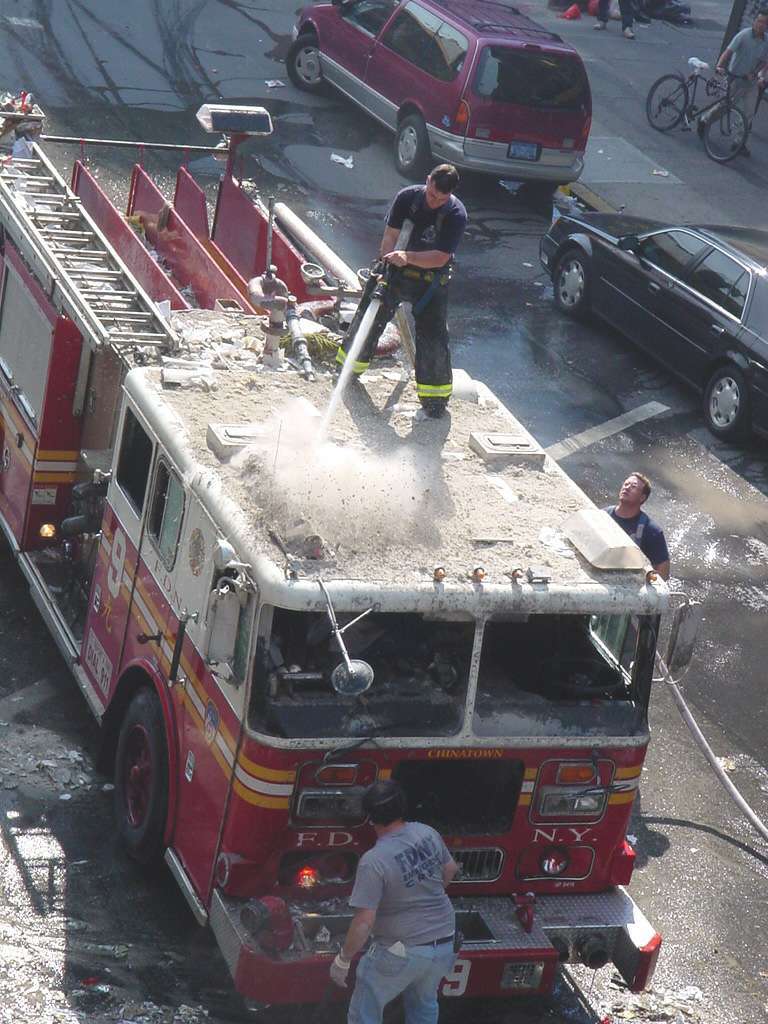 | 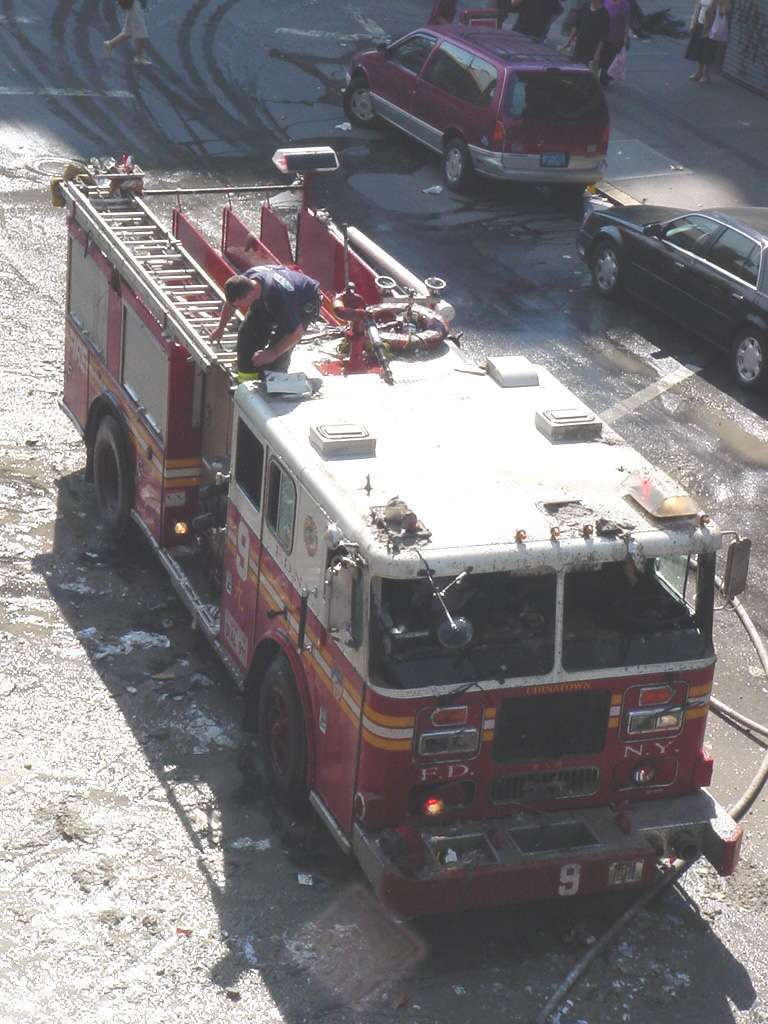 |
| Figure 66(w). Hosing down the windowless fire truck. | Figure 66(x). Final cleaning of the windowless fire truck. Notice its grill is missing. |
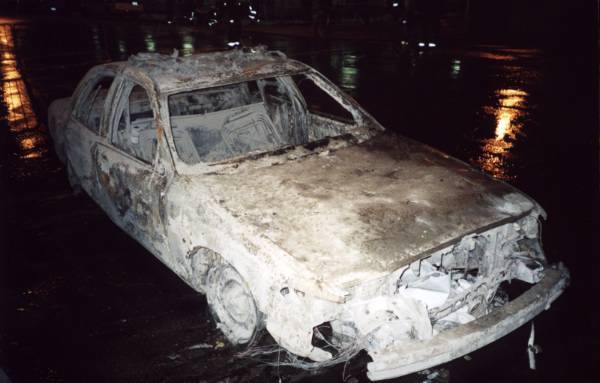 | 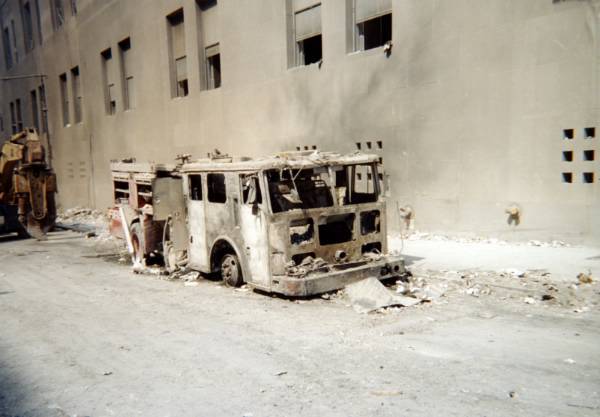 |
| Figure 66(y). What could have caused such extensive damage to this car? Has the passenger side shoulder harness survived? Where's the steering wheel? | Figure 66(z). Why is this fire truck burnt? It is missing its front grill, headlights, and related front end bright-work. Where are the tires? |
Most of the 1400 toasted cars had some, if not all, windows missing. What would cause this? Figure yy, below, shows a silver convertible with its top apparently intact but missing some of its window glass. If the windows were blown out from pressure inside, we would expect the convertible top to have been torn or blown off. This suggests that the windows were not blown out by internal pressure, but may have been shattered by some other mechanism.
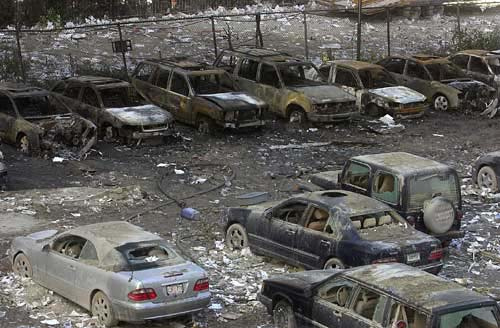 | 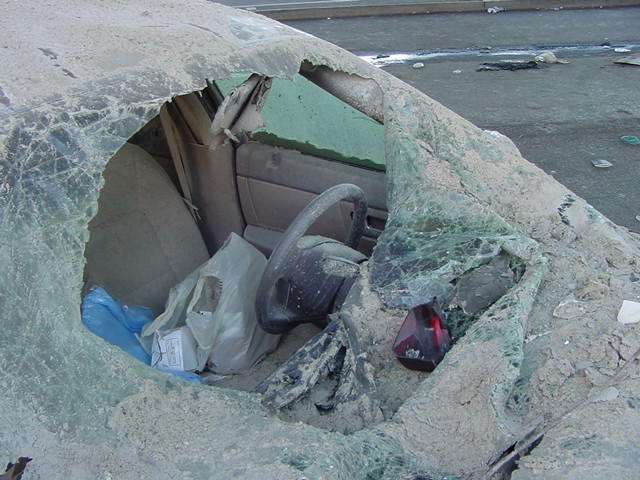 |
| Figure yy. The cars parked in the back suffered extensive damage. The car on the left and on the far right look like they have had their engines eaten. The cars in the foreground experienced less damage, but many windows are missing, however partial and whole windows also remain. (9/12/01) | Figure 78. Why is this windshield crumpled up? Curiously, the interior of the car does not appear to contain anything that crashed through the windshield. |
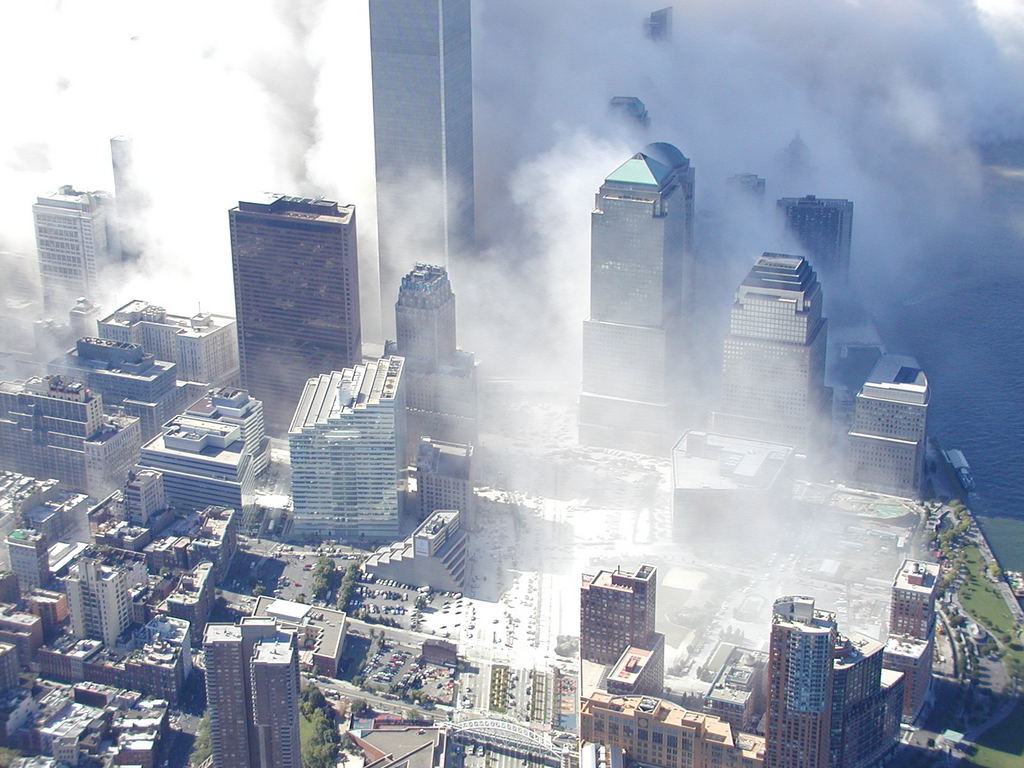 | 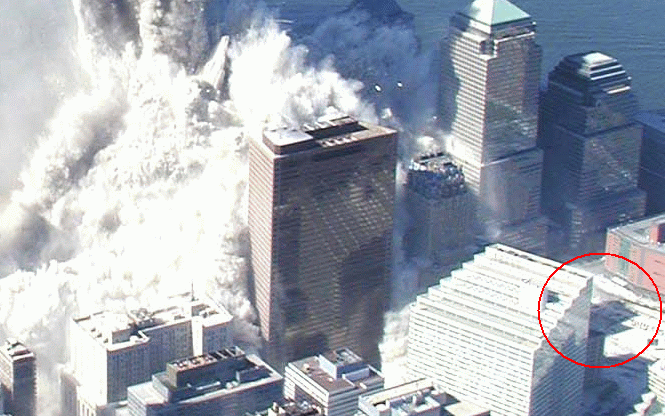 |
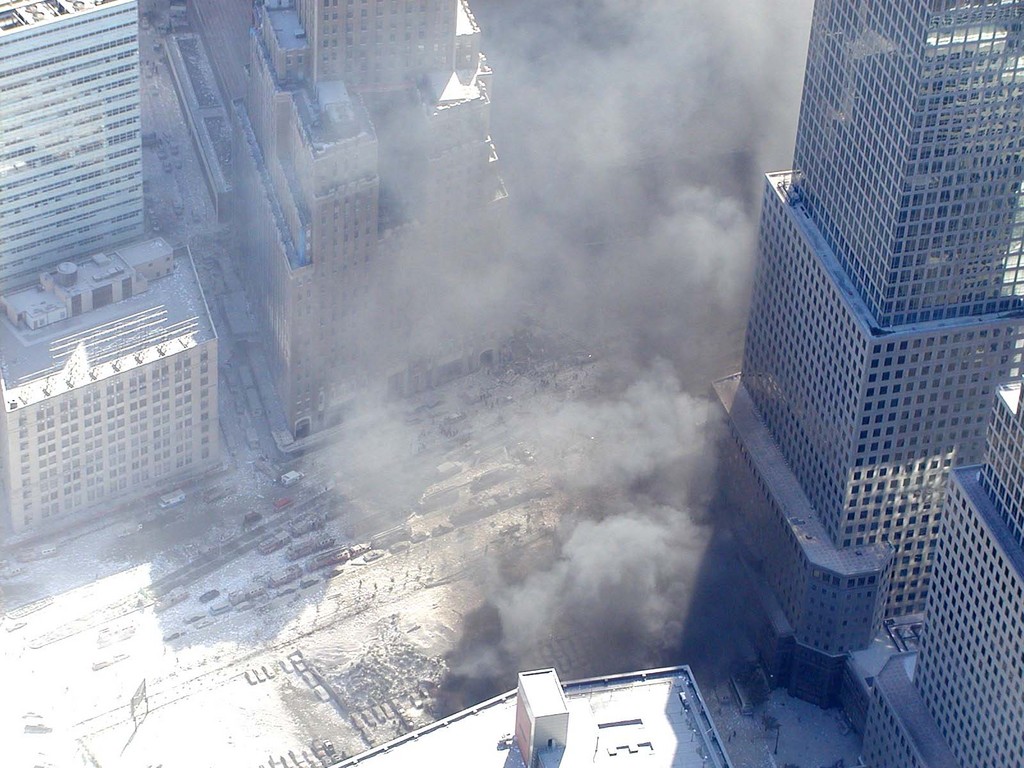
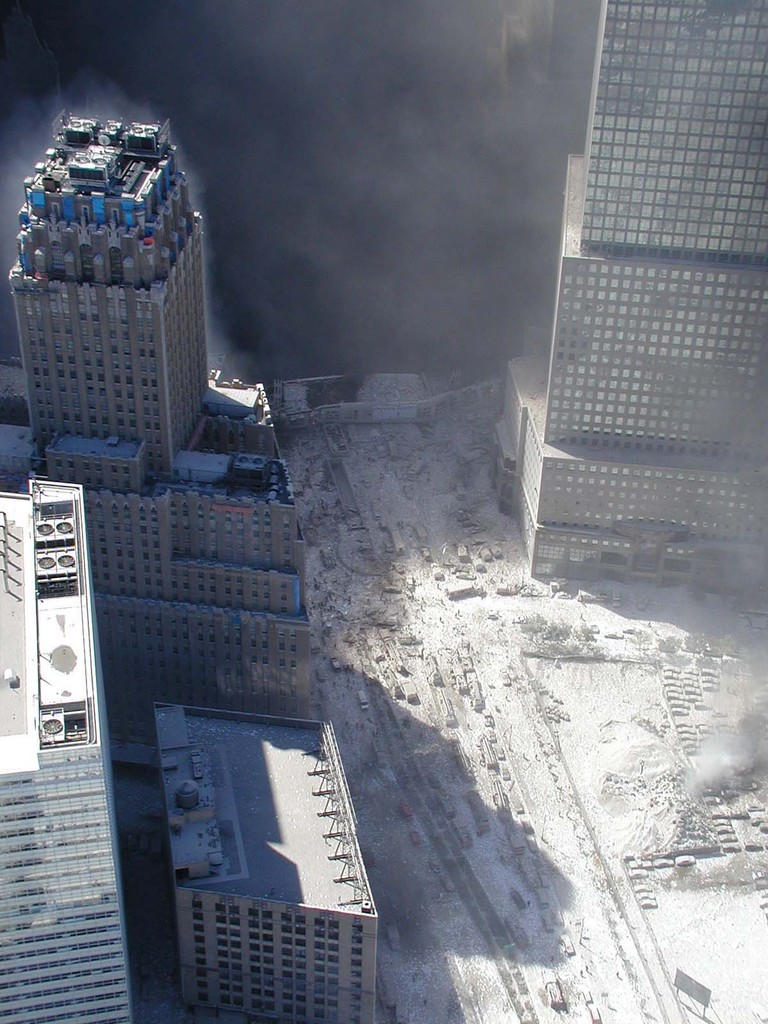
| Figure toast1. afterWTC2 was destroyed there don't appear to be any fires. (9/11/01) | Figure toast2a. The cloud from the destruction of WTC1 rolls toward the parking lot. (9/11/01) |
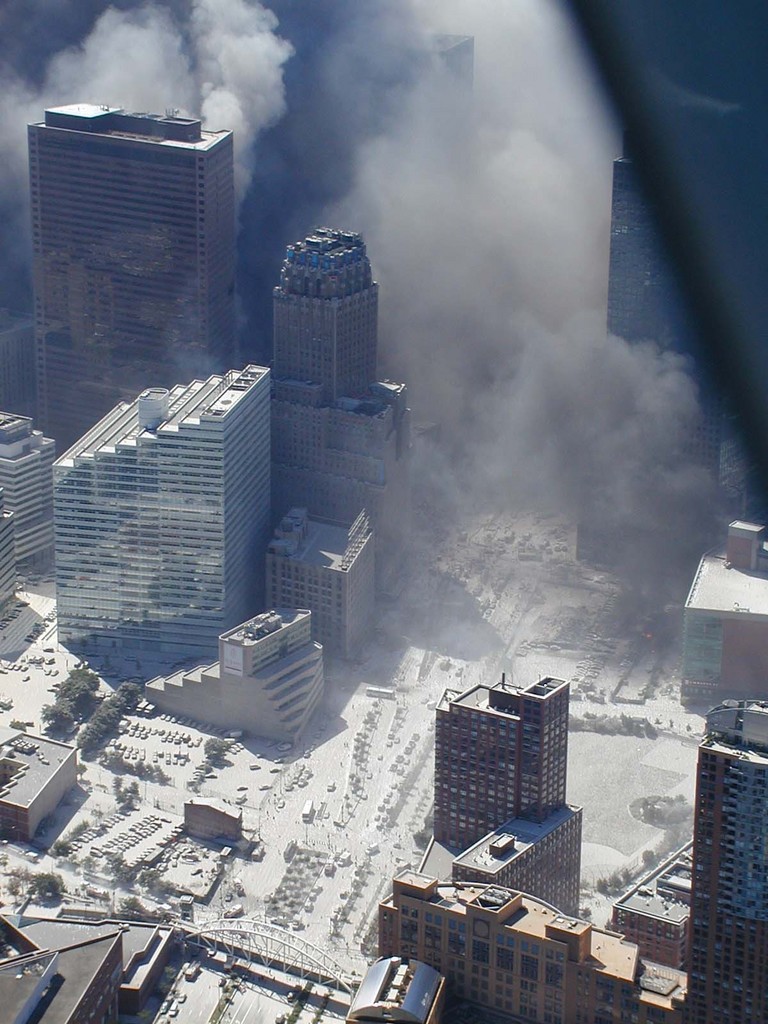 |
| Figure toast2b. Just after WTC1 is destroyed, fires start to burn the vehicles in the large lot, but not the paper. Why? (9/11/01) |
 | 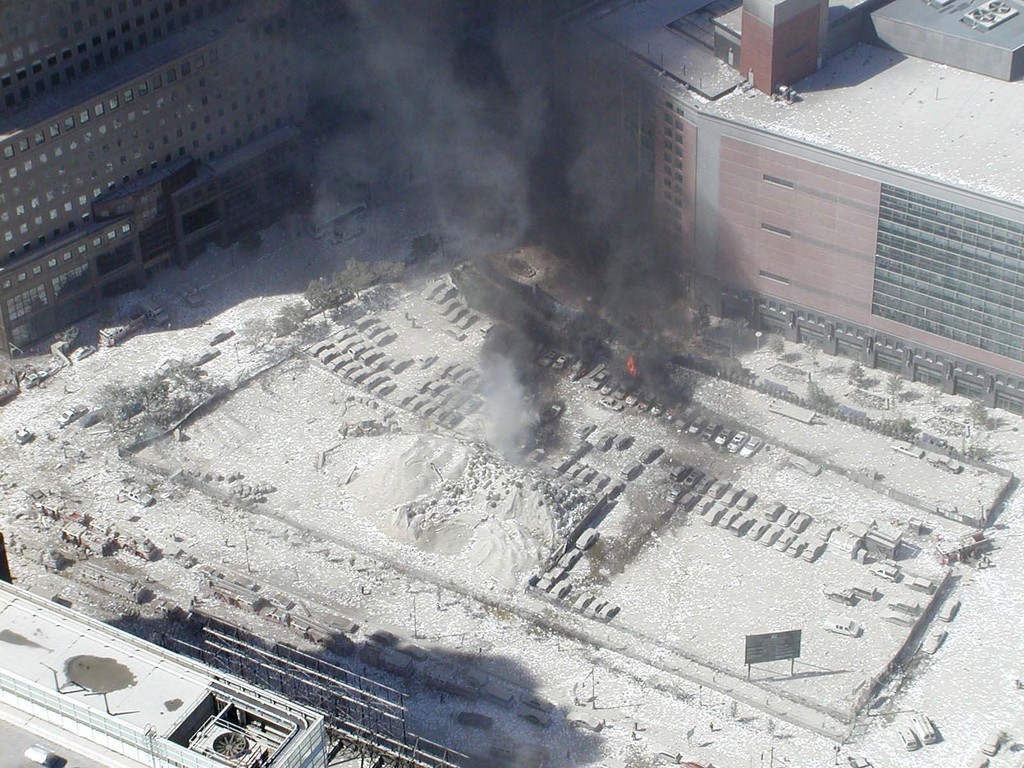 |
| Figure toast3. The vehicle fires increase in strength as sunling begins to emerge through the clearing dust cloud. (9/11/01) | Figure toast4.The air upwind of the WTC has visably become clearer. The vehicle fires continue increasing and flames can be seen. (9/11/01) |
 |
| Figure 5. The air has cleared after the destruction of WTC1. This area would be first to clear as it is upwind of the WTC. The fire in the toasted lot has increased in strength, consistent with it having just been started. (9/11/01) |
 | 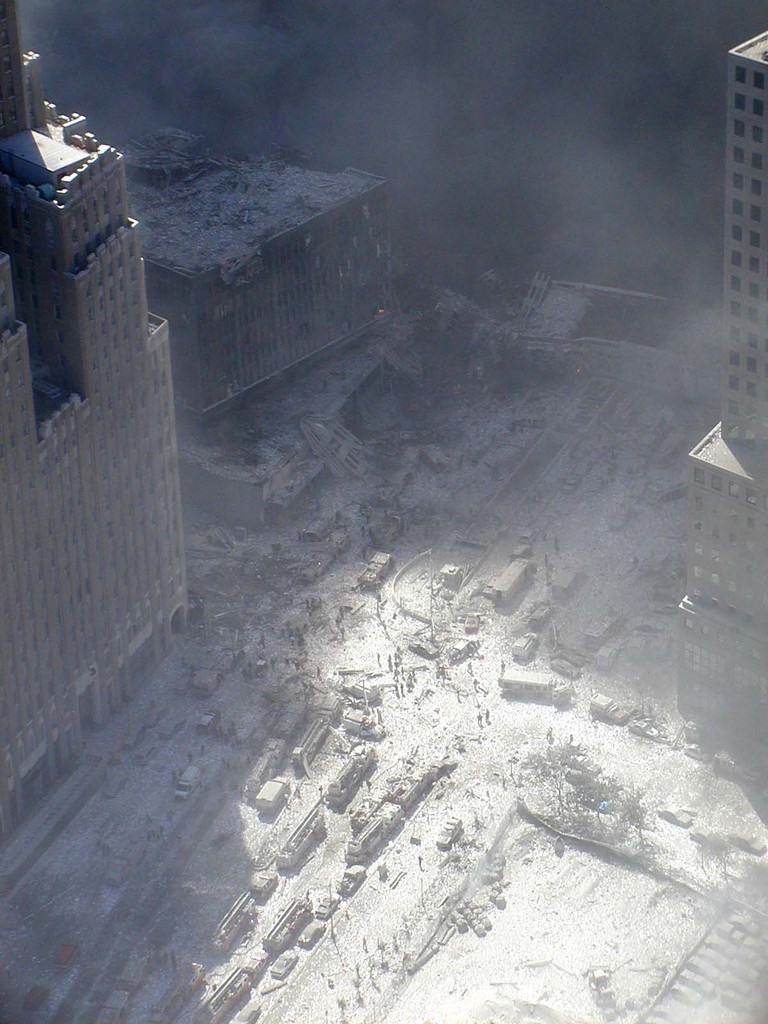 | 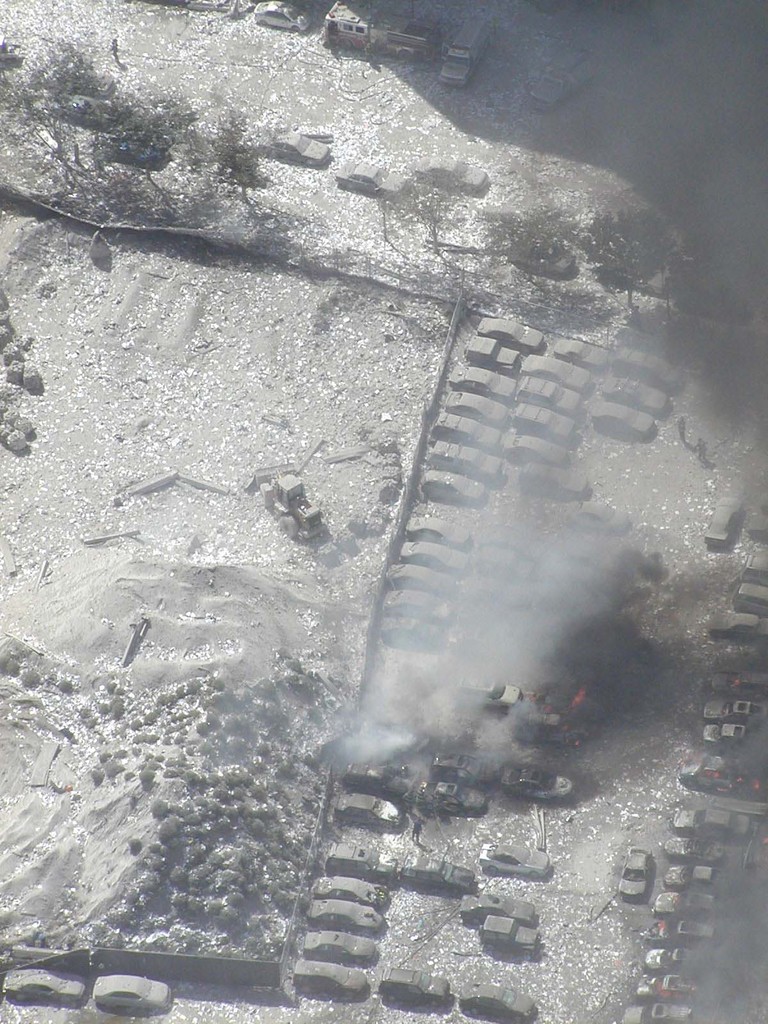 |
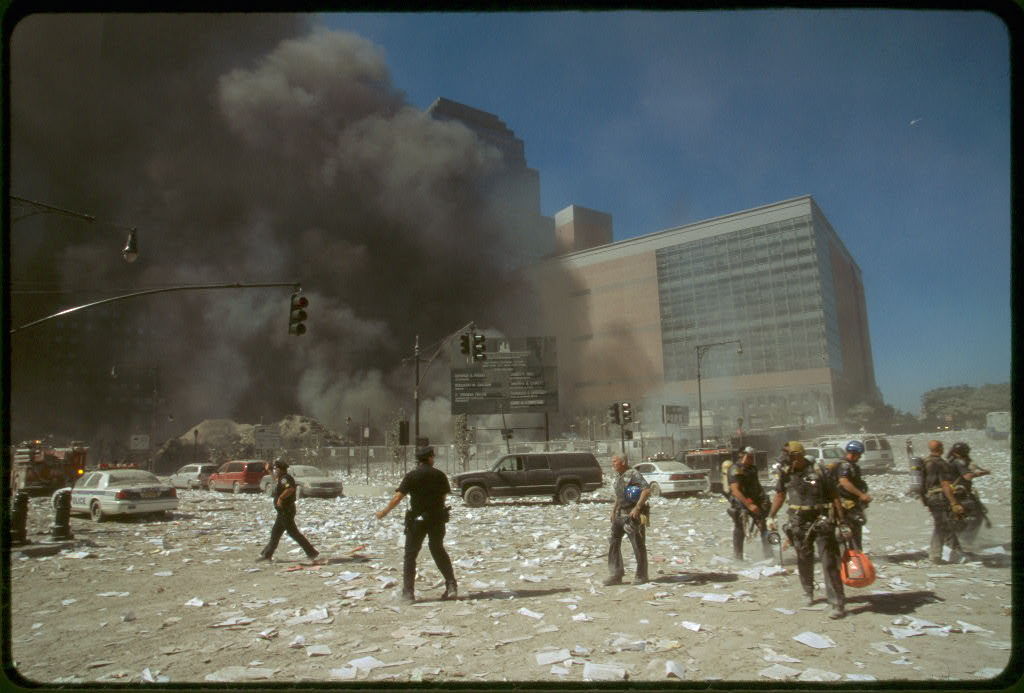
| Figure toast6. Sunlight begins streaming through the intersection. (9/11/01) | Figure toast8. How did these cars catch on fire? (9/11/01) |
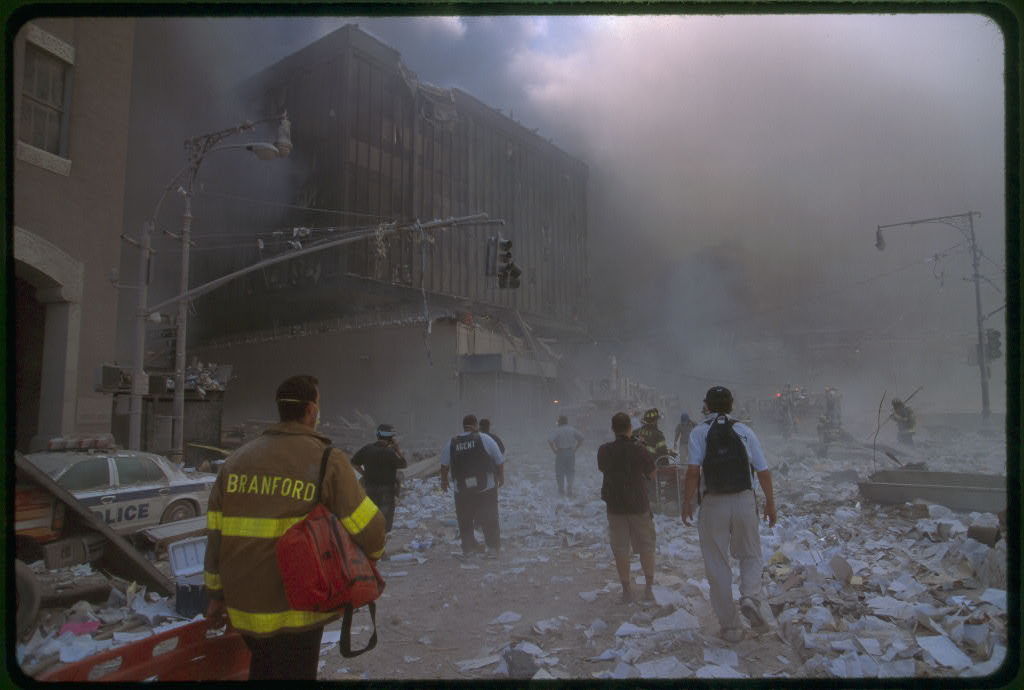

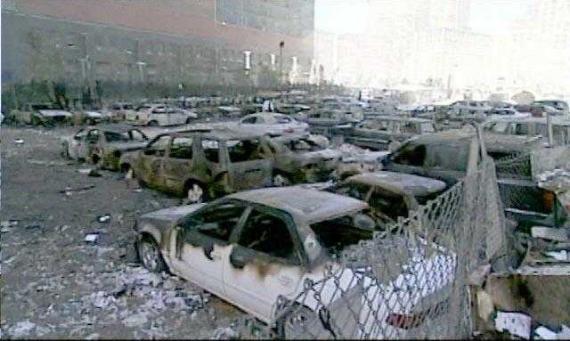 | |
| Figure toast10. Toasted cars in the lot northwest of the WTC complex. There is little visible rust, so the photo was probably within a day or two of 9/11/01. (9/?/01) Source: (WRH) | Figure toast11. Not much visible rust, yet. (9/?/01) |
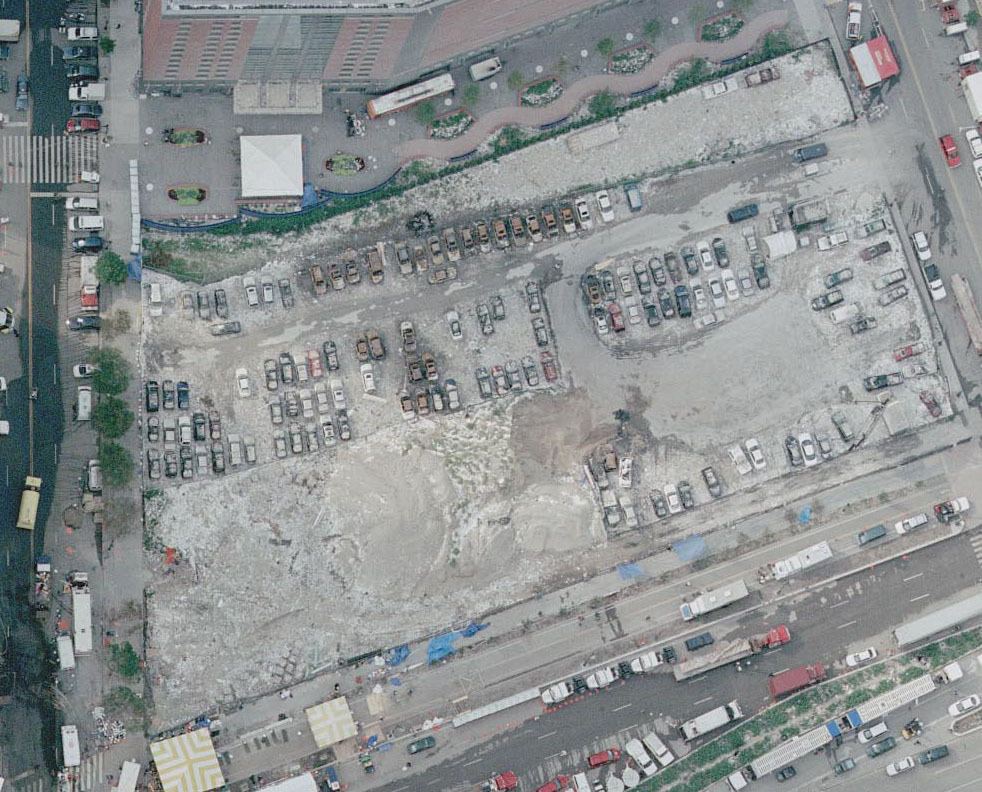 |
| Figure toast12. The rust is noticeable (9/23/01) Source: (JW cut down from NOAA) |
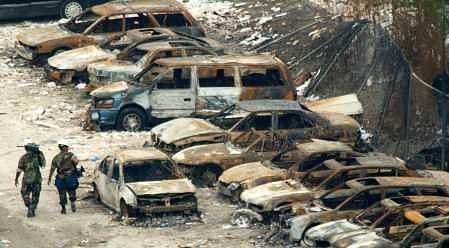 | 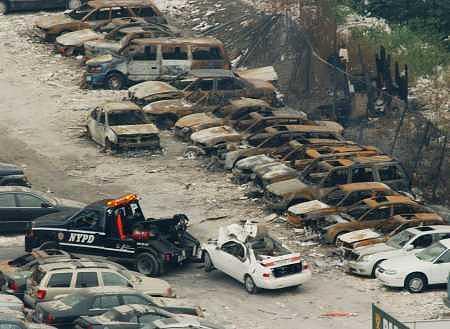 |
| Figure toast13. A lot more rust (9/?/01) |
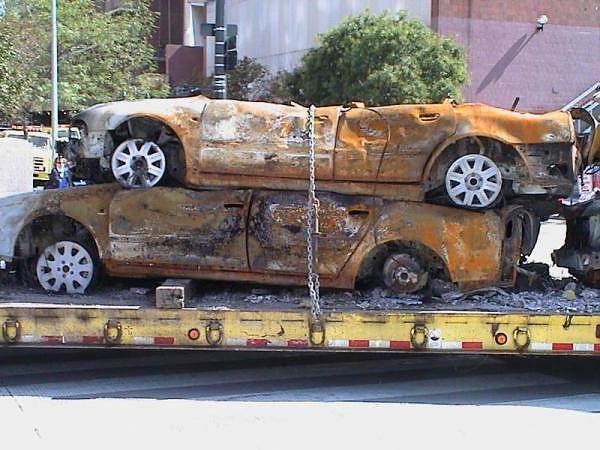 | 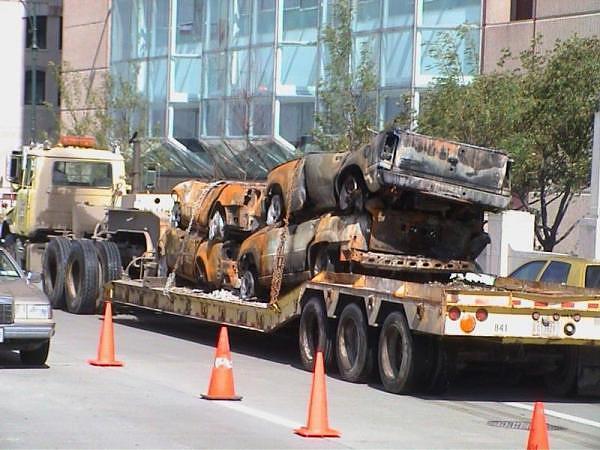 |
| Figure toast15. Presumably these cars are finally being towed away from that lot. Those wheels look fairly good which means they probably aren't steel. (9/?/01) | Figure toast16. The background is near the WTC (9/?/01) |


