.

.
Library of Professor Richard A. Macksey in Baltimore

POSTS BY SUBJECT

Labels

Monday, May 1, 2017

In 'Eisenhower's Death Camps': A U.S. Prison Guard Remembers

In 'Eisenhower's Death Camps':
A U.S. Prison Guard Remembers


Martin Brech
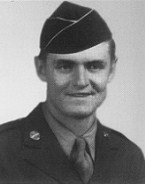


In October 1944, at age eighteen, I was drafted into the U.S. army. Largely because of the "Battle of the Bulge," my training was cut short, my furlough was halved, and I was sent overseas immediately. Upon arrival in Le Havre, France, we were quickly loaded into box cars and shipped to the front. When we got there, I was suffering increasingly severe symptoms of mononucleosis, and was sent to a hospital in Belgium. Since mononucleosis was then known as the "kissing disease," I mailed a letter of thanks to my girlfriend.
By the time I left the hospital, the outfit I had trained with in Spartanburg, South Carolina, was deep inside Germany, so, despite my protests, I was placed in a "repo depot" (replacement depot). I lost interest in the units to which I was assigned, and don't recall all of them: non-combat units were ridiculed at that time. My separation qualification record states I was mostly with Company C, 14th Infantry Regiment, during my seventeen-month stay in Germany, but I remember being transferred to other outfits also.

In late March or early April 1945, I was sent to guard a POW camp near Andernach along the Rhine.
I had four years of high school German, so I was able to talk to the prisoners, although this was forbidden. Gradually, however, I was used as an interpreter and asked to ferret out members of the S.S. (I found none.)
In Andernach about 50,000 prisoners of all ages were held in an open field surrounded by barbed wire.

The women were kept in a separate enclosure that I did not see until later. The men I guarded had no shelter and no blankets. Many had no coats. They slept in the mud, wet and cold, with inadequate slit trenches for excrement. It was a cold, wet spring, and their misery from exposure alone was evident.

Even more shocking was to see the prisoners throwing grass and weeds into a tin can containing a thin soup. They told me they did this to help ease their hunger pains. Quickly they grew emaciated. Dysentery raged, and soon they were sleeping in their own excrement, too weak and crowded to reach the slit trenches. Many were begging for food, sickening and dying before our eyes. We had ample food and supplies, but did nothing to help them, including no medical assistance.

Outraged, I protested to my officers and was met with hostility or bland indifference. When pressed, they explained they were under strict orders from "higher up." No officer would dare do this to 50,000 men if he felt that it was "out of line," leaving him open to charges. Realizing my protests were useless, I asked a friend working in the kitchen if he could slip me some extra food for the prisoners. He too said they were under strict orders to severely ration the prisoners' food, and that these orders came from "higher up." But he said they had more food than they knew what to do with, and would sneak me some.

When I threw this food over the barbed wire to the prisoners, I was caught and threatened with imprisonment. I repeated the "offense," and one officer angrily threatened to shoot me.
I assumed this was a bluff until I encountered a captain on a hill above the Rhine shooting down at a group of German civilian women with his .45 caliber pistol. When I asked, "Why?," he mumbled, "Target practice," and fired until his pistol was empty. I saw the women running for cover, but, at that distance, couldn't tell if any had been hit.

This is when I realized I was dealing with cold-blooded killers filled with moralistic hatred. They considered the Germans subhuman and worthy of extermination; another expression of the downward spiral of racism. 

Articles in the G.I. newspaper, Stars and Stripes, played up the German concentration camps, complete with photos of emaciated bodies. This amplified our self-righteous cruelty, and made it easier to imitate behavior we were supposed to oppose. Also, I think, soldiers not exposed to combat were trying to prove how tough they were by taking it out on the prisoners and civilians.

These prisoners, I found out, were mostly farmers and workingmen, as simple and ignorant as many of our own troops. As time went on, more of them lapsed into a zombie-like state of listlessness, while others tried to escape in a demented or suicidal fashion, running through open fields in broad daylight towards the Rhine to quench their thirst. They were mowed down.

Some prisoners were as eager for cigarettes as for food, saying they took the edge off their hunger. Accordingly, enterprising G.I. "Yankee traders" were acquiring hordes of watches and rings in exchange for handfuls of cigarettes or less. When I began throwing cartons of cigarettes to the prisoners to ruin this trade, I was threatened by rank-and-file G.I.s too.

The only bright spot in this gloomy picture came one night when. I was put on the "graveyard shift," from two to four a.m. Actually, there was a graveyard on the uphill side of this enclosure, not many yards away. My superiors had forgotten to give me a flashlight and I hadn't bothered to ask for one, disgusted as I was with the whole situation by that time. It was a fairly bright night and I soon became aware of a prisoner crawling under the wires towards the graveyard. We were supposed to shoot escapees on sight, so I started to get up from the ground to warn him to get back. Suddenly I noticed another prisoner crawling from the graveyard back to the enclosure. They were risking their lives to get to the graveyard for something. I had to investigate.

When I entered the gloom of this shrubby, tree-shaded cemetery, I felt completely vulnerable, but somehow curiosity kept me moving. Despite my caution, I tripped over the legs of someone in a prone position. Whipping my rifle around while stumbling and trying to regain composure of mind and body, I soon was relieved I hadn't reflexively fired. The figure sat up. Gradually, I could see the beautiful but terror-stricken face of a woman with a picnic basket nearby. German civilians were not allowed to feed, nor even come near the prisoners, so I quickly assured her I approved of what she was doing, not to be afraid, and that I would leave the graveyard to get out of the way.

I did so immediately and sat down, leaning against a tree at the edge of the cemetery to be inconspicuous and not frighten the prisoners. I imagined then, and still do now, what it would be like to meet a beautiful woman with a picnic basket under those conditions as a prisoner. I have never forgotten her face.

Eventually, more prisoners crawled back to the enclosure. I saw they were dragging food to their comrades, and could only admire their courage and devotion.

On May 8, V.E. Day [1945], I decided to celebrate with some prisoners I was guarding who were baking bread the other prisoners occasionally received. This group had all the bread they could eat, and shared the jovial mood generated by the end of the war. We all thought we were going home soon, a pathetic hope on their part. We were in what was to become the French zone [of occupation], where I soon would witness the brutality of the French soldiers when we transferred our prisoners to them for their slave labor camps.

On this day, however, we were happy.
As a gesture of friendliness, I emptied my rifle and stood it in the corner, even allowing them to play with it at their request. This thoroughly "broke the ice," and soon we were singing songs we taught each other, or that I had learned in high school German class ("Du, du, liegst mir im Herzen"). Out of gratitude, they baked me a special small loaf of sweet bread, the only possible present they had left to offer. I stuffed it in my "Eisenhower jacket," and snuck it back to my barracks, eating it when I had privacy.
I have never tasted more delicious bread, nor felt a deeper sense of communion while eating it. I believe a cosmic sense of Christ (the Oneness of all Being) revealed its normally hidden presence to me on that occasion, influencing my later decision to major in philosophy and religion.

Shortly afterwards, some of our weak and sickly prisoners were marched off by French soldiers to their camp. We were riding on a truck behind this column. Temporarily, it slowed down and dropped back, perhaps because the driver was as shocked as I was. Whenever a German prisoner staggered or dropped back, he was hit on the head with a club and killed. The bodies were rolled to the side of the road to be picked up by another truck. For many, this quick death might have been preferable to slow starvation in our "killing fields."

When I finally saw the German women held in a separate enclosure, I asked why we were holding them prisoner. I was told they were "camp followers," selected as breeding stock for the S.S. to create a super-race. I spoke to some, and must say I never met a more spirited or attractive group of women. I certainly didn't think they deserved imprisonment.

More and more I was used as an interpreter, and was able to prevent some particularly unfortunate arrests. One somewhat amusing incident involved an old farmer who was being dragged away by several M.P.s. I was told he had a "fancy Nazi medal," which they showed me. Fortunately, I had a chart identifying such medals. He'd been awarded it for having five children! Perhaps his wife was somewhat relieved to get him "off her back," but I didn't think one of our death camps was a fair punishment for his contribution to Germany. The M.P.s agreed and released him to continue his "dirty work."

Famine began to spread among the German civilians also. It was a common sight to see German women up to their elbows in our garbage cans looking for something edible -- that is, if they weren't chased away.

When I interviewed mayors of small towns and villages, I was told that their supply of food had been taken away by "displaced persons" (foreigners who had worked in Germany), who packed the food on trucks and drove away. When I reported this, the response was a shrug. I never saw any Red Cross at the camp or helping civilians, although their coffee and doughnut stands were available everywhere else for us. In the meantime, the Germans had to rely on the sharing of hidden stores until the next harvest.

Hunger made German women more "available," but despite this, rape was prevalent and often accompanied by additional violence. In particular I remember an eighteen-year old woman who had the side of her faced smashed with a rifle butt, and was then raped by two G.I.s. Even the French complained that the rapes, looting and drunken destructiveness on the part of our troops was excessive. In Le Havre, we'd been given booklets warning us that the German soldiers had maintained a high standard of behavior with French civilians who were peaceful, and that we should do the same. In this we failed miserably.

"So what?" some would say. "The enemy's atrocities were worse than ours." It is true that I experienced only the end of the war, when we were already the victors. The German opportunity for atrocities had faded, while ours was at hand. But two wrongs don't make a right. Rather than copying our enemy's crimes, we should aim once and for all to break the cycle of hatred and vengeance that has plagued and distorted human history.
This is why I am speaking out now, 45 years after the crime. We can never prevent individual war crimes, but we can, if enough of us speak out, influence government policy.
We can reject government propaganda that depicts our enemies as subhuman and encourages the kind of outrages I witnessed. We can protest the bombing of civilian targets, which still goes on today. And we can refuse ever to condone our government's murder of unarmed and defeated prisoners of war.

I realize it's difficult for the average citizen to admit witnessing a crime of this magnitude, especially if implicated himself. Even G.I.s sympathetic to the victims were afraid to complain and get into trouble, they told me.
And the danger has not ceased. Since I spoke out a few weeks ago, I have received threatening calls and had my mailbox smashed.
But its been worth it. Writing about these atrocities has been a catharsis of feelings suppressed too long, a liberation, that perhaps will remind other witnesses that "the truth will make us free, have no fear." We may even learn a supreme lesson from all this: only love can conquer all.


About the author
Martin Brech lives in Mahopac, New York. When he wrote this memoir essay in 1990, he was an Adjunct Professor of Philosophy and Religion at Mercy College in Dobbs Ferry, New York. Brech holds a master's degree in theology from Columbia University, and is a Unitarian-Universalist minister.
This essay was published in The Journal of Historical Review, Summer 1990 (Vol. 10, No. 2), pp. 161-166. (Revised, updated: Nov. 2008)


For Further Reading
James Bacque, Crimes and Mercies: The Fate of German Civilians Under Allied Occupation, 1944-1950 (Toronto: Little, Brown and Co., 1997)
James Bacque, Other Losses: An investigation into the mass deaths of German prisoners at the hands of the French and Americans after World War II (Toronto: Stoddart, 1989)
Alfred-Maurice de Zayas, Nemesis at Postsdam (Lincoln, Neb.: 1990)
Alfred-Maurice de Zayas, A Terrible Revenge: The Ethnic Cleansing of the Eastern European Germans, 1944-1950 (New York: St. Martin's Press, 1994)
John Dietrich, The Morgenthau Plan: Soviet Influence on American Postwar Policy (New York: Algora, 2002)
Ralph Franklin Keeling, Gruesome Harvest: The Allies' Postwar War Against the German People (IHR, 1992). Originally published in Chicago in 1947.
Giles MacDonogh, After the Reich: The Brutal History of the Allied Occupation (New York: Basic Books, 2007)
John Sack, An Eye for an Eye: The Story of Jews Who Sought Revenge for the Holocaust (2000)
Mark Weber, "New Book Details Mass Killings and Brutal Mistreatment of Germans at the End of World War Two" (Summer 2007)
( http://www.ihr.org/other/afterthereich072007.html )


 http://www.ihr.org/jhr/v10/v10p161_Brech.html
======================

Patrick J. Buchanan : Black America’s Real Problem Isn’t White Racism

Black America’s Real Problem Isn’t White Racism


By Patrick J. Buchanan


In the aftermath of the acquittal of George Zimmerman, Eric Holder, Al Sharpton and Ben Jealous of the NAACP are calling on the black community to rise up in national protest.
Yet they know — and Barack Obama, whose silence speaks volumes, knows — nothing is going to happen.
“Stand-Your-Ground” laws in Florida and other states are not going to be repealed. George Zimmerman is not going to be prosecuted for a federal “hate crime” in the death of Trayvon Martin.
The result of all this ginned-up rage that has produced vandalism and violence is simply going to be an ever-deepening racial divide.

Consider the matter of crime and fear of crime.
From listening to cable channels and hearing Holder, Sharpton, Jealous and others, one would think the great threat to black children today emanates from white vigilantes and white cops.
Hence, every black father must have a “conversation” with his son, warning him not to resist or run if pulled over or hassled by a cop.
Make the wrong move, son, and you may be dead is the implication.

But is this the reality in Black America?
When Holder delivered his 2009 “nation-of-cowards” speech blaming racism for racial separation, Manhattan Institute’s Heather Mac Donald suggested that our attorney general study his crime statistics.

In New York from January to June 2008, 83 percent of all gun assailants were black, according to witnesses and victims, though blacks were only 24 percent of the population. Blacks and Hispanics together accounted for 98 percent of all gun assailants. Forty-nine of every 50 muggings and murders in the Big Apple were the work of black or Hispanic criminals.

New York Police Commissioner Ray Kelly confirms Mac Donald’s facts. Blacks and Hispanics commit 96 percent of all crimes in the city, he says, but only 85 percent of the stop-and-frisks are of blacks and Hispanics.

And these may involve the kind of pat-downs all of us have had at the airport.
Is stop-and-frisk the work of racist cops in New York, where the crime rate has been driven down to levels unseen in decades?

According to Kelly, a majority of his police force, which he has been able to cut from 41,000 officers to 35,000, is now made up of minorities.

But blacks are also, per capita, the principal victims of crime. Would black fathers prefer their sons to grow up in Chicago, rather than low-crime New York City, with its stop-and-frisk policy?

Fernando Mateo, head of the New York taxicab union, urges his drivers to profile blacks and Hispanics for their own safety: “The God’s honest truth is that 99 percent of the people that are robbing, stealing, killing these drivers are blacks and Hispanics.”

Mateo is what The New York Times would describe as “a black Hispanic” Yet he may be closer to the ‘hood than Holder, who says he was stopped by police when running to a movie — in Georgetown.

Which raises a relevant question. Georgetown is an elitist enclave of a national capital that has been ruled by black mayors for half a century. It’s never had a white mayor.

Is Holder saying we’ve got racist cops in the district where Obama carried 86 percent of the white vote and 97 percent of the black vote? And his son should fear the white cops in Washington, D.C.?

What about interracial crime, white-on-black attacks and the reverse?
After researching the FBI numbers for “Suicide of a Superpower,” this writer concluded:
“An analysis of ‘single offender victimization figures’ from the FBI for 2007 finds blacks committed 433,934 crimes against whites, eight times the 55,685 whites committed against blacks. Interracial rape is almost exclusively black on white — with 14,000 assaults on white women by African Americans in 2007. Not one case of a white sexual assault on a black female was found in the FBI study.”


Though blacks are outnumbered 5-to-1 in the population by whites, they commit eight times as many crimes against whites as the reverse. By those 2007 numbers, a black male was 40 times as likely to assault a white person as the reverse.
If interracial crime is the ugliest manifestation of racism, what does this tell us about where racism really resides — in America?

And if the FBI stats for 2007 represent an average year since the Tawana Brawley rape-hoax of 1987, over one-third of a million white women have been sexually assaulted by black males since 1987 — with no visible protest from the civil rights leadership.

Today, 73 percent of all black kids are born out of wedlock. Growing up, these kids drop out, use drugs, are unemployed, commit crimes and are incarcerated at many times the rate of Asians and whites — or Hispanics, who are taking the jobs that used to go to young black Americans.

Are white vigilantes or white cops really Black America’s problem?
Obama seems not to think so. The Rev. Sharpton notwithstanding, he is touting Ray Kelly as a possible chief of homeland security.


 http://buchanan.org/blog/black-americas-real-problem-isnt-white-racism-5710
======================

Patrick J. Buchanan : Did Hitler Want War?

Did Hitler Want War?


by Patrick J. Buchanan


On Sept. 1, 1939, 70 years ago, the German Army crossed the Polish frontier. On Sept. 3, Britain declared war.
Six years later, 50 million Christians and Jews had perished. Britain was broken and bankrupt, Germany a smoldering ruin. Europe had served as the site of the most murderous combat known to man, and civilians had suffered worse horrors than the soldiers.
By May 1945, Red Army hordes occupied all the great capitals of Central Europe: Vienna, Prague, Budapest, Berlin. A hundred million Christians were under the heel of the most barbarous tyranny in history: the Bolshevik regime of the greatest terrorist of them all, Joseph Stalin.

What cause could justify such sacrifices?

The German-Polish war had come out of a quarrel over a town the size of Ocean City, Md., in summer. Danzig, 95 percent German, had been severed from Germany at Versailles in violation of Woodrow Wilson’s principle of self-determination. Even British leaders thought Danzig should be returned.

Why did Warsaw not negotiate with Berlin, which was hinting at an offer of compensatory territory in Slovakia? Because the Poles had a war guarantee from Britain that, should Germany attack, Britain and her empire would come to Poland’s rescue.

But why would Britain hand an unsolicited war guarantee to a junta of Polish colonels, giving them the power to drag Britain into a second war with the most powerful nation in Europe?

Was Danzig worth a war? Unlike the 7 million Hong Kongese whom the British surrendered to Beijing, who didn’t want to go, the Danzigers were clamoring to return to Germany.

Comes the response: The war guarantee was not about Danzig, or even about Poland. It was about the moral and strategic imperative “to stop Hitler” after he showed, by tearing up the Munich pact and Czechoslovakia with it, that he was out to conquer the world. And this Nazi beast could not be allowed to do that.

If true, a fair point. Americans, after all, were prepared to use atom bombs to keep the Red Army from the Channel. But where is the evidence that Adolf Hitler, whose victims as of March 1939 were a fraction of Gen. Pinochet’s, or Fidel Castro’s, was out to conquer the world?

After Munich in 1938, Czechoslovakia did indeed crumble and come apart. Yet consider what became of its parts.
The Sudeten Germans were returned to German rule, as they wished. Poland had annexed the tiny disputed region of Teschen, where thousands of Poles lived. Hungary’s ancestral lands in the south of Slovakia had been returned to her. The Slovaks had their full independence guaranteed by Germany. As for the Czechs, they came to Berlin for the same deal as the Slovaks, but Hitler insisted they accept a protectorate.
Now one may despise what was done, but how did this partition of Czechoslovakia manifest a Hitlerian drive for world conquest?
Comes the reply: If Britain had not given the war guarantee and gone to war, after Czechoslovakia would have come Poland’s turn, then Russia’s, then France’s, then Britain’s, then the United States.
We would all be speaking German now.

But if Hitler was out to conquer the world — Britain, Africa, the Middle East, the United States, Canada, South America, India, Asia, Australia — why did he spend three years building that hugely expensive Siegfried Line to protect Germany from France? Why did he start the war with no surface fleet, no troop transports and only 29 oceangoing submarines? How do you conquer the world with a navy that can’t get out of the Baltic Sea?
If Hitler wanted the world, why did he not build strategic bombers, instead of two-engine Dorniers and Heinkels that could not even reach Britain from Germany?
Why did he let the British army go at Dunkirk?
Why did he offer the British peace, twice, after Poland fell, and again after France fell?
Why, when Paris fell, did Hitler not demand the French fleet, as the Allies demanded and got the Kaiser’s fleet? Why did he not demand bases in French-controlled Syria to attack Suez? Why did he beg Benito Mussolini not to attack Greece?
Because Hitler wanted to end the war in 1940, almost two years before the trains began to roll to the camps.

Hitler had never wanted war with Poland, but an alliance with Poland such as he had with Francisco Franco’s Spain, Mussolini’s Italy, Miklos Horthy’s Hungary and Father Jozef Tiso’s Slovakia.

Indeed, why would he want war when, by 1939, he was surrounded by allied, friendly or neutral neighbors, save France. And he had written off Alsace, because reconquering Alsace meant war with France, and that meant war with Britain, whose empire he admired and whom he had always sought as an ally.

As of March 1939, Hitler did not even have a border with Russia. How then could he invade Russia?

Winston Churchill was right when he called it “The Unnecessary War” — the war that may yet prove the mortal blow to our civilization.


 http://buchanan.org/blog/did-hitler-want-war-2068
=====================

Mark Weber : Hollywood’s Agenda, and the Power Behind It

Hollywood’s Agenda, and the Power Behind It

By Mark Weber


Text of address given at the “Hollywoodism” conference in Tehran, Iran, on Feb. 6, 2013

Last September, during my first visit to Iran, an incident occurred that underscores the importance of our meeting here this week.
Perhaps eight of us -- men and women from several different countries who were attending the “New Horizon” conference -- were sitting together for a meal at a large, round table at the top of the Milad Tower, high above central Tehran. As the conversation turned to customs and lifestyles in our different countries, a younger Iranian in his 20s remarked, almost in passing, that Americans are slender and thin. I was surprised by this, and responded by saying that, by all accounts, Americans are the most overweight people in the world. I asked him why he thought Americans are slender and thin. Well, he replied, that’s how they look in American movies.
Now, this young man was not stupid or foolish. And what people think about the average weight of Americans is not a critically important matter. But his remark was another reminder of Hollywood’s tremendous, global influence, and of how misleading its imagery can be. 
-------
 
During one-on-one talks with Iranians, I’ve been surprised by how many have a strangely idealized impression of the US and American society that’s based on their viewing of American movies and television. This is especially remarkable given that, in the United States at least, we’re told that Iranians hate America. Actually, it seems that often the most hostile view of the US and Americans is by people in countries that are supposed “friends” of the US, and that a much more positive view of the United States can sometimes be found in countries that are supposed enemies of America.

If even many Iranians, whom one might suppose would be particularly skeptical of Hollywood imagery and propaganda, can be so readily swayed or misled by it, how much more easily influenced and misled might people be in countries that are under the direct shadow of Washington, New York and Hollywood.
Well, we certainly have our work cut out for us!

Everyone understands that American motion pictures and television, and, more broadly, the US mass media, play an important role in shaping the outlook, values and behavior, of many millions of people around the world, especially, of course, in my homeland, the United States. But even many of those who readily acknowledge this influence seem not to fully comprehend the formidable power behind Hollywood, or the outlook and agenda of those who wield that power.

Last September, during my first visit to Iran, I was a bit surprised that at one session of the “New Horizon” conference, a few of the participants objected to describing Hollywood as “Zionist controlled” or “Zionist dominated.” The discussion became so heated that a special session was scheduled to further debate this issue and, hopefully, to reach a consensus on it. This question is not a peripheral or academic one. An awareness of who holds power in Hollywood is essential for an understanding of the outlook, ideology and agenda of those who wield such great influence.

During a television interview in 1996, actor Marlon Brando spoke bluntly on this subject. He said: “I am very angry with some of the Jews ... They know perfectly well what their responsibilities are ... Hollywood is run by Jews. It’s owned by Jews, and they should have a greater sensitivity about the issue of people who are suffering.” / 1

For making those remarks, Zionist voices in the US quickly and severely denounced the veteran actor. He was sternly rebuked, for example, by the “Anti-Defamation League,” one of the most powerful and influential Jewish-Zionist groups in the US. The ADL called Brando’s remarks a “slur.”
In fact, statements, at least by non-Jews, that affirm Zionist or Jewish domination of Hollywood are routinely denounced by the ADL and similar groups as groundless, “anti-Semitic,” and intolerably offensive “hate” speech. / 2

But what’s the reality of the matter? Was Marlon Brando telling the truth? How accurate is it to describe Hollywood -- and, more generally, the US mass media -- as Jewish or Zionist controlled? 

One of the most knowledgeable and seasoned observers of Hollywood is Michael Medved, a well-known Jewish author and political commentator who is also a prominent film critic. On this subject, he has written: “It makes no sense at all to try to deny the reality of Jewish power and prominence in popular culture. Any list of the most influential production executives at each of the major movie studios will produce a heavy majority of recognizably Jewish names.” / 3

One person who has carefully studied this subject is Jonathan J. Goldberg, editor of the influential Jewish community weekly Forward. In his 1996 book, entitled Jewish Power, he wrote: / 4

“In a few key sectors of the media, notably among Hollywood studio executives, Jews are so numerically dominant that calling these businesses Jewish-controlled is little more than a statistical observation ...
“Hollywood at the end of the twentieth century is still an industry with a pronounced ethnic tinge. Virtually all the senior executives at the major studios are Jews. Writers, producers, and to a lesser degree directors are disproportionately Jewish -- one recent study showed the figure as high as 59 percent among top-grossing films.
“The combined weight of so many Jews in one of America’s most lucrative and important industries gives the Jews of Hollywood a great deal of political power.”


Another person who has commented with some authority on this matter is Joel Stein, a Jewish Hollywood producer, and a writer for Time magazine and other periodicals. In a column that appeared in December 2008 in the Los Angeles Times, he wrote: “As a proud Jew, I want America to know about our accomplishment. Yes, we control Hollywood ... I don’t care if Americans think we’re running the news media, Hollywood, Wall Street or the government. I just care that we get to keep running them.” / 5

Several years ago, Bishop Desmond Tutu of South Africa, who was awarded the 1984 Nobel Peace Prize, told an audience in Boston: "... You know as well as I do that, somehow, the Israeli government is placed on a pedestal [in the US], and to criticize it is to be immediately dubbed anti-Semitic ... People are scared in this country, to say wrong is wrong because the Jewish lobby is powerful -- very powerful." / 6

Bishop Tutu spoke the truth. Although Jews make up only about two or three percent of the US population, they wield immense power and influence — vastly more than any other ethnic or religious group.

As Jewish author and political science professor Benjamin Ginsberg has pointed out: / 7

“Since the 1960s, Jews have come to wield considerable influence in American economic, cultural, intellectual and political life. Jews played a central role in American finance during the 1980s, and they were among the chief beneficiaries of that decade's corporate mergers and reorganizations. Today, though barely two percent of the nation's population is Jewish, close to half its billionaires are Jews. The chief executive officers of the three major television networks and the four largest film studios are Jews, as are the owners of the nation's largest newspaper chain and the most influential single newspaper, The New York Times ... The role and influence of Jews in American politics is equally marked ...
“Jews are only three percent of the nation's population and comprise eleven percent of what this study defines as the nation's elite. However, Jews constitute more than 25 percent of the elite journalists and publishers, more than 17 percent of the leaders of important voluntary and public interest organizations, and more than 15 percent of the top ranking civil servants.”


Two well-known Jewish writers, Seymour Lipset and Earl Raab, went into this in their 1995 book, Jews and the New American Scene. They wrote: / 8

“During the last three decades Jews [in the United States] have made up 50 percent of the top two hundred intellectuals ... 20 percent of professors at the leading universities ... 40 percent of partners in the leading law firms in New York and Washington ... 59 percent of the directors, writers, and producers of the 50 top-grossing motion pictures from 1965 to 1982, and 58 percent of directors, writers, and producers in two or more primetime television series.”


This intimidating power is not a new or recent phenomenon. Thirty years ago, the anti-Zionist Jewish American scholar Alfred M. Lilienthal -- whom I knew well, and for whom I once worked -- dealt with this in his detailed study, titled The Zionist Connection. He wrote: / 9

“The extent and depth to which organized Jewry reached -- and reaches -- in the U.S. is indeed awesome … The most effective component of the Jewish connection is probably that of media control … Jews, toughened by centuries of persecution, have risen to places of prime importance in the business and financial world… Jewish wealth and acumen wields unprecedented power in the area of finance and investment banking, playing an important role in influencing U.S. policy toward the Middle East … In the larger metropolitan areas, the Jewish-Zionist connection thoroughly pervades affluent financial, commercial, social, entertainment, and art circles.”

In 1972, during a private White House meeting, President Richard Nixon and the Rev. Billy Graham, the nation's best-known Christian evangelist, spoke together frankly about the Jewish grip on the media. Their secretly recorded one-on-one conversation was not made public until 30 years later.
During their talk, Graham said: "This stranglehold has got to be broken or the country's going down the drain." The President responded by saying: "You believe that?" Graham replied: "Yes, sir." And Nixon said: "Oh, boy. So do I. I can't ever say that, but I believe it." / 10

Even though President Nixon, supposedly the most powerful man in the world, believed that America was, as he put it, "going down the drain" unless what he regarded as the Jewish "stranglehold" on the US media is broken, he was afraid to speak publicly about this matter. As powerful as he was, President Nixon feared a power greater than his own.

A characteristic feature of unethical or illegitimate power is a pattern of lies and deceit. For more than 70 years one of the main pillars of Jewish Hollywood has been Metro Goldwyn Mayer. The familiar roaring lion trademark of this great motion picture and television production company appears at the beginning of MGM films. Around the roaring lion of the trademark are the words, in Latin, of the MGM motto, “Ars Gratia Artis,” which means “Art for the sake of art.” This motto is supposed to suggest that, at least for Hollywood and MGM, film and television productions are made, or should be made, only to promote art or culture for its own sake.

In fact, this MGM motto -- this liberal watchword -- is a lie. For MGM, as for all of Hollywood, “art”, or, more precisely, motion pictures and television shows, are produced and marketed not for the sake of “art” or “culture,” but rather, above all, for the sake of money, for profits -- but also to promote the interests, ideology and goals of those who control and run Hollywood. An important and socially harmful consequence of Hollywood’s furious scramble for dollars is the production of motion pictures and television shows aimed at the largest possible markets, and which, therefore, often pander to a base cultural level. That’s bad enough. But in addition, Hollywood has a long record of turning out films that are made to further ideological, ethnic or political goals.

A good example is “Exodus,” a 1960 epic about the founding of the State of Israel. It’s based on a best-selling novel of the same name, written by Leon Uris, an ardent Jewish Zionist. The film’s producer and director was the Jewish immigrant, Otto Preminger. With a memorable, soaring musical score, and starring such prominent actors as Paul Newman and Eva Marie Saint, the film was enormously successful.
In the film, and in the book on which it was based, Jews are portrayed as high-minded, sensitive, idealistic, resourceful and courageous. The British are shown as cynical and rather ignorant. And the Palestinian Arabs, insofar as they are depicted at all, are portrayed as treacherous, cruel and murderous. For an entire generation of Americans, including myself as a youth, along with millions in other countries, the “Exodus” film was perhaps the single most important factor in shaping our view of Zionism and the Palestine-Israel conflict. 

During the second half of the last century, one of America’s most popular entertainers was Steve Allen. He was also a gifted and noted musician, composer and writer. In 1992 -- some twenty years ago -- he said: “Everyone -- left, right and middle -- is perfectly aware that we are in a period of cultural and moral collapse. But some people don’t want to concede that the popular media bear part of the responsibility.” / 11
Allen was right. Few people, I think, will dispute that Hollywood has played a major role in lowering, even debasing, the cultural level of the United States, and, to a certain extent, of much of the rest of the world.

Michael Medved, the Jewish American author and film critic I mentioned earlier, took a critical look at this issue in a widely-discussed 1992 book titled Hollywood vs. America. While Hollywood continues to produce works of technical brilliance, dazzling camera work, stunning special effects, impressive sets, skilled editing, and creative writing, the great problem of America’s cultural-entertainment center is what Medved calls a “sickness of the soul.” 
Hollywood today, he says, is a “poison factory,” where what he calls a “pattern of honoring ugliness “ has become “pervasive.” “The most influential leaders of the entertainment industry,” Medved goes on, demonstrate what he describes as a “preference for the perverse.” “One of the symptoms of the corruption and collapse of our popular culture,” he wrote, “is the insistence that we examine only the surface of any piece of art or entertainment. The politically correct, properly liberal notion is that we should never dig deeper -- to consider whether a given work is true, or good, or spiritually nourishing -- or to evaluate its impact on society at large.” / 12


Those who defend Hollywood, and the “American way of life,” will sometimes argue that -- however base or perverse some Hollywood productions may be -- they do not represent “official” or institutional Hollywood. A distinction, they say, should be made between the few admittedly deplorable productions -- a small number of “rotten apples” -- on the one hand, and “official” or institutional Hollywood, on the other. However valid this argument may be, there’s also no question but that Hollywood, as an institution, all too often sanctions and promotes a cultural ethos that is debased, degenerate, and inhuman.

There is no more prestigious or universally acknowledged expression of “official” Hollywood than the Academy Awards ceremony, a highly publicized annual event at which the elite of Hollywood honors itself, and gives recognition to what it regards as the outstanding productions and personalities of the preceding year. At the Academy Award ceremony of early 2006, institutional Hollywood bestowed its highest honor for the best original song in a motion picture on a rap song -- if such sound even deserves to be called music -- entitled “It’s Hard Out Here for a Pimp,” about the laments and travails of a man who makes a living on the money brought in by his whores.
Here is a portion of the lyrics of this rap song -- these are the least offensive lines -- which I’ll try to give in English that is more understandable than the original:
“It's blood sweat and tears when it come down to a lick. I'm tryin' to get rich 'fore I leave up out it. I'm tryin' to have thangs but it's hard for a pimp. So I'm prayin' and I'm hopin' to God I don't slip, yeah.
“Man, it seems like I'm duckin' dodgin' bullets everyday. Niggaz hatin' on me cause I got, girls on the tray. But I gotta stay paid, gotta stay above water. Couldn't keep up with my girls, that's when things got harder
“North Memphis where I'm from, I'm 7th street bound. Where people all the time end up lost and never found. Man, these girls think we prove thangs, leave a big head. They come hopin' every night, they don't end up bein' dead.
“Wait I got a snow bunny, and a black girl too. You pay the right price, and they'll both do you. That's the way the game goes, gotta keep it strictly pimpin'. Gotta keep my hustle tight, makin' change off these women, yeah”

Is this what Hollywood means by “Art for the sake of art”? Is this really an exemplary product of American culture? Is this the music of a healthy society? What does this tell us about Hollywood? And what does it say about America? 

In the aftermath of Hollywood’s prestigious honor for “It’s Hard Out Here for a Pimp,” no major political figure or leading newspaper raised a voice of protest or shame. That’s because in today’s America, this rap song is regarded not as outrageous or perverse, but instead is embraced as an acceptable, praiseworthy expression of US culture. 

Another example of Hollywood’s notion of cultural distinction is a very profitable and widely acclaimed 2009 motion picture entitled “Inglorious Bastards.” In this absurdly fanciful production, actor Brad Pitt plays a Jewish US Army lieutenant during World War II who leads a team of eight Jewish American Army men whose mission behind enemy lines is to kill as many Germans as possible, and to kill them in the most cruel, painful and hideous way possible. Each team member, he says with joyful pride, must collect 100 “Nazi” scalps, and he tells them that no prisoners will be taken -- that is, every captured German soldier must be murdered. In one dramatic scene, a US Army sergeant, who calls himself the “Bear Jew,” kills a prisoner of war by bashing in his head with a baseball bat.
This vile glorification of a band of vengeful Jewish sadists was honored by institutional Hollywood with multiple awards, including an Academy Award and eight Academy Award nominations. Years of conditioning by Hollywood filmmakers and American educators had primed audiences to approve and even applaud the sadistic violence of these criminals in US military uniform, because the victims are, after all, evil “Nazis” who deserve to be killed in the most hideous and cruel way possible. Over the years, Hollywood and American public officials have worked together to stigmatize Japanese, Germans, Arabs and others as expendable, evil sub-humans who deserve to be eradicated as vermin.


Hollywood and Washington seem always to be on the lookout for new nations and nationalities for targeting as “evil,” and therefore worthy of eradication. Not long ago, you’ll recall, an American president proclaimed Iran to be an “axis of evil” country, and his successor, the current US president, tells the world that in dealing with Iran, “all options are on the table” -- which is an indirect way of threatening Iran with bombing, invasion, war and even nuclear obliteration.

American motion pictures and television, along with the rest of the US mass media, play an important role in shaping people’s basic assumptions about life and the world, in setting social-ethical standards, and in delineating the boundaries of what’s politically possible. Together with America’s still very formidable financial, economic and military power, Hollywood and its products have real impact on the lives of millions, not only in the US, but around the globe.

Along with the rest of the Jewish-Zionist dominated media, Hollywood sensationalizes and distorts current events, systematically falsifies history, promotes debased “entertainment” and perverse cultural standards, and makes possible the Jewish-Zionist hold on American political life, thereby enabling Israel’s wars and decades-long oppression of Palestinians.

Today there is no more important or urgent task than to clearly identify and effectively counter this Jewish-Zionist power.

I want to emphasize here that to deal candidly with this reality is not, as some claim, “anti-Semitism” or “hate.” We should not, and we do not, wish harm to anyone because of his or her ancestry, ethnic background, religion or privately held beliefs. At the same time, we should not -- we must not -- let smears or malicious name-calling keep us from affirming the truth, and doing what is right.

We are meeting here this week at a conference that brings together men and women of diverse nationalities, races and cultures, and with a broad range of political and religious views. But regardless of our background, nationality or worldview, and regardless of the particular passion or cause that most moves each of us, we share a sense of responsibility for the future of our own nations, and of the world.

We are engaged in a great, global struggle -- one in which two distinct and irreconcilable sides confront each other -- a world struggle that pits an arrogant and malevolent power that feels ordained to rule over others, on one side, and all other nations on the other. It is a struggle not merely for justice or the well-being of the peoples of this or that nation or region, but a great historical battle for the soul and future of humanity itself.

End Notes

 
1. Interview with Larry King, CNN network, April 5, 1996. "Brando Remarks," Los Angeles Times, April 8, 1996, p. F4 (OC). A short time later Brando was obliged to apologize for his remarks.
2. Abraham H. Foxman, Never Again?: The Threat of the New Anti-Semitism (Harper San Francisco, 2003), p. 251.
3. M. Medved, “Is Hollywood Too Jewish?,” Moment, Vol. 21, No. 4 (1996), p. 37.
4. Jonathan Jeremy Goldberg, Jewish Power: Inside the American Jewish Establishment (Addison-Wesley, 1996), pp. 280, 287-288. See also pp. 39-40, 290-291.
5. J. Stein, “How Jewish Is Hollywood?,” Los Angeles Times, Dec. 19, 2008.
( http://www.latimes.com/news/opinion/commentary/la-oe-stein19-2008dec19,0,4676183.column )
6. D. Tutu, “Apartheid in the Holy Land,” The Guardian (Britain), April 29, 2002.
( http://www.guardian.co.uk/israel/comment/0,10551,706911,00.html )
7. Benjamin Ginsberg, The Fatal Embrace: Jews and the State (University of Chicago, 1993), pp. 1, 103.
8. Seymour Martin Lipset and Earl Raab, Jews and the New American Scene (Harvard Univ. Press, 1995), pp. 26-27.
9. A. Lilienthal, The Zionist Connection (New York: Dodd, Mead, 1978), pp. 206, 209, 212, 218, 228, 229. See also: M. Weber, “A Straight Look at the Jewish Lobby.”
(http://www.ihr.org/leaflets/jewishlobby.shtml )
10. “Nixon, Billy Graham Make Derogatory Comments About Jews on Tapes,” Chicago Tribune, March 1, 2002 (or Feb. 28, 2002)
( http://www.fpp.co.uk/online/02/02/Graham_Nixon.html );
“Billy Graham Apologizes for ’72 Remarks,” Associated Press, Los Angeles Times, March 2, 2002. “Graham Regrets Jewish Slur,” BBC News, March 2, 2002.
( http://news.bbc.co.uk/2/hi/americas/1850077.stm) The conversation apparently took place on Feb. 1, 1972.
11. Michael Medved, Hollywood vs. America (Harper Collins, 1992), back cover dust jacket.
12. M. Medved, Hollywood vs. America (1992), pp. 11, 25, 26, 21.

About the Author


Mark Weber is an American historian, writer, lecturer and current affairs analyst. He studied history at the University of Illinois (Chicago), the University of Munich (Germany), and Portland State University. He holds a Master's degree in European history from Indiana University. Since 1995 he has been director of the Institute for Historical Review, an independent, public interest research, educational and publishing center in southern California that works to promote peace, understanding and justice through greater public awareness of the past.


http://www.ihr.org/hollywoodagenda_weber.html
===========

Patrick J. Buchanan : Is Democracy in a Death Spiral?

Is Democracy in a Death Spiral?


By Patrick J. Buchanan

“You all start with the premise that democracy is some good. I don’t think it’s worth a damn. Churchill is right. The only thing to be said for democracy is that there is nothing else that’s any better. …
“People say, ‘If the Congress were more representative of the people it would be better.’ I say Congress is too damn representative. It’s just as stupid as the people are, just as uneducated, just as dumb, just as selfish.”

This dismissal of democracy, cited by historian H. W. Brands in “The General vs. the President: MacArthur and Truman at the Brink of Nuclear War,” is attributed to that great populist Secretary of State Dean Acheson.
-----

Few would air such views today, as democracy has been divinized.

Indeed, for allegedly hacking the Clinton campaign and attacking “our democracy,” Vladimir Putin has been condemned to the ninth circle of hell. Dick Cheney and John McCain have equated Moscow’s mucking around in our sacred democratic rituals to an “act of war.”

Yet democracy seems everywhere to be losing its luster.
Among its idealized features is the New England town meeting. There, citizens argued, debated, decided questions of common concern.
Town hall meetings today recall a time when folks came out to mock miscreants locked in stocks in the village square. Congressmen returning to their districts in Holy Week were shouted down as a spectator sport.
 A Trump rally in Berkeley was busted up by a mob. The university there has now canceled an appearance by Ann Coulter.
Charles Murray, whose books challenge conventional wisdom about the equality of civilizations, and Heather Mac Donald, who has documented the case that hostility to cops is rooted in statistical ignorance, have both had their speeches violently disrupted on elite campuses.
In Washington, our two-party system is in gridlock. Comity and collegiality are vanishing. Across Europe, centrist parties shrink as splinter parties arise and “illiberal democracies” take power.
Russia and China, which have embraced autocratic capitalism, have attracted admirers and emulators by the seeming success of their strongman rule.
President Trump, seeing the way the world is going, welcomes to the White House Egypt’s President Abdel-Fattah al-Sissi, whose army dumped over the elected government and jailed thousands.
Following a disputed referendum that granted President Recep Tayyip Erdogan near-dictatorial powers, Trump phoned his congratulations to the Turkish autocrat. It was Erdogan who described democracy as a bus you get off when it reaches your stop.

Why is liberal democracy, once hailed as the future of mankind, in a deepening bear market? First, Acheson was not all wrong.

When George W. Bush declared that the peoples of the Middle East should decide their future in democratic elections, Lebanon chose Hezbollah, the Palestinians chose Hamas, the Egyptians the Muslim Brotherhood. The first two are U.S.-designated terrorist groups, as members of Congress wish to designate the third. Not an auspicious beginning for Arab democracy.

In Sunday’s election in France, a Communist-backed admirer of Hugo Chavez, Jean-Luc Melenchon, and the National Front’s Marine Le Pen could emerge as the finalists on May 7.

Democracy is increasingly seen as a means to an end, not an end in itself. If democracy doesn’t deliver, dispense with it.

Democracy’s reputation also suffers from the corruption and incompetence of some of its celebrated champions.
The South African regime of Jacob Zuma, of Nelson Mandela’s ANC, faces a clamor for his resignation. Brazil’s Dilma Rousseff was impeached in August. South Korean President Park Geun-hye has been removed and jailed for corruption. Venezuela’s Hugo Chavez was elected president four times.

In Federalist No. 2, John Jay called us a “band of brethren” and “one united people” who shared the same ancestors, language, religion, principles, manners, customs.
Seventy years later, the brethren went to war with one another, though they seem to have had more in common in 1861 than we do today.

Forty percent of Americans now trace their ancestral roots to Latin America, Asia and Africa. The Christian component of the nation shrinks, as the numbers of Muslims, Hindu, atheists, agnostics grow. We have two major languages now. Scores of other languages are taught in schools.

Not only do we disagree on God, gays and guns, but on politics and ideology, morality and faith, right and wrong. One-half of America sees the other as “a basket of deplorables. … racist, sexist, homophobic, xenophobic, Islamophobic … bigots.”

How, outside an external attack that unites us, like 9/11, do we find unity among people who dislike each other so much and regard each other’s ideas and ideals as hateful and repellent?

Democracy requires common ground on which all can stand, but that ground is sinking beneath our feet, and democracy may be going down the sinkhole with it.
Where liberals see as an ever-more splendid diversity of colors, creeds, ethnicities, ideologies, beliefs and lifestyles, the Right sees the disintegration of a country, a nation, a people, and its replacement with a Tower of Babel.
Visions in conflict that democracy cannot reconcile.


 http://buchanan.org/blog/democracy-death-spiral-126837
====================

Mark Weber : The 'Good War' Myth of World War Two

The 'Good War' Myth of World War Two

By Mark Weber


World War II was not only the greatest military conflict in history, it was also America's most important twentieth-century war. It brought profound and permanent social, governmental and cultural changes in the United States, and has had a great impact on how Americans regard themselves and their country's place in the world.

This global clash -- with the United States and the other "Allies" on one side, and Nazi Germany, imperial Japan and the other "Axis" countries on the other -- is routinely portrayed in the US as the "good war," a morally clear-cut conflict between Good and Evil. / 1

In the view of British author and historian Paul Addison, "the war served a generation of Britons and Americans as a myth which enshrined their essential purity, a parable of good and evil." / 2 
Dwight Eisenhower, Supreme wartime Commander of American forces in Europe, and later US president for eight years, called the fight against Nazi Germany "the Great Crusade." /  3  And President Bill Clinton said that in World War II the United States "saved the world from tyranny." / 4  Americans are also told that this was an unavoidable and necessary war, one that the US had to wage to keep from being enslaved by cruel and ruthless dictators.

Whatever doubts or misgivings Americans may have had about their country's role in Iraq, Vietnam, or other overseas conflicts, most accept that the sacrifices made by the US in World War II, especially in defeating Hitler's Germany, were entirely justified and worthwhile. 

For more than 60 years, this view has been reinforced in countless motion pictures, on television, by teachers, in textbooks, and by political leaders. The reverential way that the US role in the war has been portrayed moved Bruce Russett, professor of political science at Yale University, to write: / 5

"Participation in the war against Hitler remains almost wholly sacrosanct, nearly in the realm of theology ... Whatever criticisms of twentieth-century American policy are put forth, United States participation in World War II remains almost entirely immune. According to our national mythology, that was a 'good war,' one of the few for which the benefits clearly outweighed the costs. Except for a few books published shortly after the war and quickly forgotten, this orthodoxy has been essentially unchallenged."

How accurate is this hallowed portrayal of America's role in World War II? As we shall see, it does not hold up under close examination.

First, a look at the outbreak of war in Europe. 

When the leaders of Britain and France declared war against Germany on September 3, 1939, they announced that they were doing so because German military forces had attacked Poland, thereby threatening Polish independence. In going to war against Germany, the British and French leaders transformed what was then a geographically limited, two-day-old clash between Germany and Poland into a continental, European-wide conflict. 

It soon became obvious that the British-French justification for going to war was not sincere. When Soviet Russian forces attacked Poland from the East two weeks later, ultimately taking even more Polish territory than did Germany, the leaders of Britain and France did not declare war against the Soviet Union. And although Britain and France went to war supposedly to protect Polish independence, at the end of the fighting in 1945 – after five and a half years of horrific struggle, death and suffering – Poland was still not free, but instead was entirely under the brutal rule of Soviet Russia.

Sir Basil Liddell Hart, an outstanding twentieth-century British military historian, put it this way: / 6

"The Western Allies entered the war with a two-fold object. The immediate purpose was to fulfill their promise to preserve the independence of Poland. The ultimate purpose was to remove a potential menace to themselves, and thus ensure their own security. In the outcome, they failed in both purposes. Not only did they fail to prevent Poland from being overcome in the first place, and partitioned between Germany and Russia, but after six years of war which ended in apparent victory they were forced to acquiesce in Russia's domination of Poland – abandoning their pledges to the Poles who had fought on their side."

In 1940, shortly after he was named prime minister, Winston Churchill spelled out, in two often quoted speeches, his reasons for continuing Britain's war against Germany. In his famous "Blood, Sweat and Tears" speech, the great British wartime leader said that unless Germany was defeated, there would be "no survival for the British empire, no survival for all that the British empire has stood for..." A few weeks later, in his "Finest Hour" address, Churchill said: "Upon this battle depends the survival of Christian civilization. Upon it depends our own British life and the long continuity of our institutions and our Empire." / 7

How strange those words sound today. Even though Britain supposedly "won," or at least was on the winning side in the war, the once-mighty British empire has vanished into history. No British leader today would dare defend the often brutal record of British imperialism, including killing and bombing in order to maintain exploitative colonial rule over millions in Asia and Africa. Nor would any British leader today dare to justify killing people in order to uphold "Christian civilization," not least for fear of offending Britain's large and rapidly growing non-Christian population.

Americans like to believe that "good guys" win, and "bad guys" lose, and, in international affairs, that "good" countries win wars, and "bad" countries lose them. In keeping with this view, Americans are encouraged to believe that the US role in defeating Germany and Japan demonstrated the righteousness of the "American Way," and the superiority of our country's form of government and society.

But if there is any validity to this view, it would be more accurate to say that the war's outcome showed the righteousness of the "Soviet Way," and the superiority of the Soviet Communist form of society and government. Indeed, for decades that was a proud claim of Moscow's leaders. As one official Soviet history book, published in the 1970s, put it:

"The war demonstrated the superiority of the Soviet socialist social and state system ... The war further demonstrated the social and political unity of the Soviet people ... Once again it underscored the significance of the guiding and organizing role of the Communist Party in socialist society. The Communist Party consolidated millions of people in their fight against the fascist aggressors ... The selfless dedication demonstrated by the Communist Party during the war years further solidified the trust, respect and love it enjoys among the Soviet people." / 8

In fact, Hitler's Germany was defeated, first and foremost, by the Soviet Union. Some 70-80 percent of German combat forces were destroyed by the Soviet military on the Eastern front. The D-Day landing in France by American and British forces, which is often portrayed in the United States as a critically important military blow against Nazi Germany, was launched in June 1944 -- that is, less than a year before the end of the war in Europe, and months after the great Soviet military victories at Stalingrad and Kursk, which were decisive in Germany's defeat. / 9

What were the American goals in World War II, and how successful was the US in achieving them? 

In 1941 President Franklin Roosevelt, together with British prime minister Winston Churchill, issued a formal declaration of Allied war aims, the much-publicized "Atlantic Charter." In it, the United States and Britain declared that they sought "no territorial changes that do not accord with the freely expressed wishes of the peoples concerned," that they would "respect the right of all peoples to choose the form of governments under which they will live," and that they would strive "to see sovereign rights and self-government restored to those who have been forcibly deprived of them."

It soon became apparent, though, that this solemn pledge of freedom and self-government for "all peoples" was little more than empty propaganda. / 10

This is hardly surprising, given that America's two most important military allies in the war were Great Britain and the Soviet Union – that is, the world's foremost imperialist power, and the world's cruelest tyranny.

At the outbreak of war in 1939, Britain ruled over the largest colonial empire in history, holding more millions of people against their will than any regime before or since. This vast empire included what is now India, Pakistan, Bangladesh, Malaysia, Nigeria, Ghana, Kenya, Uganda, Tanzania, and South Africa.
America's other great wartime ally, the Soviet Union, was, by any objective measure, the most tyrannical or oppressive regime of its time, and a vastly more cruel despotism than Hitler's Germany. As historians acknowledge, the victims of Soviet dictator Stalin greatly outnumber those who perished as a result of Hitler's policies.
Robert Conquest, a prominent scholar of twentieth century Russian history, estimates the number of those who lost their lives as a consequence of Stalin's policies as "no fewer than 20 million." / 11

During the war the United States helped substantially to maintain Stalin's tyranny, and to aid the Soviet Union in oppressing additional millions of Europeans, while also helping Britain to maintain or re-establish its imperial rule over many millions in Asia and Africa. / 12

Paul Fussell, a professor at the University of Pennsylvania who served in World War II as a US Army lieutenant, wrote in his acclaimed book Wartime that "the Allied war has been sanitized and romanticized almost beyond recognition by the sentimental, the loony patriotic, the ignorant and the bloodthirsty." / 13

An important feature of this "sanitized" view is the belief that whereas the Nazi German regime was responsible for many terrible war crimes and atrocities, the Allies, and especially the United States, waged war humanely. In fact, the record of Allied misdeeds is a long one, and includes the British-American bombing of German cities, a terroristic campaign that took the lives of more than half a million civilians, the genocidal "ethnic cleansing" of millions of civilians in eastern and central Europe, and the large-scale postwar mistreatment of German prisoners. / 14

After "forty months of war duty and five major battles" in which Edgar L. Jones served as "an ambulance driver, a merchant seaman, an Army historian, and a war correspondent," he wrote an article dispelling some myths about the Americans' role in the war. "What kind of war do civilians suppose we fought, anyway?," he told readers of The Atlantic monthly. "We shot prisoners in cold blood, wiped out hospitals, strafed lifeboats, killed or mistreated enemy civilians, finished off the enemy wounded, tossed the dying into a hole with the dead, and in the Pacific boiled the flesh off enemy skulls to make table ornaments for sweethearts, or carved their bones into letter-openers." / 15

Shortly after the end of the war, the victorious powers put Germany's wartime leaders on trial for war crimes and crimes against humanity. In doing so, the US and its allies held German leaders to a standard that they did not respect themselves.

US Supreme Court Justice Robert Jackson was not the only high-ranking American official to acknowledge, at least in private, that the claim of unique Allied righteousness was mere pretense. In a letter to the President, written while he was serving as the chief US prosecutor at the great Nuremberg trial of 1945-1946, Jackson acknowledged that the Allies "have done or are doing some of the very things we are prosecuting the Germans for. The French are so violating the Geneva Convention in the treatment of [German] prisoners of war that our command is taking back prisoners sent to them [for forced labor in France]. We are prosecuting plunder and our Allies are practicing it. We say aggressive war is a crime and one of our allies asserts sovereignty over the Baltic States based on no title except conquest." / 16

At the conclusion of the Nuremberg trial of 1945-1946, the respected British weekly The Economist cited Soviet crimes, and then added, "Nor should the Western world console itself that the Russians alone stand condemned at the bar of the Allies' own justice." The Economist editorial went on:

"... Among crimes against humanity stands the offence of the indiscriminate bombing of civilian populations. Can the Americans who dropped the atom bomb and the British who destroyed the cities of western Germany plead 'not guilty' on this count? Crimes against humanity also include the mass expulsion of populations. Can the Anglo-Saxon leaders who at Potsdam condoned the expulsion of millions of Germans from their homes hold themselves completely innocent?... The nations sitting in judgment [at Nuremberg] have so clearly proclaimed themselves exempt from the law which they have administered." / 17

Another popular American assumption is that this country's enemies in World War II were all non-democratic dictatorships. In fact, on each side there were regimes that were repressive or dictatorial, as well as governments that had broad public support. Many of the countries allied with the US were headed by governments that were oppressive, dictatorial, or otherwise non-democratic. / 18
Finland, a democratic republic, was an important wartime partner of Hitler's Germany.

In crass violation of their own solemnly proclaimed principles, the US, British and Soviet statesmen disposed of tens of millions of people with no regard for their wishes. The deceit and cynicism of the Allied leaders was perhaps most blatant in the infamous British-Soviet "percentages agreement" to divide up South Eastern Europe. 
At a meeting with Stalin in 1944, Churchill proposed that in Romania the Soviets should have 90 percent influence or authority, and 75 percent in Bulgaria, and that Britain should have 90 percent influence or control in Greece. In Hungary and Yugoslavia, the British leader suggested, each should have 50 percent. Churchill wrote all this out on a piece of paper, which he pushed across to Stalin, who made a check mark on it and passed it back. Churchill then said, "Might it not be thought rather cynical if it seemed we had disposed of these issues, so fateful to millions of people, in such an off-hand manner? Let us burn the paper." "No, you keep it," replied Stalin. / 19

To solidify the Allied wartime coalition – which was formally known as the "United Nations" -- President Roosevelt, British Prime Minister Churchill, and Soviet premier Stalin met together on two occasions: in November 1943 at Tehran, in occupied Iran, and in February 1945 in Yalta, in Soviet Crimea. The three Allied leaders accomplished what they accused the Axis leaders of Germany, Italy and Japan of conspiring to achieve: world domination. 

During a 1942 meeting in Washington, President Roosevelt candidly told the Soviet foreign minister that "the United States, England and Russia, and perhaps China, should police the world and enforce disarmament [of all others] by inspection." / 20

To secure the global rule of the victorious powers after the war, the "Big Three" Allied leaders established the United Nations organization to serve as a permanent world police force. Once Germany and Japan were defeated, though, the US and the Soviet Union squared off against each other, which made it impossible for the UN to function as President Roosevelt had intended. While the US and Soviet Union each sought for decades to secure hegemony in its own sphere of influence, the two "super powers" were also rivals in a decades-long struggle for global supremacy.
In his book, A People's History of the United States, historian Howard Zinn wrote:  / 21

"The victors were the Soviet Union and the United States (also England, France and Nationalist China, but they were weak). Both these countries now went to work – without swastikas, goose-stepping, or officially declared racism, but under the cover of 'socialism' on the one side, and 'democracy' on the other, to carve out their own empires of influence. They proceeded to share and contest with one another the domination of the world, to build military machines far greater than the Fascist countries had built, to control the destinies of more countries than Hitler, Mussolini, and Japan had been able to. They also acted to control their own populations, each country with its own techniques – crude in the Soviet Union, sophisticated in the United States – to make their rule secure." 

The United States officially entered World War II after the Japanese attack on the US naval base at Pearl Harbor in Hawaii on December 7, 1941. Until then, the US was officially a neutral country, and most Americans wanted to keep out of the war that was then raging in Europe and Asia. In spite of the country's neutral status, President Roosevelt and his administration, together with much of the US media, prodded the American people into supporting war against Germany. A large-scale propaganda campaign was mounted to persuade Americans that Hitler and his Nazi "henchmen" or "hordes" were doing everything in their power to take over and "enslave" the entire world, and that war with Hitler's Germany was inevitable.
As part of this effort, the President and other high-ranking American officials broadcast fantastic lies about supposed plans by Hitler and his government to attack the United States and impose a global dictatorship. / 22

President Roosevelt's record of lies is acknowledged even by his admirers. Among those who have sought to justify his policy is the eminent American historian Thomas A. Bailey, who wrote:  / 23

"Franklin Roosevelt repeatedly deceived the American people during the period before Pearl Harbor ... He was like the physician who must tell the patient lies for the patient's own good ... The country was overwhelmingly noninterventionist to the very day of Pearl Harbor, and an overt attempt to lead the people into war would have resulted in certain failure and an almost certain ousting of Roosevelt in 1940, with a complete defeat of his ultimate aims." 

Professor Bailey went on to offer a cynical view of American democracy:

"A president who cannot entrust the people with the truth betrays a certain lack of faith in the basic tenets of democracy. But because the masses are notoriously shortsighted and generally cannot see danger until it is at their throats, our statesmen are forced to deceive them into an awareness of their own long-run interests. This is clearly what Roosevelt had to do, and who shall say that posterity will not thank him for it?"

As part of the US government's campaign to incite war, President Roosevelt in 1941 ordered the US Navy to help British forces in attacking German vessels in the Atlantic.  This was reinforced by a presidential "shoot on sight" order to the US Navy against German and Italian ships. Roosevelt's goal was to provoke an "incident" that would provide a pretext for open war. Hitler, for his part, was anxious to avoid conflict with the United States. The German leader responded to the US government's blatantly illegal provocations by ordering his navy commanders to avoid clashes with US ships. / 24

Also in crass violation of international law, the officially neutral US government provided massive "Lend Lease" aid to Germany's enemies, especially Britain and its empire, as well as to Soviet Russia.

Two prominent American historians, Allan Nevins and Henry Steele Commager, noted that:

"This [1941 "Lend Lease"] measure was clearly unneutral, but the United States, committed now to the defeat of Germany, was not to be stayed by the niceties of international law. Other equally unneutral acts followed – the seizure of Axis shipping, the freezing of Axis funds, the transfer of tankers to Britain, the occupation of Greenland and, later, of Iceland, the extension of lend-lease to the new ally, Russia, and ... the presidential order to 'shoot on sight' any enemy submarines." / 25

In the view of British historian J.F.C. Fuller, President Roosevelt "left no stone unturned to provoke Hitler to declare war on the very people to whom he so ardently promised peace. He provided Great Britain with American destroyers, he landed American troops in Iceland, and he set out to patrol the Atlantic seaways in order to safeguard British convoys; all of which were acts of war ... In spite of his manifold enunciations to keep the United States out of the war, he was bent on provoking some incident which would bring them into it." / 26

So belligerent and unlawful were the Roosevelt administration's policies that Admiral Harold R. Stark, chief of US naval operations, acknowledged in a confidential September 1941 memorandum for the President:
 "He [Hitler] has every excuse in the world to declare war on us now, if he were of a mind to." / 27

Across Europe and Asia, the Second World War brought mass destruction, death to tens of millions of men, women and children, and great suffering to many more. Americans, though, were spared the horrors of large-scale bombing, combat fighting on their home soil, or occupation by foreign armies.

At the end of the war the United States was the only major nation not shattered in the global conflict. It emerged as the world's preeminent economic, military, and financial power. For the US, the half-century from 1945 to the mid-1990s was an era of spectacular economic growth and unmatched global stature.

Lewis H. Lapham, author and for years editor of Harper's magazine, put it this way:

"In 1945, the United States inherited the earth ... At the end of World War II, what was left of Western civilization passed into the American account. The war had also prompted the country to invent a miraculous economic machine that seemed to grant as many wishes as were asked of it. The continental United States had escaped the plague of war, and so it was easy enough for the heirs to believe that they had been anointed by God." / 28

But were Americans really better off than if they had stayed out of World War II? Among those who has not thought so is Prof. Bruce Russett, who wrote: / 29

"American participation in World War II had very little effect on the essential structure of international politics thereafter, and probably did little either to advance the material welfare of most Americans or to make the nation secure from foreign military threats ... In fact, most Americans probably would have been no worse off, and possibly a little better, if the United States had never become a belligerent...
"I personally find it hard to develop a very emphatic preference for Stalinist Russia over Hitlerite Germany ... In cold-blooded realist terms, Nazism as an ideology was almost certainly less dangerous to the United States than is Communism."

Although Third Reich Germany and imperial Japan were destroyed, the United States and Britain failed to achieve the political goals proclaimed by their leaders.
In August 1945, the prestigious British weekly, The Economist, noted:
"At the end of a mighty war fought to defeat Hitlerism, the Allies are making a Hitlerian peace. This is the real measure of their failure." / 30

Among those who were not happy about the war's outcome was British historian Basil Liddell Hart, who wrote:

"... All the effort that was put into the destruction of Hitlerite Germany resulted in a Europe so devastated and weakened in the process that its power of resistance was much reduced in the face of a fresh and greater menace – and Britain, in common with her European neighbours, had become a poor dependent of the United States. These are the hard facts underlying the victory that was so hopefully pursued and so painfully achieved – after the colossal weight of both Russia and America had been drawn into the scales against Germany. The outcome dispelled the persistent popular illusion that 'victory' spelt peace. It confirmed the warning of past experience that victory is a 'mirage in the desert' – the desert that a long war creates, when waged with modern weapons and unlimited methods." / 31

Even Winston Churchill had misgivings about the war's outcome. Three years after the end of the fighting, he wrote:

"The human tragedy [of the war] reaches its climax in the fact that after all the exertions and sacrifices of hundreds of millions of people and of the victories of the Righteous Cause, we have still not found Peace or Security, and that we lie in the grip of even worse perils than those we have surmounted." / 32

At the end of the war, Europe for the first time in its history was no longer master of its own destiny, but was instead under the domination of two great outer European powers, the United States and the Soviet Union, which for political and ideological reasons had no special interest in, or concern for, European culture or Western civilization. /  33

In the view of Charles A. Lindbergh, the world-famous author and aviator, the war was a great setback for the West. Twenty-five years after the end of the conflict, he wrote: / 34

"We won the war in a military sense; but in a broader sense it seems to me we lost it, for our Western civilization is less respected and secure than it was before. In order to defeat Germany and Japan we supported the still greater menaces of Russia and China – which now confront us in a nuclear-weapon era. Poland was not saved ... Much of our Western culture was destroyed. We lost the genetic heredity formed through aeons in many million lives ... It is alarmingly possible that World War II marks the beginning of our Western civilization's breakdown, as it already marks the breakdown of the greatest empire ever built by man."

The outcome of the US and British role in the war moved British historian J.F.C. Fuller to write: / 35

"What persuaded them [Roosevelt and Churchill] to adopt so fatal a policy? We hazard to reply – blind hatred! Their hearts ran away with their heads and their emotions befogged their reason. For them the war was not a political conflict in the normal meaning of the words, it was a Manichean contest between Good and Evil, and to carry their people along with them they unleashed a vitriolic propaganda against the devil they had invoked."

Even after the passage of so many years, this hatred has endured. American schools, the US mass media, government agencies and political leaders have for decades carried on a campaign of emotion-laden, one-sided propaganda to uphold the national mythology of World War II. 

-----

How a nation views the past is not a trivial or merely academic exercise. Our perspective on history profoundly shapes our actions in the present, often with grave consequences for the future. Drawing conclusions from our understanding of the past, we make or support policies that greatly impact many lives.
The familiar American portrayal of World War II, and the "good war" mythology of the US role in it, is not merely bad history. It has helped greatly to support and justify a series of arrogant US foreign policy adventures, with harmful consequences for both America and the world.

"World War II has warped our view of how we look at things today," said US Navy rear admiral Gene R. LaRoque, who served in 13 major battles during the war. "We see things in terms of that war, which in a sense was a good war. But the twisted memory of it encourages the men of my generation to be willing, almost eager, to use military force anywhere in the world."  / 36

Since 1945, American presidents have repeatedly sought to justify US military actions in foreign countries by recalling the "good war" and, in particular, the US role in defeating Germany. During the 1960s, President Lyndon Johnson sought to win support for his Vietnam war policy with historically false portrayals of World War II and Hitler's Germany. / 37

This moved historian Murray Rothbard to write in 1968: / 38

" ...World War II is the last war myth left, the myth that the Old Left clings to in pure desperation: the myth that here, at least, was a good war, here was a war in which America was in the right. World War II is the war thrown into our faces by the war-making establishment, as it tries, in each war that we face, to wrap itself in the mantle of good and righteous World War II." 

In recent years, American political leaders have tried to gain support for war against Iraq and Iran by drawing historical parallels between Hitler and the leaders of those two Middle East countries.

Many Americans are understandably outraged by the deceit and falsehoods of President George W. Bush and his administration in seeking public support for the US invasion of Iraq in 2003. But as we have seen, presidential deception to justify war did not start with him. Americans who express admiration for the US role in World War II, and for Franklin Roosevelt's presidential leadership, have little moral right to complain when presidents follow his example and lead the country into war by breaking the law, subverting the Constitution, and lying to the people.
If the history of war and conflict teaches us anything, it is the danger of arrogance and hubris – that is, the danger of going to war because a nation's leaders are convinced of their own righteousness, or have persuaded themselves and the public that a foreign country should be attacked because its government or society is not merely alien, hostile or threatening, but "evil." 

This is perhaps the most harmful legacy of America 's national mythology about World War II -- the notion that worthwhile or justifiable wars are fought against countries headed by supposedly "evil" regimes. And it is this very outlook that moved President George W. Bush to refer to his "war on terrorism" as a "crusade," and, in a major speech, to proclaim a US foreign policy dedicated to "ending tyranny in the world." / 39

A nation should go to war only after prudent consideration, after carefully weighing the possible consequences, and only for the most compelling of reasons, after all other alternatives have been exhausted, and as a last resort. This is especially true given the awesome destructive power of modern weaponry, and because – as World War II , the "Good War," so tragically attests -- wars rarely turn out the way anyone expects.
------------

About the Author


Mark Weber is director of the Institute for Historical Review. He studied history at the University of Illinois (Chicago), the University of Munich, Portland State University and Indiana University (M.A., 1977). This article was presented as a lecture at an IHR meeting in Costa Mesa, California, on May 24, 2008.

End Notes 


 1. Studs Terkel, "The Good War" (New York: Pantheon, 1984), p. vi.
2. P. Fussell, Wartime (1989), pp. 164-165.Also quoted there by Fussell is Eric Severeid, an influential American journalist and commentator, who wrote that the war "absolutely" was a "contest between good and evil."
3. Eisenhower declaration of June 6, 1944, issued in connection with the D-Day invasion.
4. Clinton's second inaugural address, Jan. 20, 1997. See: M. Weber, "The Danger of Historical Lies: President Clinton's Distortion of History," The Journal of Historical Review, May-June 1997. http://www.ihr.org/jhr/v16/v16n3p-2_Weber.html )
5.  B. M. Russett, No Clear and Present Danger (1972), pp. 12, 17.
6. Basil H. Liddell Hart, History of the Second World War (New York: G. P. Putnam's Sons, 1971), p. 3.
7. Churchill speeches of May 13, 1940, and June 18, 1940.
8. K. Gusev, V. Naumov, The USSR: A Short History (Moscow: Progress, 1976), p. 239.
9. N. Davies, No Simple Victory (2007), pp. 24, 25, 276, 484-485; John Erickson, The Road to Berlin (Yale Univ. Press, 1999), p. ix (preface); Soviet losses in the three-week Berlin offensive of April 16 to May 8, 1945, it's been estimated, were greater than the total of American dead in the Second World War, and greater than the losses of the Western allies in the whole of 1945. H. P. Willmott, The Great Crusade: A New Complete History of the Second World War (New York: 1990), p. 452; In the view of historian John Lukacs: "Their [the Soviet Russians'] resistance and victory over the Germans was their greatest – no, their only great – achievement during the seventy-four years of Soviet Communism." J. Lukacs, The End of the Twentieth Century and the End of the Modern Age (New York: 1993), p. 55.

10.  British historian J. F. C. Fuller called the Atlantic Charter "first class propaganda, and probably the biggest hoax in history." J. F. C. Fuller, A Military History of the Western World , Vol. 3 (New York: DaCapo, 1987), p. 453.

11. R. Conquest, The Great Terror: A Reassessment (Oxford Univ. Press, 1990), p. 48. See also: N. Davies, No Simple Victory (2007), pp. 64-67

12.  A few years after the end of the war, former US President Herbert Hoover recalled his critical view of Roosevelt's policy of aiding the Soviet Union: "In June 1941, when Britain was safe from German invasion due to Hitler's diversion to attack Stalin, I urged that the gargantuan jest of all history would be our giving aid to the Soviet government. I urged that we should allow those two dictators to exhaust each other. I stated that the result of our assistance would be to spread Communism over the whole world. ... The consequences have proved that I was right." Cited by: Scott Horton, "Saving England Wasn't Worth It," June 2007. ( http://www.antiwar.com/horton/?articleid=11213 )

13. P. Fussell, Wartime (New York: 1989), p. ix (preface)
14. See, for example: Max Hastings, Bomber Command (New York: 1979); Giles MacDonogh, After the Reich (2007); N. Davies, No Simple Victory (2007), pp. 67-72; Alfred M. de Zayas, The German Expellees: Victims in War and Peace (New York: 1993); Frederick J. P. Veale, Advance to Barbarism (IHR, 1993); Jörg Friedrich, The Fire: The Bombing of Germany, 1940-1945 (Columbia University Press, 2006); Ralph F. Keeling, Gruesome Harvest (Chicago: 1947)
15. Edgar L. Jones, "One War is Enough," The Atlantic, Feb. 1946. ( http://tmh.floonet.net/articles/nonatlserv.shtml ). Also quoted in P. Fussell, Thank God for the Atom Bomb and Other Essays (New York: 1988), pp. 50-51.
16. Jackson letter to Truman, Oct. 12, 1945. Quoted in: Robert E. Conot, Justice at Nuremberg (New York: 1983), p. 68. See also: James McMillan, Five Men at Nuremberg (London: 1985), pp. 67, 173-174, 244-245, 380, 414-415.
17. "The Nuremberg Judgment," editorial, The Economist (London), Oct. 5, 1946. Quoted in: M. Weber, "The Nuremberg Trials and the Holocaust," The Journal of Historical Review, Summer 1992, p. 176. (http://www.ihr.org/jhr/v12/v12p167_Webera.html)
18.  In addition to the Soviet Union and the puppet states under British colonial rule, those countries included China, Brazil, Cuba, and Egypt.
19. Martin Gilbert, Road to Victory, Winston Churchill 1941-45, Vol. VII  (Houghton Mifflin, 1986), pp. 992-994. Source cited: W. Churchill, The Second World War. Vol. 6, Triumph and Tragedy (London, 1954), p. 198.
20. Warren F. Kimball, The Juggler: Franklin Roosevelt as Wartime Statesman (Princeton Univ. Press, 1991), p. 85 and p. 235 (n. 6). Source cited: Foreign Relations of the United States, 1942, vol. III, pp. 573 f.
21. H. Zinn, A People's History of the United States (New York: HarperCollins/ Perennial, 2001), pp. 424-425.
22. In his nationally broadcast address of Dec. 29, 1940, President Roosevelt told Americans that "the Nazi masters of Germany" were seeking "to enslave the whole of Europe, and then to use the resources of Europe to dominate the rest of the world." In his address of May 27, 1941, Roosevelt said that "the Nazis" sought "world domination." On Oct. 25, 1941, US Assistant Secretary of State Adolph Berle told Americans that Hitler and the Nazis "planned to conquer the entire world." Two days later, the President issued perhaps his most extravagant claim of supposed Nazi plans to take over the world. See: M. Weber, "Roosevelt's 'Secret Map' Speech," The Journal of Historical Review, Spring 1985. See also: Thomas A. Bailey and P. Ryan, Hitler vs. Roosevelt (1979), esp. pp. 199-203; Ted Morgan, FDR: A Biography (New York: 1985), pp. 602-603;
      "From the captured German archives, there is no evidence to support the President's claims that Hitler contemplated any offensive against the western hemisphere, and until America entered the war there is abundant evidence that this was the one thing he wished to avert." J. F. C. Fuller, A Military History of the Western World, Vol. 3 (New York: DaCapo, 1987), p. 629.
23. T. A. Bailey, The Man in the Street (1948), pp. 11-13. Quoted in: W. H. Chamberlin, America's Second Crusade, p. 123. See also: Joseph P. Lash, Roosevelt and Churchill, 1939-1941 (New York: 1976), pp. 9, 10, 420, 421.
24.  C. Tansill, Back Door to War (1952), pp. 606-615; Joseph P. Lash, Roosevelt and Churchill, 1939-1941 (New York: 1976), pp. 298, 323, 340, 344, 392, 418, 419, 421; T. A. Bailey and P. B. Ryan, Hitler vs. Roosevelt (1979), pp. 166,  265, 268; Ted Morgan, FDR: A Biography (1985), pp. 589, 601; Frederic R. Sanborn, "Roosevelt is Frustrated in Europe," in H. E. Barnes, ed., Perpetual War for Perpetual Peace (1993), pp. 219-221; James McMillan, Five Men at Nuremberg (London: 1985), pp. 173-174; W. H. Chamberlin, America's Second Crusade (1950), pp. 124-147.
25. Allan Nevins, Henry Steele Commager, A Pocket History of the United States (New York: Washington Square Press, 1986), p. 433.
26. J. F. C. Fuller, A Military History of the Western World , Vol. 3 (New York: DaCapo, 1987), p. 416
27. Robert E. Sherwood, Roosevelt and Hopkins: An Intimate History (New York: Harper & Brothers, 1948), p. 380.
28. Lewis H. Lapham, "America's Foreign Policy: A Rake's Progress," Harper's, March 1979. Quoted in: Studs Terkel, "The Good War" (New York: 1984), p. 8.
29. B. M. Russett, No Clear and Present Danger (1972), pp. 19, 20, 42.
30. The Economist (London), August 11, 1945. Quoted in: J.F.C. Fuller, A Military History of the Western World , Vol. 3 (New York: DaCapo, 1987), p. 631.
31. Basil H. Liddell Hart, History of the Second World War (New York: G. P. Putnam's Sons, 1971), p. 3.
32. W. Churchill, The Gathering Storm (Boston: 1948), pp. iv-v (preface).
33. H. P. Willmott, The Great Crusade: A New Complete History of the Second World War (New York: The Free Press, 1990), pp. 102-103, 474 , 476; See also: F. P. Yockey, Imperium (Noontide Press, 2000).
 34. Charles A. Lindbergh, The Wartime Journals of Charles A. Lindbergh  (New York: 1970), pp. xiv-xv;
  Donald Day, for years a correspondent in central Europe for the Chicago Tribune, was even more emphatic in viewing an Allied victory as catastrophic for Europe and the West. "Speaking as an American and as a newspaperman of 15 years experience who knows something about both the United States and Europe," he wrote in early 1943, "I think an American control and administration of Europe would be just as destructive and ruinous as Soviet control. Both would be really Jewish control." Donald Day, Onward Christian Soldiers (Noontide Press, 2002), p. 168.

35.  J. F. C. Fuller, A Military History of the Western World, Vol. 3 (New York: DaCapo, 1987), p. 631.
36. Studs Terkel, "The Good War" (1984), p. 193.
37. President Johnson repeatedly compared the North Vietnamese leadership to Hitler to justify the use of American military power in Southeast Asia. At a news conference on July 28, 1965, for example, he said that "the lessons of history" showed that "surrender" in Vietnam would not bring peace. "We learned from Hitler at Munich," he said, "that success only feeds the appetite of aggression. The battle will be renewed in one country and then another country..."

38. Murray N. Rothbard, "Harry Elmer Barnes, RIP," Left and Right, 1968. ( http://www.lewrockwell.com/rothbard/rothbard165.html )
39. George W. Bush, Inaugural address, Jan. 20, 2005. "So it is the policy of the United States to seek and support the growth of democratic movements and institutions in every nation and culture, with the ultimate goal of ending tyranny in the world."

For Further Reading


Michael C. C. Adams, The Best War Ever: America and World War II (Johns Hopkins Univ. Press, 1994).
Thomas A. Bailey, Paul B. Ryan, Hitler vs. Roosevelt: The Undeclared Naval War (New York: The Free Press, 1979).
Nicholson Baker, Human Smoke: The Beginnings of World War II, the End of Civilization (New York: Simon & Schuster, 2008)
Harry Elmer Barnes, ed., Perpetual War for Perpetual Peace (Institute for Historical Review, 1993)
Patrick J. Buchanan, Churchill, Hitler and 'The Unnecessary War': How Britain Lost Its Empire and the West Lost the World (New York: Crown, 2008).
William H. Chamberlain, America's Second Crusade (Chicago: 1950)
Benjamin Colby, 'Twas a Famous Victory (Arlington House, 1975)
George N. Crocker, Roosevelt's Road to Russia (Regnery, 1961)
Norman Davies, No Simple Victory: World War II in Europe, 1939-1945 (New York: Viking, 2007)
Paul Fussell, Wartime: Understanding and Behavior in the Second World War (New York: 1989).
Adolf Hitler. Reichstag speech of Dec. 11, 1941. (Declaration of war against the USA.)
( http://www.ihr.org/jhr/v08/v08p389_Hitler.html )
Max Hastings, Bomber Command (New York: 1979)
Robert Higgs, "Truncating the Antecedents: How Americans Have Been Misled about World War II." March 18, 2008 ( http://www.lewrockwell.com/higgs/higgs77.html )
David L. Hoggan. The Forced War: When Peaceful Revision Failed. IHR, 1989.
Herbert C. Hoover, Freedom Betrayed: Herbert Hoover’s Secret History of the Second World War and its Aftermath (George H. Nash, ed.). Stanford Univ., 2011.
David Irving, Hitler’s War. Focal Point, 2002.
Giles MacDonogh, After the Reich: The Brutal History of Allied Occupation (Basic Books, 2007)
Robert Nisbet, Roosevelt and Stalin: The Failed Courtship (London: 1989)
Amos Perlmutter, FDR & Stalin: A Not So Grand Alliance, 1943-1945 (University of Missouri Press, 1993)
Bruce M. Russett, No Clear and Present Danger: A Skeptical View of the U.S. Entry into World War II (New York: Harper & Row, 1972)
Friedrich Stieve. What the World Rejected: Hitler’s Peace Offers, 1933- 1939.
( http://ihr.org/other/what-the-world-rejected.html )
R. H. S. Stolfi, Hitler: Beyond Evil and Tyranny. Prometheus Books, 2011.
Michel Sturdza, The Suicide of Europe (Boston: 1968)
Viktor Suvorov (pseud.), The Chief Culprit: Stalin's Grand Design to Start World War II. Annapolis, Md.: Naval Institute Press, 2008
Charles C. Tansill, Back Door to War: The Roosevelt Foreign Policy, 1933-1941 (Chicago: 1952)
A.J.P. Taylor, The Origins of the Second World War. New York: 1983.
Studs Terkel, "The Good War": An Oral History of World War Two (New York: Pantheon, 1984)
John Toland, Adolf Hitler. Doubleday & Co., 1976.
Nikolai Tolstoy, Stalin's Secret War (New York: 1981)
F. J. P. Veale, Advance to Barbarism (Institute for Historical Review, 1993)
Mark Weber, "President Roosevelt's Campaign to Incite War in Europe: The Secret Polish Documents," The Journal of Historical Review, Summer 1983 (Vol. 4, No. 2), pp. 135-172.
(http://www.ihr.org/jhr/v04/v04p135_Weber.html)
Mark Weber, "Roosevelt's 'Secret Map' Speech," The Journal of Historical Review, Spring 1985.
( http://www.ihr.org/jhr/v06/v06p125_Weber.html )
Alfred M. de Zayas, Nemesis at Potsdam: The Expulsion of the Germans from the East (University of Nebraska, 1989)