.

.
Library of Professor Richard A. Macksey in Baltimore

POSTS BY SUBJECT

Labels

Tuesday, May 30, 2017

Raymond Ibrahim : "Drip-Drip" Genocide: Muslim Persecution of Christians, February, 2017

  • "They are burning us alive! They seek to exterminate Christians altogether! Where's the military?" -- Christian man fleeing Al-Arish, Egypt; video.
  • "Historical churches in Iran being destroyed while UNESCO overlooks," is the title of one report.
  • On the same day as Pakistan's government charged an elderly Christian man with blasphemy -- which carries a death penalty -- it acquitted 106 Muslims of burning down an entire Christian village.
The Islamic State is at it again. More stories of atrocities against Christians continued to surface. In one, a Christian man, Meghrik, said the bus in which he was riding in Syria was stopped at what turned out to be an ISIS checkpoint. Three men dressed in black entered and began checking all the passengers' identification papers. "Are you a Christian?" they asked him. "No," he said. He explained that he was raised by Christian parents and his family name was Christian, but that he was not. "You're lying," the fighter said. "Your name says you're a Christian. Come with me." He was taken to an ISIS judge who "concluded that he was a Christian" and said "You're sentenced to death." Thereafter Meghrik was severely whipped and tortured. At one point, he was thrown in a hole in the ground and surrounded by an execution squad prepared to fire. After 10 days of this treatment and for unknown reasons -- Meghrik cites a miracle and is now a devout Christian -- he was released.

While much of the world acknowledges that the Islamic State is engaged in acts of genocide against religious minorities such as Christians and Yazidis, in other Muslim states, such as Pakistan, Christians and other non-Muslim minorities are experiencing a "drip-drip genocide", said the noted author, journalist and Pakistani politician Farahnaz Ispahani:
"Right before the partition of India and Pakistan, we had a very healthy balance of religions other than Islam. Hindus, Sikhs, Christians, Zoroastrians. Pakistan goes from 23 per cent [non-Muslim at the time of partition in 1947], which is almost a quarter of its population, to three per cent today. I call it a 'drip drip genocide', because it's the most dangerous kind of wiping out of religious communities.... It doesn't happen in one day. It doesn't happen over a few months. Little by little by little, laws and institutions and bureaucracies and penal codes, textbooks that malign other communities, until you come to the point of having this sort of jihadi culture that is running rampant."
Other accounts of Muslim persecution of Christians to surface in February 2017 include, but are not limited to, the following:

The Slaughter of Christians in Egypt

As in January, when five different Christians were killed in four separate hate crimes around the country, another murderous wave took non-Muslim minorities by storm, this time in al-Arish, Sinai. The murders may have resulted from a video released in February by the "Islamic State in Egypt." In the video, masked militants promise more attacks on the "worshipers of the cross" — a reference to the Coptic Christians of Egypt, of whom they also refer to as their "favorite prey" and "infidels who are empowering the West against Muslim nations." One of the militants, carrying an AK-47 assault rifle, added, "God gave orders to kill every infidel." Below is a list of Christians murdered in al-Arish:
  • January 30: A 35-year-old Christian was in his small shop working with his wife and young son when three masked men walked in, opened fire and killed him. The masked men then sat around his shop table, eating chips and drinking soda, while the bodies lay in a pool of blood before the terrified wife and child.
  • February 13: A 57-year-old Christian laborer was shot and killed as he tried to fight off masked men trying to kidnap his young son on a crowded street in broad daylight. The men, after murdering the father, seized his young son and took him to an unknown location (where, if precedent is accurate, he is likely being tortured or possibly killed, if a hefty ransom is not paid).
  • February 16: A 45-year-old Christian schoolteacher was moonlighting at his shoe store with his wife, when masked men walked in the crowded shop and shot him dead.
  • February 17: A 40-year-old medical doctor was killed by masked men who, after forcing him to stop his car, opened fire and killed him. He leaves a widow and two children.
  • February 22: Islamic State affiliates killed a 65-year-old Christian man by shooting him in the head. They then abducted and tortured his 45-year-old son before burning him alive and dumping his charred remains near a schoolyard.
  • February 23: A Christian plumber was shot dead in front of his wife and children at their home.
After the slayings, at least 300 Christians living in al-Arish fled their homes, with nothing but their clothes on their backs and their children in their hands. In a video of these Copts, one man can be heard saying "They are burning us alive! They seek to exterminate Christians altogether! Where's the military?" Another woman yells at the camera:
"Tell the whole world, look — we've left our homes, and why? Because they kill our children, they kill our women, they kill our innocent people! Why? Our children are terrified to go to schools. Why? Why all this injustice?! Why doesn't the president move and do something for us? We can't even answer our doors without being terrified!"
"We loved our country but our country doesn't love us," said the brother of one of the slain.

Muslim Abduction, Rape, Murder and Mutilation of Christian Women
Pakistan
Hours after being dropped off at the Convent of Jesus and Mary school in Punjab by her brother, Tania Mariyam, a 12-year-old Christian girl, was found dead in a canal. Despite all the evidence to the contrary — including her clothes being ripped off and signs of drugging — police investigations concluded that she had committed suicide. After three weeks of pressure from Mariyam's family and human rights groups, who insisted that the girl had been raped and murdered — as so many Christian girls (and boys) in Pakistan have been before her — police finally conceded that she had not killed herself. Even so, "the severe delays," says the British Pakistani Christian Association, "mean that much of the evidence has been lost."
"There was a disgusting police cover up," the murdered girl's father said, "and I fear that they have colluded with the murderer and know more than they are letting on. They do not care about Christians."
-----------

West Africa: According to a report, "Muslims radicals punished the [14-year-old] daughter of a Christian missionary for her faith by subjecting her to brutal female genital mutilation. Currently, the young woman remains in a coma, struggling for her life." Lydia's father, Yoonus, formerly a Muslim scholar, had converted to Christianity. When the local Muslim community heard of this — and that he "was now leading Muslims to Christ" — they "urged him to return to Islam and promised to give him gifts if he rejected Christianity. However, Yoonus and his family refused to renounce their faith, resulting in increased persecution," including the attack on his daughter.

Egypt: Two new cases surfaced of young Christian girls being abducted with the indifference or complicity of the authorities. After Rania Eed Fawzy, 17, failed to return home, her parents and lawyer said it was "an incident of kidnapping and forced conversion to Islam." They "filed a complaint with the local police that a Muslim male named Rabee Radi Naghi had taken their daughter against her will." When the family lawyer contacted the Egyptian Attorney General, Nabil Ahmed Sadek, requesting "to remove Rania from hiding and deliver her to one of the Christian Orthodox homeless youth shelters"—as "[n]ormally in such cases the local authorities know where the kidnap victim is kept" — the Attorney General refused and said, "[T]he girl embraced Islam, what do you want?"
As the report explains, even if she did freely convert, "a child in Egypt is considered a minor until age 21. Until [one comes] of age, conversion from one religion to another is illegal."
"In such kidnapping cases, however, the authorities always settle the issue by accepting the minor Christian girl's 'conversion' to Islam ... never the other way around. In conversion from Islam to Christianity complaints, police go above and beyond their role to retrieve the girl and warn her of death from apostasy. Such cases suit the purposes of ideological jihad. By removing a non-Muslim young woman of child-bearing age from the Christian community, adding her to the Muslim girl population to bear Muslim children serves to increase the Muslim population while decreasing Christian numbers."
Separately, after an apparent ruse caused the older brother of Hanan Adly, an 18-year-old Christian girl, to step out of the house one night, she disappeared from the family farm. The family and their lawyer made a formal complaint to the police, accusing a neighbor, Mohamed Ahmed Nubi Soliman, 27, of kidnapping her. Prosecutors summoned the man and "he admitted a connection with the incident. However, he was released due to lack of physical evidence," says the report.
"A national security investigation was ordered, but ... there has been no progress with the case, despite protests outside the police station by friends and family of Hanan."

Mali: A Christian nun was kidnapped in the Muslim-majority African nation with "no claims or demands for ransom", said a local Christian leader. Sister Cecilia Narváez Argoti, of Colombian background, belonged to the Congregation of the Franciscan Sisters of Mary Immaculate.
"The kidnappers arrived on 7 February from a secluded location a bit far from the village where Sister Cecilia and her sisters were. They broke into the missionary center and plundered money and computer equipment. They then escaped with the ambulance of the medical center with the nun."

Muslim Attacks on Christian Churches

Central African Republic: Supporters of a Muslim rebel group destroyed two churches and killed a pastor in what are described as "revenge attacks." After the national security forces, backed by UN peacekeepers, launched a military operation to interrogate Youssouf Malinga, a local Muslim militia leader known as the "Big Man," he and his men opened fire on the security forces and killed two passersby. Security forces responded with fire and killed Malinga and one of his men; three soldiers were also injured in the shootout. Malinga's supporters responded by surrounding an apostolic church and stabbing its pastor to death. "More than two dozen people were wounded. At least two churches were destroyed, along with a school," in the "revenge attacks," the report adds. "Central African Republic was plunged into civil war in 2013 following the overthrow of former president Francois Bozize, a Christian, by Muslim rebels from the Seleka militia."
Congo: Churches are "being desecrated and Christian nuns terrorised by 'violent thugs' amid a wave of increased hostility on Christians," according to reports. Elsewhere the "thugs" are described as "Islamist extremists." In February alone, "the extremists" burned a major seminary and
"sow[ed] terror among the Carmelite Sisters in nearby Kananga.... The extremists also attacked the St. Dominic church in the town of Limete. They 'overturned the tabernacle, ransacked the altar, smashed some of the benches and attempted to set fire to the church,' the archbishop said."
Iran: "Historical churches in Iran being destroyed while UNESCO overlooks," is the title of one report. After explaining that "Destroying church buildings has a long record in the history of the Islamic regime of Iran," it gives several examples in recent times. Sometimes churches are attacked by "extremist Muslims" who destroy crosses, statues, and icons with sledgehammers and axes; other times the government is responsible.
In one case, "judicial authorities in Kerman issued a ruling for a historical church building in their city to be brought down, even though a few years earlier this church had been registered as a national heritage site"; in another instance, a "historical evangelical church building in Mashhad that had been registered as a national heritage site in 2005, was destroyed." There "are around five hundred registered church buildings in Iran, with many of them abandoned or on the verge of destruction."

Sudan: The government ordered the "demolition of at least 25 church buildings" in the Khartoum area, relates one report. The government claimed the churches were built on land zoned for other uses, although mosques located in the same area were spared from the demolition order. Christian leaders said this is "not an isolated act" but rather part of a wider "crack-down" on Christianity that "should be taken with wider perspective." The Sudan Council of Churches denounced the order and called on the government to reconsider the decision or provide alternative sites for the churches. But Mohamad el Sheikh Mohamad, general manager of Khartoum State's land department in the Ministry of Physical Planning, said the order should be implemented immediately. "Sudan since 2012 has bulldozed church buildings and harassed and expelled foreign Christians," the report concludes.

Nigeria: The Christian Association of Nigeria is calling on the nation's government to help rebuild destroyed churches in the Muslim majority regions of the nation's northeastern states. This comes after a report revealed that "at least 900 Christian places of worship have been destroyed by Boko Haram since the [militant Islamic] group began its violent activities." U.S. lawmakers said that Nigeria is the worst nation in which to be Christian. Christopher Smith, Chairman of US House of Representatives' Sub-committee on Africa, said that both his staff and he have "investigated the crises facing Christians in Nigeria today" and
"made several visits to Nigeria, speaking with Christians and Muslim religious leaders across the country and visiting fire-bombed churches, such as in Jos.... Unfortunately, Nigeria has been cited as the most dangerous place for Christians in the world and impunity for those responsible for the killing of Christians seem to be widespread."
What makes the African nation so hostile to Christians is Boko Haram, a militant Muslim group, which has "forced Christians to convert and forced Muslims to adhere to its extreme interpretation of Islam."

Pakistan: Catholic churches and schools in the Lahore area closed down after a Taliban splinter group, which had killed seventy Christians on Easter Day, 2016, carried out a suicide bombing at a rally and killed at least 14 people. The group had vowed a year ago that it planned on launching "more devastating attacks that will target Christians and other religious minorities as well as government installations."
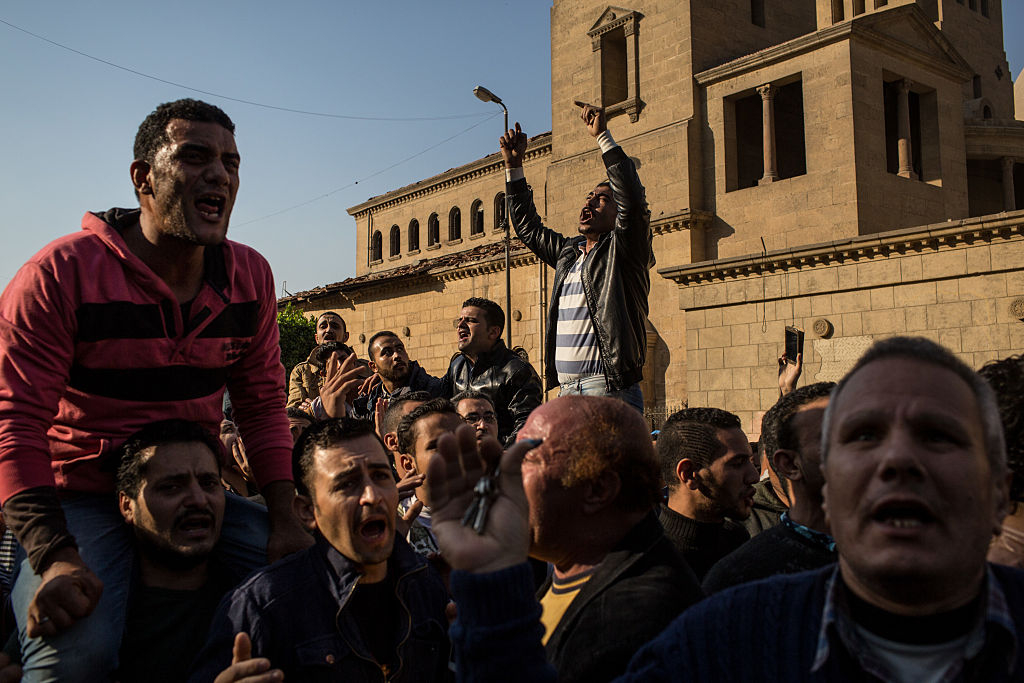

Coptic Christians protest outside the church of St Peter and St Paul in Cairo, Egypt, after a bomb attack on the complex, on December 11, 2016. (Photo by Chris McGrath/Getty Images)


Pakistani Justice

On January 28, a court acquitted 106 Muslims of burning down an entire Christian village in 2013 — including 150 homes and three churches. The attack came after one of its inhabitants, Sawan Masih, was accused of blasphemy. More than 80 prosecution witnesses, 63 of them with statements recorded about the attack, said they did not recognize any of the 106 accused. So they were all released.
Also on January 28, the government arrested an elderly Christian man on the charge of blasphemy — which carries a maximum death penalty. A mosque leader accused Mukhtar Masih, 70, of writing two letters containing derogatory remarks about the Koran and Muhammad. The report cites a source who said that "the charges against Masih were fabricated by local Muslims seeking to seize his property." Nonetheless, police raided the elderly man's home the same day and took his entire family into custody. His family was released but he was booked on charges of blasphemy, and beaten in an attempt to force him to admit to it.
Separately, the Pakistani government denied that "Christian minorities are being targeted by the country's controversial blasphemy laws," says another report — despite the well-known fact that religious minorities, chief among them Christians, are the demographic group most prone to being accused and convicted of blasphemy, to say nothing of being beaten, lynched, and burned alive in mob attacks. After alleging that, of 129 cases of blasphemy, 99 were leveled against fellow Muslims, Interior Minister Nisar Ali Khan said "religious minorities are not being embroiled in blasphemy cases more than Muslims." However, "[s]everal different persecution watchdog groups have pointed out that Christians are often heavily targeted by blasphemy laws." Pakistani human rights activist Wilson Chowdhry said officials are "twisting statistics":
"Sadly, Mr Khan's comments... [and] contrived results have failed to recognize that Christians in recent years have become the number one target of blasphemy allegations. It is our belief that a large proportion of the 26 percent of blasphemy convictions listed against minorities will have sentenced Christians, yet we contribute only 1.6 percent of the entire national population."

Muslim Hate for and Discrimination against Christians

Egypt: Fadi, a 15-year-old Christian boy, was sentenced to 15 years in prison after being found guilty of what human rights activists say is a false accusation. Last summer, a Muslim neighbor accused him of sexually assaulting an 8-year-old Muslim boy. Investigations and forensic examinations were performed but revealed no evidence of sexual activity. The family was still ordered to leave the village and the charges remained. According to Fadi's mother, Hana, he was targeted only because their Muslim neighbors, whose grandfather is an influential imam at the local mosque, "don't like Christians." She adds: the "judge convicted my son to 15 years because he is a Christian. If he was a Muslim boy, the judge would acquit him when he saw the forensic report, because the forensic report absolved my son," but "because my son is Christian," the judge "believed the speech of [the Muslim boy's] father instead of the forensic report."

Turkey: The Islamic terrorist who opened fire on an Istanbul nightclub during New Year's Eve celebrations confessed that "I wanted to stage the attack on Christians in order to exact revenge on them for their acts committed all over the world. My aim was to kill Christians." But for a variety of reasons that made it difficult for him to launch a spectacular attack on Christians, Abdulkadir Masharipov, of Uzbeki origin, ended up killing 39 people and wounded 65 others at a nightclub. He laments that he did not die then and there as a "martyr": "When I was out of bullets, I threw two stun grenades. I put the third one near my face to commit suicide, but I didn't die. I survived, but I entered Reina [nightclub] to die." Apparently to hurry him on his way to what he sought on the day of attack, Islamic paradise, Abdulkadir said that "it would be good if he were given capital punishment."

Iraq: Kurdish Peshmerga forces continue to be hostile to a Christian militia group also fighting the Islamic State. After William J. Murray, chairman of the Washington, D.C.-based Religious Freedom Coalition, visited the Christian town of Qaraqosh on the Nineveh Plain, he wrote that it
"has enemies other than the ruthless Islamic State, or ISIS, which left it in ruins. Currently the Kurdish militia, the Peshmerga, is blocking aid to the NPU [Nineveh Protection Unit] that guards the town, because the NPU is the Assyrian Christian militia. It is the only armed Christian group in Iraq.... While for appearance and funding from Washington, the Kurds support Christian interests for now, the historical relationship between the two groups includes participation in slaughtering Christians by the tens of thousands. There is no room for a Christian enclave, particularly one that is armed, in the future of an independent state of Kurdistan..."
Kurds are Sunni Muslims.

France: A new study revealed that, in the Western European nation with the largest Muslim population, the overwhelming majority of "religious attacks" are against Christians. "Acts targeting Christian places accounted for 90% of all attacks on places of worship (Christians, Jews or Muslims)." Although the government responded to these statistics by saying that "all these acts have no religious motivation," and that out of 949 attacks on churches, "there was a possible 'satanic motivation' in 14 cases and an 'anarchist' motivation in 25," it did not reveal the source behind the other 910 attacks. Another report, however, from neighboring Germany gives a hint:
"Last year in Dülmen, following the arrival of well over a million [mostly Muslim] migrants in Germany, local media said 'not a day goes by' without attacks on Christian religious statues."
===========

About this Series

While not all, or even most, Muslims are involved, persecution of Christians by Muslims is growing. The report posits that such Muslim persecution is not random but rather systematic, and takes place irrespective of language, ethnicity, or location.
Raymond Ibrahim is the author of Crucified Again: Exposing Islam's New War on Christians (published by Regnery with Gatestone Institute, April 2013).
Follow Raymond Ibrahim on Twitter and Facebook
============= 

Soeren Kern : Germany: Wave of Muslim Honor Killings

  • The court heard how Amer K. stabbed the mother of his three children in the chest and neck more than twenty times with a large kitchen knife, because he thought she wanted to divorce him.
  • "Then he takes the knife and plunges it into her chest, [penetrating] the pericardium and heart muscle. A second stab opens the left abdominal cavity. Nurettin B. then pulls out the ax. With the blunt side he hits her head, cracking her skull. Then he grabs the rope. On one end he ties a gibbet knot around her neck, then he ties the other end to the trailer hitch on [his car]... He races through the streets at 80 km/h [until] the rope breaks." — State Prosecutor Ann-Kristin Fröhlich, reconstructing the husband's actions.
  • In Ahaus, a 27-year-old Nigerian asylum seeker stabbed to death a 22-year-old woman after she seemingly offended his honor by rejecting his romantic advances.
The trial of a Kurdish man who tied one of his three wives to the back of a car and dragged her through the streets of a town in Lower Saxony has drawn attention to an outbreak of Muslim honor violence in Germany.

Honor violence — ranging from emotional abuse to physical and sexual violence to murder — is usually carried out by male family members against female family members who are perceived to have brought shame upon a family or clan.

Offenses include refusing to agree to an arranged marriage, entering into a relationship with a non-Muslim or someone not approved by the family, refusing to stay in an abusive marriage or living an excessively Western lifestyle. In practice, however, the lines between crimes of honor and crimes of passion are often blurred and any challenge to male authority can elicit retribution, which is sometimes staggeringly brutal.

On May 22, a court in Hanover heard how a 39-year-old Turkish-born Kurd named Nurettin B. attempted to murder his second wife, Kader K., 28, after she asked him to provide financial support for their two-year-old son.
State Prosecutor Ann-Kristin Fröhlich reconstructed Nurettin B.'s actions:
"At around 6PM on November 20, 2016, Nurettin B. got into his car in Hamelin to meet Kader K. The trunk contained a knife, an ax and a rope. Sitting on the back seat of the car was their two-year-old son, who had spent the weekend with him. On the street, the former couple got into an argument and he begins hitting her. Then he takes the knife and plunges it into her chest. The 12.4 centimeter long blade penetrates the pericardium and heart muscle. A second stab opens the left abdominal cavity. Nurettin B. then pulls out the ax. With the blunt side he hits her head and upper body, cracking her skull.
"Then he grabs the rope. On one end he ties a gibbet knot around her neck, then he ties the other end to the trailer hitch on the back of his black VW Passat. Nurettin B. steps on the gas. He races through the streets at 80 km/h (50 mph). After 208 meters (680 feet) the rope breaks. Kader K. is hurled against the curb. Nurettin B. drives to the police station to turn himself in. The child is still sitting in the back seat."
Presiding Judge Wolfgang Rosenbusch asked Kader K., who was comatose for weeks, to tell her side of the story. She said "the horror" began immediately after their Islamic sharia wedding (the marriage is not valid according to German law) in March 2013, when Nurettin B. prohibited her from having any contact with friends and family. She was allowed to leave the house only for grocery shopping and medical visits. She was not allowed to have a mobile phone. Rosenbusch asked: "Does he have a problem with women?" Kader K. replied: "He believes women are slaves; they must keep silent."

Nurettin B. has confessed to the crime but insists it was not premeditated. He has been charged with attempted murder and faces a maximum sentence of 15 years in prison.

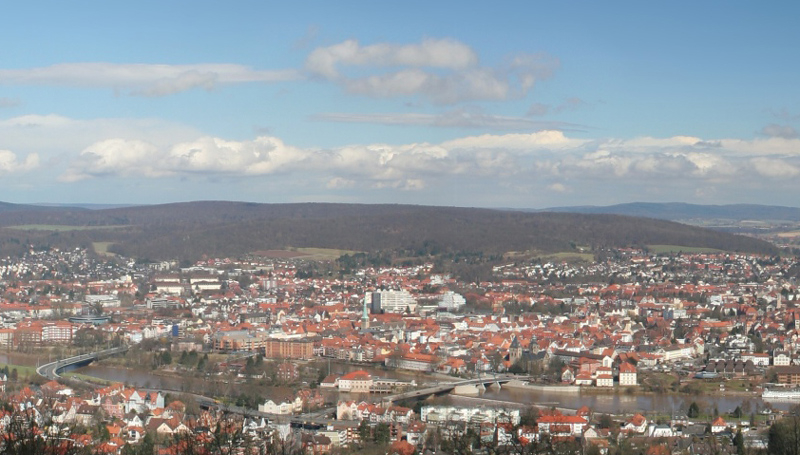
The picturesque town of Hamelin, Germany was the scene of horrific honor violence, when a Turkish-born Kurd named Nurettin B. attempted to murder one of his three wives. (Image source: Martin Möller/Wikimedia Commons)

On May 9, a court in Kiel sentenced 35-year-old Turkish man to two-and-a-half years in prison for shooting his estranged wife in both knees and permanently laming her, in the hope that she would be unattractive to other men. The court heard how the man took his wife to the back of a local mosque after Friday prayers, accused her of offending his honor and shot her, saying: "Now you can no longer walk. You will stay at home."

In court, however, the woman, possibly under pressure from her family or the mosque, told the court that they couple had reconciled and would attend marriage counselling. Some observers surmised that the dispute may have been resolved in a sharia court. In any event, the German court allowed the man to return home with his wife and it remains unclear if and when he will serve his sentence.

In Münster, a court sentenced a 36-year-old Lebanese man named Amer K. to 12 years in prison for stabbing his wife to death. The court heard how Amer K. stabbed 26-year-old Fatima S., the mother of his three children, in the chest and neck more than twenty times with a large kitchen knife because he thought she wanted to divorce him.

Meanwhile, a court in Hanau sentenced a 22-year-old Syrian refugee to twelve years in prison for stabbing to death his 30-year-old sister, Ramia A., with a kitchen knife. She was 23 weeks pregnant and was accused of having brought shame to her family. Her unborn child also died in the attack.

The true scale of Germany's honor crime problem is unknown: many such crimes go unreported and reliable statistics do not exist. Empirical evidence indicates that honor violence — primarily but not exclusively the product of Muslim culture and Islamic law, sharia — has metastasized since Chancellor Angela Merkel allowed in some two million migrants from Africa, Asia and the Middle East.

In March 2011, the Max Planck Institute published a landmark study on honor killings. The study analyzed all such crimes known to have occurred in Germany between 1996 and 2005. The report found that there were two honor killings in 1998 and 12 in 2004. By 2016, however, the number had jumped to more than 60, an increase of 400%, according to the website Ehrenmord.

The actual number of honor crimes presumably is much higher. Increased censorship by the police and the media, aimed at stemming anti-immigration sentiments, makes it impossible to know the names and national origins of many victims or perpetrators, or the true circumstances surrounding many murders, which often appear to be honor killings but are downplayed as "domestic disputes" (Familienangelegenheiten).

2017 is nevertheless on track to be a record year for honor violence in Germany; in the first five months of this year, there have been at least 30 honor killings, including the following:

May 18. In Berlin, a 32-year-old Bosnian, Edin A., murdered his former girlfriend, a 35-year-old German woman named Michelle E., after she ended their abusive relationship. He also abducted and tortured her 12-year-old son, who was forced to watch his mother's murder. Neighbors said they had repeatedly alerted the police about Edin A.'s violent behavior, but the police did nothing.

May 17. In Pforzheim, a 53-year-old Tajik man stabbed to death his 50-year-old wife at her place of employment, a Christian daycare center. It remains unclear if the woman was a convert to Christianity.

May 17. In Wardenburg, a 37-year-old Iraqi man stabbed to death his 37-year-old wife while she was asleep in her bed. The couple's five children, between the ages of four and 15, were at home at the time of the murder and are now living with relatives.

May 8. In Neuendettelsau, a 24-year-old Ethiopian asylum seeker, Mohammed G., stabbed his 22-year-old girlfriend in the stomach at a restaurant after she allegedly "provoked" him. The woman was five months pregnant; the unborn baby died in the attack.

May 4. In Freiburg, a 33-year-old Syrian asylum seeker stabbed his 24-year-old wife, a Kurdish Christian who had moved out of the couple's apartment, but had returned to collect some personal belongings. The couple's three children — aged six, three and ten months — are now in protective custody.

April 29. In Prien am Chiemsee, a 29-year-old Afghan man stabbed to death a 38-year-old Afghan woman, Farima S., who had converted to Christianity. The attacker ambushed the woman as she was exiting a grocery store with her two children.

April 23. In Syke, a 32-year-old Iraqi man, Murad B., strangled his 32-year-old wife, Mehe K., in front of the couple's three children, ages one, two and nine.

April 23. In Dresden, a 29-year-old Pakistani refugee, Shahajan Butt, murdered his girlfriend, a 41-year-old Vietnamese woman named Thu T. Police say the man, who arrived in Germany in December 2015, became enraged after he noticed that the woman had not posted any photos of him on her Facebook page, and suspected that she may have had another boyfriend.

April 16. In Mainz-Finthen, a 39-year-old Egyptian asylum seeker stabbed to death his 32-year-old wife. Police said the couple had been arguing at the time of the attack. Their two children are being held in protective custody.
April 5. In Leipzig, a 34-year-old Syrian man stabbed his 28-year-old wife because she wanted a divorce. The couple's two children witnessed the attack; they are being held in protective custody.

March 31. In Gütersloh, a 43-year-old Syrian man burned his 18-year-old daughter with a cigarette and threatened to kill her. When the police intervened, the father refused to allow his daughter to leave the house. After police succeeded in bringing the girl to safety, the father and son attacked the police, who used pepper-spray to fend them off. The girl is being held in protective custody.

March 15. In Kiel, a 40-year-old German-Turkish man stabbed to death his 34-year-old Turkish wife in front of a daycare center. Neighbors said the couple, who were separated, had quarreled about moving their three children to Turkey.

March 4. In Duisburg, a 30-year-old Syrian asylum seeker, Mahmood Mahrusseh, stabbed his 32-year-old ex-girlfriend. The woman survived; her attacker remains at large.

March 3. In Mönchengladbach, a 32-year-old asylum seeker, Ahmed Salim, murdered a 47-year-old German woman, Nicole M., apparently after she ended a relationship with him. The man, who also uses the alias Jamal Amilia, was arrested in Spain. In his asylum application, he had written that he was from Israel. In another asylum application filed in another country, he had written that he was from Morocco. He is believed to be from Iraq.

March 2. In Scheeßel, a 42-year-old Iraqi man stabbed to death his 52-year-old wife, also from Iraq. Police described the murder as an honor killing. The couple's children are now in protective custody.

February 25. In Euskirchen, a 32-year-old German-Turkish man stabbed to death his former girlfriend, a 32-year-old German woman who had begun dating someone else.

February 17. In Offenbach, a 32-year-old Turkish man, Volkan T., shot to death his former girlfriend, a 40-year-old woman, Silvia B. The man said he was angry that the woman, who had two children, had ended her relationship with him.

February 15. In Bielefeld, a 51-year-old Iraqi man tried to murder his 51-year-old wife by attacking her with a hammer while she was attending a German class at a local language academy. The man was apparently angry that his wife was mixing with other language students.

February 10. In Ahaus, a 27-year-old Nigerian asylum seeker stabbed to death a 22-year-old woman after she seemingly offended his honor by rejecting his romantic advances. The woman, a Hindu, was employed at the same asylum shelter where her attacker lived. He was arrested in Basel, Switzerland.

February 7. In Hanover-Mühlenberg, a 21-year-old Serbian man stabbed his ex-girlfriend after she ended their relationship and had begun dating someone else.

February 1. In Hamburg, a 26-year-old Afghan man stabbed his estranged 28-year-old wife during an argument; she survived the attack.

January 15. In Bremen-Vegesack, a 39-year-old Turkish man murdered his 40-year-old Syrian wife, who was nine months pregnant, because she wanted to divorce him. The unborn baby also died during the attack.

January 5. In Waldshut-Tiengen, a 47-year-old Turkish man stabbed his estranged wife as she was walking with a friend. When she tried to run away, he pursued her and plunged a knife in her back
.
January 4. In Köln-Buchheim, a 44-year-old Iraqi man murdered his 19-year-old daughter because he did not approve of her boyfriend. Two days later, he called police. "I killed my daughter," he said. The man may never face justice; he is believed to have fled to Iraq.
Soeren Kern is a Senior Fellow at the New York-based Gatestone Institute. Follow him on Facebook and on Twitter.

Hugh Fitzgerald : Olivier Roy, “One of France’s Top Experts On Islamic Terrorism” (Part I)

Hugh Fitzgerald: Olivier Roy, “One of France’s Top Experts On Islamic Terrorism” (Part I)


Olivier Roy, who refuses to believe that the acts of Muslim terrorists might actually be explained by reference to Islam, its texts and teachings, was quick off the mark in explaining the Manchester bombing:
Salman Abedi, the suicide bomber who killed 22 people at a Manchester pop concert this week, started life advantageously enough: to parents who had fled Gadhafi’s Libya for a new life in Britain. But actually it was that kind of dislocation that would send him off kilter two decades later, says Olivier Roy, one of France’s top experts on Islamic terrorism.
“An estimated 60 percent of those who espouse violent jihadism in Europe are second-generation Muslims who have lost their connection with their country of origin and have failed to integrate into Western societies,” Roy says.
They are subject to a “process of deculturation” that leaves them ignorant of and detached from both the European society and the one of their origins. The result, Roy argues, is a dangerous “identity vacuum” in which “violent extremism thrives.”
As it happens, Salman Abedi did not “lose his connection” to Libya; in Manchester he lived in what was in effect a Little Libya, one of  the largest communities of Libyans outside of Libya itself, surrounded by fellow Libyans, as well as other Muslims. Nor did his family sever their own connection to Libya. His parents moved back to Libya in 2011, but they, and at least two of his siblings, returned to Manchester often; his father, known as Abu Ismail, had been a member of the Libyan Islamic Fighting Group, an anti-Khaddafy force that had close links to Al-Qaeda. When he was in Manchester, he and Salman Abedi regularly attended the Didsbury Mosque.

Abedi himself made frequent trips to Libya and was there, in fact, just before he returned to carry out the Manchester  attack. He remained a devout Muslim, and gave no sign of falling away from Islam. His only sign of “Western decadence” was his occasionally smoking marijuana. He was not affected by “deculturation.” He did not suffer from a “dangerous ‘identity vacuum,” as Olivier Roy would have us believe. He memorized the entire Qur’an, earning the title of hafiz. He was perfectly secure in his Muslim identity. Yet Olivier Roy insists on a psychological explanation — an “identity vacuum” — for Abedi’s decision to become a shahid, despite all the evidence to the contrary. But that is because he continues to refuse to take the ideology of Islam seriously, refuses even to discuss the possibility that the clear meaning of the Islamic texts and teachings might be sufficient to explain Muslim terrorism.

If Salman Abedi did not appear to suffer from that “identity vacuum” that Roy insists explains much of Muslim terrorism, how would he explain what has prompted other terrorists, those who did not live in the West and could hardly be described as enduring that “identity vacuum” which he wrongly ascribes to Abedi? Let’s see. What was the “identity vacuum,” Olivier Roy should explain, experienced by Osama bin Laden and Ayman Al-Zawahiri, the leaders of Al-Qaeda who spent their lives entirely within Muslim lands? What “identity vacuum” prompted Abu Musab Al-Zarqawi, who was born and raised in Jordan, and spent his later life fighting Infidels in Iraq, including the Shi’a, whom he regarded as the worst kind of Infidels?  Or Abu Bakr Al-Baghdadi, the “caliph” of the Islamic State, who had studied Islam for years, and had three advanced degrees in Islamic studies from the Islamic University in Baghdad? None of these, nor hundreds of other Muslim terrorists, whose identities are known, and who have taken part in attacks on Infidels, appear to have had an “identity vacuum.”

Anwar Al-Awlaki was born in New Mexico, spent the first seven years of his life in America before returning with his parents to Yemen, and then spent another twelve years in the United States, serving as an imam for a year at a notorious mosque in Falls Church, Virginia before he returned to Yemen. But did he suffer from an “identity vacuum,” or was he, rather, always a committed Muslim while living in the West? How many of those who left Europe to join the Islamic State had previously suffered from an “identity vacuum,” or had wavered in their commitment to Islam? Is there an “identity vacuum” among the Muslims of Boko Haram in Nigeria, or Abu Sayyaf in the Philippines?

This psychological explanation for Islamic terrorism simply draws attention away from what is to be found in the Qur’an, hadith, and sira, that is, the duty of Jihad and of Commanding Right and Forbidding Wrong.
Olivier Roy, like O.J. Simpson, is “looking for the real killer” and finds it in the “identity vacuum” he claims so many Muslims suffer from.
Born in Britain in 1994, Abedi would later be drawn to violent fundamentalism after a life in limbo. On the one hand, he tried to reconnect with Libya, where he traveled shortly before this week’s attack, while on the other, he strove to emulate the same British young people he killed.
In Roy’s narrative, Abedi “tried to reconnect with Libya” — but through his frequent trips back, his family in Libya, his living within a largely Libyan milieu in Manchester — there was no need to “try to reconnect” because he never lost his Libyan connection.
And Roy insists he “strove to emulate the same….people he killed.” Roy offers no evidence for this. How did Abedi strive to emulate them? Does occasionally smoking marijuana constitute an attempt to “emulate the same British people [mostly, young girls] he killed”? He had intermittent connections to a gang of Libyan Muslims in Manchester, whose property crimes against Infidels they may have regarded as helping themselves to the Jizyah that they surely believed was theirs by right. In that activity, was he emulating these young girls he targeted?
Unlike second generations like Abedi’s, third generations are normally better integrated in the West and don’t account for more than 15 percent of homegrown jihadis,” Roy says. “Converts, who also have an approach to Islam decontextualized from any culture, account for about 25 percent of those who fall prey to violent fundamentalism.”
This is an example of “how to confuse with statistics.” Is Roy speaking about Muslims in the U.K., or France, or throughout the European Union? He doesn’t say. And his assertion that the third generation of Muslims account for “don’t account for more than 15 percent of homegrown jihadis” tells us little unless we know what percentage of Muslims in the West are “third-generation.” If that third generation constitutes 15 percent of the Muslim population of the West, then their accounting for no more “than 15 percent of homegrown jihadis” is scarcely cause for celebration. If, however, they accounted for, say, 5 percent of the Muslim population in the West, but 15 percent of the homegrown jihadis, that would be cause for even more alarm than sensible Infidels already feel. Roy doesn’t tell us what percentage of the total Muslim population in the West are third generation. Nor does he tell us how he would define being “better integrated” into European societies. Nor does he tell us how Islam is “decontextualized from any culture” when Islam itself carries with it its own culture, the culture of Islam, a Total Belief-System, including a Complete Regulation of a Believer’s Life and Explanation of the Universe, based on texts that do not change in time and space.

As for “converts,” who constitute about 25 percent of those who become violent Jihadists, what percentage of the Muslims in France or the West (it still not having been made clear by Olivier Roy what country or countries, and what Muslim population, he is talking about) are converts? If they are 50 percent of the Muslim population, but only 25 percent of the Jihadis, that tells us that converts are less likely to be violent. If, on the other hand, converts are, say, 10 percent of the total Muslim population, but 25 percent of the violent Jihadists, this tells a different story. Olivier Roy again fails to provide the information needed for any judgement to be made.
It’s a pattern that can be traced from second-generation Khaled Kelkal, France’s first homegrown jihadi in 1995, to the Kouachi brothers who attacked satirical magazine Charlie Hebdo in Paris in 2015. The rule also applies to foreign fighters such as Sabri Refla, the Belgian-born son of a Moroccan father and a Tunisian mother who left for Syria at 18 “after espousing an Islam completely unrelated to our background,” says his grieving mother Saliha Ben Ali.
What exactly is the “pattern’” that Olivier Roy claims to have traced? That some second-generation Muslims in the West become jihadists? Yes, we all know this. We all know that first, second, and even third generation Muslims in the West have become Jihadists, and so have converts to Islam, and so have Muslims who have never set foot in the West. And he reports the self-serving remark by a mother (described, with unmerited empathy, as “grieving”) that her Muslim terrorist son “was espousing an Islam completely unrelated to our background.”

So what, then, was the Islam that the son’s family espoused? A bowdlerized Qur’an from which all 109 Jihad verses were excised? Or from which all the negative comments on Infidels — such as that they are “the vilest of creatures,” and that Muslims should not take Christians and Jews as friends — have been removed?
With little if any understanding of religion or Islamic culture, young people like Abedi turn to terrorism out of a “suicidal instinct” and “a fascination for death,” Roy says. This key element is exemplified by the jihadi slogan first coined by Osama bin Laden: “We love death like you love life.”
The large majority of Al-Qaida and Islamic State jihadis, including the Manchester attacker Abedi, commit suicide attacks not because it makes sense strategically from a military perspective or because it’s consistent with the Salafi creed,” Roy says. “These attacks don’t weaken the enemy significantly, and Islam condemns self-immolation as interference with God’s will. These kids seek death as an end-goal in itself.”
Olivier Roy claims that Abedi had “little if any understanding of religion or Islamic culture” — even though he was the devout Muslim son of a devout father, attended mosque regularly, associated with Muslims, lived in a Libyan Muslim environment within Manchester, traveled back and forth to Libya,  and had committed to memory the entire Qur’an. On what basis, therefore, did Olivier Roy conclude that Salman Abedi “had little if any understanding of religion or Islamic culture”?
What part of Islam does Roy think Abedi didn’t understand? And more tellingly, what part of Islam do we now know that Olivier Roy does not understand?

Olivier Roy makes much of a “suicidal instinct” that he thinks leads young people to “turn to terrorism.” He fails to recognize the clear distinction Muslims make between committing suicide and being a martyr, or shahid, willing to lose his life in an attack on Infidels. 

He claims that “We love death like you love life” is a “slogan first coined by Osama bin Laden.” He’s off by about 1350 years. The phrase originated at the Battle of Qadisiyya, in the year 636, when the commander of the Muslim forces, Khalid ibn Al-Walid, sent an emissary with a message from Caliph Abu Bakr to the Persian commander, Khosru. 
The message stated: “You [Khosru and his people] should convert to Islam, and then you will be safe, for if you don’t, you should know that I have come to you with an army of men that love death, as you love life.”
This account has been recited in Muslim sermons, newspapers, and textbooks for years, long before Osama bin Laden mentioned it. It is remarkable that Olivier Roy appears unaware of all this, and attributes it to bin Laden.

Then there is Roy’s claim that “self-immolation” is condemned by Islam, so that the suicide Jihadis are merely fulfilling their own death-wish and not following the tenets of Islam. Suicide, by itself, is certainly condemned in Islam. But in Islam, the Jihadis who die while attacking and killing Infidels, fulfilling the commandment to wage Jihad, are not regarded as committing suicide, which is forbidden, but as being willing to risk almost certain death in the commission of a deed of derring-do against Infidels, for which they deserve to be regarded as shahids, martyrs who have earned a place in Paradise. Islam is against “suicide” — that is, taking one’s life out of despair — but not against losing one’s life while conducting an act of violent Jihad. There are many passages in the Qur’an and hadith that praise a Jihadi who knows he may well lose his life in an attack on Infidels. Roy simply refuses to credit the distinction in Islam between the suicides and the shahids, and to recognize that the latter are not, pace Roy “merely fulfilling their own death-wish,” but are carrying out one of Islam’s highest deeds.

Olivier Roy claims that the Manchester and similar terror attacks do not make sense strategically. We are asked to believe that these attacks “don’t weaken the enemy significantly.”  
Is that true? Haven’t the more than 30,000 terrorist attacks by Muslims since 9/11/2001 had an enormous effect on the peoples of the West? 
Doesn’t the palpable sense of insecurity that is now felt by non-Muslims all over Western Europe constitute  a “weakening” of the enemy? Doesn’t the fact that governments in the West now must constantly reassure their populations about the “level of threat” show that Islamic terrorism is having an effect? 
Are crowds in Paris and London, in Stockholm and Nice and Brussels and Munich, really as carefree as they were, say, twenty years ago? 
Is there not, in many places, a palpable sense of anxiety, even dread? Isn’t terrorism on the tip of every tongue, each new atrocity ratcheting up the level of fear, with “terrorism” (the adjective “Islamic” ordinarily left out, but clearly understood) the subject of constant government study and pronouncements by lone academics, or solemn committees, charged with understanding the phenomenon and too often eager to claim or suggest that “Islamic terrorism” has nothing to do with Islam? 
Isn’t Olivier Roy himself the member of a vast tribe of “Islamic terrorism experts” that only came into being just a few decades ago?

Along with the psychic cost, there is the economic cost of Islamic terrorism. The United States has spent some $791 billion for homeland security between 9/11/2001 and 3/01/2013. From 3/01/2013 to 2017, given that costs have kept increasing by at least one-third of that $791 billion, that means to a certainty that at least one trillion dollars has been spent from 9/11/2001 to  6/1/2017 on homeland security, just in one country. Nor does that figure include the $5 trillion spent by the United States abroad, in campaigns to both defeat terrorism — the Taliban and Al-Qaeda in Afghanistan, the Islamic State in Iraq and Syria — and to attempt to establish regimes that would meet some minimum level of decency, and thus, it was felt, dampen down the terrorist temptation. The skyrocketing sums spent in Iraq to bring good government after Saddam Hussein was toppled, and in Afghanistan to keep the Taliban off-balance and on the run, and even in Syria, with costly American support for the soi-disant “good rebels” who, it is hoped, will fight both Bashar al-Assad and the Islamic State, are expenses that can reasonably be linked, albeit indirectly, to the need to improve homeland security.

Think of the cost, too, all over Europe, for security measures made necessary by the threat of Islamic terrorism. There is now a huge security apparatus in place, increasing with each new attack. Think of the guards now deemed necessary, at airports and on airplanes, at train stations and on trains, at bus stations and on buses, at churches and synagogues and Hindu temples, at Christian and Jewish  schools, at concert halls, at museums, at libraries, at sports events, at celebrations of national holidays, at Christmas markets, almost anywhere that a large and vulnerable crowd might assemble, and then might be blown up, or mowed down, by an Islamic terrorist or terrorists eager to “strike terror” in the hearts of Infidels. Think of the additional cost of the army patrols that now march through many European (and especially French) cities and towns, conducting their sweeps of sensitive or vulnerable areas, both to look for suspicious behavior as well as to reassure the populace.

Before the World Trade Center bombing, France used to deploy 20,000 soldiers at Christmas time. In 2015, it deployed 120,000. What have those extra 100,000 men cost French taxpayers? Think of the cost to the European governments of paying for those who must now monitor mosques and Muslim neighborhoods, and who also now pay large numbers of Muslim informers (whose trustworthiness is subject to debate, but whose ability to extract large sums from the government is beyond debate). Add to these the cost for extra police and detectives needed to conduct round-the-clock surveillance of some high-risk Muslims, lesser levels of surveillance for others, and the need to follow up every lead in order to prevent attacks (and the public may not realize just how many attacks have been, and will be, prevented by such tedious and expensive work). Then, after attacks, people connected to the perpetrator are picked up, with more detective work, more prosecutors, more court-appointed lawyers, more judges, and ultimately, more prison cells — all made necessary by the permanent threat of Islamic terrorism.

It’s not a small problem. In late May, MI5 admitted that there were at least “23,000 Jihadis” in the United Kingdom.

How much, do you think, constant surveillance of 23,000 wily and dangerous Jihadis costs the British government? How many police resources have had to be diverted and devoted to this task?

Think also of the economic loss when events are cancelled out of fear of possible terrorism.
Among events that have been cancelled in Europe are concerts, bicycle races, Christmas festivals, concerts, and the largest open-air flea market in all of Europe, La Braderie in Lille.
Most recently, the government of the U.K. even cancelled The Changing of the Guard.
The direct cost is to those who had to cancel their concerts, sports events, Christmas markets, open-air markets, flea markets.
But the larger loss comes from cancellations by tourists who change their plans and decide not to visit a city or country that has been the object of repeated terrorist attacks.
Again, this has become a huge problem. In 2016, there were 5 million fewer tourists in Paris than in 2015. This cost Paris — its restaurants, hotels, shops, theatres, museums — 1.3 billion Euros, or 1.5 billion dollars — just in that one year. For France as a whole, how many billions of tourist dollars have been lost because of terrorism? In Nice, in Lyon, in Toulouse, cities where there have been widely publicized murderous attacks, tourism has suffered. And what has been the cost in lost tourism for France as a whole? And what further drop in tourism since 2016?

If we take all of Western Europe, how many tens of billions of tourist dollars have been lost in the U.K. (especially in London), Germany, the Netherlands, Belgium, Scandinavia (especially Sweden, and in islamified Malmo)?
Just the other day, the Russian government issued a warning to Russian tourists to avoid London, based on the attacks in Manchester and the abortive attempt to attack the Houses of Parliament which got as far as Westminster Bridge. How much of a drop in Russians going to London will there be? And what happens after the next major attack? And the next?

Travel agents and others involved in the tourism industry have made clear that the main reason tourists — especially Chinese and Japanese tourists, who happen to be the biggest spenders — chose not to visit Paris in 2016 was fear over terrorism and security in the wake of the Charlie Hebdo massacre in January 2015 and the attacks in November (at the Bataclan nightclub, and the restaurant Au Petit Cambodge) of the same year. Each new attack does damage to tourism in the city, and country, where the attack took place.

If the United States has had to spend more than $1 trillion on homeland security, and the countries of Western Europe collectively spent a similar sum, and if we were to tote up both those expenditures and the tens of billions of dollars in lost revenues because of declines in tourism due to Islamic terror attacks, surely that is a major success for those waging economic jihad.

Yet Olivier Roy blandly informs us that the attacks by Muslims in the West have been of “little strategic value” and “don’t weaken the enemy.” Is he right? The new expenses, for security, of a trillion here in the U.S. and a trillion there in Europe, and the tens of billions in lost tourism dollars, all of it the consequence of Muslim terrorism, is undeniably damaging — except to Olivier Roy, who  denies that Islamic terrorism does indeed “weaken the enemy” and says not a word about economic jihad.


https://www.jihadwatch.org/2017/05/hugh-fitzgerald-olivier-roy-one-of-frances-top-experts-on-islamic-terrorism-part-i
================

Saturday, May 27, 2017

Yves Mamou : France: No-Go Zones Now in Heart of Big Cities

  • "There are several hundred square meters of pavement abandoned to men alone; women are no longer considered entitled to be there. Cafés, bars and restaurants are prohibited to them, as are the sidewalks, the subway station and the public squares." – Le Parisien.
  • "For more than a year, the Chapelle-Pajol district (10th-18th arrondissements) has completely changed its face: groups of dozens of lone men, street vendors, aliens, migrants and smugglers harass women and hold the streets." – Le Parisien.
  • In the heart of Paris, Bordeaux, Toulouse, Marseille, Grenoble, Avignon, districts here and there have been "privatized" by a mix of drug traffickers, Salafist zealots and Islamic youth gangs. The main victims are women. They are – Muslim and non-Muslim -- sexually harassed; some are sexually assaulted. The politicians, as usual, are fully informed of the situation imposed upon women.

In January, 2015, a week after the attack on the satirical magazine Charlie Hebdo, the American television channel Fox News created a scandal in France by claiming that Islamic "no-go zones" were established in the heart of Paris. For the French media, the existence of no-go zones -- where non-Muslims are unwelcome and Islamic law, sharia, holds sway -- in the heart of the capital was pure nonsense and horrifying "fake news." Paris's mayor, Anne Hidalgo, said she planned to sue Fox News and that the "honor of Paris" was at stake.

By May 2017, however, the tone had changed. The French daily, Le Parisien, disclosed that, in fact, no-go zones are in the heart of the capital. It seems that the district of Chapelle-Pajol, in the east of Paris, has become very much a no-go zone. Hundreds of Muslim migrants and drug dealers crowd the streets, and harass women for wearing what many of these migrants apparently regard as immodest clothing:
"Women in this part of eastern Paris complain that they cannot move about without being subjected to comments and insults from men.
"There are several hundred square meters of pavement abandoned to men alone; women are no longer considered entitled to be there. Cafés, bars and restaurants are prohibited to them, as are the sidewalks, the subway station and the public squares. For more than a year, the Chapelle-Pajol district (10th-18th arrondissements) has completely changed its face: groups of dozens of lone men, street vendors, aliens, migrants and smugglers harass women and hold the streets."
Natalie, a 50-year-old resident of the area said: "The atmosphere is agonizing, to the point of having to modify our routes and our clothing. Some [women] even gave up going out."

Aurélie, 38, who has lived in the area for 15 years, said that the café-bar below her apartment had been a pleasant place, but has turned into an exclusively male establishment. "I have to listen to a lot of remarks when I pass by, especially since they drink a lot," she said.
A local 80-year-old woman is reported to have totally stopped leaving her apartment after being sexually assaulted one day as she was returning home. Another woman is said to suffer a flood of insults simply by standing at her window.

Mayor Hidalgo is not talking about suing the media for defaming the honor of Paris anymore. She even said that this security issue has been "identified for several weeks", and proposed launching an "exploratory process" to combat discrimination against women and a "local delinquency treatment group". It was slightly hollow, Orwellian "newspeak," and aroused mockery and indignation on social networks.

Mentioning no-go zones in France was, until recently, taboo. It was regarded as "racist" or "Islamophobic" -- most of the time both -- to talk about that. In May 2016, Patrick Kanner, France's Minister for Urban Areas, harassed by journalists, finally acknowledged the truth : "There are today, we know, a hundred neighborhoods in France that present potential similarities with what has happened in Molenbeek." He was referring to the infamous neighborhood in Brussels, under Salafist control, which has become the epicenter of jihad in Europe.
What is new, is that no-go zones are no longer relegated to the suburbs, where migrants and Muslims have usually been concentrated.


No-go zones, through mass migration, have been emerging in the heart of Paris, Bordeaux, Toulouse, Marseille, Grenoble, Avignon -- districts "privatized" here and there by a mix of drug traffickers, Salafist zealots and Islamic youth gangs. The main victims are women. They are -- both Muslim and non-Muslim -- sexually harassed; some are sexually assaulted.

Politicians, as usual, are fully informed of the situation imposed upon women. A 2014 report from the High Commissioner on Equality revealed that in the so-called "sensitive urban areas," nearly one in ten women has suffered physical or sexual violence.

Another report handed to the government, in September 2016, by the organization "France Médiation" revealed significant details, albeit written in chastened terms:
Public areas are "occupied" exclusively by men who "park" there, and women are merely authorized to pass through them...
It's not unique to this city: in the past 10 years, women have been seen public spaces desert them.
"You have to stay away, not provoke. I always go out with my children so there is no problem."
In some places, male groups "monopolize" public spaces and sometimes block the access to the entrances of buildings
Women are obliged to avoid the elevator in order to flee glances and remarks that are sometimes unpleasant. They have go up the stairs -- dirty, unlit and several stories high.
Cafés are occupied exclusively by men; women do not dare to enter them; they even avoid passing by.
The newly elected French president, Emmanuel Macron, ostensibly avoided security questions during the election campaign. No doubt, security questions will overtake him sooner than he thinks.


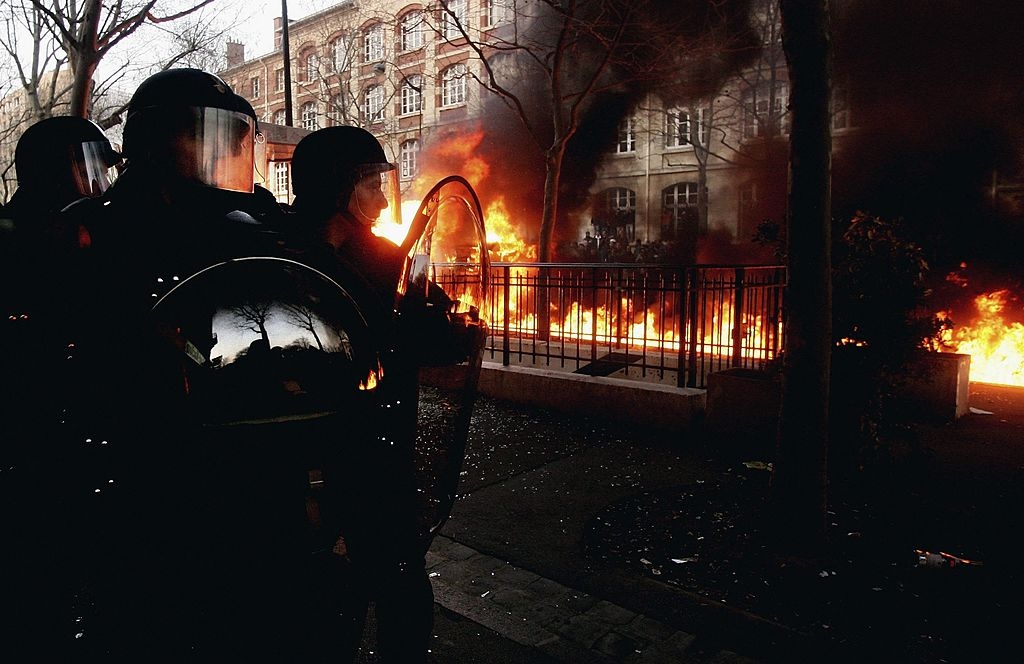
(Image source: Pascal Le Segretain/Getty Images)
Yves Mamou, author and journalist, based in France, worked for two decades as a journalist for Le Monde.

Uzay Bulut : Europe: Muslim Atrocities against Women? So What!

  • These examples are merely a sampling of what is becoming commonplace across Europe. In the name of human rights, inclusion, diversity and equality, "enlightened" activists and judicial authorities are apologizing for and excusing Muslim criminals for behavior that would not be tolerated from anyone else -- and should not be tolerated.
  • Do these judges work for Islamic sharia courts or for secular European courts?
  • These court rulings are an open call to Muslim men in Europe to rape women, children, anyone they like. Those cultures in which women and children as are viewed as property deserve no respect, and certainly not preferential treatment.
It happened again last week. Two Turkish nationals in Schwerin, Germany were arrested for raping a 13-year-old girl after forcing themselves into her home.


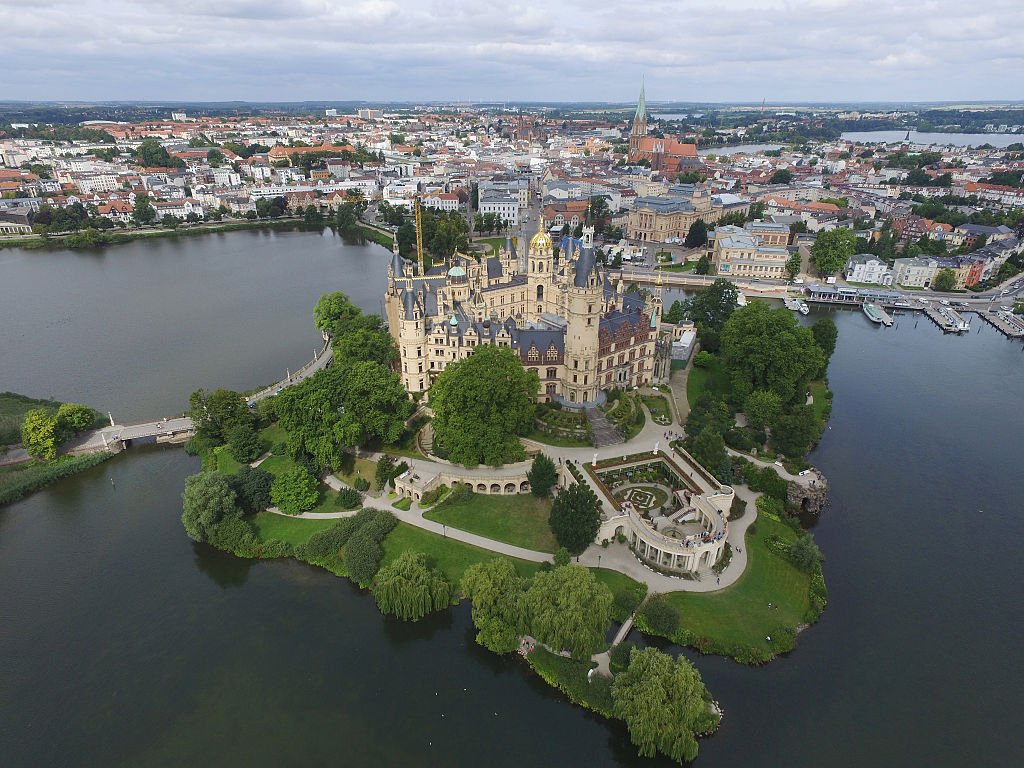
Schwerin, Germany (Image source: Getty Images)

Recently, a judge in Germany acquitted a Turkish drug dealer of raping one of his customers last August. He had forced himself on her for four hours and left her incapacitated for weeks. He told the judge that in the culture from where he came, what she "had experienced as rape" might be considered merely "wild sex".
What "culture" is this?

According to the Turkish women's rights organization "We Will Stop the Murders of Women," which publishes monthly reports, in March of this year alone, 35 women were killed; 14 others were exposed to sexual violence, and 63 children were molested. Many children, the report said, had been sexually abused for years, and often attempted suicide.

The report also stated that the murder of women in Turkey -- 63% percent of which is committed by husbands, boyfriends, fathers, brothers or sons -- is spurred more than half the time by women; it is supposedly their fault: they actually wanted to make decisions about their lives, such as getting a divorce, before they were murdered.

Worse, nearly a third of those are classified by authorities as "suspicious murders," perpetrated by "unknown assailants."

Torturing women to death is also increasingly widespread, as well as killing young children along with their mothers. One case involved a man who slit the throats of his ex-wife and their five-year-old daughter.

As above, crimes against girls and women are often shrugged off by Turkey's criminal justice system. One case in point is of a man acquitted by a judge in Eskisehir; the man was accused by his cousin of repeated rape and death threats, from the time the victim was 13 years old. After a nine-month trial and massive evidence against him, the man was acquitted.

Although crimes against women take place all over the world, practices such as sexual enslavement and stoning to death are far more widespread in Islamic societies, where they are also socially and legally tolerated -- as rooted in Islamic scripture. The Quran, for instance, allows men to beat his wives.

Tragically, Europe, when Muslims are the perpetrators, seems to be adopting the sharia approach to rape.
Britain's The Independent reported in October:
"A man who raped a 10-year-old boy at a swimming pool in Austria has had his conviction overturned after judges found he may have believed the child consented. Police said the 20-year-old Iraqi refugee, who has not been named, assaulted his victim in a toilet cubicle at the Theresienbad swimming pool in Vienna on 2 December last year.
"The child reported the rape to a lifeguard and his attacker was arrested at the scene, reportedly telling officers in initial interviews that he was experiencing a 'sexual emergency' after not having sex in four months. In June, he was jailed for a minimum of six years for rape and aggravated sexual abuse of a minor, and ordered to pay €4,700 (£3,700) compensation to the boy's family.
"Speaking to local media, the victim's mother revealed her son had been 'screaming and crying every night' since the attack and had talked of suicide."
This came from the UK's Daily Mail:
"A young left-wing German politician has admitted she lied to police about the racial background of three men who raped her in case it triggered reprisals against refugees in her country.
"Selin Gören, the national spokeswoman of the left-wing youth movement Solid, was attacked by three men in January in the city of Mannheim where she works as a refugee activist.
"The 24-year-old was ambushed late at night in a playground where she said she was forced to perform a sex act on her attackers.
"After the assault, she went straight to the police -- but she did not tell them the ethnic make-up of the men, that they were speaking Arabic or Farsi.
"Selin, aware of the backlash that migrants suffered after the events in Cologne on New Year's Eve - when hundreds of women were sexually assaulted and robbed by marauding gangs of immigrant youths - instead said she was robbed and said her attackers spoke German.
"Now she has told Germany's Spiegel magazine why she lied...[because she] did not want to stoke 'more hatred against migrants in Germany.'"
These examples are merely a sampling of what is becoming commonplace across Europe. In the name of human rights, inclusion, diversity and equality, "enlightened" activists and judicial authorities are apologizing for and excusing Muslim criminals for behavior that would not be tolerated from anyone else -- and that should not be tolerated.

By overlooking or justifying Islamic atrocities, Europeans are not only endangering innocent women and children; they are actually encouraging rape and other forms of violence. Meanwhile, they are also complicit in destroying Western values.
If one such value is multiculturalism, sadly -- contrary to "progressive" belief -- not all cultures are necessarily equal. Those cultures in which women and children as are viewed as property deserve no respect, and certainly not preferential treatment.

Do these judges work for sharia courts or for secular European courts?
What kind of a message do these judges give to Muslim and other criminals in Europe with their decisions? These court rulings are an open call to Muslim men in Europe to rape women, children, anyone they like. What will a society be like to live in if the courts will be on the side of the rapists and they will not be held accountable?

Why not publicize that if people decide to move to a country, they must respect the citizens and laws of that country? Bringing the primitive aspects of one's culture to a host country should not be encouraged or tolerated. Rape is always rape, assault is always assault, no matter who the perpetrator is. Western countries must stop tolerating Muslim criminals because of their religion. That is not wise public policy or even justice. Cultures and religions that do not respect women and others do not deserve to be respected.

Unfortunately, these extremely basic truths haven been largely ignored. The politically correct multiculturalists have created an environment in which some Europeans have forgotten what it means to stand up for reason, truth and justice- perhaps out of fear of being called "racist"; or the very misguided desire to "prevent a backlash against Muslims." It would be nice if Muslims would help to prevent the "frontlash".

By tolerating Muslim criminals in the name of human rights, tolerance, inclusion, diversity, or equality, however, these judges or activists are actually destroying those values. By taking the side of the rapists and becoming complicit in their crimes, they are encouraging rapists and turning everyone -- including children -- into potential victims.
Trying to justify rapes and other crimes committed by Muslims is an attack against the safety and dignity of everyone.
Uzay Bulut, a journalist born and raised a Muslim in Turkey, is currently based in Washington D.C. She is a writing fellow of the Middle East Forum.