.

.
Library of Professor Richard A. Macksey in Baltimore

POSTS BY SUBJECT

Labels

Wednesday, July 4, 2018

Ron Unz: the JFK Assassination, Part II – Who Did It?


American Pravda: the JFK Assassination, Part II – Who Did It?
• June 25, 2018


A strong dam may hold back an immense quantity of water, but once it breaks the resulting flood may sweep aside everything in its path. I had spent nearly my entire life never doubting that a lone gunman named Lee Harvey Oswald killed President John F. Kennedy nor that a different lone gunman took the life of his younger brother Robert a few years later. Once I came to accept that these were merely fairy tales widely disbelieved by many of the same political elites who publicly maintained them, I began considering other aspects of this important history, the most obvious being who was behind the conspiracy and what were their motives.
On these questions, the passage of a half-century and the deaths, natural or otherwise, of nearly all the contemporary witnesses drastically reduces any hope of coming to a firm conclusion. At best, we can evaluate possibilities and plausibilities rather than high likelihoods let alone near certainties. And given the total absence of any hard evidence, our exploration of the origins of the assassination must necessarily rely upon cautious speculation.
From such a considerable distance in time, a bird’s-eye view may be a reasonable starting point, allowing us to focus on the few elements of the apparent conspiracy that seem reasonably well established. The most basic of these is the background of the individuals who appear to have been associated with the assassination, and the recent books by David Talbot and James W. Douglass effectively summarize much of the evidence accumulated over the decades by an army of diligent assassination researchers. Most of the apparent conspirators seem to have had strong ties to organized crime, the CIA, or various anti-Castro activist groups, with considerable overlap across these categories. Oswald himself certainly fit this same profile although he was very likely the mere “patsy” that he claimed to be, as did Jack Ruby, the man who quickly silenced him and whose ties to the criminal underworld were long and extensive.
An unusual chain of events provided some of the strongest evidence of CIA involvement. Victor Marchetti, a career CIA officer, had risen to become Special Assistant to the Deputy Director, a position of some importance, before resigning in 1969 over policy differences. Although he fought a long battle with government censors over his book, The CIA and the Cult of Intelligence, he retained close ties with many former agency colleagues.
During the 1970s, the revelations of the Senate Church Committee and the House Select Committee on Assassinations had subjected the CIA to a great deal of negative public scrutiny, and there were growing suspicions of possible CIA links to JFK’s assassination. In 1978 longtime CIA Counter-intelligence chief James Angleton and a colleague provided Marchetti with an explosive leak, stating that the agency might be planning to admit a connection to the assassination, which had involved three shooters, but place the blame upon E. Howard Hunt, a former CIA officer who had become notorious during Watergate, and scapegoat him as a rogue agent, along with a few other equally tarnished colleagues. Marchetti published the resulting story in The Spotlight, a weekly national tabloid newspaper operated by Liberty Lobby, a rightwing populist organization based in DC. Although almost totally shunned by the mainstream media, The Spotlight was then at the peak of its influence, having almost 400,000 subscribers, as large a readership as the combined total of The New Republic, The Nation, and National Review.
Marchetti’s article suggested that Hunt had actually been in Dallas during the assassination, resulting in a libel lawsuit with potential damages large enough to bankrupt the publication. Longtime JFK assassination researcher Mark Lane became aware of the situation and volunteered his services to Liberty Lobby, hoping to use the legal proceedings, including the discovery process and subpoena power, as a means of securing additional evidence on the assassination, and after various court rulings and appeals, the case finally came to trial in 1985.
As Lane recounted in his 1991 bestseller, Plausible Denial, his strategy generally proved quite successful, not only allowing him to win the jury verdict against Hunt, but also eliciting sworn testimony from a former CIA operative of her personal involvement in the conspiracy along with the names of several other participants, though she claimed that her role had been strictly peripheral. And although Hunt continued for decades to totally deny any connection with the assassination, near the end of his life he made a series of video-taped interviews in which he admitted that he had indeed been involved in the JFK assassination and named several of the other conspirators, while also maintaining that his own role had been merely peripheral. Hunt’s explosive death-bed confession was recounted in a major 2007 Rolling Stone article and also heavily analyzed in Talbot’s books, especially his second one, but otherwise largely ignored by the media.
Many of these same apparent conspirators, drawn from the same loose alliance of groups, had previously been involved in the various U.S. government-backed attempts to assassinate Castro or overthrow his Communist government, and they had developed a bitter hostility towards President Kennedy for what they considered his betrayal during the Bay of Pigs fiasco and afterward. Therefore, there is a natural tendency to regard such animosity as the central factor behind the assassination, a perspective generally followed by Talbot, Douglass, and numerous other writers. They conclude that Kennedy died at the hands of harder-line anti-Communists, outraged over his perceived weakness regarding Cuba, Russia, and Vietnam, sentiments that were certainly widespread within right-wing political circles at the height of the Cold War.
While this framework for the assassination is certainly possible, it is far from certain. One may easily imagine that most of the lower-level participants in the Dallas events were driven by such considerations but that the central figures who organized the plot and set matters into motion had different motives. So long as all the conspirators were agreed on Kennedy’s elimination, there was no need for an absolute uniformity of motive. Indeed, men who had long been involved in organized crime or clandestine intelligence operations were surely experienced in operational secrecy, and many of them may not have expected to know the identities, let alone the precise motives, of the men at the very top of the remarkable operation they were undertaking.
We must also sharply distinguish between the involvement of particular individuals and the involvement of an organization as an organization. For example, CIA Director John McCone was a Kennedy loyalist who had been appointed to clean house a couple of years before the assassination, and he surely was innocent of his patron’s death. On the other hand, the very considerable evidence that numerous individual CIA intelligence officers and operatives participated in the action has naturally raised suspicions that some among their highest-ranking superiors were involved as well, perhaps even as the principal organizers of the conspiracy.
These reasonable speculations may have been magnified by elements of personal bias. Many of the prominent authors who have investigated the JFK assassination in recent years have been staunch liberals, and may have allowed their ideology to cloud their judgment. They often seek to locate the organizers of Kennedy’s elimination among those rightwing figures whom they most dislike, even when the case is far from entirely plausible.
But consider the supposed motives of hard-line anti-Communists near the top of the national security hierarchy who supposedly may have organized Kennedy’s elimination because he backed away from a full military solution in the Bay of Pigs and Cuban Missile Crisis incidents. Were they really so absolutely sure that a President Johnson would be such an enormous improvement as to risk their lives and public standing to organize a full conspiracy to assassinate an American president?
A new presidential election was less than a year away, and Kennedy’s shifting stance on Civil Rights seemed likely to cost him nearly all the Southern states that had provided his margin of electoral victory in 1960. A series of public declarations or embarrassing leaks might have helped remove him from office by traditional political means, possibly replacing him with a Cold War hard-liner such as Barry Goldwater or some other Republican. Would the militarists or business tycoons often implicated by liberal JFK researchers have really been so desperate as to not wait those extra few months and see what happened?
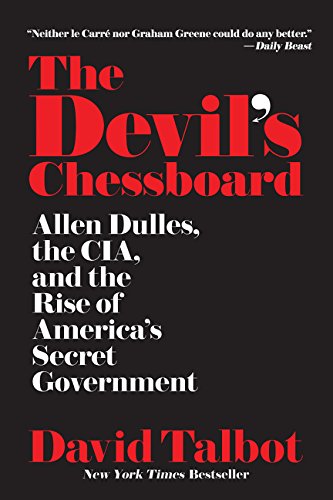
Based on extremely circumstantial evidence, Talbot’s 2015 book The Devil’s Chessboard, something of a sequel to Brothers, suggests that former longtime CIA Director Allan Dulles may have been the likely mastermind, with his motive being a mixture of his extreme Cold Warrior views and his personal anger at his 1961 dismissal from his position.
While his involvement is certainly possible, obvious questions arise. Dulles was a seventy-year-old retiree, with a very long and distinguished career of public service and a brother who had served as Eisenhower’s secretary of state. He had just published The Craft of Intelligence, which was receiving very favorable treatment in the establishment media, and he was embarked on a major book tour. Would he really have risked everything—including his family’s reputation in the history books—to organize the murder of America’s duly-elected president, an unprecedented act utterly different in nature than trying to unseat a Guatemalan leader on behalf of supposed American national interests? Surely, using his extensive media and intelligence contacts to leak embarrassing disclosures about JFK’s notorious sexual escapades during the forthcoming presidential campaign would have been be a much safer means of attempting to achieve an equivalent result. And the same is true for J. Edgar Hoover and many of the other powerful Washington figures who hated Kennedy for similar reasons.
On the other hand, it is very easy to imagine that such individuals had some awareness of the emerging plot or may even have facilitated it or participated to a limited extent. And once it succeeded, and their personal enemy had been replaced, they surely would have been extremely willing to assist in the cover-up and protect the reputation of the new regime, a role that Dulles may have played as the most influential member of the Warren Commission. But such activities are different than acting as the central organizer of a presidential assassination.
Just as with the hard-line national security establishment, many organized crime leaders had grown outraged over the actions of the Kennedy Administration. During the late 1950s, Robert Kennedy had intensely targeted the mob for prosecution as chief counsel to the Senate Labor Rackets Committee. But during the 1960 election, family patriarch Joseph Kennedy used his own longstanding mafia connections to enlist their support for his older son’s presidential campaign, and by all accounts the votes stolen by the corrupt mob-dominated political machines in Chicago and elsewhere helped put JFK in the White House, along with Robert Kennedy as his Attorney General. Frank Sinatra, an enthusiastic Kennedy supporter, had also helped facilitate this arrangement by using his influence with skeptical mob leaders.
However, instead of repaying such crucial election support with political favors, Attorney General Robert Kennedy, perhaps ignorant of any bargain, soon unleashed an all-out war against organized crime, far more serious than anything previously mounted at the federal level, and the crime bosses regarded this as a back-stabbing betrayal by the new administration. Once Joseph Kennedy was felled by an incapacitating stroke in late 1961, they also lost any hope that he would use his influence to enforce the deals he had struck the previous year. FBI wiretaps reveal that mafia leader Sam Giancana decided to have Sinatra killed for his role in this failed bargain, only sparing the singer’s life when he considered how much he personally loved the voice of one of the most famous Italian-Americans of the 20th century.
These organized crime leaders and some of their close associates such as Teamster boss Jimmy Hoffa certainly developed a bitter hatred toward the Kennedys, and this has naturally led some authors to point to the mafia as the likely organizers of the assassination, but I find this quite unlikely. For many decades, American crime bosses had had a complex and varied relationship with political figures, who might sometimes be their allies and at other times their persecutors, and surely there must have been many betrayals over the years. However, I am not aware of a single case in which any even moderately prominent political figure on the national stage was ever targeted for assassination, and it seems quite unlikely that the sole exception would be a popular president, whom they would have likely regarded as being completely out of their league. On the other hand, if individuals who ranked high in Kennedy’s own DC political sphere set in motion a plot to eliminate him, they might have found it easy to enlist the enthusiastic cooperation of various mafia leaders.
Furthermore, the strong evidence that many CIA operatives were involved in the conspiracy very much suggests that they were recruited and organized by some figure high in their own hierarchy of the intelligence or political worlds rather than the less likely possibility that they were brought in solely by leaders of the parallel domain of organized crime. And while crime bosses might possibly have organized the assassination itself, they surely had no means of orchestrating the subsequent cover-up by the Warren Commission, nor would there have been any willingness by America’s political leadership to protect mafia leaders from investigation and proper punishment for such a heinous act.
If a husband or wife is found murdered, with no obvious suspect or motive at hand, the normal response of the police is to carefully investigate the surviving spouse, and quite often this suspicion proves correct. Similarly, if you read in your newspapers that in some obscure Third World country two bitterly hostile leaders, both having unpronounceable names, had been sharing supreme political power until one was suddenly struck down in a mysterious assassination by unknown conspirators, your thoughts would certainly move in an obvious direction. Most Americans in the early 1960s did not perceive their own country’s politics in such a light, but perhaps they were mistaken. As a total newcomer to the enormous, hidden world of JFK conspiracy analysis, I was immediately surprised by the mere sliver of suspicion directed towards Vice President Lyndon B. Johnson, the slain leader’s immediate successor and the most obvious beneficiary.
The two Talbot books and the one by Douglass, totaling some 1500 pages, devote merely a few paragraphs to any suspicions of Johnson’s involvement. Talbot’s first book reports that immediately after the assassination, the vice president had expressed a frantic concern to his personal aides that a military coup might be in progress or a world war breaking out, and suggests that these few casual words demonstrate his obvious innocence, although a more cynical observer might wonder if those remarks had been uttered for exactly that reason. Talbot’s second book actually quotes an apparent low-level conspirator as claiming that Johnson had personally signed off on the plot and admits that Hunt believed the same thing, but treats such unsubstantiated accusations with considerable skepticism, before adding a single sentence acknowledging that Johnson may indeed have been a passive supporter or even an accomplice. Douglass and Peter Dale Scott, author of the influential 1993 book Deep Politics and the Death of JFK, apparently seem never to have even entertained the possibility.
Ideological considerations are probably an important reason for such remarkable reticence. Although liberals had grown to revile LBJ by the late 1960s for his escalation of the unpopular Vietnam War, over the decades those sentiments have faded, while warm memories of his passage of the landmark Civil Rights legislation and his creation of the Great Society programs have elevated his stature in that ideological camp. Furthermore, such legislation had long been blockaded in Congress and only became law because of the 1964 Democratic Congressional landslide following JFK’s martyrdom, and it might be difficult for liberals to admit that their fondest dreams were only realized by an act of political parricide.
Kennedy and Johnson may have been intensively hostile personal rivals, but there seem to have been few deep ideological differences between the two men, and most of the leading figures in JFK’s government continued to serve under his successor, surely another source of enormous embarrassment to any ardent liberals who came to suspect that the former had been murdered by a conspiracy involving the latter. Talbot, Douglass, and many other left-leaning advocates for an assassination conspiracy prefer to point the finger of blame towards far more congenial villains such as hard-line, anti-Communist Cold Warriors and right-wing elements, notably including top CIA officials, such as former director Allan Dulles.
An additional factor helping to explain the extreme unwillingness of Talbot, Douglass, and others to consider Johnson as an obvious suspect may be the realities of the book publishing industry. By the 2000s, JFK assassination conspiracies had long become passé and were treated with disdain in mainstream circles. Talbot’s strong reputation, his 150 original interviews, and the quality of his manuscript broke that barrier, and attracted The Free Press as his very respectable publisher, while later drawing a strongly positive review by a leading academic scholar in the New York Times Sunday Book Review and an hour long television segment broadcast on C-Span Booknotes. But if he had devoted any space to voicing suspicions that our 35th president had been murdered by our 36th, surely the weight of that extra element of “outrageous conspiracy theory” would have ensured that his book sank without a trace.
However, if we cast off these distorting ideological blinders and the practical considerations of American publishing, the prima facie case for Johnson’s involvement seems quite compelling.
Consider a very simple point. If a president is struck down by an unknown group of conspirators, his successor would normally have had the strongest possible incentive to track them down lest he might become their next victim. Yet Johnson did nothing, appointing the Warren Commission that covered up the entire matter, laying the blame upon an erratic “lone gunman” conveniently dead. This would seem remarkably odd behavior for an innocent LBJ. This conclusion does not demand that Johnson was the mastermind, nor even an active participant, but it raises a very strong suspicion that he at least had had some awareness of the plot, and enjoyed a good personal relationship with some of the principals.
A similar conclusion is supported by a converse analysis. If the plot succeeded and Johnson became president, the conspirators must surely have felt reasonably confident that they would be protected rather than tracked down and punished as traitors by the new president. Even a fully successful assassination would entail enormous risks unless the organizers believed that Johnson would do exactly what he did, and the only means of ensuring this would be to sound him out about the plan, at least in some vague manner, and obtain his passive acquiesce.
Based on these considerations, it seems extremely difficult to believe that any JFK assassination conspiracy took place entirely without Johnson’s foreknowledge, or that he was not a central figure in the subsequent cover-up.
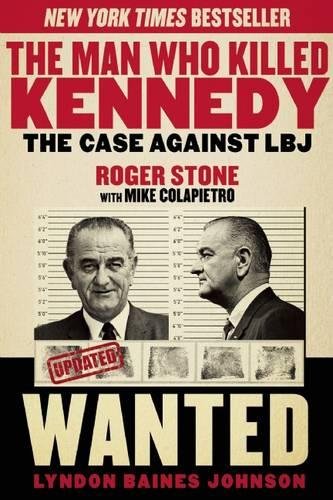
But the specific details of Johnson’s career and his political situation in late 1963 greatly strengthen these entirely generic arguments. A very useful corrective to the “See No Evil” approach to Johnson from liberal JFK writers is Roger Stone’s The Man Who Killed Kennedy: The Case Against LBJ, published in 2013. Stone, a longtime Republican political operative who got his start under Richard Nixon, presents a powerful case that Johnson was the sort of individual who might easily have lent his hand to political murder, and also that he had strong reasons to do so.
Among other things, Stone gathers together an enormous wealth of persuasive information regarding Johnson’s decades of extremely corrupt and criminal practices in Texas, including fairly plausible claims that these may have included several murders. In one bizarre 1961 incident that strangely foreshadows the Warren Commission’s “lone gunman” finding, a federal government inspector investigating a major Texas corruption scheme involving a close LBJ ally was found dead, shot five times in the chest and abdomen by a rifle, but the death was officially ruled a “suicide” by the local authorities, and that conclusion was reported with a straight face in the pages of the Washington Post.
Certainly one remarkable aspect of Johnson’s career is that he was born dirt-poor, held low-paying government jobs throughout his entire life, yet took the oath of office as the wealthiest president in modern American history, having accumulated a personal fortune of over $100 million in present-day dollars, with the financial payoffs from his corporate benefactors having been laundered through his wife’s business. This odd anomaly is so little remembered these days that a prominent political journalist expressed total disbelief when I mentioned it to him a decade ago.
Stone also effectively sketches out the very difficult political situation Johnson faced in late 1963. He had originally entered the 1960 presidential race as one of the most powerful Democrats in the country and the obvious front-runner for his party’s nomination, certainly compared to the much younger Kennedy, whom he greatly outranked in political stature and also somewhat despised. His defeat, involving a great deal of underhanded dealings on both sides, came as a huge personal blow. The means by which he somehow managed to get himself placed on the ticket are not entirely clear, but both Stone and Seymour Hersh in The Dark Side of Camelot strongly suggest that personal blackmail was a greater factor than geographical ticket-balancing. In any event, Kennedy’s paper-thin 1960 victory would have been far more difficult without Texas narrowly falling into the Democratic column, and election fraud there by Johnson’s powerful political machine seems almost certainly to have been an important factor.
Under such circumstances, Johnson naturally expected to play a major role in the new administration, and he even issued grandiose demands for a huge political portfolio, but instead he found himself immediately sidelined and treated with complete disdain, soon becoming a forlorn figure with no authority or influence. As time went by, the Kennedys made plans to get rid of him, and just a few days before the assassination, they were already discussing whom to place on the reelection ticket in his stead. Much of Johnson’s long record of extreme corruption both in Texas and in DC was coming to light following the fall of Bobby Baker, his key political henchman, and with strong Kennedy encouragement, Life Magazine was preparing a huge expose of his sordid and often criminal history, laying the basis for his prosecution and perhaps a lengthy prison sentence. By mid-November 1963, Johnson seemed a desperate political figure at the absolute end of his rope, but a week later he was the president of the United States, and all those swirling scandals were suddenly forgotten. Stone even claims that the huge block of magazine space reserved for the Johnson expose was instead filled by the JFK assassination story.
Aside from effectively documenting Johnson’s sordid personal history and the looming destruction he faced at the hands of the Kennedys in late 1963, Stone also adds numerous fascinating pieces of personal testimony, which may or may not be reliable. According to him, as his mentor Nixon was watching the scene at the Dallas police station where Jack Ruby shot Oswald, Nixon immediately turned as white as a ghost, explaining that he had personally known the gunman under his birth-name of Rubenstein. While working on a House Committee in 1947, Nixon had been advised by a close ally and prominent mob-lawyer to hire Ruby as an investigator, being told that “he was one of Lyndon Johnson’s boys.” Stone also claims that Nixon once emphasized that although he had long sought the presidency, unlike Johnson “I wasn’t willing to kill for it.” He further reports that Vietnam Ambassador Henry Cabot Lodge and numerous other prominent political figures in DC were absolutely convinced of Johnson’s direct involvement in the assassination.
Stone has spent more than a half-century as a ruthless political operative, a position that provided him with unique personal access to individuals who participated in the great events of the past, but one that also carries the less than totally candid reputation of that profession, and individuals must carefully weigh these conflicting factors against each other. Personally, I tend to credit most of the eyewitness stories he provides. But even readers who remain entirely skeptical should find useful the large collection of secondary source references to the sordid details of LBJ’s history that the book provides.
Finally, a seemingly unrelated historical incident had originally raised my own suspicions of Johnson’s involvement.
Just prior to the outbreak of the Six Day War in 1967, Johnson had dispatched the U.S.S. Liberty, our most advanced intelligence-gathering ship, to remain offshore in international waters and closely monitor the military situation. There have been published claims that he had granted Israel a green-light for its preemptive attack, but fearful of risking a nuclear confrontation with the Soviet patrons of Syria and Egypt, had strictly circumscribed the limits of the military operation, sending the Liberty to keep an eye on developments and perhaps also to “show Israel who was boss.”
Whether or not this reconstruction is correct, the Israelis soon launched an all-out attack on the nearly defenseless ship despite the large American flag it was flying, deploying attack jets and torpedo boats to sink the vessel during an assault that lasted several hours, while machine-gunning the lifeboats to ensure that there would be no survivors. The first stage of the attack had targeted the main communications antenna, and its destruction together with heavy Israeli jamming prevented any communications with other U.S. naval forces in the region.
Despite these very difficult conditions, a member of the crew heroically managed to jerry-rig a replacement antenna during the attack, and by trying numerous different frequencies was able to evade the jamming and contact the U.S. Sixth Fleet, informing them of the desperate situation. Yet although carrier jets were twice dispatched to rescue the Liberty and drive off the attackers, each time they were recalled, apparently upon direct orders from the highest authorities of the U.S. government. Once the Israelis learned that word of the situation had reached other U.S. forces, they soon discontinued their attack, and the heavily-damaged Liberty eventually limped into port, with over 200 dead and wounded sailors and NSA signal operators, representing the greatest loss of American servicemen in any naval incident since World War II.
Although numerous medals were issued to the survivors, word of the incident was totally suppressed by a complete blanket of secrecy, and in an unprecedented step, even a Congressional Medal of Honor was awarded only in a private ceremony. The survivors were also harshly threatened with immediate court martial if they discussed what had transpired with the press or anyone else. Despite the overwhelming evidence that the attack had been intentional, a naval court of inquiry presided over by Admiral John S. McCain, Jr., father of the current senator, whitewashed the incident as a tragic accident, and a complete media blackout suppressed the facts. The true story only began to come out years later, when James M. Ennes, Jr., a Liberty survivor, risked severe legal consequences and published Assault on the Liberty in 1979 .
As it happened, NSA intercepts of Israeli communications between the attacking jets and Tel Aviv, translated from the Hebrew, fully confirmed that the attack had been entirely deliberate, and since many of the dead and wounded were NSA employees, the suppression of these facts greatly rankled their colleagues. My old friend Bill Odom, the three-star general who ran the NSA for Ronald Reagan, later shrewdly circumvented the restrictions of his political masters by making those incriminating intercepts part of the standard curriculum of the Sigint training program required for all intelligence officers.
In 2007 an unusual set of circumstances finally broke the thirty year blackout in the mainstream media. Real estate investor Sam Zell, a Jewish billionaire extremely devoted to Israel, had orchestrated a leveraged-buyout of the Tribune Company, parent of the Los Angeles Times and the Chicago Tribune, investing merely a sliver of his own money, with the bulk of the financing coming from the pension funds of the company he was acquiring. Widely heralded as “the grave dancer” for his shrewd financial investments, Zell publicly boasted that the deal gave him nearly all of the upside potential of the company, while he bore relatively little of the risk. Such an approach proved wise since the complex deal quickly collapsed into bankruptcy, and although Zell emerged almost unscathed, the editors and journalists lost decades of their accumulated pension dollars, while massive layoffs soon devastated the newsrooms of what had been two of the country’s largest and most prestigious newspapers. Perhaps coincidentally, just as this business turmoil hit in late 2007, the Tribune ran a massive 5,500 word story on the Liberty attack, representing the first and only time such a comprehensive account of the true facts has ever appeared in the mainstream media.
By all accounts, Johnson was an individual of towering personal ego, and when I read the article, I was struck by the extent of his astonishing subservience to the Jewish state. The influence of campaign donations and favorable media coverage seemed completely insufficient to explain his reaction to an incident that had cost the lives of so many American servicemen. I began to wonder if Israel might have played an extraordinarily powerful political trump-card, thereby showing LBJ “who was really boss,” and once I discovered the reality of the JFK assassination conspiracy a year or two later, I suspected I knew what that trump-card might have been. Over the years, I had become quite friendly with the late Alexander Cockburn, and the next time we had lunch I outlined my ideas. Although he had always casually dismissed JFK conspiracy theories as total nonsense, he found my hypothesis quite intriguing.
Regardless of such speculation, the strange circumstances of the Liberty incident certainly demonstrated the exceptionally close relationship between President Johnson and the government of Israel, as well as the willingness of the mainstream media to spend decades hiding events of the most remarkable nature if they might tread on particular toes.
These important considerations should be kept in mind as we begin exploring the most explosive yet under-reported theory of the JFK assassination. Almost twenty-five years ago the late Michael Collins Piper published Final Judgment presenting a very large body of circumstantial evidence that Israel and its Mossad secret intelligence service, together with their American collaborators, probably played a central role in the conspiracy.
For decades following the 1963 assassination, virtually no suspicions had ever been directed towards Israel, and as a consequence none of the hundreds or thousands of assassination conspiracy books that appeared during the 1960s, 1970s, and 1980s had hinted at any role for the Mossad, though nearly every other possible culprit, ranging from the Vatican to the Illuminati, came under scrutiny. Kennedy had received over 80% of the Jewish vote in his 1960 election, American Jews featured very prominently in his White House, and he was greatly lionized by Jewish media figures, celebrities, and intellectuals ranging from New York City to Hollywood to the Ivy League. Moreover, individuals with a Jewish background such as Mark Lane and Edward Epstein had been among the leading early proponents of an assassination conspiracy, with their controversial theories championed by influential Jewish cultural celebrities such as Mort Sahl and Norman Mailer. Given that the Kennedy Administration was widely perceived as pro-Israel, there seemed no possible motive for any Mossad involvement, and bizarre, totally unsubstantiated accusations of such a monumental nature directed against the Jewish state were hardly likely to gain much traction in an overwhelmingly pro-Israel publishing industry.
However, in the early 1990s highly-regarded journalists and researchers began exposing the circumstances surrounding the development of Israel’s nuclear weapons arsenal. Seymour Hersh’s 1991 book The Samson Option: Israel’s Nuclear Arsenal and American Foreign Policy described the extreme efforts of the Kennedy Administration to force Israel to allow international inspections of its allegedly non-military nuclear reactor at Dimona, and thereby prevent its use in producing nuclear weapons. Dangerous Liaisons: The Inside Story of the U.S.-Israeli Covert Relationship by Andrew and Leslie Cockburn appeared in the same year, and covered similar ground.
Although entirely hidden from public awareness at the time, the early 1960s political conflict between the American and Israeli governments over nuclear weapons development had represented a top foreign policy priority of the Kennedy Administration, which had made nuclear non-proliferation one of its central international initiatives. It is notable that John McCone, Kennedy’s choice as CIA Director, had previously served on the Atomic Energy Commission under Eisenhower, being the individual who leaked the fact that Israel was building a nuclear reactor to produce plutonium.
The pressure and financial aid threats secretly applied to Israel by the Kennedy Administration eventually became so severe that they led to the resignation of Israel’s founding Prime Minister David Ben-Gurion in June 1963. But all these efforts were almost entirely halted or reversed once Kennedy was replaced by Johnson in November of that same year. Piper notes that Stephen Green’s 1984 book Taking Sides: America’s Secret Relations With a Militant Israel had previously documented that U.S. Middle East Policy completely reversed itself following Kennedy’s assassination, but this important finding had attracted little attention at the time.
Skeptics of a plausible institutional basis for a JFK assassination conspiracy have often noted the extreme continuity in both foreign and domestic policies between the Kennedy and Johnson Administrations, arguing that this casts severe doubt on any such possible motive. Although this analysis seems largely correct, America’s behavior towards Israel and its nuclear weapons program stands as a very notable exception to this pattern.
An additional major area of concern for Israeli officials may have involved the efforts of the Kennedy Administration to sharply restrict the activities of pro-Israel political lobbies. During his 1960 presidential campaign, Kennedy had met in New York City with a group of wealthy Israel advocates, led by financier Abraham Feinberg, and they had offered enormous financial support in exchange for a controlling influence in Middle Eastern policy. Kennedy managed to fob them off with vague assurances, but he considered the incident so troubling that the next morning he sought out journalist Charles Bartlett, one of his closest friends, and expressed his outrage that American foreign policy might fall under the control of partisans of a foreign power, promising that if he became president, he would rectify that situation. And indeed, once he had installed his brother Robert as Attorney General, the latter initiated a major legal effort to force pro-Israel groups to register themselves as foreign agents, which would have drastically reduced their power and influence. But after JFK’s death, this project was quickly abandoned, and as part of the settlement, the leading pro-Israel lobby merely agreed to reconstitute itself as AIPAC.
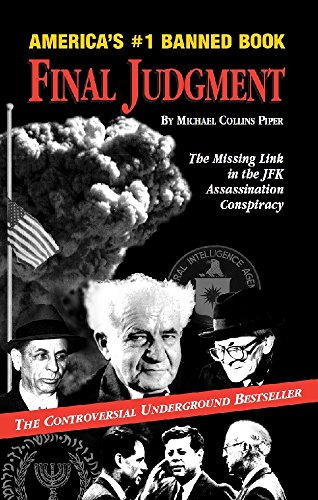
Final Judgment went through a number of a reprintings following its original 1994 appearance, and by the sixth edition released in 2004, had grown to over 650 pages, including numerous long appendices and over 1100 footnotes, the overwhelming majority of these referencing fully mainstream sources. The body of the text was merely serviceable in organization and polish, reflecting the total boycott by all publishers, mainstream or alternative, but I found the contents themselves remarkable and generally quite compelling. Despite the most extreme blackout by all media outlets, the book sold more than 40,000 copies over the years, making it something of an underground bestseller, and surely bringing it to the attention of everyone in the JFK assassination research community, though apparently almost none of them were willing to mention its existence. I suspect these other writers realized that even any mere acknowledgement of the existence of the book, if only to ridicule or dismiss it, might prove fatal to their media and publishing career. Piper himself died in 2015, aged 54, suffering from the health problems and heavy-drinking often associated with grim poverty, and other journalists may have been reluctant to risk that same dismal fate.
As an example of this strange situation, the bibliography of Talbot’s 2005 book contains almost 140 entries, some rather obscure, but has no space for Final Judgment, nor does his very comprehensive index include any entry for “Jews” or “Israel.” Indeed, at one point he very delicately characterizes Sen. Robert Kennedy’s entirely Jewish senior staff by stating “There was not a Catholic among them.” His 2015 sequel is equally circumspect, and although the index does contain numerous entries pertaining to Jews, all these references are in regards to World War II and the Nazis, including his discussion of the alleged Nazi ties of Allen Dulles, his principal bête noire. Stone’s book, while fearlessly convicting President Lyndon Johnson of the JFK assassination, also strangely excludes “Jews” and “Israel” from the long index and Final Judgment from the bibliography, and Douglass’s book follows this same pattern.
Furthermore, the extreme concerns that the Piper Hypothesis seems to have provoked among JFK assassination researchers may explain a strange anomaly. Although Mark Lane was himself of Jewish origins and left-wing roots, after his victory for Liberty Lobby in the Hunt libel trial, he spent many years associated with that organization in a legal capacity, and apparently became quite friendly with Piper, one of its leading writers. According to Piper, Lane told him that Final Judgment made “a solid case” for a major Mossad role in the assassination, and he viewed the theory as fully complementary to his own focus on CIA involvement. I suspect that concerns about these associations may explain why Lane was almost completely airbrushed out of the Douglass and 2007 Talbot books, and discussed in the second Talbot book only when his work was absolutely essential to Talbot’s own analysis. By contrast, New York Times staff writers are hardly likely to be as versed in the lesser-known aspects of the JFK assassination research community, and being ignorant of this hidden controversy, they gave Lane the long and glowing obituary that his career fully warranted.
When weighing the possible suspects for a given crime, considering their past pattern of behavior is often a helpful approach. As discussed above, I can think of no historical example in which organized crime initiated a serious assassination attempt against any American political figure even moderately prominent on the national stage. And despite a few suspicions here and there, the same applies to the CIA.
By contrast, the Israeli Mossad and the Zionist groups that preceded the establishment of the Jewish state seem to have had a very long track record of assassinations, including those of high-ranking political figures who might normally be regarded as inviolate. Lord Moyne, the British Minister of State for the Middle East, was assassinated in 1944 and Count Folke Bernadotte, the UN Peace Negotiator sent to help resolve the first Arab-Israel war, suffered the same fate in September 1948. Not even an American president was entirely free of such risks, and Piper notes that the memoirs of Harry Truman’s daughter Margaret reveal that Zionist militants had tried to assassinate her father using a letter laced with toxic chemicals in 1947 when they believed he was dragging his heels in supporting Israel, although that failed attempt was never made public. The Zionist faction responsible for all of these incidents was led by Yitzhak Shamir, who later became a leader of Mossad and director of its assassination program during the 1960s, before eventually becoming Prime Minister of Israel in 1986.
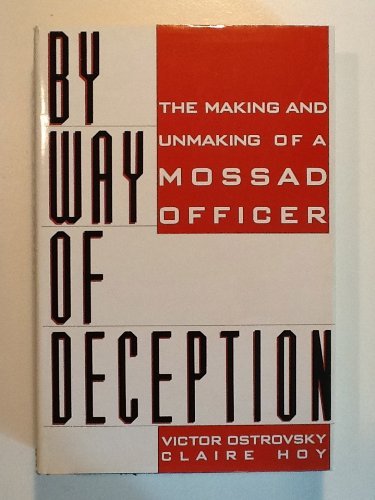
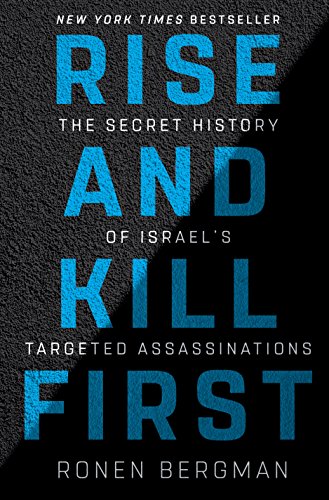
If the claims in the 1990s tell-all bestsellers of Mossad defector Victor Ostrovsky can be credited, Israel even considered the assassination of President George H.W. Bush in 1992 for his threats to cut off financial aid to Israel during a conflict over West Bank settlement policies, and I have been informed that the Bush Administration took those reports seriously at the time. And although I have not yet read it, the recent, widely-praised book Rise and Kill First: The Secret History of Israel’s Targeted Assassinations by journalist Ronen Bergman suggests that no other country in the world may have so regularly employed assassination as a standard tool of state policy.
There are other notable elements that tend to support the Piper Hypothesis. Once we accept the existence of a JFK assassination conspiracy, the one individual who is virtually certain to have been a participant was Jack Ruby, and his organized crime ties were almost entirely to the huge but rarely-mentioned Jewish wing of that enterprise, presided over by Meyer Lansky, an extremely fervent supporter of Israel. Ruby himself had particularly strong connections with Lansky lieutenant Mickey Cohen, who dominated the Los Angeles underworld and had been personally involved in gun-running to Israel prior to the 1948 war. Indeed, according to Dallas rabbi Hillel Silverman, Ruby had privately explained his killing of Oswald by saying “I did it for the Jewish people.”
An intriguing aspect to Oliver Stone’s landmark JFK film should also be mentioned. Arnon Milchan, the wealthy Hollywood producer who backed the project, was not only an Israeli citizen, but had also reportedly played a central role in the enormous espionage project to divert American technology and materials to Israel’s nuclear weapons project, the exact undertaking that the Kennedy Administration had made such efforts to block. Milchan has even sometimes been described as “the Israeli James Bond.” And although the film ran a full three hours in length, JFK scrupulously avoided presenting any of the details that Piper later regarded as initial clues to an Israeli dimension, instead seeming to finger America’s fanatic home-grown anti-Communist movement and the Cold War leadership of the military-industrial complex as the guilty parties.
Summarizing over 300,000 words of Piper’s history and analysis in just a few paragraphs is obviously an impossible undertaking, but the above discussion provides a reasonable taste of the enormous mass of circumstantial evidence mustered in favor of the Piper Hypothesis.
In many respects, JFK Assassination Studies has become its own academic discipline, and my credentials are quite limited. I have read perhaps a dozen books in the subject, and have also tried to approach the issues with the clean slate and fresh eyes of an outsider, but any serious expert would surely have digested scores or even hundreds of the volumes in the field. While the overall analysis of Final Judgment struck me as quite persuasive, a good fraction of the names and references were unfamiliar, and I simply do not have the background to assess their credibility, nor whether the description of the material presented is accurate.
Under normal circumstances, I would turn to the reviews or critiques produced by other authors, and comparing them against Piper’s claims, then decide which argument seemed the stronger. But although Final Judgment was published a quarter-century ago, the near-absolute blanket of silence surrounding the Piper Hypothesis, especially from the more influential and credible researchers, renders this impossible.
However, Piper’s inability to secure any regular publisher and the widespread efforts to smother his theory out of existence, have had an ironic consequence. Since the book went out of print years ago, I had a relatively easy time securing the rights to include it in my collection of controversial HTML Books, and I have now done so, thereby allowing everyone on the Internet to conveniently read the entire text and decide for themselves, while easily checking the multitude of references or searching for particular words or phrases.

This edition actually incorporates several much shorter works, originally published separately. One of these, consisting of an extended Q&A, describes the genesis of the idea and answers numerous questions surrounding it, and for some readers might represent a better starting point.

There are also numerous extended Piper interviews or presentations easily available on YouTube, and when I watched two or three of them a couple of years ago, I thought he effectively summarized many of his main arguments, but I cannot remember which ones they were.
The Kennedy assassination surely ranks as one of the most dramatic and heavily reported events of the twentieth century, yet the overwhelming evidence that our president died at the hands of a conspiracy rather than an eccentric “lone gunman” was almost entirely suppressed by our mainstream media during the decades that followed, with endless ridicule and opprobrium heaped on many of the stubborn truth-tellers. Indeed, the very term “conspiracy theory” soon became a standard slur aimed against all those who sharply questioned establishmentarian narratives, and there is strong evidence that such pejorative use was deliberately promoted by government agencies concerned that so much of the American citizenry was growing skeptical of the implausible cover story presented by the Warren Commission. But despite all these efforts, the period may mark the inflection point at which public trust in our national media began its precipitous decline. Once an individual concludes that the media lied about something as monumental as the JFK assassination, he naturally begins to wonder what other lies may be out there.
Although I now consider the case for an assassination conspiracy overwhelming, I think that the passage of so many decades has removed any real hope of reaching a firm conclusion about the identities of the main organizers or their motives. Those who disagree with this negative assessment are free to continue sifting the enormous mountain of complex historical evidence and debating their conclusions with others having similar interests.
However, among the cast of major suspects, I think that the most likely participant by far was Lyndon Johnson, based on any reasonable assessment of means, motive, and opportunity, as well as the enormous role he obviously must have played in facilitating the subsequent Warren Commission cover-up. Yet although such an obvious suspect must surely have been immediately apparent to any observer, Johnson seems to have received only a rather thin slice of the attention that books regularly directed to other, far less plausible suspects. So the clear dishonesty of the mainstream media in avoiding any recognition of a conspiracy seems matched by a second layer of dishonesty in the alternative media, which has done its best to avoid recognizing the most likely perpetrator.
And the third layer of media dishonesty is the the most extreme of all. A quarter century ago, Final Judgment provided an enormous mass of circumstantial evidence suggesting a major, even dominant, role for the Israeli Mossad in organizing the elimination of both our 35rd president and also his younger brother, a scenario that seems second in likelihood only to that of Johnson’s involvement. Yet Piper’s hundreds of thousands of words of analysis have seemingly vanished into the ether, with very few of the major conspiracy researchers even willing to admit their awareness of a shocking book that sold over 40,000 copies, almost entirely by underground word-of-mouth.
So although committed partisans can continue endless, largely fruitless debates over “Who Killed JFK,” I think that the one firm conclusion we can draw from the remarkable history of this pivotal event of the twentieth century is that all of us have lived for many decades within the synthetic reality of “Our American Pravda.”

Friday, June 8, 2018

Fred Hutchison : The dark, intolerant, and abusive nature of the gay agenda


The dark, intolerant, and abusive nature of the gay agenda
Fred Hutchison, RenewAmerica analyst
March 22, 2012

Originally published April 28, 2004

Over twenty years ago, I had an intermittent conversation about homosexuality with a gay man at work. Although he persistently brought up the subject, he would periodically fly into a rage and call me a bigot when I disagreed with him. That man went on to become a key homosexual organizer in my city.

Five years ago, I wrote a letter to the editor of my newspaper concerning how the paper was becoming an organ of gay advocacy. I forwarded the letter to a group who received regular mailings from me. One man responded and disclosed himself as a gay. He accused me of wanting to submit gays to the equivalent of the Spanish Inquisition. He used several abusive terms which reminded me of other encounters I have had with gays, including the individual mentioned in the first paragraph. I replied that I refused to be bullied and intimidated into silence.

Are gays inherently hysterical, hateful, and intolerant of disagreement, I wondered, or are they reading off the same script? Are they systematically organized to strike out at opponents, and to silence them through intimidation? The answer is that no, homosexuals are not necessarily hysterical, hateful, or intolerant by nature — but yes, this is something they have learned. It is a technique called "jamming," which is part of an elaborate program to further the gay agenda.

Propaganda and thought control

I learned about jamming by reading the articles How America Went Gay, and Thought Reform and the Psychology of Homosexual Advocacy by Charles W. Socarides, M.D., President of the National Association for Research and Therapy of Homosexuality (NARTH) and a clinical professor of psychiatry at Albert Einstein College of Medicine. He is the author of the book Homosexuality: A Freedom Too Far (1995). Socarides drew a lot of his information about the program that involves "jamming" from the book After the Ball: How America Will Conquer Its Fear and Hatred of Gays in the 1990's (1990) by Marshall Kirk and Hunter Madsen. This book is a blueprint for gay activists for applying brainwashing techniques developed by the totalitarian regime of Communist China. These techniques were catalogued in Robert Jay Lifton's seminal work, Thought Reform and the Psychology of Totalism: A Study of Brainwashing in China (1989).

The program borrowed from the Chinese and put forward for gay activism by Kirk and Madsen involves three steps: 1) desensitization, 2) jamming, and 3) conversion.

1) Desensitization — Through constant exposure to homosexuals on television, in the movies, on radio, and in the newspapers, the public would become accustomed to gays being a normal part of their life. The image conveyed would be that gays are ordinary people like everyone else. As the gays came out of the closet to show a public face, the startling aspects of gay perversion and pathology would be left in the closet — concealed from the public eye. The goal of desensitization is public indifference.

2) Jamming — The object of jamming is to shame gay opponents into silence. The shame comes from the accusation of bigotry and from social stigmatization.

"All normal people feel shame when they perceive that they are not thinking, feeling, or acting like the pack...The trick is to get the bigot into the position of feeling a conflicted twinge of shame....when his homohatred surfaces.

"Thus, propagandistic advertisement can depict homophobic and homohating bigots as crude loudmouths.... It can show them being criticized, hated, shunned. It can depict gays experiencing horrific suffering as the direct result of homohatred-suffering of which even most bigots would be ashamed to be the cause."
(Kirk and Madsen)

Notice the two elements — the shaming of the alleged "bigot" by making him feel like a social pariah and the depiction of the suffering gay to win sympathy. In my personal experience, I have met with two versions of the shaming tactics from gays. The first is the personal attack (ad hominem, meaning "against the man"). The ad hominem attack ignores the logic and facts put forward by the opponent and accuses him of being a bigot — i.e., a shameful being. The insult is pure assertion and unsupported by facts. It is essentially a threat to socially stigmatize the person if he does not desist from his opposition to the gay agenda.

This tactic is very effective in a politically correct group-think environment — such as college campuses and newsrooms. Politicians as a class are extremely sensitive to the threat of being publicly stigmatized. Remember Kirk and Marsden's idea that "people feel shame when they perceive that they are not thinking, feeling, or acting like the pack." These may be primitive wolf-pack group-think tactics, but they are powerful nonetheless.

Almost all of us have been through this kind of thing. A perfect example is the high school clique. Retribution for violating the code of the clique involves public shaming and demonization. One becomes an "untouchable" — a pariah to every clique and caste in the school.

A study of the life cycle of a business found that the terminal stage of decline was when group-think prevailed. At this point, the in-group became an end in itself and the customer became an inconvenient nuisance. James F. Welles, Ph.D., wrote The Story of Stupidity, which examined historical eras in which many people were seized by a self-destructive collective stupidity. In each case, group-think prevailed, and rationality and independent thought were driven out. "Political correctness" is a form of contemporary group-think that drives out common sense. This poisoned environment has created the opportunity for the abusive nonsense of gay "jamming" to flourish. However toxic and destructive wolf-pack group-think is, it is a powerful temptation that man, a social animal, is prone to, and which dictators make use of.

When I testified before the Ohio Senate Committee on the Defense of Marriage (DOM) Act, the Republican committee chairman, who favors the act, allowed those against DOM to repeatedly make charges of bigotry and hatred against those who favored DOM. He allowed them to run on with no time limit as they painted the gay lifestyle in glowing terms and wallowed in their personal pain from bigotry. Unfortunately, he did not allow those in favor of DOM to answer the charges of bigotry or refute any of the assertions the anti-DOM folks made. He refused to allow experts to speak about the tragic realities of the homosexual lifestyle. Why? He probably did not want to be called a "bigot" in front of the TV cameras. He was scared to death of public jamming and shaming. Even though he voted for DOMA, he was terrified at being publicly branded as not being "one of the pack." This accords perfectly with Chinese brainwashing techniques. Consider Kirk and Marsden again:

"...our effect is achieved without reference to facts, logic, or proof. Just as the bigot became such, without any say in the matter, through repeated infralogical emotional conditioning, his bigotry can be alloyed in exactly the same way, whether he is conscious of the attack or not. In short, jamming succeeds insofar as it inserts even a slight frisson of doubt and shame into the previously unalloyed, self-righteous pleasure. This approach can be quite useful and effective — if our message can get the massive exposure upon which all else depends."

The gays have indeed been given massive public exposure by liberals on TV, in the movies, and within the print media. This aggressive use of the media has been a priority of the agenda of gay leaders at least since 1971.

The "frisson of doubt" inserted through emotional conditioning is especially effective on men in the clergy. They view themselves as men of conscience and compassion — and like to be seen by others as such. Thus, when the pastor speaks in accord with the scriptures and calls gay sexual practices a sin, he may feel an almost unconscious shiver of doubt and shame. It is not the shame of violating a universal moral law or upholding the truth of the Bible. It is the shame of violating a social taboo and the fear of being seen by men that he is lacking in compassion and sensitivity. It plays to the ultimate fear of many pastors, the fear of public disgrace.

Denominations like the Episcopalians, the Lutherans, the Presbyterians, and the Methodists are in a pitched battle over whether to ordain gays, or to bless gay unions. Many of the theological moderates and many of the Bishops have taken to saying that they are "open" to hearing both sides. By taking no public position, they hide from the threat of being defamed by one side as being a "bigot" and a "hater," or being charged by the other side with being unscriptural.

The resistance against the gay agenda in the churches is left to the most conservative, the most principled, and those most willing to stand alone. Those who love God and truth more than they hate being publicly slimed by the gay activists and their liberal allies must often bear a heavy cost. When the liberal clergy seize control of a denomination and back the gay agenda, they ostracize the conservatives who oppose the gay agenda and exclude them from the seminaries, from denominational committees, and from speaking engagements. So much for liberal "tolerance" and "inclusion."

One aspect of the shaming technique is to portray how much pain the gay suffers as a result of the intolerance of the bigot. The movie Philadelphia, starring Tom Hanks, is a media tour de force in getting wide audiences to sympathize with the sufferings of a gay man and to be disgusted with the persecutions of his bigoted tormentors. Everyone who places a high value on compassion is bound to be swayed by the movie. It is one of the greatest masterpieces of propaganda ever put on screen. The not-so-subtle message is — "Shame on you bigots for not giving your approval to the cute and sensitive Tom Hanks — who just happens to be gay." With one stroke, the bigots are jammed and shamed and the gay wins sympathy. Brilliant propaganda — that. The Chinese would be proud.

3) Conversion — The third step is conversion of the public to be receptive to the gay agenda. Conversion requires a change of heart. The change of heart will occur "...if we can actually make them like us," says Kirk and Madsen. "Conversion aims at just this...conversion of the average American's emotions, mind, and will, through a planned psychological attack, in the form of propaganda fed to the media." When the audience begins to sympathize with Tom Hanks in Philadelphia, the process of conversion has begun.

On television, gay comedienne Ellen DeGeneres once used abrasiveness in comedy. Since her public disclosure that she is a lesbian, she has emphasized personal likability. Queer Eye for the Straight Guy emphasizes a goofy cuteness and sweetness. Public likability has eluded the hard-boiled Ellen, but the "fab five" of Queer Eye have been fantastically successful in winning the sentimental favor of the public. No line is too sappy and no situation too mushy for the fab five. Don't you just want to hug them? Folks, this is conversion. Serious conversion. Never underestimate the gushy sentimentality of the American public. The cuteness of Topsy in Uncle Tom's Cabin did more to turn public sentiment away from slavery than all the abolitionists combined.

The big lie

The big lie technique has been used by almost all totalitarians. As explained by Joseph Goebbels, the Nazi propaganda chief, "Tell a lie, make it a big one, repeat it often enough, and a lot of people will believe it." The Chinese propaganda techniques used for the gay agenda are more sophisticated than the bombastic Nazi methods. But as true totalitarians seeking mind control, the people behind the gay agenda are promoting three big lies: 1) Homosexuality is genetically determined, 2) Change is not possible, and 3) Gay rights are part of the civil rights agenda. Homosexuality is placed on a par with race and gender. According to the gay agenda, these truths are obvious. No debate is needed. Opposition to these points signifies bigotry.

1) Genetic determinism — Genes determine human choices and the trajectory of human development, we are told. This means that the gay is a programmed automaton and has no choice but to perform those sexual acts which the genes dictate. A full menu of sexual perversions are written into the genes and require only the right opportunity and stimulation to express themselves. This is nonsense, of course. Gays have free will and choice, as do every human being. Sexual perversions must be learned through some combination of experimentation and instruction.

At present, there seems to be no scientific evidence linking particular genes to particular sexual practices. But there is scientific evidence to the contrary. A sample of 90,000 identical twins (who have the same genes) shows no meaningful correlation of the sexual preference for twins raised apart. Fraternal twins had a higher correlation. If genetic determinism was true, there should be 100% correlation. (Source: Bearman & Bruckner, American Journal of Sociology, Vol 107, No 5, 2002)

The Journal of Homosexuality, a gay publication, reports that certain gay-gene studies and gay-brain studies do not stand up to critical analysis. Many gays want the truth instead of the big lie. Others prefer the big lie. The author of one of the criticized gay-gene studies is under investigation for science fraud by the National Institutes of Health for Science Fraud.

2) Gays can't change

Dr. Socarides says that one-third of his former gay patients are now married and most have children. This corresponds with the success rate of the Betty Ford clinic. Another third of Socarides patients remain homosexual, but are not part of the gay scene. They report more control over their impulses and a more responsible approach to sex. The point is that two-thirds of his patients made positive changes to some extent. This excludes the blanket assertion that gays can't change.

3) Discrimination against gays is a civil rights issue

Race and gender are permanent innate characteristics that are fixed at birth. No moral judgment can be made of race and gender, because no one chooses their race or gender.

By contrast, gay sexual activity is a behavior — and a homosexual orientation seems to emerge in developmental stages. Individual choices and social environment profoundly influence the trajectory of development. Sexual perversions must be learned through experimentation and instruction. Such practices are subject to moral judgments.

In view of these facts and controversies, what we need today in America is a moral citizenry immune to such brainwashing and disinformation. If we are to preserve civilization in the face of the relentless lies and deceptive techniques of the gay agenda, enough God-fearing Americans must be willing to stand up for what is right, courageously, and make a difference in the culture war.

Charles W. Socarides : How America Went Gay


How America Went Gay
by Charles W. Socarides, M.D.

[COMMENT:  A clear, accurate, and brief history of how America Went "Gay". 
Dear reader, the powers that be, the globalist crowd, are able to determine to a fairly precise degree what will and will not be taught in our government-run schools.  They own the media and many if not most politicians.  They own must of world-wide commerce.  The success of homosexualization could happen only with their permission, or more likely, their command.  This whole program, like the so-call Muslim threat, is being fostered, to a great degree, by these people.  Both the homosexual population and the Islamic population is too dysfunctional to mount any global threat by themselves.   
The book by Marshall Kirk and Hunter Madsen, After the Ball, referred to below, is a classic in the exposition of evil - deliberate subversion of truth to attain ends not attainable in the light of day.  It is a mainstay of homosexualist strategy. 
See also Socarides' book, Homosexuality: a Freedom Too Far.
    E. Fox]
 

Charles W. Socarides, M.D., is clinical professor of psychiatry at Albert Einstein College of Medicine/Montefiore Medical Center in New York. He is president of the National Association for Research and Therapy of Homosexuality, and author of Homosexuality: A Freedom Too Far (Adam Margrave Books, Phoenix, Arizona).
https://en.wikipedia.org/wiki/Charles_W._Socarides

For more than 20 years, I and a few of my colleagues in the field of psychoanalysis have felt like an embattled minority, because we have continued to insist, against today's conventional wisdom, that gays aren't born that way. We know that obligatory homosexuals are caught up in unconscious adaptations to early childhood abuse and neglect and that, with insight into their earliest beginnings, they can change. This "adaptation" I speak of is a polite term for men going through the motions of mating not with the opposite sex but with one another. 
 
For most of this century, most of us in the helping professions considered this behavior aberrant. Not only was it "off the track"; the people caught up in it were suffering, which is why we called it a pathology. We had patients, early in their therapy, who would seek out one sex partner after another-total strangers-on a single night, then come limping into our offices the next day to tell us how they were hurting themselves. Since we were in the business of helping people learn how not to keep hurting themselves, many of us thought we were quietly doing God's work. 
 
Now, in the opinion of those who make up the so-called cultural elite, our view is "out of date." The elite say we hurt people more than we help them, and that we belong in one of the century's dustbins. They have managed to sell this idea to a great many Americans, thereby making homosexuality fashionable and raising formerly aberrant behavior to the status of an "alternate lifestyle." 
 
You see this view expressed in some places you would least expect. The Pope says same-sex sex is wrong, but a good many of his own priests in this country (some of whom are gay themselves) say the Pope is wrong. Indeed, in much of academe and in many secondary school classrooms gays are said to lead a new vanguard, the wave of the future in a world that will be more demographically secure when it has fewer "breeders" (which is what some gay activists call heterosexuals these days). 
 
How did this change come about? Well, the revolution did not just happen. It has been orchestrated by a small band of very bright men and women-most of them gays and lesbians-in a cultural campaign that has been going on since a few intellectuals laid down the ideological underpinnings for the entire tie-dyed, try-anything-sexual Woodstock generation. In various ways, Theodore Reich, Alfred Kinsey, Fritz Perls, Norman O. Brown, Herbert Marcuse and Paul Goodman preached a new countercultural gospel: "If it feels good, do it." 
 
It was all part of a plan, as one gay publication put it, "to make the whole world gay." I am not making this up. You can read an account of the campaign in Dennis Altman's The Homosexualization of America. In 1982 Altman, himself gay, reported with an air of elation that more and more Americans were thinking like gays and acting like gays. There were engaged, that is, "in numbers of short-lived sexual adventures either in place of or alongside long-term relationships." Altman cited the heterosexual equivalents of gay saunas and the emergence of the swinging singles scene as proofs that "promiscuity and 'impersonal sex' are determined more by social possibilities than by inherent differences between homosexuals and heterosexuals, or even between men and women." 
 
Heady stuff. Gays said they could "reinvent human nature, reinvent themselves." To do this, these reinventors had to clear away one major obstacle. No, they didn't go after the nation's clergy. They targeted the members of a worldly priesthood, the psychiatric community, and neutralized them with a radical redefinition of homosexuality itself. In 1972 and 1973 they co-opted the leadership of the American Psychiatric Association and, through a series of political maneuvers, lies and outright flim-flams, they "cured" homosexuality overnight-by fiat. They got the A.P.A. to say that same-sex sex was "not a disorder." It was merely "a condition"-as neutral as lefthandedness.
This amounted to a full approval of homosexuality. Those of us who did not go along with the political redefinition were soon silenced at our own professional meetings. Our lectures were canceled inside academe and our research papers turned down in the learned journals. 

Worse things followed in the culture at large. Television and movie producers began to do stories promoting homosexuality as a legitimate lifestyle. A gay review board told Hollywood how it should deal or not deal with homosexuality. Mainstream publishers turned down books that objected to the gay revolution. Gays and lesbians influenced sex education in our nation's schools, and gay and lesbian libbers seized wide control of faculty committees in our nations' colleges. State legislatures nullified laws against sodomy.
If the print media paid any attention at all, they tended to hail the gay revolution, possibly because many of the reporters on gay issues were themselves gay and open advocates for the movement. And those reporters who were not gay seemed too intimidated by groupthink to expose what was going on in their own newsrooms. 
 
And now, what happens to those of us who stand up and object? Gay activists have already anticipated that. They have created a kind of conventional wisdom: that we suffer from homophobia, a disease that has actually been invented by gays projecting their own fear on society. And we are bigots besides, because, they say, we fail to deal with gays compassionately. Gays are now no different than people born black or Hispanic or physically challenged. Since gays are born that way and have no choice about their sexual orientation, anyone who calls same-sex sex an aberration is now a bigot. Un-American, too. Astoundingly now, college freshmen come home for their first Thanksgiving to announce, "Hey, Mom! Hey, Dad! We've taken the high moral ground. We've joined the gay revolution." 
 
My wife, Clare, who has an unerring aptitude for getting to the heart of things, said one day recently in passing, "I think everybody's being brainwashed." That gave me a start. I know "brainwashing" is a term that has been used and overused. But my wife's casual observation only reminded me of a brilliant tract I had read several years ago and then forgotten. It was called After the Ball: How America Will Conquer its Fear and Hatred of Gays in the 1990's, by Marshall Kirk and Hunter Madsen.
That book turned out to be the blueprint gay activists would use in their campaign to normalize the abnormal through a variety of brainwashing techniques once catalogued by Robert Jay Lifton in his seminal work, Thought Reform and the Psychology of Totalism: A Study of Brainwashing in China.
In their book Kirk and Madsen urged that gay activists adopt the very strategies that helped change the political face of the largest nation on earth. The authors knew the techniques had worked in China. All they needed was enough media-and enough money-to put them to work in the United States. And they did. These activists got the media and the money to radicalize America-by processes known as desensitization, jamming and conversion.
They would desensitize the public by selling the notion that gays were "just like everyone else." This would make the engine of prejudice run out of steam, i.e., lull straights into an attitude of indifference. 
 
They would jam the public by shaming them into a kind of guilt at their own "bigotry." Kirk and Madsen wrote:
All normal persons feel shame when they perceive that they are not thinking, feeling, or acting like one of the pack....The trick is to get the bigot into the position of feeling a conflicting twinge of shame...when his homohatred surfaces. Thus, propagandistic advertisement can depict homophobic and homohating bigots as crude loudmouths....It can show them being criticized, hated, shunned. It can depict gays experiencing horrific suffering as the direct result of homohatred-suffering of which even most bigots would be ashamed to be the cause.
The best thing about this technique, according to Kirk and Madsen: The bigot did not even have to believe he was a loathsome creature:
Rather, our effect is achieved without reference to facts, logic, or proof. Just as the bigot became such, without any say in the matter, through repeated infralogical emotional conditioning, his bigotry can be alloyed in exactly the same way, whether he is conscious of the attack or not. In short, jamming succeeds insofar as it inserts even a slight frisson of doubt and shame into the previously unalloyed, self-righteous pleasure. The approach can be quite useful and effective-if our message can get the massive exposure upon which all else depends.
Finally-this was the process they called conversion-Kirk and Madsen predicted a mass public change of heart would follow, even among bigots, "if we can actually make them like us." They wrote, "Conversion aims at just this...conversion of the average American's emotions, mind, and will, through a planned psychological attack, in the form of propaganda fed to the nation via the media." 

In the movie "Philadelphia" we see the shaming technique and the conversion process working at the highest media level. We saw Tom Hank's character suffering (because he was gay and had AIDS) at the hands of bigots in his Philadelphia law firm. Not only were we ashamed of the homophobic behavior of the villainous straight lawyers in the firm; we felt nothing but sympathy for the suffering Hanks. (Members of the Motion Picture Academy felt so much sympathy they gave Hanks an Oscar.) Our feelings helped fulfill Kirk and Madsen's strategy: "to make Americans hold us in warm regard, whether they like it or not."  
Few dared speak out against "Philadelphia" as an example of the kind of propaganda Kirk and Madsen had called for. By then, four years after the publication of the Kirk-Madsen blueprint, the American public had already been programmed. Homosexuality was now simply "an alternate lifestyle." Best of all, because of the persuaders embedded in thousands of media messages, society's acceptance of homosexuality seemed one of those spontaneous, historic turnings in time-yes, a kind of conversion. Nobody quite knew how it happened, but the nation had changed. We had become more sophisticated, more loving toward all, even toward those "afflicted" with the malady-excuse me, condition. 
 
By 1992 the President of the United States said it was time that people who were openly gay and lesbian should not be ousted from the nation's armed forces. In 1993 the nation's media celebrated a huge outpouring of gay pride in Washington, D.C. Television viewers chanted along with half a million marchers, "Two, four, six, eight! Being gay is really great." We felt good about ourselves. We were patriotic Americans. We had abolished one more form of discrimination, wiped out one of society's most enduring afflictions: homophobia. Best of all, we knew now that gay was good, gay was free. 

 ==================
 
Excuse me. Gay is not good. Gay is not decidedly free. How do I know this? For more than 40 years, I have been in solidarity with hundreds of homosexuals, my patients, and I have spent most of my professional life engaged in exercising a kind of "pastoral care" on their behalf. But I do not help them by telling them they are O.K. when they are not O.K. Nor do I endorse their "new claim to self-definition and self-respect." Tell me: Have we dumped the idea that a man's self-esteem comes from something inside himself (sometimes called character) and from having a good education, a good job and a good family-and replaced that notion with this, that he has an affinity to love (and have sex with) other men?
 
In point of fact, many of my patients had character; they had an education; they were respected ad men and actuaries and actors. But they were still in pain-for one reason and one reason alone. They were caught up in this mysterious compulsion to have sex with other men. They were not free. They were not happy. And they wanted to see if they could change. 
 
Over the years, I found that those of my patients who really wanted to change could do so, by attaining the insight that comes with a good psychoanalysis. Others found other therapies that helped them get to the bottom of their compulsions, all of which involved high motivation and hard work. Difficult as their therapeutic trips were, hundreds and thousands of homosexuals changed their ways. Many of my own formerly homosexual patients-about a third of them-are married today and happily so, with children. One-third may not sound like a very good average. But it is just about the same success rate you will find at the best treatment centers for alcoholics, like Hazelden in Minnesota and the Betty Ford Clinic in California. 
 
Another third of my patients remain homosexual but not part of the gay scene. Now, after therapy, they still have same-sex sex, but they have more control over their impulses because now they understand the roots of their need for same-sex sex. Some of these are even beginning to turn on to the opposite sex. I add this third to my own success rate-so that I can tell people in all honesty that my batting average is .667 out of more than a thousand "at bats." 
 
Of course, I could bat .997 if I told all my patients in pain that their homosexuality was "a special call" and "a liberation." That would endear me to everyone, but it would not help them. It would be a lie-despite recent pieces of pseudo-science bolstering the fantasy that gays are "born that way." The media put its immediate blessing on this "research," but we were oversold. Now we are getting reports, even in such gay publications as The Journal of Homosexuality, that the gay-gene studies and the gay-brain studies do not stand up to critical analysis. (The author of one so-called "gay-gene theory" is under investigation by the National Institutes of Health for scientific fraud.)
I was not surprised to hear this. My long clinical experience and a sizable body of psychoanalysis research dating all the way back to Freud tell me that most men caught up in same-sex sex are reacting, at an unconscious level, to something amiss with their earliest upbringing- overcontrolling mothers and abdicating fathers. Through long observation I have also learned that the supposedly liberated homosexual is never really free. In his multiple, same-sex adventures, even the most effeminate gay was looking to incorporate the manhood of others, because he was in a compulsive, never-ending search for the masculinity that was never allowed to build and grow in early childhood. 
 
When I tried to explain these dynamics to the writer who helped me put together a kind of popular catechism on homosexuality, I found he had a hard time understanding what this "incorporation" meant. He said, "Your patient would be more manly if he took in the penis of another man? Sounds a little dumb. Would I run faster if I ate the flesh of a deer?" 
I told him, "You have to understand that we are talking about feelings that come from deep in the unconscious mind. They are very primitive. In fact, if you have ever read any Indian lore, you may remember that Indians would, in fact, eat the flesh of a deer in order to become faster afoot. To us, that is a very primitive idea. But it had a mythic significance for a young Iroquois brave. And Madison Avenue still makes use of such mythic meanings. The ad people sell us things based on the notion that we will become what we eat or drink or possess." The point I was making was this: We do not understand same-sex sex until we realize that the dynamics involved are unconscious. 
 
This is one reason why psychoanalysis is the tool that gets us to the heart of everything. Once my patients have achieved an insight into these dynamics-and realized there is no moral fault involved in their longtime and mysterious need-they have moved rather quickly on the road to recovery. Their consequent gratitude to me is overwhelming. And why shouldn't it be? They were formerly caught up in compulsions they could not understand, compulsions they could not control. Now they are in charge of their own lives.
Their former promiscuity may have looked a lot like "liberation." But it was not true freedom. It was a kind of slavery. And it was not a lifestyle. With the onset of AIDS, as the playwright and gay militant Larry Kramer said in a 1993 interview, it turned out to be a death style. I have had some patients tell me, "Doctor, if I weren't in therapy, I'd be dead." 
 
Testimonials from my recovered patients make me feel my work is worthwhile-despite regular demands from the gay rights community for my silence. What would they have me do? Pack my bags, find a new profession, lock up a lifetime of research and analysis, hide my truth under a bushel? It is not my psychoanalytic duty to tell people they are marvelous when they are out of control, much less ask disingenuous rhetorical questions like, "What kind of God would afflict people with an 'objective disorder' in the disposition of their hearts?" 
 
Giving God the credit for their gayness is a persistent refrain in much gay literature today, and I am saddened to see people of evident good will become unwitting parties to the blasphemy. Gays ascribe their condition to God, but he should not have to take that rap, any more than he should be blamed for the existence of other man-made maladies-like war, for instance, which has proven to be very unhealthy for humans and for all other living things. God does not make war. Men do. 
 
And, when homosexuality takes on all the aspects of a political movement, it, too, becomes a war, the kind of war in which the first casualty is truth, and the spoils turn out to be our own children. An exaggeration? Well, what are we to think when militant homosexuals seek to lower the age of consensual sexual intercourse between homosexual men and young boys to the age of 14 (as they did in Hawaii in 1993) or 16 (as they tried to do in England in 1994)? In the Washington March for Gay Pride in 1993, they chanted, "We're here. We're queer. And we're coming after your children."
What more do we need to know? 
 
[This article first appeared in America (November 18, 1995). Used by permission of the author.]
* * * * * * * * * * * * * * * *

Wednesday, June 6, 2018

Louis XVII : voyage au cœur du mystère


Louis XVII : voyage au cœur du mystère

Deux cents vingt ans après la mort de l’Enfant du Temple, le mystère plane toujours sur le sort du dauphin, second fils de Louis XVI et Marie-Antoinette, petit garçon qui, entre quatre et dix ans, vit s’abattre sur lui et sa famille la grande tourmente de la Révolution. Grégoire Renaud, président de Cyrano.net et passionné d’Histoire, vous invite à démêler les fils d’une énigme encore irrésolue.


Un mystère toujours d’actualité


Tout a été dit sur Louis XVII : tout… et son contraire ! Ce petit prince aux boucles blondes, si fragile et si beau, élevé dans les palais dorés de Versailles et des Tuileries, choyé de sa famille, ne paraissait pourtant pas destiné à une courte vie, à la fois si cruelle et si singulière.


C’était un bel enfant qui fuyait de la terre ;
Son œil bleu du malheur portait le signe austère ;
Ses blonds cheveux flottaient sur ses traits pâlissants ;
Et les vierges du ciel, avec des chants de fête,
Aux palmes du martyre unissaient sur sa tête
La couronne des innocents.

Victor Hugo, Louis XVII


Depuis son enfermement dans la Tour du Temple en 1792 – forteresse médiévale en plein cœur de Paris qui avant la Révolution servait de demeure au Prieur de l’Ordre de Malte – jusqu’en ce début de XXIe siècle, les partisans de la mort du Dauphin, de son évasion ou de sa survivance, continuent leur bataille et s’affrontent, à grand renfort de livres, d’expertises ADN et de contre-enquêtes, de colloques et autres communiqués de presse…
Preuve que le mystère passionne toujours : du salon de province jusqu’à l’Académie, universitaires, historiens amateurs et lecteurs éclairés ont chacun leur avis sur la question… et continuent de chercher ! On ne compte plus ainsi les milliers d’heures consacrées en patientes études, en bibliothèques et dans les salles d’archives, à la recherche du moindre indice sur le sort du Dauphin. Chaque année voit fleurir de nouveaux ouvrages sur Louis XVII, qui forment autant de nouvelles hypothèses à explorer… au point que notre énigme, à ce jour, a déjà fait l’objet de plus de 800 livres, de milliers d’articles et d’une dizaine de films… sans pour autant que ce mystère ne soit définitivement résolu !
Récemment encore, en 2014, Jacques Soppelsa, universitaire reconnu et président honoraire de la Sorbonne, a par exemple commis, à mi-chemin entre le livre d’histoire et le roman policier, un très intéressant petit ouvrage, Louis XVII : la piste argentine… Louis XVII en Amérique du Sud, vous avez dit ?
Les arguments présentés sont plus ou moins sérieux. Fruits de longues méditations, de savantes analyses ou d’hypothèses hardies, ils décortiquent l’Histoire, tracent des pistes, scrutent les évènements et la psychologie des personnages, construisent des théories, les infirment, les confirment,  étudient les rapports diplomatiques secrets, la pédiatrie et l’autopsie, la graphologie, la philosophie politique, la grammaire latine, les flux économiques et financiers sous la Révolution, la contrebande, les crimes inexpliqués, la mystique…
Il est donc à redouter (ou à applaudir, c’est selon) que tant que des preuves scientifiques irréfutables n’auront pas été apportées, le mystère demeurera, et continuera de se développer… et de nous fasciner !


Plus qu’une nostalgie romantique, un mystère politique


En Histoire, certaines analyses ne vont pas sans arrière-pensée idéologique ! La question Louis XVII n’échappe pas à cette règle. Entre survivantistes farouches et héritiers de Robespierre, légitimistes de tout poil, orléanistes convaincus, scientistes férus d’ADN et légalistes républicains, amateurs curieux et doux rêveurs, et tout simplement ceux qui pensent que l’Affaire Louis XVII ne mérite plus d’être étudiée, et devrait être close … il y a de quoi en effet se perdre ! Inconsciemment, notre avis sur Louis XVII dépend en effet de notre vision de l’Histoire et de notre jugement sur la Révolution et sur son héritage.
Plus qu’une simple nostalgie romantique, nous nous approchons en réalité d’un mystère politique, qui dépasse le seul Enfant-Roi et la tourmente révolutionnaire. Ici, nous pressentons que la disparition de Louis XVII, vraie ou fausse, programmée, maquillée, entretenue, oubliée, combattue… dissimule une vérité qui – à la manière d’une éclipse quand le Soleil reparaît à la vue – est susceptible d’éclairer l’Histoire d’une nouvelle lumière.
Il est remarquable d’observer que le Premier et le Second Empire, la Restauration, la Monarchie de Juillet, Vichy et toutes les Républiques qui se sont succédé sont, tous, sans exception, nés, à leur manière, de l’incapacité du régime politique précédent à incarner à la fois la France éternelle et l’aspiration des citoyens à la Liberté. Nul n’a réussi, ni Louis XVIII avec la Charte, ni Louis-Philippe, ni Napoléon III, ni Poincaré, ni de Gaulle, à unir ces deux France blessées et rivales. Et aucun de nos dirigeants, même animé d’un désir sincère d’unité, n’a jamais réussi à effacer cette blessure intime et profonde, née de la Révolution, imprimée dans les cœurs de France.
Faisons de notre côté un peu de politique-fiction… Notre patrie, nous dit-on, est depuis plus de deux siècles en deuil de son Roi, et souffre d’un mal-être dont elle ne se remet. Son unité est brisée. Si l’Enfant-Martyr avait survécu et retrouvé son trône, rejeté par les princes, la Montagne et les thermidoriens, ayant connu non seulement dans l’exil mais surtout dans sa chair la Terreur sans-culotte, enfant-symbole d’une France fragile, capable de pardonner et de dépasser ses errements, notre pays aurait connu, sans doute, toute autre destinée.
Voilà pourquoi le mystère Louis XVII attire et continuera de fasciner ! En lui, toutes les espérances politiques d’une France réconciliée s’éteignent et renaissent ensemble !


Les hypothèses historiques


Quand nous entendons parler de l’Affaire, dans un café, au coin du feu ou bien un ministère, sur une bonne feuille ou au retour d’une messe de Requiem, c’est souvent un voile pudique qui apparaîtra pour désigner l’enfant prisonnier et mort le 8 juin 1795. Point de Louis XVII, de Dauphin, d’Enfant royal, de petit prince, de duc de Normandie, on ne murmure le nom que de l’Enfant du Temple… Est-ce la délicatesse républicaine d’un régime politique qui rougirait encore d’avoir fait périr un innocent ? Ou un euphémisme coupable, qui voudrait maladroitement oublier que l’enfant était Roi ? Ou encore l’aveu d’un doute persistant… parce qu’après tout, dans les tourbillons passés de l’Histoire, nous ne savons plus très bien si cet enfant mort au Temple était vraiment Louis XVII… ou pas !
Dès la mort du Roi, le 21 janvier 1793, la rumeur en effet court et enfle… Le petit prince serait en vie et en lieu sûr ! Il fait l’objet de tractations secrètes entre Charrette et les généraux bleus qui négocient la paix en Vendée. Il se serait échappé, remplacé dans sa prison par un garçon du même âge ! Au-delà du petit enfant, le Dauphin est un symbole politique avant tout.  Pour les Vendéens et les Royalistes, Louis XVII vivant, c’est leur cœur et leur espérance qui continuent de battre, mort, les armes sont rendues ; pour Provence, le futur Louis XVIII, vivant, l’enfant est un obstacle au trône qui doit lui revenir, mort, il condamne la République qui tue un innocent. Enfin, pour les Révolutionnaires au pouvoir à Paris, vivant, le fils Capet reste, en cas de victoire des Coalisés, une assurance pour leur vie, mort, c’est le symbole que la Royauté n’est définitivement plus et que la Révolution a gagné.
Publiquement, le Dauphin doit donc mourir. Ainsi, la Vendée, exsangue et épuisée, ne se battra plus, et les princes se débarrassent d’un concurrent bien encombrant, quand Robespierre, Fouché, Barras, dans le secret, veilleront sur l’enfant substitué dont ils connaissent l’identité, et qui leur servira de sauf-conduit en cas de retournement politique… Force est de constater que, pour Robespierre au moins, ce secret bien gardé ne l’aura pas sauvé !
C’est dans ces conditions, sur fond de secrets politiques et de complots ourdis, que près de cent dauphins, célèbres ou ignorés, apparaissent tout au long du XIXe siècle, parfois contre leur gré. Le plus connu, Naundorff, possède encore ses partisans… et a des descendants !
Parmi les prétendants, il est en effet celui qui a remporté le plus de suffrages. A son apparition, dans les années 1830, plusieurs membres de l’ancienne Cour et intimes de la famille royale l’auraient reconnu : Mme de Rambaud, ancienne berceuse des Enfants de France, attachée au dauphin, Etienne de Joly, le dernier ministre de la Justice de Louis XVI, ou encore Jean-Baptiste de Brémond, ancien secrétaire privé du défunt Roi. Ces témoignages lanceront sa notoriété, même si pour beaucoup, Naundorff n’est qu’un aventurier et un brillant imposteur, qui fait sourire, indigne les royalistes ou fait grincer des dents.
Quant à l’historiographie officielle, elle retient la mort de l’Enfant du Temple le 8 juin 1795, victime de scorbut et de mauvais traitements. Pourtant, si à la Restauration, les messes de Requiem de Louis XVI et de Marie-Antoinette sont célébrées dans toute la France les 21 janvier et 16 octobre, dates de leurs décapitations, la famille royale ne se souhaitera jamais organiser une messe pour le repos de Louis XVII, à l’anniversaire prétendu de sa mort. Le mystère déjà ?


La preuve par l’ADN : retour sur l’enquête


Ces dernières années, la recherche sur Louis XVII a connu son lot de surprises et de rebondissements. Tout le monde se souvient qu’en 1947, Alain Decaux se prononçait dans un petit livre retentissant, Louis XVII retrouvé, pour l’identité de Naundorff et du petit Roi. Le vieil académicien s’est rétracté depuis, même s’il n’écarte pas tout à fait l’hypothèse de la survie du dauphin. Dans les années 1990, ce sont des batailles d’ADN, qui semblent démontrer l’imposture de Naundorff. En 2004, les travaux de Philippe Delorme semblent définitivement écarter la possibilité d’une survie du fils de Louis XVI et de Marie-Antoinette… L’historien spécialiste des familles royales européennes a en effet retrouvé la trace du cœur de l’Enfant du Temple, mis de côté pendant l’autopsie et conservé précieusement pendant plus de deux cents ans. Portant la trace d’une parenté ADN avec les Habsbourg, le cœur est identifié avec celui de Louis XVII. Il rejoint alors en grandes pompes, et sous les vivats d’une foule émue, la basilique Saint-Denis, vaisseau immobile et sépulcre des Rois.
Pour le grand public, la question Louis XVII semble définitivement résolue ! L’Enfant n’avait donc pas échappé à son cruel destin.


Sauf que…

L’Affaire n’est peut-être pas close : en 2014, une nouvelle analyse d’ADN, réalisée par le Pr Gérard Lucotte, indique qu’Hugues de Bourbon, descendant direct de Nandorff, présente un chromosome Y « capétien ». A Paris, c’est un étonnement amusé, d’autant plus que le Pr Lucotte, généticien mondialement réputé, est, depuis ses recherches sur la Tunique d’Argenteuil, parfois considéré comme un illuminé ! Mais nous n’en sommes pas au premier revirement !
En Histoire, la recherche de la Vérité est un travail lent, parfois ingrat, mais toujours passionnant. Avec Louis XVII, l’historien travaille sur un champ très exploré, fourmillant de témoignages, étudié… et finalement assez méconnu. Pourquoi ? Dans ce poker politique, entre Robespierre et Provence, Barras, Bonaparte,  Charrette, le geôlier Simon, le docteur Pelletan… qui ment, qui dit la vérité ? Qui joue ? Qui veut la mort du Dauphin, qui souhaite au contraire qu’il s’échappe et qu’il vive, qui veut le maintenir caché ? Et des témoins retrouvés après l’Empire, lequel veut se sauver, lequel est rendu au silence, lequel est digne de confiance, lequel est ignoré ?


Le cœur de Louis XVII : une clef du mystère ?


L’enquête menée dans les années 2000 par Philippe Delorme a prouvé, par l’ADN, la parenté du cœur déposé à Saint-Denis avec la Reine Marie-Antoinette et les Habsbourg.  Remontant l’Histoire, elle a remonté l’origine de la relique, conservée depuis la fin du XIXe siècle au château de Froshdorf, en Autriche, par des descendants de la famille de Bourbon, jusqu’au médecin légiste qui avait procédé à l’autopsie de l’enfant mort au Temple, le docteur Pelletan. Tout s’enchaîne alors logiquement ! La boucle est bouclée : l’Enfant du Temple, mort le 8 juin 1795, était Louis XVII ! Point de Naundorff ou d’espoir romanesque d’une survivance ou d’un complot caché !
Pour tous, mis à part quelques irréductibles, la cause est donc entendue, logique !
Et pourtant, les chercheurs du Cercle Louis XVII, menés par Mme Laure de la Chapelle, leur présidente, appuient, dans un document très argumenté, une hypothèse originale, qui milite dans le sens de la réouverture du dossier.
En effet, l’itinéraire du petit cœur suit, tout au long du XIXe siècle, étrangement,  celui du cœur d’un autre prince, le premier dauphin, son frère aîné, mort en 1789. Embaumé et déposé dans un cénotaphe au Val-de-Grâce, il fut profané pendant la Révolution  et retiré de l’église, avec d’autres souvenirs de l’Ancien Régime. A la Restauration, le cœur du premier dauphin est remis à l’Archevêché de Paris, où il est entreposé sur une étagère, dans la bibliothèque… C’est le moment où la famille Pelletan remet son propre cœur (celui de l’Enfant du Temple, autopsié en 1795), à Mgr de Quélen, archevêque de Paris, qui l’accepte, la famille royale doutant, quant à elle, de son authenticité.
Ainsi, les deux cœurs royaux se retrouvent-ils, pour la première fois, au même endroit. Jusqu’à la Révolution de Juillet. Les Trois Glorieuses entraînent en effet le saccage de l’Archevêché, et les deux cœurs,  miraculeusement récupérés dans les décombres du pillage, sont  remis, l’un puis l’autre, à deux branches de la famille Pelletan, héritières du médecin légiste révolutionnaire. Pendant tout le XIXe siècle, ces deux branches, qui, pour des motifs de brouille familiale, n’ont aucun lien entre elles, sont ainsi  convaincues de posséder le cœur de l’Enfant du Temple, donc de Louis XVII. Or, de cœur, il ne peut y en avoir qu’un seul ! Mais lequel ?
Les héritiers des deux branches Pelletan vont multiplier les démarches pour remettre leurs reliques royales au comte de Chambord puis à ses héritiers Bourbons. Ce qui est fait, et explique que le château de Froshdorf abritera, dès la fin du XIXe siècle et jusque dans les années 1930 au moins, les deux cœurs supposés de Louis XVII. Lequel est le vrai, lequel est le faux ? Nous n’en savons rien, mis à part qu’un cœur reparaît dans les années 1960, remis par la princesse Massimo, héritière de Froshdorf, au duc de Beauffremont, représentant des royalistes légitimistes en France.
C’est ce cœur qui servit à l’analyse ADN, qui permit d’identifier le cœur de l’Enfant du Temple et celui de Louis XVII, en 2004. Mais si ce cœur, déposé aujourd’hui à Saint-Denis, était en réalité celui du premier dauphin ? Cela expliquerait pourquoi l’analyse ADN conclut à la parenté du cœur de Saint-Denis avec les Habsbourg. Mais si deuxième cœur il y a, où se trouve-t-il ?
Bref, chers lecteurs, voyez-vous, la question Louis XVII, si passionnante, si romanesque, si incroyable, si polémique, si historique, si politique aussi, n’est visiblement pas encore tranchée… Il y a cependant lieu de croire qu’elle le sera dans les années qui viennent. La généalogie par l’ADN est en effet un sport de plus en plus performant, et qui permet tous les jours d’entrouvrir de troublants secrets d’Histoire, et ainsi révéler de curieuses surprises !
Pour les plus curieux, la remarquable émission L’Ombre d’un doute, présentée par Franck Ferrand  et diffusée le 3 novembre 2014 sur France 3, vous permettra d’appronfondir cette épineuse question :


https://youtu.be/WmZGzD3Gc9E

===========================