.

.
Library of Professor Richard A. Macksey in Baltimore

POSTS BY SUBJECT

Labels

Monday, September 19, 2022

Macron's Pessimistic Moment


Macron's Pessimistic Moment

by

 https://www.gatestoneinstitute.org/18853/macron-pessimistic-moment

  • "Prepare for the end of abundance!" This is the message that French President Emmanuel Macron offered in his first post-holiday pronouncement last month. Though supposedly addressed at the French people, Macron's lamentation seemed to have the entire "Western world" in mind.

  • In its current version, the nomos [organizing principle] trying to seize control in almost all Western societies could be described as "victimism".

  • In victimism the state is seen as a cash machine distributing money among the victims, while apologizing to them. In the past few years. Western states, both in Europe and North America, have distributed countless trillions...

  • Some philosophers, among them the German Jürgen Habermas, have tried to give victimism a Christian varnish. In their reading, the Western world, long after having adopted "secularism", remembers Christianity as a school of frugality, empathy for the downtrodden and atonement of sins symbolized by Christ as the ultimate victim.

  • The trouble with that reading is that it is closer to the Greek concept of the scapegoat, than to the Christian concept of redeemer.
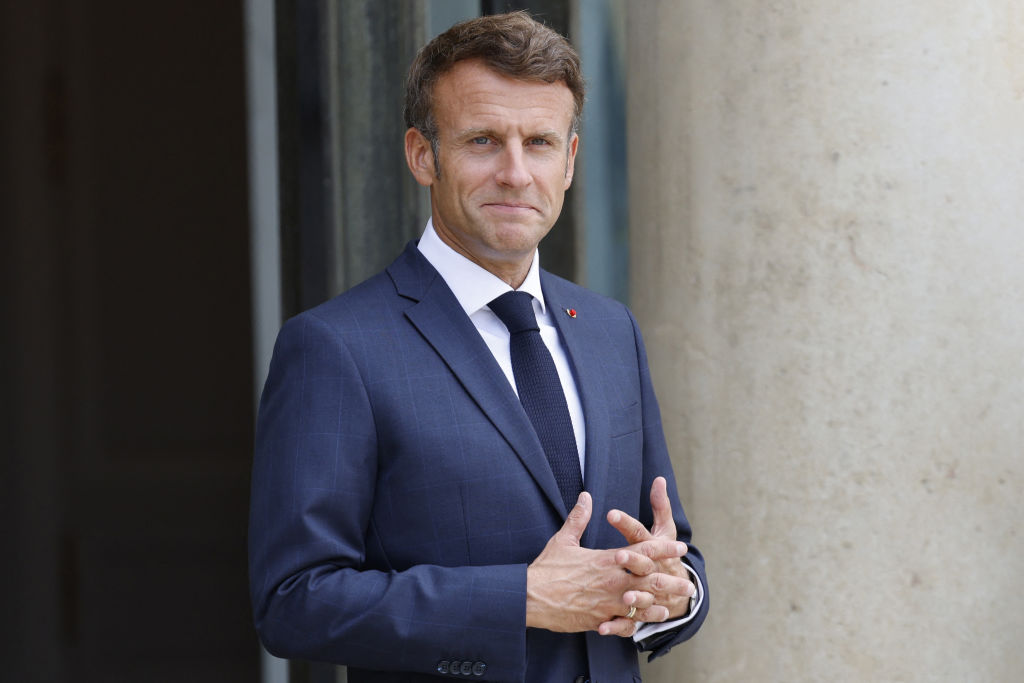
"Prepare for the end of abundance!" This is the message that French President Emmanuel Macron offered in his first post-holiday pronouncement last week. (Photo by Ludovic Marin/AFP via Getty Images)

"Prepare for the end of abundance!" This is the message that French President Emmanuel Macron offered in his first post-holiday pronouncement last month. Though supposedly addressed at the French people, Macron's lamentation seemed to have the entire "Western world" in mind.

According to him the era of easily available capital and seemingly endless natural resources, notably oil and natural gas, is already over. The "Western world" must learn to live in a different way.

Though Macron did not use the old cliché about "consumerism" depleting the planet's resources and causing climate change, it was clear that he had half an eye on the ecologist hymn-sheet.

Why would the leader of a democracy encourage pessimism, not to say anguish, exactly at a time that, according to his fanciful analysis, we are heading for dire straits?

One answer may be found in the setback that Macron's party, a hodgepodge of groups from across the political spectrum, suffered in the recent general election, winning only a plurality.

Six years ago, Macron built his surprise success by trying to de-ideologize French politics and bridging the classical 200-year-old left-right divide.

What happened in the first five years of Macron's presidency seemed to confirm his assumption that France was prepared to free itself of ideology. In that period reds, Communists and socialists of various shades, became pink while blues, traditional rightist and Gaullist parties, became turquoise, and blacks, hard right and neo-fascist groups became grey.

However, the change caused by Macron's "revolution" opened the way for a new ideology in a society that seems unable to do without an ideological panoptic. That ideology had been lurking on the sidelines for decades under different labels, notably environmentalism, ecologysm, declinism and political correctness or its American version, wokeism.

According to German political theorist Carl Schmidt, every society needs what he calls a "nomos" the ancient Greek word for the organizing principle of a society's material and cultural life. That "nomos" could have a dynamic, even an aggressive, attitude. But it could also reflect lethargy and even fear of losing freedoms or material means of subsistence.

In its current version, the nomos trying to seize control in almost all Western societies could be described as "victimism".

According to it, the planet is the victim of mankind's insatiable appetite for consumption. Mankind itself is the victim of greed which is bred by capitalism, itself a victim of capricious markets. Women are victims of men while the youths, forming the majority of the "underprivileged", are victims of the rich old.

Descendants of former slaves are victims of descendants of former slave-owners. Those with "alternative life-styles" are victims of those who stay straitlaced and favor the parson's position.

The search for new religious, social, economic, ethnic and other victims is endless. Society must be divided into countless slices, each equal to but at the same time different from all others.

Schmidt's "nomos" was abused by the German Nazis and "Third Way" advocates as a means of dissolving civil society while the state devoured the nation before spitting it out in a war.

The new "nomos", on the other hand, seems designed to emasculate the state into a court jester for a society defined as a coalition of victims.

Gone are the days when Frederic Bastiat told the French parliament in the 19th century that a "desacralized state" could become a danger to freedom. Today, Francois Guizot, who advised the French to "go and get rich" both materially and culturally, would feel out of place in Paris.

We hear echoes of Adolphe Thier, the man who crushed the Paris Commune, who told the Parliament that "Easy life isn't good for everyone!"

Recently on French state TV, there were two journalists boasting about how they refused to wear neckties and formal suits to interview Macron and how they refrained from addressing him as "Mr. President," supposedly to avenge an older generation of TV reporters who, now cast as post-factum victims, had to kowtow to presidents De Gaulle, Mitterrand or Chirac.

Spreading a paradoxical salad-bar, victimist ideology challenges the concept of individual and equal citizenship in the name of "the people", an abstraction capable of being misunderstood and misused. Remember the Nazis' slogan: "You are nothing! Your People is all!" (Du bist nichts, dein Volk ist alles!)

Saying the same thing, albeit in a pseudo-philosophical formula, August Comte asserted that "The citizen has only the right to consent, no other rights!"

In victimism, the state is seen as a cash machine distributing money among the victims, while apologizing to them. In the past few years. Western states, both in Europe and North America, have distributed countless trillions to bolster their shaken legitimacy.

Some philosophers, among them the German Jürgen Habermas, have tried to give victimism a Christian varnish. In their reading, the Western world, long after having adopted "secularism", remembers Christianity as a school of frugality, empathy for the downtrodden and atonement of sins symbolized by Christ as the ultimate victim.

The trouble with that reading is that it is closer to the Greek concept of the scapegoat, than to the Christian concept of redeemer.

In the Greek concept, the scapegoat is truly sinful and its sacrifice cleanses the society. In the Christian concept the redeemer is innocent, symbolizing his sacrifice as a sign of divine grace.

Victimism is a witches' brew of misunderstood Christianity, a zombie version of Marxism, eco-fanaticism and bleeding-heart liberalism espoused by mostly well-intentioned, well-to-do but pessimistic people. With the mantra "less is better than more", they warn that economic growth leads to Thanatos or collective suicide.

From now on, perhaps until the end of time, we ought to opt for "no more growth". The advice is "desire what you have" and "recycle what you don't want."

Amazingly, civilizations that feared growth, shunned innovation, favored recycling, and curbed desires, as we see in that great book "Gilgamesh", were doomed to decline and die.

The good news is that victimism, though stronger than ever in Western societies, has not succeeded in killing the Western civilization's fundamental optimism, craving for individual freedom, innovation and growth.

Macron's real or feigned pessimism could turn out to be a passing cloud.

Amir Taheri was the executive editor-in-chief of the daily Kayhan in Iran from 1972 to 1979. He has worked at or written for innumerable publications, published eleven books, and has been a columnist for Asharq Al-Awsat since 1987.

This article was originally published by Asharq al-Awsat and is reprinted by kind permission of the author.


Turkey: What Is the Real Terrorist Threat?


Turkey: What Is the Real Terrorist Threat?

by

 https://www.gatestoneinstitute.org/18742/turkey-terrorist-threat

  • Erdoğan said that Turkey would freeze Finland and Sweden's NATO membership bids if the Nordic countries do not come into line with Turkey's "fight against terrorist organizations."

  • That might be a tough task for Finland and Sweden. In 2019, Erdoğan notoriously called half of Turks (those who do not vote for him) terrorists. The same year, Erdoğan declared the pro-Kurdish People's Democracy Party a terrorist entity. In parliamentary elections in June 2015, that party won 13% of the national vote and 80 seats in the Turkish parliament. Nevertheless, in 2021, Erdoğan stated that the students who peacefully protested his appointment of a rector to Boğaziçi University were "terrorists."

  • If Sweden and Finland do not fight wholeheartedly everyone Erdoğan deems a terrorist, does that mean he will veto their membership?

  • Kavala was acquitted on all charges but, as Erdoğan publicly insists that he is a "traitor," he was not released from prison. Upon his acquittal, a prosecutor instantly produced a new indictment against him.

  • The West should tell Erdoğan it is ISIS, not men like Kavala, that is the terror threat to civilization.

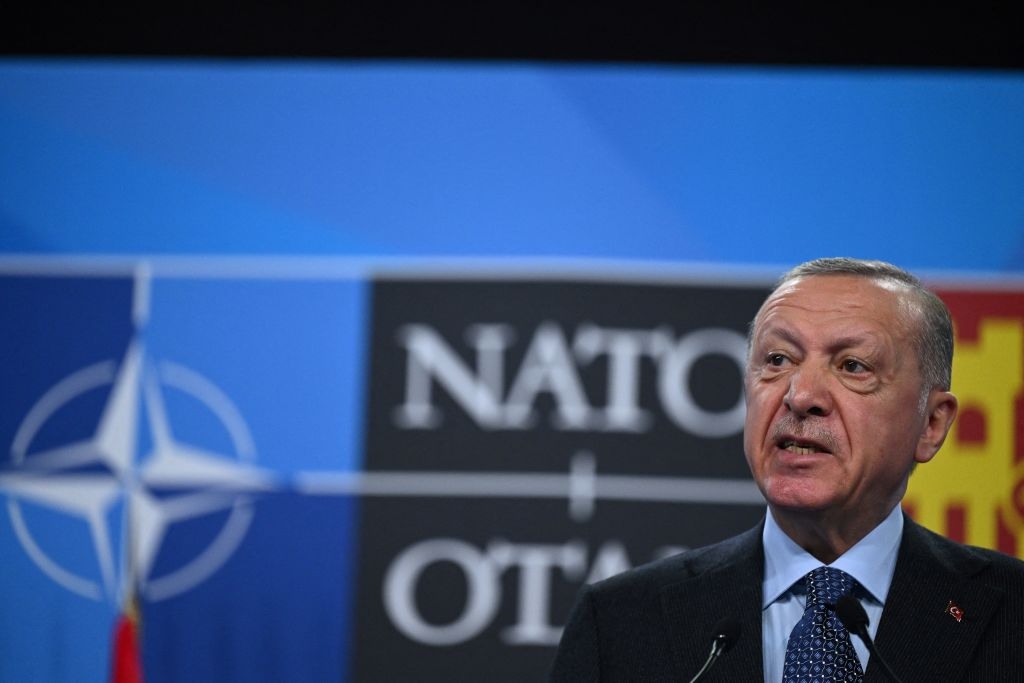
Turkish President Recep Tayyip Erdoğan said that Turkey would freeze Finland and Sweden's NATO membership bids if the Nordic countries do not come into line with Turkey's "fight against terrorist organizations." That might be a tough task for Finland and Sweden. In 2019, Erdoğan notoriously called half of Turks (those who do not vote for him) terrorists. (Photo by Gabriel Bouys/AFP via Getty Images)

Turkish President Recep Tayyip Erdoğan's ideological family tree is inherently anti-Western-- hence, anti-US and anti-NATO. This author's most recent article, "NATO Family Picture in Madrid: This Will Not Be Erdoğan's Last Blackmail," was posted on July 7. Only 11 days later, on July 18, Erdoğan said that Turkey would freeze Finland and Sweden's NATO membership bids if the Nordic countries do not come into line with Turkey's "fight against terrorist organizations."

That might be a tough task for Finland and Sweden. In 2019, Erdoğan notoriously called half of Turks (those who do not vote for him) terrorists. The same year, Erdoğan declared the pro-Kurdish People's Democracy Party a terrorist entity. In parliamentary elections in June 2015, that party won 13% of the national vote and 80 seats in the Turkish parliament. Nevertheless, in 2021, Erdoğan stated that the students who peacefully protested his appointment of a rector to Boğaziçi University were "terrorists." The Nordics may find it somewhat difficult to cooperate with Erdoğan and chase 40 million-plus Turkish terrorists in addition to tens of millions of Kurds living in Turkey, Iraq, Syria -- and Europe.

On May 17, Erdoğan announced that Turkey would veto Sweden and Finland's bids for NATO membership, and accused them of hosting Kurdish (and other) terrorists. Under pressure from NATO allies, he conditionally removed his veto at the June 29 NATO Summit in Madrid . If Sweden and Finland do not wholeheartedly fight everyone Erdoğan deems a terrorists, does that mean he will veto their membership?

Take, for instance, the notorious case of Osman Kavala, a millionaire philanthropist and human rights activist who has been in prison for the past five years on flimsy charges of sponsoring terrorism and riots against Erdoğan's government, espionage, and a rich fictional catalogue of other crimes.

On July 11, the European Court of Human Rights (ECHR) published its decision regarding Turkey's rigid failure to release Kavala, sentenced to life in prison in May. The court ruled that Turkey had violated a previous judgment from the ECHR in the case of Kavala vs Turkey from December 2019 that called for Kavala's release. It is rare for the court to explicitly reprimand a state for failing to abide by a decision. As it was ministers from the Council of Europe (CoE) who referred the case back to the court in February, the ECHR's decision is seen as moving the CoE a step closer to suspending Turkey as a member, or expelling it as they did Russia after it invaded Ukraine.

Kavala was acquitted on all charges but, as Erdoğan publicly insists that he is a "traitor," he was not released from prison. Upon his acquittal, a prosecutor instantly produced a new indictment against him.

If, in this case, Kavala would have escaped the Turkish dungeons and appeared in Sweden or Finland, Erdoğan would probably insist on his extradition before he gives the green light to the Nordics joining NATO. This can be what will happen to anyone Erdoğan might view as a terrorist who, in fact, is just someone who opposes the Sultan's Islamist rule.

Erdoğan's calculus has no limits. He refers to the PKK when he is talking about "Kurdish terrorists." He is right that the PKK's violent separatist campaign since 1984 has claimed more than 40,000 lives in Turkey; the victims were both Turks and Kurds. Turkey, the U.S. and European Union -- including Finland and Sweden -- have officially banned the PKK for being a terrorist entity. Where is the PKK is legal? In Erdoğan's "strategic ally," Russia. Any objections to Putin? Not on your life.

Kavala is not a terrorist. If Erdoğan wants to fight terrorism, he should not torture a liberal philanthropist by keeping him in solitary confinement despite his acquittal. Instead, Erdoğan should rethink, specifically drop, his plans for a new military incursion into Syria -- and not add to Turkey's military build-up in Syria– just to win a handful more of nationalistic votes in elections next year, on the assumption that a new military campaign in Syria would earn him critical votes from nationalist Turks.

There are reports that Pentagon officials are increasingly concerned about a new Turkish military invasion in northern Syria and have begun planning for how it could impact the U.S. fight against the Islamic State (ISIS) terrorist group. The main concern, is that any Turkish military movement into Syria would draw the U.S. partner, the Kurdish-led Syrian Democratic Forces (SDF), away from the battle against ISIS, the officials said.

"We strongly oppose any Turkish operation into northern Syria and have made clear our objections to Turkey," said Dana Stroul, Deputy Assistant Secretary of Defense for the Middle East. "Such an operation puts at risk U.S. forces' coalition campaign against ISIS and will introduce more violence into Syria."

The West should tell Erdoğan it is ISIS, not men like Kavala, that is the terror threat to civilization.

Burak Bekdil, one of Turkey's leading journalists, was recently fired from the country's most noted newspaper after 29 years, for writing in Gatestone what is taking place in Turkey. He is a Fellow at the Middle East Forum.


When German Environmentalists and Putin's Government Had a Burning Love Affair


When German Environmentalists and Putin's Government Had a Burning Love Affair

by

https://www.gatestoneinstitute.org/18829/german-environmentalists-gazprom-putin

  • In 2011, the German Baltic Sea Nature Conservation Foundation was established as a result of an agreement between three of Germany's leading environmental organizations - WWF, BUND and NABU - and the company Nord Stream, which is a subsidiary of the government of Vladimir Putin.

  • These environmental organizations were, moreover, at the same time fiercely opposed to German civil nuclear power, to the exploitation of shale gas in Europe and to the import of American gas via the construction of liquefied petroleum gas terminals in Germany.

  • Those were three issues where the views of the environmental organizations were totally congruent with those of the Russian Federation. This meant betting everything on "red" -- as in a casino -- but in this instance, on Russian gas.

  • Right after these contractual commitments by Nord Stream AG, the environmental organizations withdrew the lawsuit they had initiated against Nord Stream...

  • The German press reported last month that, inspired by the success of the first foundation, the same State of Mecklenberg-Western Pomerania was setting up a new foundation as recently as January 2021, the Mecklenberg-Western Pomerania Foundation for Climate and Environmental Protection, this time endowed with 192 million euros from the Russian government.

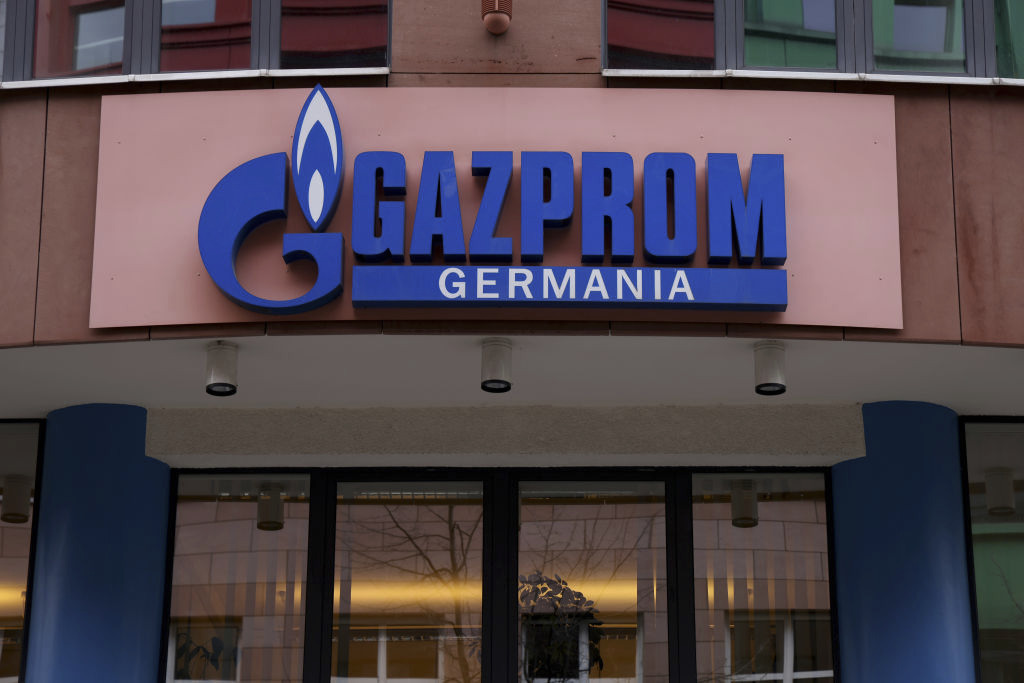
Those were... issues where the views of the environmental organizations were totally congruent with those of the Russian Federation. This meant betting everything on 'red' -- as in a casino – but in this instance, on Russian gas. Pictured: The corporate headquarters of Gazprom Germania, the German unit of Russian natural gas company Gazprom, photographed on March 30, 2022 in Berlin, Germany. (Photo by Sean Gallup/Getty Images)

In 2011, the German Baltic Sea Nature Conservation Foundation (Naturschutzstiftung Deutsche Ostsee) was created as a result of an agreement between Nord-Stream, the three main environmental organisations in Germany — WWF, BUND ("Friends of the Earth"), NABU — and the state of Mecklenburg-Western Pomerania. This foundation was immediately provided with a lucrative budget of ten million euros by Nord Stream.

Based in Zug, Switzerland, Nord Stream AG is an international consortium of five major companies established in 2005 for the planning, construction and subsequent operation of two 1,224-kilometres long gas pipelines across the Baltic Sea. The five shareholders of the consortium are Gazprom International Projects LLC, Wintershall Dea AG, PEG Infrastruktur AG, N.V. Nederlandse Gasunie and ENGIE. Gazprom International Projects LLC holds a 51% stake in the project.

Gazprom International Projects LLC is wholly owned by Gazprom, the world's largest publicly listed natural gas company, which is majority-owned and fully controlled by the Russian government.

The top management positions at the German Baltic Sea Nature Conservation Foundation were offered to the CEOs of these three largest German environmental organizations who were quick to accept, which is hardly surprising, given that this was part of the original agreement with the Moscow Bear.

These environmental organizations are trying to escape their overwhelming historical responsibilities by arguing, as BUND explained, that the agreement with Nord Stream on the creation of the German Baltic Sea Nature Conservation Foundation was only intended to "promote the implementation of complex nature conservation measures":

"In order to implement the complex measures as effectively as possible for nature and to secure them permanently, Nord Stream made the agreed compensation funds available in March 2011 for the establishment of the German Baltic Sea Nature Conservation Foundation... With the Baltic Sea Foundation, it is possible to develop, support and implement suitable projects in a professionally sound manner and with great expertise, and thus also to effectively compensate for the damage caused by the Baltic Sea pipeline. The non-profit Baltic Sea Foundation acts independently of the founder and is solely committed to its statutory objectives of promoting practical nature conservation and environmental protection measures at the Baltic Sea. To ensure that these funds are actually used to implement meaningful nature conservation work, WWF, NABU and BUND participate in the foundation's committees."

Let us try to see it clearly.

The reality of this agreement was stated by Nord Stream at the time of the foundation's creation in 2011:

"From today, the environmental organizations WWF, BUND and NABU will work closely together with the State of Mecklenburg-Western Pomerania and Nord Stream AG in the German Baltic Sea Nature Conservation Foundation (...) Jochen Lamp from WWF Germany will chair the board. The first deputy is Corinna Cwielag from BUND Mecklenburg-Western Pomerania."

The website of the German Baltic Sea Nature Conservation Foundation states:

"The German Baltic Sea Nature Conservation Foundation... was established in 2011 following an agreement between Nord Stream AG and the environmental organizations BUND Mecklenburg-Western Pomerania and WWF Germany."

Finally, the official statement from the state government concerned, Mecklenburg-Western Pomerania, reads:

"The creation of the foundation is the consistent realisation of the agreements for more nature conservation that the environmental organizations BUND and WWF Germany concluded with the company Nord Stream last year. In the foundation, representatives of BUND and WWF form the board of directors together with the State Secretary of the Ministry of Agriculture, Environment and Consumer Protection. (...) WWF CEO Jochen Lamp regards the establishment of the foundation as a great success for the protection of the marine environment (...) Representatives of NABU, the State Chancellery of Mecklenburg-Western Pomerania and the founder also work together in the 'curatorium', the strategic supervisory body of the new foundation."

To sum up, it is therefore a matter of fact and established law that in 2011, the German Baltic Sea Nature Conservation Foundation was established as a result of an agreement between three of Germany's leading environmental organizations - WWF, BUND and NABU - and the company Nord Stream, which is a subsidiary of the government of Vladimir Putin. Fact.

These environmental organizations were, moreover, at the same time fiercely opposed to German civil nuclear power, to the exploitation of shale gas in Europe and to the import of American gas via the construction of liquefied petroleum gas terminals in Germany.

Those were three issues where the views of the environmental organizations were totally congruent with those of the Russian Federation. This meant betting everything on "red" -- as in a casino -- but in this instance, on Russian gas.

Right after these contractual commitments by Nord Stream AG, the environmental organizations withdrew the lawsuit they had initiated against Nord Stream, as stated by BUND at the time. Quid pro quo, anyone?

Finally, the German press reported last month that, inspired by the success of the first foundation, the same State of Mecklenberg-Western Pomerania was setting up a new foundation as recently as January 2021, the Mecklenberg-Western Pomerania Foundation for Climate and Environmental Protection (Stiftung Klima- und Umweltschutz Mecklenburg-Vorpommern), this time endowed with 192 million euros from the Russian government. To quote the centre-left German daily Die Zeit:

"The Foundation for Climate and Environmental Protection was established at the beginning of 2021 by the government of [Mecklenberg-Western Pomerania's] Minister-President Manuela Schwesig (SPD). Officially, it was to promote environmental protection projects in the country... [and] received a total of 192 million euros from Nord Stream 2 AG, a subsidiary of Gazprom. The money was paid out between February and November 2021."

The German newspaper Die Welt wrote that the 192 million euros "benefited 80 service providers, who received 119 orders worth 165 million euros from the business enterprise set up within the environmental foundation." In its principles, this new foundation states that "the Foundation is interested in cooperating with the numerous initiatives, associations and foundations in climate protection... with a great deal of expertise." In Russian money?

The case is currently being examined by a commission of inquiry of the Mecklenburg-Western Pomerania state parliament, which was scheduled to begin its work at the end of August 2022. It is likely that, considering the seriousness of the facts, Germany's Chancellor Olaf Scholz and his predecessor, Angela Merkel, will be questioned.

The members of state parliament, Die Welt continues, also want to shed light on the role that the Russian secret services have played in the background. The current Interior Minister of Mecklenberg-Western Pomerania state, Christian Pegel (SPD), is particularly targeted:

"As Minister of Energy, this lawyer had once been instrumental in drawing up the foundation's statutes. In order to do this, Pegel met with representatives of the Russian-dominated Nord Stream 2 AG in circumstances that seem suspicious, without keeping any records. It is therefore not possible to know what agreements and arrangements were made on this occasion. For its part, Pegel claims that he no longer knows exactly what happened at the time. Through a spokeswoman, the minister told this newspaper: 'Insofar as he was involved in informal or formal discussions, he has no concrete recollection due to the passage of time."

A real short-term memory problem: the foundation was created last year.

Drieu Godefridi is a jurist (Saint-Louis University of Louvain), a philosopher (Saint-Louis University of Louvain) and a doctor in legal theory (Paris IV-Sorbonne).


Sunday, September 18, 2022

National Security Threat: China's Eyes in America


National Security Threat: China's Eyes in America

by

 https://www.gatestoneinstitute.org/18885/china-drones-dji-spying

  • The Chinese company DJI controls nearly 90% of the world market for consumer and commercial grade drones.

  • The excellent reporting on DJI by Kitchen tracks efforts by the company to lobby against passage of a bill called the American Security Drone Act (ASDA), now before Congress, to outlaw federal government use of DJI products entirely. What is the risk? Not only the data gathered by the drones themselves, but everything collected by the mobile app with which users control their drones and manage their DJI accounts. Like many other mobile applications, this includes a user's contacts, photos, GPS location, and online activities.

  • Every DJI drone in the skies above America is as good as a hovering Chinese spy.

  • DJI is engaged in a fierce lobbying effort to prevent passage of the ASDA bill. So fierce that they have enlisted police officers from local jurisdictions to come to Washington and lobby congressional staffers about how great DJI drones are for their cash-strapped local forces.... DJI lobbyists from firms like Squire Patton Boggs, Cassidy & Associates, and CLS Strategies are taking no chances. The company spent $2.2 million in lobbying efforts in 2020 and $1.4 million last year on lobbying activities, according to OpenSecrets.org.

  • Much as they are doing with products such as solar panels, the Chinese realize that cornering the market in an area where reach equals access is critical to their long-term plans to dominate. Their pattern includes stealing technology they cannot create themselves and using any means available to aid in that theft. Therefore, every bit of access to information they can scour is of more value to them than the product used to get it.

  • Understanding these patterns is central to recognizing that the Chinese do this to their own people as well.... [through] many different forms of what we may baldly call blackmail.

  • The Wilson Center, a bipartisan think tank in Washington, reported in 2017 that a small community of PRC students and diplomats have engaged in intimidation tactics ranging from intelligence gathering to financial retaliation... It was just those sorts of concerns that led the Trump administration to create the "China Initiative" within the Justice Department in 2018. This effort generated plenty of convictions of Chinese nationals in the US for technology theft and other forms of industrial espionage. The Biden administration ended the program this year....

  • China's strategy has for years hinged on infiltration by some Chinese scientists and researchers working abroad in the US and other western nations, with threats against their Chinese relatives as leverage for them to do so.

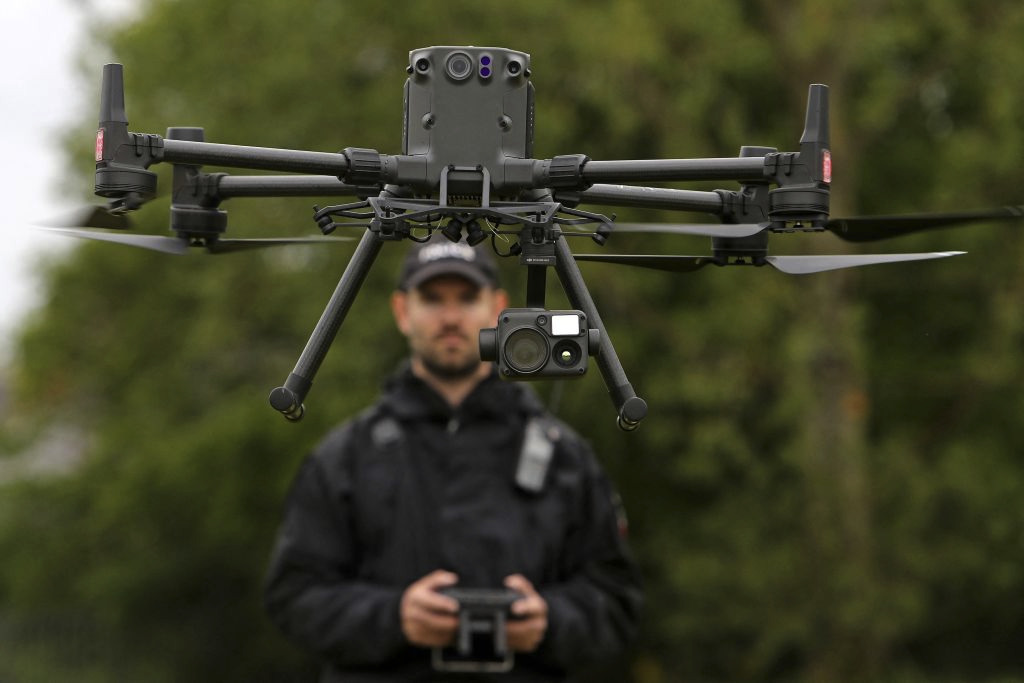
The consumer and commercial grade drones made by the Chinese company DJI account for nearly 90% of the market. These popular products are cost-effective, easy to fly and operate, and send every byte of data they gather to servers in China. Every DJI drone in the sky is as good as a hovering Chinese spy. Pictured: A police sergeant in Exeter, England pilots a DJI drone on May 25, 2021, as part of security preparations for the G7 Summit that was attended by US President Joe Biden and leaders of the other G7 countries. (Photo by Geoff Caddick/AFP via Getty Images)

Chinese intelligence gathering in the US takes many forms and has different purposes. Most Americans are familiar with some of their means and tactics, but not with how widespread and persistent they are.

Americans may know about the malware contained in that infernal TikTok app that their children use. They may know the Chinese military's cyber-intelligence service was likely behind many of the largest hacks of Americans' personal data that have ever occurred. They may know from the news how US defense and intelligence policy have sanctioned Chinese telecom giant Huawei, and counseled America's allies to reject Chinese-architected implementations of 5G networking, due to evidence that China has planted backdoors in commercial networking equipment designed to allow the Communist regime in Beijing to conduct surveillance and cyber-espionage anywhere in the world.

Do they know it extends to consumer-level drones?

Cybersecurity expert Klon Kitchen, writing for The Dispatch, recently detailed the problem with DJI, the Chinese company whose consumer and commercial grade drones control nearly 90% of the market. These popular products are cost-effective, easy to fly and operate, and send every byte of data they gather to servers in China. For this reason, they are banned by the US military and Department of Homeland Security, though still used by the FBI and increasingly by local police as "eyes in the sky" during crime events. FBI use of DJI drones is especially ironic considering bureau director Christopher Wray has warned often of the dangers to western commerce posed by the Chinese, most recently in London.

The excellent reporting on DJI by Kitchen tracks efforts by the company to lobby against passage of a bill called the American Security Drone Act (ASDA), now before Congress, to outlaw federal government use of DJI products entirely. What is the risk? Not only the data gathered by the drones themselves, but everything collected by the mobile app with which users control their drones and manage their DJI accounts. Like many other mobile applications, this includes a user's contacts, photos, GPS location, and online activities.

To repeat: Every DJI drone in the skies above America is as good as a hovering Chinese spy.

Like other Chinese government-controlled companies such as Huawei and Hikvision, makers of the artificial intelligence systems used in facial recognition and in the repression of China's Uyghur minority, DJI is adept at playing the Washington game. The company is engaged in a fierce lobbying effort to prevent passage of the ASDA bill. So fierce that they have enlisted police officers from local jurisdictions to come to Washington and lobby congressional staffers about how great DJI drones are for their cash-strapped local forces. As Kitchen points out, the ASDA bill is directed only towards a federal ban on these drones, but DJI lobbyists from firms like Squire Patton Boggs, Cassidy & Associates, and CLS Strategies are taking no chances. The company spent $2.2 million in lobbying efforts in 2020 and $1.4 million last year on lobbying activities, according to OpenSecrets.org.

These lobbyists are using the classic argument that it would be wrong to ban the federal government's use of our product because so many other people are using it. This is doubtless the dilemma currently facing the app stores of Apple and Google regarding the TikTok app, another Chinese product. The TikTok app has been identified by cybersecurity professionals as containing a keystroke logger, and both Apple and Google have been pressured by the Federal Communications Commission to remove it from their app stores. "Can we really ban something that so many people are happily using?" they must be asking themselves.

Therein lies the heart of the Chinese approach. TikTok was a mobile device application that no one was asking for, yet it became an overnight sensation in most western countries. We really must acknowledge, and grudgingly admire, the brilliant insight shown by the app's creator company, Chinese-government-controlled ByteDance, into the psyche of large numbers of young, western people. The TikTok app, pitched initially as a way to share and watch silly dance video clips, has been adopted by younger "woke" schoolteachers to "out" themselves as scheming, haranguing social justice warriors intent on smuggling sexual ideology into their classrooms and bragging about it.

This adds some context to Republican Sen. Rob Portman's (R-OH) exasperation at a Senate hearing about the ASDA legislation, where he said:

"Again, given what the FBI has told us, what the Commerce Department has told us, what we know from reports, I can't believe we have to write legislation to force US agencies to ban the use of Chinese-made drones, particularly where the servers are in China, where the Chinese government is a part owner and a supporter of this particular company."

The Chinese approach is to "capture" elite institutions and individuals in the US: politicians, leading universities, large pension funds, social media, and Hollywood among them. My latest book, Red Handed, documents this capture in the areas of politics, diplomatic and business consulting, Big Tech, academia, and on Wall Street. There is insight in the Soviet-era statement, attributed to Lenin, about capitalists "selling us the rope with which to hang them." Yet, it is the Chinese that understood how to sell the rope at a good price.

Much as they are doing with products such as solar panels, the Chinese realize that cornering the market in an area where reach equals access is critical to their long-term plans to dominate. Their pattern includes stealing technology they cannot create themselves and using any means available to aid in that theft. Therefore, every bit of access to information they can scour is of more value to them than the product used to get it.

Understanding these patterns is crucial to recognizing that the Chinese do this to their own people as well. As Gordon Chang's recent piece for the Gatestone Institute discusses, the Chinese Communist Party maintains tight control of Chinese people overseas through many different forms of what we may baldly call blackmail. The many stories of intimidation of Chinese students and academics in the US who speak up about human rights abuses by China, or in support for democracy in Hong Kong and Taiwanese independence, all demonstrate this.

Universities have put up with this in exchange for foreign funds for decades. They are only recently being confronted by the costs of this indulgence. For example, the former chairman of Harvard University's Chemistry and Chemical Biology Department was convicted by a federal jury for lying to federal authorities about his affiliation with the People's Republic of China's Thousand Talents Program and the Wuhan University of Technology (WUT) in Wuhan, China, as well as failing to report income he received from WUT.

The Wilson Center, a bipartisan think tank in Washington, reported in 2017 that a small community of PRC students and diplomats have engaged in intimidation tactics ranging from intelligence gathering to financial retaliation. "A Preliminary Study of PRC Political Influence and Interference Activities in American Higher Education" examines PRC influence in American universities.

It was just those sorts of concerns that led the Trump administration to create the "China Initiative" within the Justice Department in 2018. This effort generated plenty of convictions of Chinese nationals in the US for technology theft and other forms of industrial espionage. The Biden administration ended the program this year, citing concerns that a broader approach was needed and in response to lobbying by Asian American groups that it unfairly targeted scientists with connections to China. Further, Assistant Attorney General Matthew Olsen also said he heard concerns from the academic community that prosecutions of researchers for grant fraud and other charges was having a "chilling effect."

Be that as it may, China's strategy has for years hinged on infiltration by some Chinese scientists and researchers working abroad in the US and other western nations, with threats against their Chinese relatives as leverage for them to do so. This will remain a counter-intelligence problem regardless of what the effort to expose it is called.

It is all part of the pattern. Call it sabotage by remote control.

Peter Schweizer, President of the Governmental Accountability Institute, is a Gatestone Institute Distinguished Senior Fellow and author of the new book, Red Handed: How American Elites are Helping China Win.


Iran and Russia: The New Alliance


Iran and Russia: The New Alliance

by

https://www.gatestoneinstitute.org/18903/iran-russia-alliance

  • Significantly, Russia and Iran's cooperation extends to the military and space fields, with Russia recently helping Iran to launch a new satellite into space.

  • Iran's Khayyam satellite "will greatly enhance Tehran's ability to spy on military targets across the Middle East... [and give] Tehran "unprecedented capabilities, including near-continuous monitoring of sensitive facilities in Israel and the Persian Gulf." — The Washington Post, August 4, 2022.

  • "Iran could share the imagery with pro-Iranian militia groups across the region, from the Houthi rebels battling Saudi-backed government forces in Yemen to Hezbollah fighters in southern Lebanon and Shiite militias in Iraq and Syria." — Unnamed Middle Eastern official, The Washington Post, June 10, 2021.

  • "As Iran perfects its missile arsenal... alongside its growing UAV capability throughout the Middle East –being able to sync those capabilities with satellite capabilities and surveillance will only increase the lethality of the Iranian threat." — Richard Goldberg, former Iran analyst in the Trump administration's National Security Council, The Washington Post, August 4, 2022.

  • Iran has also become a major developer and producer of drones.... Most recently, Iran claimed that it had developed a long-range suicide drone "designed to hit Israel's Tel Aviv, Haifa."

  • Despite this acknowledged "profound threat" emanating from the mutually beneficial alliance between Russia and Iran, the Biden administration nevertheless has been making dangerous concessions to revive the nuclear deal, which would only deepen the threat and benefit not only Iran, but also Russia.

  • Let us hope that the new "Iran nuclear deal," reportedly "off the table for the time being" is off the table for good.

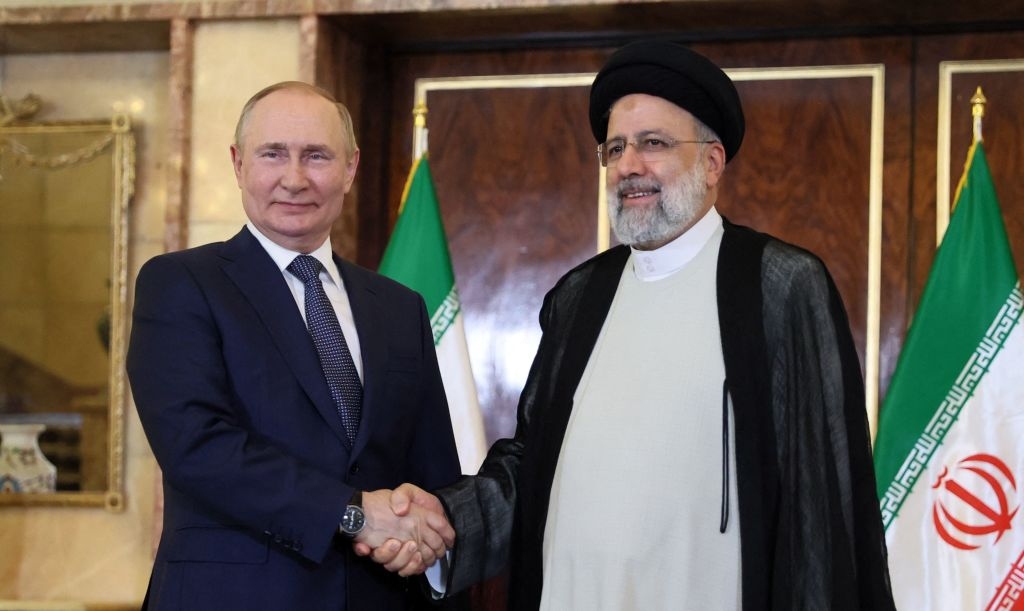
Russia and Iran's cooperation extends to the military and space fields, with Russia recently helping Iran to launch a new satellite into space. Pictured: Russian President Vladimir Putin and Iran's President Ebrahim Raisi hold a meeting in Tehran on July 19, 2022. (Photo by Sergei Savostyanov/Sputnik/AFP via Getty Images)

Iran and Russia have been strengthening their alliance recently, growing it gradually to such an extent that the Wall Street Journal wrote on August 27 that the two countries were "forging tighter ties than ever," as both countries face continued international isolation.

In recent months, Russia and Iran have signed a multitude of agreements, especially in trade, oil and gas, and military cooperation.

In June, an agreement on the establishment of mutual trade centers in St. Petersburg and Tehran was signed, to generate further trade between the two countries in the sectors of energy, transportation, electronics, agriculture, food, pharmaceuticals and construction, by helping Iranian and Russian businessmen establish contacts and conduct financial transactions.

In May, Russia and Iran signed agreements on settling their trade and energy payments in their national currencies instead of the US dollar. In addition, they agreed to continue talks to connect their electronic payment systems as well as their financial messaging systems. Since then, Russia and Iran have gradually begun trading in their national currencies.

In 2021, the volume of bilateral trade between Russia and Iran increased by 81% from the previous year, rising to $3.3 billion. In January, after a two-day visit to Moscow, Iranian President Ebrahim Raisi said that the two countries would increase trade even further.

"We agreed to remove trade barriers and boost the economic exchanges between the two countries. Currently, the level of mutual trade is not acceptable, so the two countries agreed to increase trade to $10 billion a year. The two countries can take steps to break the dominance of the dollar over monetary and banking relations and trade with the national currency."

During Raisi's visit, the two countries also signed agreements to deepen energy cooperation and in July, Russia announced that it would invest $40 billion in Iran's oil industry, Russia's largest ever investment in Iran. Russia announced the investment deal as Russian President Vladimir Putin was visiting Iran for talks.

According to Iranian state news outlet IRNA, Putin and Raisi "discussed ways for expansion of bilateral relations in different areas, including energy, transit, trade exchanges and regional developments as well."

Significantly, Russia and Iran's cooperation extends to the military and space fields, with Russia recently helping Iran to launch a new satellite into space: On August 9, Russia launched Iran's new Khayyam surveillance satellite from the Baikonur space station in Kazakhstan.

The launch of the satellite is a telling example of the kind of dangers that a strengthened Russian-Iranian alliance poses to US interests.

Iran's Khayyam satellite "will greatly enhance Tehran's ability to spy on military targets across the Middle East," according to unnamed Western and Middle Eastern officials quoted by the Washington Post. The satellite's high-resolution camera apparently gives Tehran "unprecedented capabilities, including near-continuous monitoring of sensitive facilities in Israel and the Persian Gulf."

Iran will also be able to "task" the new satellite to spy on locations of its choosing, as often as it wishes, according to the officials.

"It's not the best in the world, but it's high resolution and very good for military aims," a Middle Eastern official familiar with the hardware of the satellite told the Washington Post in June 2021.

"Iran could share the imagery with pro-Iranian militia groups across the region, from the Houthi rebels battling Saudi-backed government forces in Yemen to Hezbollah fighters in southern Lebanon and Shiite militias in Iraq and Syria."

"This is obviously a clear and present danger to the United States and our allies in the Middle East and abroad," said Richard Goldberg, a former Iran analyst in the Trump administration's National Security Council.

"As Iran perfects its missile arsenal – from short-, medium- to longer-range missiles, alongside its growing UAV capability throughout the Middle East –being able to sync those capabilities with satellite capabilities and surveillance will only increase the lethality of the Iranian threat."

For the time being, however, the Iranian satellite is meant to be helping Russia's war effort in Ukraine, another example of the mutual benefits accruing to both Russia and Iran from their alliance.

"Russia, which has struggled to achieve its military objectives during its five-month-old assault on Ukraine, told Tehran that it plans to use the satellite for several months, or longer, to enhance its surveillance of military targets in that conflict," the Washington Post wrote.

Equally significantly, Iran is now actively helping Russia with its war effort in Ukraine, which puts on display the extremely negative effects of the new Russian-Iranian alliance.

Russia has ordered hundreds of Iranian military drones as Russia suffers from a severe lack of attack drones that are precision-capable. Russia has bought at least two kinds of drones from Iran, the Mohajer-6 and the Shahed-series drones. The first batch of drones, according to the Washington Post, was picked up by Russian cargo flights in late August. Iran reportedly has been training Russian soldiers in using them in Russia's war in Ukraine. On September 13, Ukraine said that it had shot down an Iranian-produced Shahed drone.

Iran has become a major developer and producer of drones. In October 2021, the Wall Street Journal reported the concern of defense officials from the United States, Israel and Europe that Iran's progress in developing, building and deploying drones was changing the security situation in the Middle East region.

"The drones themselves are often made with widely available components used in the ever-growing commercial drone market and by hobbyists, the officials say," the Wall Street Journal reported.

"Some mimic the designs of Israeli and American military drones... Tehran's engineers rely on imported components to create aerial vehicles that can accurately strike targets at long distance and rapidly change direction to avoid air defenses and radar, say European and Middle Eastern security officials who have studied wreckages of the drones."

Most recently, Iran claimed that it had developed a long-range suicide drone "designed to hit Israel's Tel Aviv, Haifa."

In July, US National Security Adviser Jake Sullivan denounced the new cooperation between Russia and Iran:

"Russia deepening an alliance with Iran to kill Ukrainians is something that the whole world should look at and see as a profound threat."

Despite this acknowledged "profound threat" emanating from the mutually beneficial alliance between Russia and Iran, the Biden administration nevertheless has been making dangerous concessions to revive the nuclear deal, which would only deepen the threat and benefit not only Iran, but also Russia.

"Several of Russia's top state-controlled nuclear companies stand to gain billions of dollars in revenue as part of a new nuclear accord with Iran that will waive sanctions on these firms so that they can build up Tehran's nuclear infrastructure," the Washington Free Beacon reported in April.

"Russia's state-controlled Rosatom energy firm and at least four of its major subsidiaries will receive sanctions waivers under a new accord so that they can complete nuclear projects in Iran worth more than $10 billion, according to the 2019 document, which details all the Russian entities involved in these projects. With a new nuclear accord being finalized, the Biden administration has repeatedly guaranteed Russia that it will not face sanctions for its work on Iranian nuclear sites, even as Moscow faces a barrage of international penalties for its unprovoked war in Ukraine. The Biden administration renewed a series of sanctions waivers to permit Russia's nuclear work in Iran as part of a package of concessions meant to entice both countries into signing a new accord."

Let us hope that the new "Iran nuclear deal," reportedly "off the table for the time being" is off the table for good.

Judith Bergman, a columnist, lawyer and political analyst, is a Distinguished Senior Fellow at Gatestone Institute.


Europe's Energy Crisis


Europe's Energy Crisis

by

  • In response to Russia severely restricting or cutting off gas supplies, EU governments will take dramatic actions over the coming months. Germany recently announced it would keep two of the nuclear plants it was shuttering as backups, just in case. EU leaders will then go back to the voters and describe the amazing job they did while failing to mention they were the ones who made the decisions that put their countries in this crisis in the first place.

  • The entire current crisis was avoidable if the EU had developed a rational plan instead of one based on a daydream, no matter how enticing.

  • The U.S. needs urgently to examine what is happening in Europe and develop a rational energy transition plan. Any long-term solution must include strategies for reliable power production, affordable sustainable energy and a massively strengthened electrical grid.

  • Europe's plan was built on the hope that consumers would accept higher prices, that Russia and Putin would be reliable, and that battery storage technology would be robust enough to cover the times when "the wind doesn't blow and the sun doesn't shine."

  • This strategy, sadly always doomed to failure, provides a cautionary tale for "solutions" based solely on hope.

  • The U.S. should not repeat the same mistakes as the EU by continuing down a path that cuts domestic fossil fuel production, bans gasoline-powered vehicles, and ignores that the power generation capacity and energy infrastructure are not in place to achieve an unrealistic and unfortunately unsustainable green agenda.

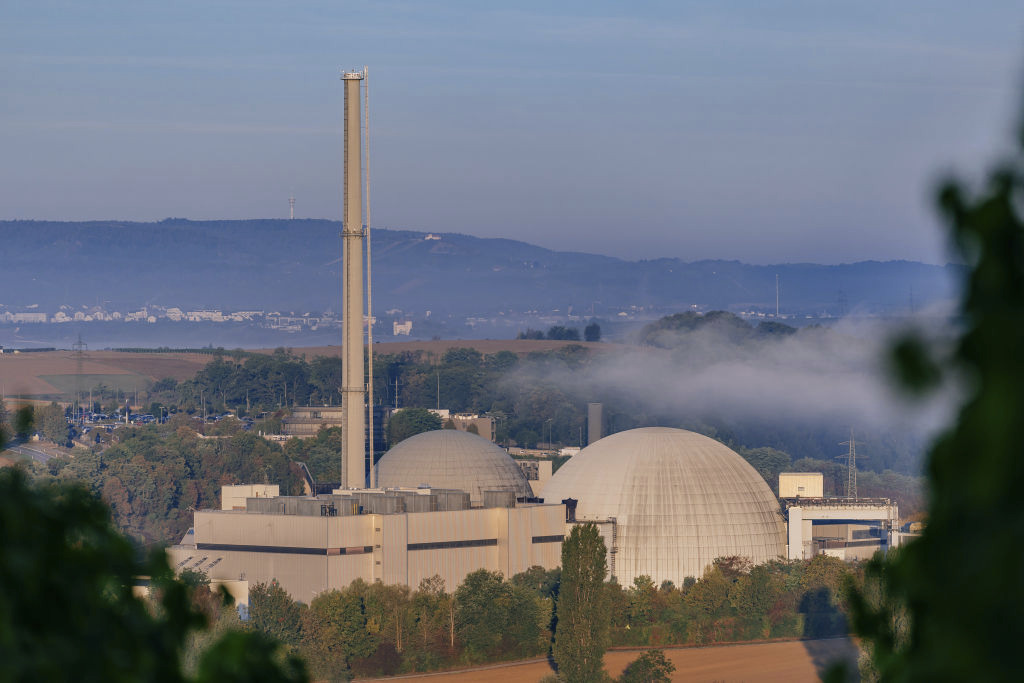
In response to Russia severely restricting or cutting off gas supplies, EU governments will take dramatic actions over the coming months. Germany recently announced it would keep two of the nuclear plants it was shuttering as backups, just in case. Pictured: The Neckarwestheim nuclear power plant, one of two that the German government plans to allow to continue running as a backup. (Photo by Thomas Niedermueller/Getty Images)

Europe is facing a growing energy crisis. Individuals and industries are being battered by rising energy costs. On August 31, Russia shut down the Nord Stream 1 gas pipeline to Germany for initially what was supposed to be 72 hours, but followed by an announcement of "technical difficulties" that would prevent a resumption. Russian energy giant Gazprom also announced that natural gas supplies to French energy company Engie SA would be immediately reduced. These actions have created significant uncertainty and the threat of much higher energy prices in Europe as the cold winter season approaches.

In the Netherlands last month, I had the opportunity to discuss the skyrocketing energy costs. Monthly utility bills of 400 to 600 euros are not unusual. One company said it was spending four times the amount for natural gas than a year ago. The company indicated because of these higher costs, it would be cutting its production by 50% this winter. Most European Union countries are experiencing an eight-fold increase in energy prices.

Both Germany and the Netherlands have been seeing extreme energy price spikes. Germany's prices surged to 1,050 euros per megawatt hour (MWh) before falling to 610 euros in August. Last year, the approximate cost was only 85 euros per MWh.

This dramatic inflation in energy costs is resulting in predictable actions with unpredictable outcomes. The Dutch have reported demand destruction. This means that when the price for a product increases, the demand for it decreases. What we are seeing in Europe is significant decrease in demand for energy because of the huge price increases. An example is the business that will cut production by 50% because energy costs have significantly increased the costs of their end product, resulting in a 50% cut in demand for their product.

The Dutch used 25% less natural gas in the first six months of 2022 than they did in the comparable period in 2021 — primarily due to customers' responses to the higher prices and mercifully somewhat milder than expected temperatures.

The EU has already asked member states to cut energy use by 15% this winter. When it comes to Russian gas supplies, European Commission President Ursula von der Leyen warned Europe to prepare for the "worst situation." Meanwhile, the Norwegian energy company Equinor estimates that European power companies will need to find 1.5 trillion euros to cover the costs of margin calls related to soaring energy prices. Europe and the West look as if they will be in for a rough, expensive winter.

Predictably, EU government leaders believe that the EU and its member states "must act." Several countries have already unilaterally implemented measures -- from imposing price caps to direct government handouts to deal with the immediate costs of the crisis. At the EU level, there now appears to be a consensus that the entire energy market structure must be redesigned, and quickly. They seem to be hoping that this might be completed by early 2023, but none of these actions is laying the foundation for a long-term, workable energy solution.

The reality, however, is that this situation did not develop overnight and will not be fixed overnight. Despite European politicians blaming all this on Russian President Vladimir Putin and Russia's invasion of Ukraine, the root causes go deeper. The EU made a commitment to sustainability and so-called green energy years ago. Germany, Austria, Italy and the Netherlands are now reportedly going back to coal-fired plants to save on natural gas usage. Experts in Germany say the coalition government is "trying to buy time with coal so that it can come up with a more sustainable long-term solution."

In January, Germany closed half of its six remaining nuclear power plants despite rising energy costs. Germany's lofty sustainable climate goals did not include plans on how to replace the energy that was being provided by its safe, clean and reliable nuclear power plants.

Instead, to achieve its climate utopia, Germany decided that it would become more dependent on Russian gas, that consumers willingly would pay higher prices, and that it could turn to power from far less reliable wind and solar energy. This fantasy became the model across the EU, and the EU has no one else to blame for the results.

The frustrating outcome is that businesses, families and individuals will be forced to shoulder the burden caused by unwise policy decisions by their leaders. As one Dutch farmer said, their governments are run by a bunch of bureaucrats who sit in chairs and have no real-world experience. It might be worth adding they also have no accountability.

In response to Russia severely restricting or cutting off gas supplies, EU governments will take dramatic actions over the coming months. Germany recently announced it would keep two of the nuclear plants it was shuttering as backups, just in case. EU leaders will then go back to the voters and describe the amazing job they did while failing to mention they were the ones who made the decisions that put their countries in this crisis in the first place.

The entire current crisis was avoidable if the EU had developed a rational plan instead of one based on a daydream, no matter how enticing.

The U.S. needs urgently to examine what is happening in Europe and develop a rational energy transition plan. Any long-term solution must include strategies for reliable power production, sustainable energy and a massively strengthened electrical grid.

Europe's plan was built on the hope that consumers would accept higher prices, that Russia and Putin would be reliable, and that battery storage technology would be robust enough to cover the times when "the wind doesn't blow and the sun doesn't shine."

This strategy, sadly always doomed to failure, provides a cautionary tale for "solutions" based solely on hope.

The U.S. should not repeat the same mistakes as the EU by continuing down a path that cuts domestic fossil fuel production, bans gasoline-powered vehicles, and ignores that the power generation capacity and energy infrastructure are not in place to achieve an unrealistic and unfortunately unsustainable green agenda.

Peter Hoekstra was US Ambassador to the Netherlands during the Trump administration. He served 18 years in the U.S. House of Representatives representing the second district of Michigan and served as Chairman and Ranking member of the House Intelligence Committee. He is currently Chairman of the Center for Security Policy Board of Advisors, and a Distinguished Senior Fellow at Gatestone Institute.


China's Commentary on Mistakes of Gorbachev to Make Sure the Chinese Communist Party Endures


China's Commentary on Mistakes of Gorbachev to Make Sure the Chinese Communist Party Endures

by

 https://www.gatestoneinstitute.org/18899/communist-china-gorbachev

  • Social commentary by Chinese Communist Party organs continue to urge members to be vigilant against the West's strategy of "peaceful evolution," meaning the eventual adoption by the Party of reforms that might sap it of its revolutionary aggressive stance against liberal democracies.

  • Under Xi's tutelage, the CCP strengthened its role in the life of the ordinary Chinese citizen. President Xi galvanized CCP bureaucrats to accelerate a mass migration of China's rural peasantry to urbanized environments. Consequently, tens of millions of Chinese were forced to learn new skills in manufacturing jobs. This transformation helped lift many out of abject poverty, thereby expanding China's middle class as well as the domestic market for Chinese goods. The urbanization process also helped the CCP to better control China's huge population by concentrating people in cities.

  • The USSR had failed to improve the quality of life of the Soviet citizenry. CCP leaders possibly reasoned that, because of this failure, Soviet citizens began to challenge Communist rule.... As openness became the norm, people in the USSR quickly saw that citizens in Western countries had freer and more comfortable lives.

  • Instead of imitating Gorbachev's "Glasnost" (political openness) China constructed the "Great Firewall" which filters all traffic on the Chinese Internet. Chinese authorities also ban the citizenry access to Facebook and Wikipedia.

  • China conducts its diplomatic relations even with foreign countries strictly on a transactional business basis. The CCP did not seek to export its revolution violently, as did Iran. Beijing also refused to allow its few allies, such as Pakistan, to drain its national resources. That was another self-inflicted burden that Moscow shouldered: its burden of bankrupt colonies in Eastern Europe.

  • China, instead, is offering its own model of governance -- a one-party system, tight control, a controlled economy, social stability rather than individual freedoms, internet control, and "to protect the dominant role of the CPC" -- to the world as a viable alternative to the American system.... China remains resolute in its campaigns against any movement that might possess the energy to compete with the CCP, whether the Falun Gong movement or Christianity.

  • China's leaders apparently still worry, otherwise they would not be investing such enormous resources in domestic espionage and repressing their own people.

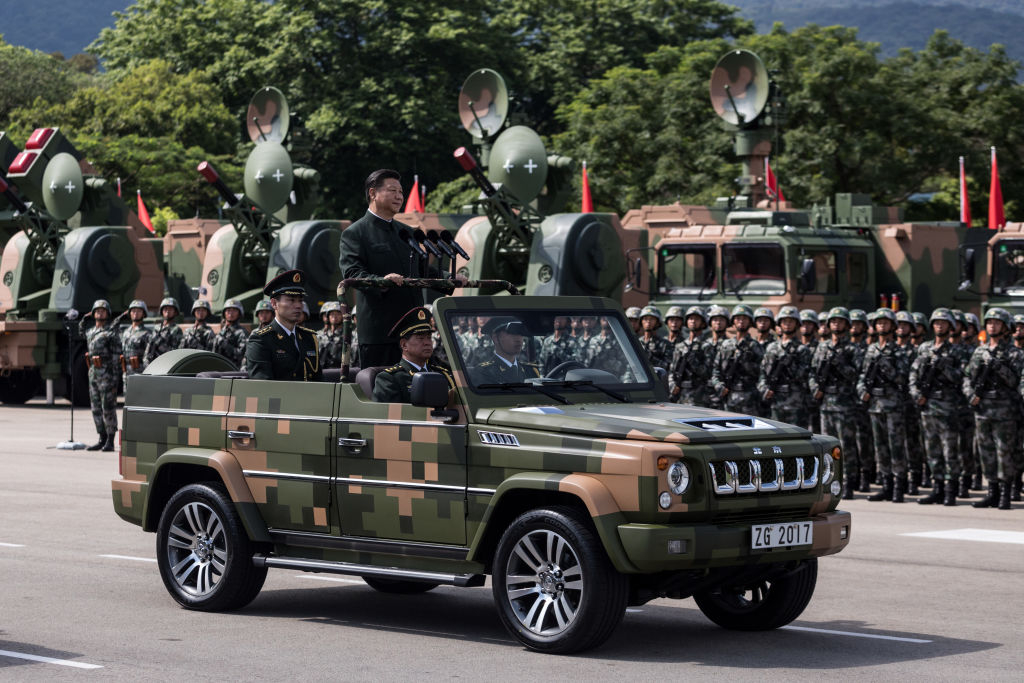
China remains resolute in its campaigns against any movement that might possess the energy to compete with the Chinese Communist Party. China's leaders invest enormous resources in domestic espionage and repressing their own people. Pictured: China's President Xi Jinping (standing in vehicle) inspects People's Liberation Army soldiers at a military base in Hong Kong on June 30, 2017. (Photo by Dale de la Rey/AFP via Getty Images)

Chinese Communist Party (CCP) commentators reacting to the death of Mikhail Gorbachev blamed the former Soviet leader for the demise of the Soviet Union. Hu Xijin, former editor of the CCP's Global Times, wrote that Gorbachev garnered praise in the West "by selling out the interests of his homeland." Xiang Ligang, a hardline journalist on international relations, claimed that Gorbachev was responsible for the war in Ukraine and unspecified disasters to follow. State controlled academia echoed similar themes. Beijing-based Renmin University Political Science Professor Shi Yinhong said: "The Chinese Communist Party is very critical of [Gorbachev], believing that he betrayed the Soviet Union."

Although more than 30 years have passed since the collapse of the Soviet Union, the CCP remains deeply troubled by the sudden disappearance of the Communist Party of the Soviet Union (CPSU). Just this past July, the CCP re-issued a six part documentary detailing ideological "lessons learned" from the failure of the CPSU. The film, entitled "Silent Contest," is mandatory viewing for CCP members. Political training courses on "The Rise and Fall of the Soviet Union" are part of the curriculum in all Party schools. During President Xi Jinping's tenure as CCP leader, countless articles and Party-sponsored study groups on CPSU failures continue.

Xi, almost immediately upon his installment as CCP General Secretary in 2012, warned that "Our Party must never find itself afflicted with the poisonous mix of ideological heresy, military disloyalty, and corruption." Xi has repeatedly lectured CCP members that the Party "will never permit subversive heresies on fundamental issues." Social commentary by CCP organs continue to urge members to be vigilant against the West's strategy of "peaceful evolution," meaning the eventual adoption by the Party of reforms that might sap it of its revolutionary aggressive stance against liberal democracies. Xi seems to have expressed his personal regret at the expungement of the CPSU when he remarked, "In the end, nobody was a real man, nobody came out to resist."

CCP leaders painfully remember that Gorbachev's visit to China in 1989 coincided with about a million Chinese demonstrators protesting in the streets of China's capital, Beijing. These protests were embarrassing to the regime, as protestors forced Gorbachev's motorcade to use the back entrance of the Great Hall of the People and made Chinese leader Deng Xiaoping alter his plans for celebrating the restoration of friendly party relations between the CCP and the CPSU. Two weeks later, on June 4, 1989, CCP leaders ordered a bloody crackdown by dispatching the Peoples' Liberation Army to fire on student demonstrators in Tiananmen Square. The CCP clearly believes it made the correct decision to save both the Party and the Chinese state, an opinion echoed by China's Defense Minister Wei Fenghe during a 2019 visit to Singapore on the 30th anniversary of the crackdown.

China, in its opening to the global market in the 1980s under Deng, unlike Gorbachev's "Perestroika" (economic restructuring), continued to protect state-owned enterprises with financial support. China established an economic model that Beijing calls "Socialism with Chinese Characteristics."

Beijing demanded a high price from Western companies investing in the Chinese domestic market. Foreign firms were forced to surrender trade and technological secrets, and no Western company was permitted to own a majority of stock in a Chinese company.

Under Xi's tutelage, the CCP strengthened its role in the life of the ordinary Chinese citizen. Xi galvanized CCP bureaucrats to accelerate a mass migration of China's rural peasantry to urbanized environments. Consequently, tens of millions of Chinese were forced to learn new skills in manufacturing jobs. This transformation helped lift many out of abject poverty, thereby expanding China's middle class as well as the domestic market for Chinese goods. The urbanization process also helped the CCP to better control China's huge population by concentrating people in cities.

Xi's governing strategy gamble is that by raising the individual's standard of living and quality of life, the Chinese people will continue to permit the Party to maintain its monopoly on political affairs. The USSR had failed to improve the quality of life of the Soviet citizenry. CCP leaders possibly reasoned that, because of this failure, Soviet citizens began to challenge Communist rule. The Chinese regime blamed Gorbachev's policy of "Glasnost" (political openness) for making matters in the Soviet Union even more unstable for the government. As openness became the norm, people in the USSR quickly realized that citizens in Western countries had freer and more comfortable lives.

China's Communist regime implemented several specific measures to guarantee that the People's Republic and the CCP did not suffer a similar fate as did the Soviet Union and the CPSU. Instead of imitating Gorbachev's "Glasnost," China constructed the "Great Firewall," which filters all traffic on the Chinese internet. Chinese authorities also ban the citizenry access to Facebook and Wikipedia.

For decades, China's "Consensus policy" decision makers avoided expensive foreign adventures like Moscow's 1979-1989 occupation of Afghanistan. The Chinese also steered clear of entanglements in proxy conflicts, as opposed to the Soviet Union in Africa, Asia, and Latin America during the Cold War.

China conducts its diplomatic relations even with foreign countries strictly on a transactional business basis. The CCP did not seek to export its revolution violently, as did Iran. Beijing also refused to allow its few allies, such as Pakistan, to drain its national resources. That was another self-inflicted burden that Moscow shouldered: its burden of bankrupt colonies in Eastern Europe.

China, instead, is offering its own model of governance -- a one-party system, tight control, a controlled economy, social stability rather than individual freedoms, internet control, and "to protect the dominant role of the CPC" -- to the world as a viable alternative to the American system. The Chinese Communist Party continues to study intensely the reasons for the Soviet Union's passage to oblivion, and seems to be implementing what it evidently believes to be a foolproof surveillance system that will prevent a similar collapse. China remains resolute in its campaigns against any movement that might possess the energy to compete with the CCP, whether the Falun Gong movement or Christianity.

China's leaders apparently still worry, otherwise they would not be investing such enormous resources in domestic espionage and repressing their own people.

Dr. Lawrence A. Franklin was the Iran Desk Officer for Secretary of Defense Rumsfeld. He also served on active duty with the U.S. Army and as a Colonel in the Air Force Reserve.