.

.
Library of Professor Richard A. Macksey in Baltimore

POSTS BY SUBJECT

Labels

Wednesday, July 18, 2018

Judith Bergman : The Relentless Radicalization of Sweden


  • Swedish police report that Muslim children have told their classmates they will cut their throats, while showing them beheadings on their mobile phones, according to the new study of Salafism in Sweden by the Swedish Defence University.
  • "Many women live worse [lives] here than they would have in their former countries" — Swedish care worker.
  • The inability -- willful blindness is probably a more apt description -- to see that jihadist terrorism does not emerge from a vacuum, but is nurtured in particular environments, is hardly an exclusively Swedish situation. The insistence of so many European and other Western authorities on describing terrorist attacks as instances of "mental illness" illustrate it perfectly.
A new study[1] of Salafism in Sweden, conducted by the Swedish Defence University, paints a bleak picture of the ongoing radicalization of Muslims in Sweden.
The Salaf are the "pious ancestors" during the first three generations of the followers of Mohammed; its ideology has come to be associated over the last few decades with al-Qaeda and ISIS, as well as with local al-Qaeda affiliates. According to the study, Salafists, who believe in Islam as Mohammed's early followers practiced it, tend to reject Western society in favor of a "pure" Islam: "Not all Salafists are jihadists, but all jihadists are Salafists". [2]
Although the study does not give an estimate of how many Salafists are in Sweden, it does describe how Salafist milieus there have evolved and grown stronger, especially during the past decade, and lists several examples of the influence they wield in different Swedish cities and localities.


The Swedish Defence University has published a new study that paints a bleak picture of the ongoing radicalization of Muslims in Sweden. (I99pema/Wikimedia Commons)

"Salafists", the authors of the study conclude, "...advocate gender segregation, demand that women veil themselves to limit 'sexual temptation', restrict women's role in the public sphere and strongly oppose listening to music and some sports activities"[3].
According to the study, many Salafists also tell Muslims not to have Swedish friends, and refer to them as "kufr", the Arabic term for a non-Muslim or "disbeliever". One Salafist preacher, Anas Khalifa, said:
"Does that mean that if you meet a Christian or Jew you should beat him or threaten him? No. There is no war between you and Christians and Jews in your school, for example. You hate him for Allah's sake. You hate that he does not believe in Allah. But you want from your heart that he will love Allah. So you have to work with them, talk with them, because you want Allah to guide them". [4]
The Salafists, apparently, have divided Sweden geographically between them. According to the study:
"It is interesting that the Salafist preachers, on which the study focuses, appear to be more in cooperation with each other, rather than rivals. Instead, these preachers seem to divide their da'wa (mission) into different geographical areas..."[5].
The study's findings from different cities where Salafists are active include:
In Borås, some children will not drink the water at the school or paint with watercolors there, because they say the water is "Christian". The police report that Muslim children have told their classmates they will cut their throats, while showing them beheadings on their mobile phones. There are examples of "adolescents arriving at mosques at the end of a school day to 'wash' themselves after having interacted with [non-Muslim] society". Care workers [health care, child care, etc.] in the city have testified to how men exercise control over women, checking on them even in waiting rooms[6]. One care worker said:
"I realized that there is a network that controls the women so they won't be left alone with the care workers. They are not given a chance to tell anyone about their situation. Many women live worse [lives] here than they would have in their former countries".
This kind of control of women appears to be taking place in practically all the Swedish cities mentioned in the study.
In Västerås, religious influence is mixed with crime. "It could be a bunch of guys coming into the grocery store. If the woman at the cashier is not veiled, they take what they want without paying, they call the cashier 'Swedish whore' and spit on her," said a police officer in the study. Other examples include Syrians and Kurds who run stores and restaurants in the area and are questioned by young Muslims about their religion. If the answer is not Islam, they are harassed. In other cases, boys as young as 10-12 years have approached older women in the area, asking them whether they are Muslim, telling them "this is our area".[7]
In Gothenburg, according to the study[8], Salafists told Muslims not to vote in the most recent elections because it is "haram" (forbidden). "They said that on the day of judgment you will be responsible for the actions of all stupid politicians if you vote. They stood at polling stations... At one polling station they waved an IS [Islamic State] flag", a local official told the authors of the study. According to one imam in the city, Gothenburg has been the capital of Wahhabism (a Saudi version of Salafism) in Europe since the 1990s.[9]
Out of the 300 Swedish Muslims who joined ISIS in Syria and Iraq, almost one third came from Gothenburg.[10] (In relation to their total population, more people have traveled from Sweden to join jihadist groups in Syria and Iraq than from most European countries -- only Belgium and Austria have a higher proportion[11]). Somali-Canadian preacher Said Regeah, speaking at the Salafist Bellevue Mosque in Gothenburg, has "raised the importance of people being born 'pure' and that only Muslims are pure. All are born as Muslims, but it is the parents who shape them to become 'Jews, Christians, or Zoroastrians'".[12]
The study also reports that non-Muslim business owners have experienced having their facilities vandalized with Islamic State graffiti and that Christian priests have received threats of decapitation[13]. One man, Samir, said, "If you do not follow Islam, people ostracize you. There are parents here who put veils on their three-year-olds. It is unreal. We are not in Iraq".[14]
Another man, Anwar, was denied service in a Muslim restaurant because he is not religious. He points out that society is letting secular Muslims down: "I don't need a Bible or a Koran in my life. The only book I need is... the [Swedish] law. But if society isn't even on your side, what can you do?"[15]
In the Stockholm area, the study estimates that there are currently up to 150 Salafist jihadists[16]. Salafists are especially concentrated in the Järva area, a "no go zone". Sometimes the jihadist and the criminal elements overlap, and these Muslims terrorize other people who live in the area. One woman said that Salafists and Islamists have come to dominate businesses, basement mosques, and cultural associations during the past ten years, and that "Swedes have no idea how much influence political Islam has in the suburb". She described how even children are gender segregated and that religious leaders tell women not to tell the authorities if their husband abuses them. "Swedish laws are not applied in the suburbs".[17]
The study concludes with a critique of Swedish authorities for their apparent inability to link individual radical Muslims to the "environments that form their ideas and in certain cases have facilitated the will to join more radical and violent groups". The study mentions the following as an example:
"When the then-National Coordinator Against Violent Extremism said that the question of why so many people chose to travel to IS from Sweden was 'a million dollar question', it is an illustration of the overall inability of Swedish authorities (with the exception of police and security police) to see that this problem has not emerged from a vacuum".[18]
This inability -- or possibly willful blindness -- to see that jihadist terrorism does not emerge from a vacuum, but is nurtured in particular environments is hardly an exclusively Swedish situation. The insistence of so many European and other Western authorities to describe terrorist attacks as instances of "mental illness" illustrate it perfectly.
The authors of the study also mention that schools and other local authorities do not know how to deal with the challenges created by the Salafists. The study mentions, for example, that a Muslim schoolgirl wanted to take off her headscarf to play hairdresser with the other children, but the Swedish personnel did not allow it out of respect for her parents' wishes. In an example from a Swedish preschool, a little girl did not want to wear her headscarf but the Swedish personnel forced it on her, "even though it felt wrong", because it was the parents' wish. Swedish school personnel have also described that they do not know how to act when children want to eat and drink during Ramadan, but the parents have instructed that they must fast.[19]
The study is an important first step in Sweden finally acknowledging that there is a problem, but unless the relevant Swedish authorities -- including the Swedish government and the political leaders, who refuse to acknowledge reality in Sweden -- read and internalize it, the study will have been done in vain.
Judith Bergman is a columnist, lawyer and political analyst.

[1] "Between Salafism and Salafist Jihadism - Impact and Challenges for Swedish Society", published on June 28. The study was commissioned by the Swedish Civil Contingencies Agency.
[2] Between Salafism and Salafist Jihadism - Impact and Challenges for Swedish Society, p 14.
[3] Ibid., p 24
[4] Ibid., p 132
[5] Ibid., p 223
[6] Borås is described on pp162ff of the study.
[7] Västerås is described on pp 168ff.
[8] Ibid., p 186
[9] Ibid., p 182
[10] Ibid., p 103
[11] Ibid., p 107
[12] Ibid., p 131
[13] Ibid., p 186
[14] Ibid., p 187
[15] Ibid., p 187
[16] Ibid., p 210
[17] Ibid., p 213
[18] Ibid., p 109
[19] Ibid., p 194


Giulio Meotti : Mass Migration: "The Fatal Solvent of the EU"

  • Today, 510 million Europeans live in the European Union with 1.3 billion Africans facing them. If the Africans follow the example of other parts of the developing world, such as the Mexicans in the US, "in thirty years... Europe will have between 150 and 200 million Afro-Europeans, compared with 9 million today". Smith calls this scenario "Eurafrique".
  • The controversial quota system for migrants has already failed. The European Court of Human Rights condemned Hungary for detaining migrants. European governments cannot stop, deport, arrest or repatriate the migrants. What do the authorities in Brussels suggest? Bring everyone to Europe?
  • French Jews have fallen victim to a form of ethnic cleansing, according to a manifesto signed by, among others, former French President Nicholas Sarkozy and former French Prime Minister Manuel Valls.
"Far from leading to fusion, Europe's migration crisis is leading to fission", Stanford's historian Niall Ferguson recently wrote. "Increasingly, I believe that the issue of migration will be seen by future historians as the fatal solvent of the EU". Week after week, Mr. Ferguson's prediction seems to be turning into a reality.
Not only does Europe continue to fragment as anti-immigration sentiment gathers political strength, but, as a result of the migrant crisis, the EU's border-free internal zone, Europe's most cherished prize after the Second World War, is now defined as "at risk" by the Italian government, among other governments, such and Austria.
Immigration is also redefining the intra-EU contract.
The Czech Republic, Hungary, Poland and Slovakia, the so called "Visegrad Group", recently called for EU border defense. "We have to have a Europe capable of defending us", Austrian Chancellor Sebastian Kurz said as well, after he was invited to join the Visegrad meeting.
 

This year, Austrian Chancellor Sebastian Kurz (second from left) was invited to join the leaders of the four "Visegrad Group" countries (Czech Republic, Hungary, Poland and Slovakia) at their June 21 summit meeting. High on the agenda were the issues of mass-migration and border protection. (Image source: Austrian Federal Chancellor's Office)
The new Italian populist government, after Italy saw more than 700,000 migrants arrive on its shores in the past five years, also embraced a hard-line policy. Italian Interior Minister Matteo Salvini recently closed Italy's ports to migrant vessels. In Germany, after the German chancellor clashed on immigration with her interior minister, Horst Seehofer, migrant policy could also lead to the "end of Merkel's tenure".
"Italy's new populist government signals a major challenge to the European status quo, but not in the way most observers initially expected", the author Walter Russell Mead recently commented in The Wall Street Journal. "The governing coalition has put the challenge to its euro policy on hold. Instead it is turning to a subject on which the European establishment is more vulnerable: migration".

The entire European political consensus is fracturing under the seismic impact of the migrant wave. Migration to Europe has become a political issue "as toxic as ever", the New York Times just noted about the current debate inside the European Union. 
The EU's current trouble seems to come from a deafness among the policy elites, who refuse to take into account the problems for their citizens that have followed unvetted mass immigration.
Mass migration in the last years has simply created major troubles for Europe's internal stability. First, there has been a security challenge. According to a new report by the Heritage Foundation:
"Almost 1,000 people have been injured or killed in terrorist attacks featuring asylum seekers or refugees since 2014. Over the past four years, 16 percent of Islamist plots in Europe featured asylum seekers or refugees. ISIS has direct connections to the majority of plots, with Germany targeted most often, and Syrians more frequently involved than any other nationality. Nearly three-quarters of plotters carry out, or have their plans thwarted, within two years of arrival in Europe.
...
"Since January 2014, 44 refugees or asylum seekers have been involved in 32 Islamist terror plots in Europe. These plots led to 814 injuries and 182 deaths."
There is also a severe challenge to ethnic and religious coexistence posed by immigration. French Jews have fallen victim to a form of ethnic cleansing, according to a manifesto signed by, among others, former French President Nicholas Sarkozy and former French Prime Minister Manuel Valls. "Ten per cent of the Jewish citizens of the Paris region have recently been forced to move because they were no longer secure in certain council estates" the manifesto said. "This is a quiet ethnic cleansing".

The threat Europe is facing if it refuses to close and control the borders is examined by Stephen Smith, an expert on Africa and admired by French President Emmanuel Macron, in his new book, The Rush to Europe: Young Africa on the Way to the Old Continent. Today, he notes, 510 million Europeans live in the European Union with 1.3 billion Africans facing them. "In thirty-five years, 450 million Europeans will face some 2.5 billion Africans, five times as many", Smith predicts. If the Africans follow the example of other parts of the developing world, such as the Mexicans in the US, "in thirty years", according to Smith, "Europe will have between 150 and 200 million Afro-Europeans, compared with 9 million today". Smith called this scenario "Eurafrique". Europe's largest migration wave since World War II has also become an increasingly urgent problem as Europe's indigenous populations continue to age and diminish in number.

The controversial quota system for migrants has already failed. The European governments also cannot really deport migrants. In 2012, the European Court of Human Rights (ECHR) condemned the Italian government and ordered it to pay thousands of euros to two dozen immigrants it deported to Libya. Italian authorities had intercepted the migrants in the Mediterranean Sea when they were trying to get to the Italian island of Lampedusa from Libya. Three years later, the European Court again condemned the Italian government for deporting migrants. The European Court of Human Rights also condemned Spain in its judgment to expel of a group of 75-80 migrants from the Melilla enclave. The ECHR then condemned Hungary for detaining migrants. Europe cannot stop, deport, arrest and repatriate the migrants. 
What do the authorities in Brussels suggest? Bring everyone to Europe?

Andrew Michta, dean of the College of International and Security Studies at the George C. Marshall European Center for Security Studies, recently wrote that, under this mass migration, European democracies risk their own "decomposition". We will not only see the "fission" of the already fragile European Union, but that of the Western civilization as well.
Giulio Meotti, Cultural Editor for Il Foglio, is an Italian journalist and author.

Friday, July 6, 2018

Ron Unz : Does Race Exist? Do Hills Exist?

http://www.unz.com/runz/does-race-exist-do-hills-exist/

Does Race Exist? Do Hills Exist?
• May 22, 2014

Although my own academic background is in theoretical physics, I’m the first to admit that field seems in the doldrums these days compared with human evolutionary biology.
The greatest physics discoveries of the last couple of years—the Higgs Boson and strong evidence for Cosmological Inflation—merely confirm the well-established beliefs that physicists have had since before I entered grad school. It’s nice that such experimental evidence means that individuals such as Peter Higgs, Alan Guth, and Andrei Linde, whose names have been prominent in the standard textbooks for decades, have received or will surely soon receive their long-deserved Nobel Prizes, but little new has been learned. Or so is the impression of a lapsed theoretician who left that field over twenty-five years ago and who mostly follows it through the pages of the major newspapers.
Meanwhile, human evolutionary biology has been on a tear, partly due to the full deciphering of the human genome over the last couple of decades and our increasing technical ability to effectively read archaic DNA from thousands or even tens of thousands of years in the past. In recent years we have seen shocking discoveries that most humans possess small but probably significant Neanderthal ancestry and that important genetic changes have regularly swept through our genome. On the theoretical side, it was long assumed that human genes had changed little since Cave Man days, but we now understand that in some respects human evolution may have actually accelerated during the last ten thousand years as our rapidly growing population provided a much larger source of potentially favorable mutations, while agriculture and civilization were simultaneously applying strong selective pressures.
Although my other projects have prevented me from following these developments except through newspapers, blogs, and books, such evolutionary issues have long fascinated me. During the early 1980s I even participated in the field, studying under Harvard’s E.O. Wilson and felt that if physics had not been an option, evolutionary biology would have been my next choice. I remember telling all my skeptical friends in 1979 that Richard Dawkins’ The Selfish Gene was probably one of the most important books of the decade, and I stand by that opinion today.
Yet although our understanding of the origins of modern humans and their biologically-influenced behavior has grown by leaps and bounds over the last couple of decades, these world-changing developments seem to have received extremely scanty coverage in the mainstream press, meaning that many of them have probably not penetrated into the public consciousness of those who are not academic specialists. The assumptions and world-views of most American intellectuals and journalists often seem stuck in the 1980s, clinging to ideas that are almost completely outmoded and incorrect, much like Soviet biology into the 1960s was still crippled by the Stalinist legacy of Trofim K. Lysenko, who had argued for the inheritance of acquired characteristics and purged all those biologists who disagreed.
America’s own Lysenko is surely the late Harvard paleontologist Stephen Jay Gould, whose platform in the prestige media and widely assigned books have massively influenced entire generations of college students and thinkers. Unfortunately, just like his Soviet counterpart, Gould promoted ideologically motivated misrepresentations of reality, sometimes backed by outright scientific fraud, and people who read his books are regularly absorbing falsehoods.
In a further parallel to the Soviet case, Gould and his Marxist circle of friends and allies, including Richard Lewontin, Steven Rose, and several others, regularly sought to purge or otherwise silence their most honest and courageous colleagues. During the 1970s, Harvard’s Wilson became their particular target for daring to publish his landmark book Sociobiology: The New Synthesis, and their wild ideological charges led radical student demonstrators to demand the university fire one of its brightest tenured stars and even to physically assault the mild-mannered Wilson at a meeting of the American Academy of Sciences. Although Gould seems to have been a rather mediocre scientist, some of his radical allies such as Lewontin were first-class researchers, but also ideologues who allowed their politics to dictate their science.
While I was a graduate student at Cambridge University during the mid-1980s, these events occasionally came up in casual discussions across the dining tables. On one such occasion, a former grad student of Lewontin’s said that during the height of the sociobiology controversy he had asked his mentor why he was leveling such ridiculous accusations against a colleague, with the reply being that those accusations were admittedly scientific nonsense, but they served the political interests of Marxism, which was far more important. Meanwhile, given Gould’s strength in words but his weakness in thinking, I find it reasonably likely that he simply believed many of the absurdities he was spouting.
As the years and the decades have gone by, I’ve always assumed that Gouldism was about to lose its grip on American intellectual life, but that assumption has always proven wrong. The totally absurd notion that genetics plays a relatively small role in influencing most human behaviors represents a zombified doctrines, absorbing endless seemingly fatal scientific wounds at the hands of prominent scholars but remaining almost unkillable, more like a religious dogma than a scientific doctrine.
For example, in 2002 Harvard’s Steven Pinker, one of America’s most prominent evolutionary psychologists, published The Blank Slate, an outstanding critique of this incorrect reigning dogma, which specifically included a lengthy debunking of Gould, Lewontin, and their circle. Not only was the book a huge seller and glowingly discussed throughout the MSM, but I was stunned to read an equally favorable review in The Nation, pole-star of America’s political Left. I naturally assumed that the full collapse of Gouldism was underway, an impression enhanced once the august New York Times later published an article describing an important instance of Gould’s scientific fraud.


But a year or two ago, when I heard smart intellectuals still citing Gould, I asked a prominent academic how that would possibly be the case. He explained that whereas in the 1990s, probably 99% of intellectuals believed in Gould, the massive revelations of recent years had merely reduced that support to 95%, leaving Gouldism almost as entrenched as ever. Whereas worldwide support for Stalinism substantially collapsed following Khrushchev’s 1956 “Secret Speech” Gouldian nonsense seems to have largely avoided that fate.

But perhaps that is now about to change.
One of the oddities of American intellectual life is that although a full-fledged scientific revolution in human genetics and evolution has been taking place for the last couple of decades, very little of this has been reported in the mainstream media, perhaps because the findings so totally contradict the numerous falsehoods that so many senior editors presumably imbibed during the introductory anthropology courses they took to satisfy their science distributional requirement as undergraduates.

Indeed, when I consider the major news stories on evolutionary breakthroughs I have read in our MSM over the last dozen years, the overwhelming majority seem to have been written by a single individual, Nicholas Wade of The New York Times, who recently retired after twenty years as a editor and reporter at our national newspaper of record, following previous decades of work at top scientific publications such as Nature and Science.

When I asked around a little, my impression was confirmed. Our nation of over 300 million may be in the forefront of evolutionary discovery, but Wade has long been almost the only reporter seriously covering these fascinating developments in the mainstream print media. Meanwhile, the weekly New York Times Science Section seems to be moving in the direction of People Magazine, with so much of the coverage seemingly focused on phone apps, dieting, and phone apps to assist with dieting. For example, fully half of the Letters page in this morning’s print edition was devoted to a heated debate on the “Science of Overeating.”
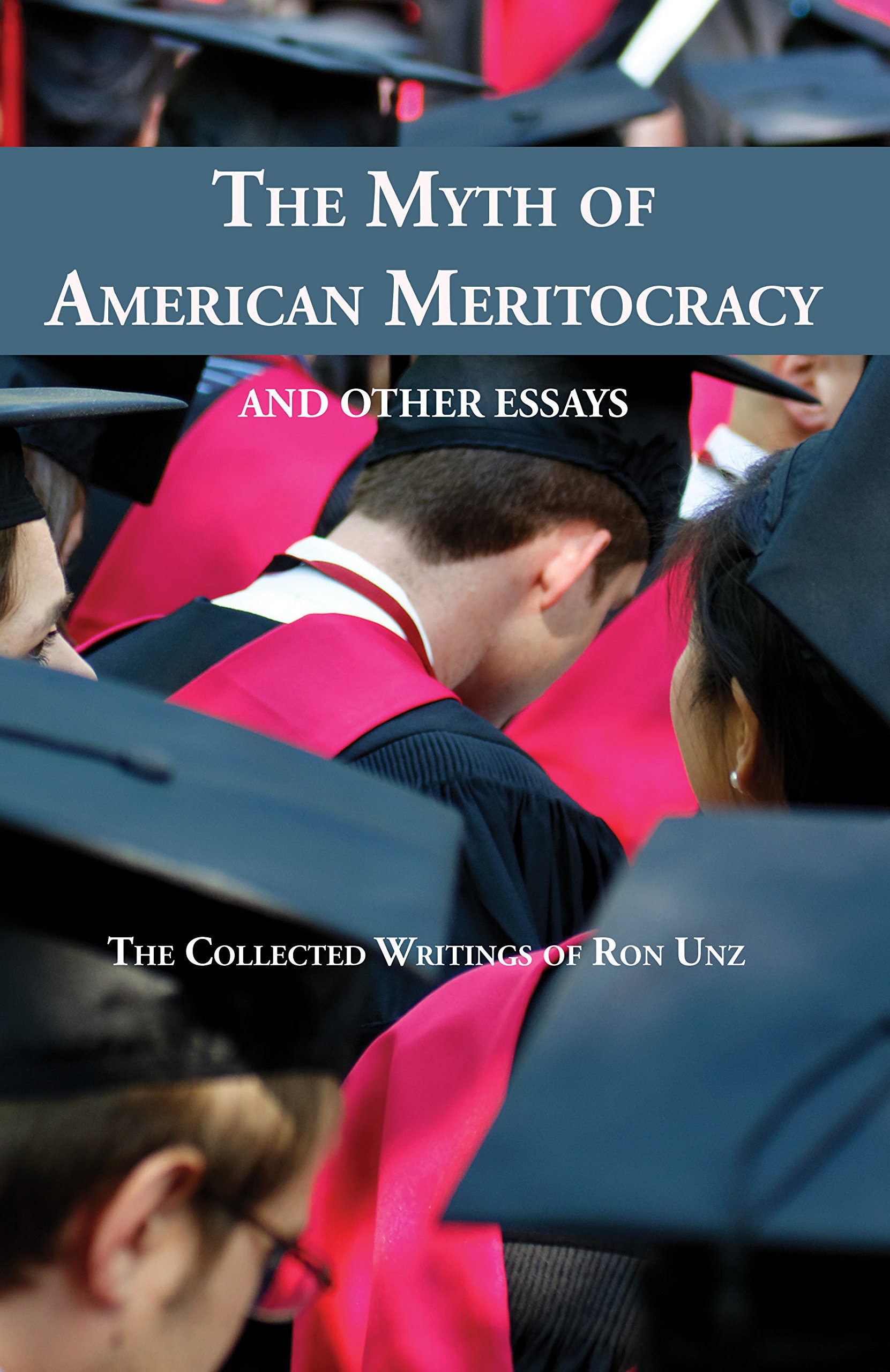
But while his former colleagues often focus on the transient and the trivial, Wade has spent the last couple of years producing an outstanding book to bring awareness of the revolutionary discoveries of modern genetic research to a broader American audience. Generations of Soviets had been taught the inheritance of acquired characteristics in their universities, and I assume they must have been shocked to discover it was all an ideologically motivated hoax. I suspect that many complacent American intellectuals may have a similar reaction to Wade’s book, which focuses on the highly touchy subject of the genetic nature of our distinct human races and the implications for society and history, bearing the descriptive title A Troublesome Inheritance: Genes, Race, and Human History. I’d certainly rank Wade’s book as the most important popular presentation of these ideas at least since Pinker’s Blank Slate. In the interests of full disclosure, I should say that I was also very pleased to see him substantially cite my own major articles from the last couple of years on race, IQ, and wealth and the Social Darwinist roots of modern China.

All too many socially-conditioned Americans have absorbed the Lewontin-Gould mantra that “Race Does Not Exist” which from a scientific perspective is roughly similar to claiming that “Teeth Do Not Exist” or perhaps “Hills Do Not Exist,” with the latter being an especially good parallel. It is perfectly correct that the notion of “hill” is ill-defined and vague—what precise height distinguishes a pile of dirt from a hill and a hill from a mountain?—but nevertheless denying the reality or usefulness of such a concept would be an absurdity. Similarly, the notion of distinct human races—genetic clusters across a wide variety of scales and degrees of fuzziness—is an obviously useful and correct organizing principle, and one which was probably accepted without question by everyone in the history of the world except for deluded Americans of the last fifty years.
Anyway, let us suppose that the Gouldians rising up to denounce the heretic, such as anthropologist Agustin Fuentes, are given their way and the common term “race” is purged from our scientific vocabulary as being meaningless. Well, large-scale genetic population clusters obviously continue to exist in the real world and are an important element in ongoing research, both medical and evolutionary. So it would make sense to conveniently replace an overly cumbersome multisyllabic phrase with a short single-syllabic word now suddenly gone unused, namely “race.”

Indeed, I would suggest that one of the sources of present-day confusion is that the very term “race” has undergone an unfortunate metamorphosis over the course of the 20th century. Today, when people speak of “races” they are almost invariably referring to the continental-scale mega-races such as Asians, Africans, and Europeans. These “races” certainly exist and are highly meaningful and distinct in genetic terms, with blogger Steve Sailer slyly noting that the cover of Prof. Luca Cavalli-Sforza definitive tome on human genetic diversity displays a colored worldwide map looking much like what Sen. Strom Thurmond in his dotage might have drawn on a napkin with crayons.

But I would argue that restricting the term race to merely that small handful of huge groupings is extremely wasteful and we are far better off also applying the term to its traditional meaning, typically aimed at much smaller population groups. One hundred years ago, every educated individual casually used phrases such as “the Anglo-Saxon race,” “the Hungarian race,” and “the Chinese race,” and this is exactly the usage to which we should restore. To be sure, these particular genetic population clusters are naturally grouped into higher-level clusters as well—with Russians, Ukrainians, and Poles all being branches of the larger Slav race, itself a component of the European mega-race, but the word can remain flexible in scale without producing any serious confusion. All these groups are exactly the sort of natural statistical clusters that regularly appear during genetic population analysis, and we might as well use the traditional popular term for them rather than inventing an entirely new one.
As for the full contents of Wade’s book, several reviews have already noted a few small glitches here and there and I myself certainly took issue with some of his arguments. For example, I think he is much too accepting of Gregory Clark’s influential 2007 book arguing that the Industrial Revolution occurred in Britain because the British had undergone nearly a thousand years of uniquely strong selection for economic success, a thesis I find extremely doubtful. I also think Wade should have given far more attention to the seminal Cochran-Harpending theory that the rapid growth of human population after the development of agriculture has produced an equally rapid acceleration in mutation-driven evolution during the last ten thousand years, and Wade’s omission surely explains why the notoriously arrogant and irascible Gregory Cochran published such an unfriendly review on his own blogsite. Certainly everyone should explore all sides of the ongoing debate and a small racialist website has conveniently gathered together annotated links to the dozens of reviews across the web, favorable, unfavorable, and mixed. But reading the book itself is essential for anyone interested in the current state of human evolutionary science.

I’d originally intended to publish my own perspective several weeks ago and was delayed by other pressing matters. But I have been very pleased to see that Wade’s book is beginning to receive the major attention it so greatly deserves. American intellectuals must begin shedding a half-century of lies and dishonesty based on the dismally unscientific dogma of Stephen Jay Gould and instead start to discover what modern evolutionary biologists and genetic researchers have all known for years or even decades. A Troublesome Inheritance by Nicholas Wade of the New York Times may represent a huge step forward in achieving this important goal.

================================

American Pravda: Our Deadly World of Post-War Politics


American Pravda: Our Deadly World of Post-War Politics
• July 2, 2018
shutterstock_1103116253
Although my main academic focus was theoretical physics, I always had a very strong interest in history as well, especially that of the Classical Era. Trying to extract the true pattern of events from a collection of source material that was often fragmentary, unreliable, and contradictory was a challenging intellectual exercise, testing my analytical ability. I believe I even contributed meaningfully to the field, including a short 1985 article in The Journal of Hellenic Studies that sifted the ancient sources to conclude that Alexander the Great had younger brothers whom he murdered when he came to the throne.

However, I never had any interest in 20th century American history. For one thing, it seemed so apparent to me that all the basic political facts were already well known and conveniently provided in the pages of my introductory history textbooks, thereby leaving little room for any original research, except in the most obscure corners of the field.
Also, the politics of ancient times was often colorful and exciting, with Hellenistic and Roman rulers so frequently deposed by palace coups, or falling victim to assassinations, poisonings, or other untimely deaths of a highly suspicious nature. By contrast, American political history was remarkably bland and boring, lacking any such extra constitutional events to give it spice. The most dramatic political upheaval of my own lifetime had been the forced resignation of President Richard Nixon under threat of impeachment, and the causes of his departure from office—some petty abuses of power and a subsequent cover-up—were so clearly inconsequential that they fully affirmed the strength of our American democracy and the scrupulous care with which our watchdog media policed the misdeeds of even the most powerful.
In hindsight I should have asked myself whether the coups and poisonings of Roman Imperial times were accurately reported in their own day, or if most of the toga-wearing citizens of that era might have remained blissfully unaware of the nefarious events secretly determining the governance of their own society.

Since my knowledge of American history ran no deeper than my basic textbooks and mainstream newspapers and magazines, the last decade or so has been a journey of discovery for me, and often a shocking one. I came of age many years after the Communist spy scares of the 1950s had faded into dim memory, and based on what I read, I always thought the whole matter more amusing than anything else. It seemed that about the only significant “Red” ever caught, who may or may not have been innocent, was some obscure individual bearing the unlikely name of “Alger Hiss,” and as late as the 1980s, his children still fiercely proclaimed his complete innocence in the pages of the New York Times. Although I thought he was probably guilty, it also seemed clear that the methods adopted by his persecutors such as Joseph McCarthy and Richard Nixon had actually done far more damage to our country during the unfortunate era named for the former figure.

During the 1990s, I occasionally read reviews of new books based on the Venona Papers—decrypted Soviet cables finally declassified—and they seemed to suggest that the Communist spy ring had both been real and far more extensive than I had imagined. But those events of a half-century earlier were hardly uppermost in my mind, and anyway other historians still fought a rear-guard battle in the newspapers, arguing that many of the Venona texts were fraudulent. So I gave the matter little thought.


Only in the last dozen years, as my content-archiving project made me aware of the 1940s purge of some of America’s most prominent public intellectuals, and I began considering their books and articles, did I begin to realize the massive import of the Soviet cables. I soon read three or four of the Venona books and was very impressed by their objective and meticulous scholarly analysis, which convinced me of their conclusions. And the implications were quite remarkable, actually far understated in most of the articles that I had read.
Consider, for example, the name Harry Dexter White, surely unknown to all but the thinnest sliver of present-day Americans, and proven by the Venona Papers to have been a Soviet agent. During the 1940s, his official position was merely one of several assistant secretaries of the Treasury, serving under Henry Morgenthau, Jr., an influential member of Franklin Roosevelt’s cabinet. But Morgenthau was actually a gentleman-farmer, almost entirely ignorant of finance, who had gotten his position partly by being FDR’s neighbor, and according to numerous sources, White actually ran the Treasury Department under his titular authority. Thus, in 1944 it was White who negotiated with John Maynard Keynes—Britain’s most towering economist—to lay the basis for the the Bretton Woods Agreement, the IMF, and the rest of the West’s post-war economic institutions.


Moreover, by the end of the war, White had managed to extend the power of the Treasury—and therefore his own area of control—deep into what would normally be handled by the Department of State, especially regarding policies pertaining to the defeated German foe. His handiwork notably included the infamous “Morgenthau Plan,” proposing the complete dismantling of the huge industrial base at the heart of Europe, and its conversion into an agricultural region, automatically implying the elimination of most of Germany’s population, whether by starvation or exodus. And although that proposal was officially abandoned under massive protest by the allied leadership, books by many post-war observers such as Freda Utley have argued that it was partially implemented in actuality, with millions of German civilians perishing from hunger, sickness, and other consequences of extreme deprivation.

At the time, some observers believed that White’s attempt to eradicate much of prostrate Germany’s surviving population was vindictively motivated by his own Jewish background. But William Henry Chamberlin, long one of America’s most highly-regarded foreign policy journalists, strongly suspected that the plan was a deeply cynical one, intended to inflict such enormous misery upon those Germans living under Western occupation that popular sentiment would automatically shift in a strongly pro-Soviet direction, allowing Stalin to gain the upper hand in Central Europe, and many subsequent historians have come to similar conclusions.

Even more remarkably, White managed to have a full set of the plates used to print Allied occupation currency shipped to the Soviets, allowing them to produce an unlimited quantity of paper marks recognized as valid by Western governments, thus allowing the USSR to finance its post-war occupation of half of Europe on the backs of the American taxpayer.

Eventually suspicion of White’s true loyalties led to his abrupt resignation as the first U.S. Director of the IMF in 1947, and in 1948 he was called to testify before the House Un-American Activities Committee. Although he denied all accusations, he was scheduled for additional testimony, with the intent of eventually prosecuting him for perjury and then using the threat of a long prison sentence to force him to reveal the other members of his espionage network. However, almost immediately after his initial meeting with the Committee, he supposedly suffered a couple of sudden heart attacks and died at age 55, though apparently no direct autopsy was performed on his corpse.

Soon afterward other Soviet spies also began departing this world at unripe ages within a short period of time. Two months after White’s demise, accused Soviet spy W. Marvin Smith was found dead at age 53 in the stairwell of the Justice building, having fallen five stories, and sixty days after that, Laurence Duggan, another agent of very considerable importance, lost his life at age 43 following a fall from the 16th floor of an office building in New York City. So many other untimely deaths of individuals of a similar background occurred during this general period that in 1951 the staunchly right-wing Chicago Tribune ran an entire article noting this rather suspicious pattern. But while I don’t doubt that the plentiful anti-Communist activists of that period exchanged dark interpretations of so many coincidental fatalities, I am not aware that such “conspiracy theories” were ever taken seriously by the more respectable mainstream media, and certainly no hint of this reached any of the standard history textbooks that constituted my primary knowledge of that period.

Sometimes rank newcomers to a given field will notice patterns less apparent to those long familiar with the topic, more easily discerning the forest amid the trees. My own very superficial knowledge of 20th century American history burdened me with fewer preconceived notions of the pattern of those times, and the substantial body-count of accused Soviet spies during the late 1940s gradually made me wonder about other sudden fatalities during that same era.


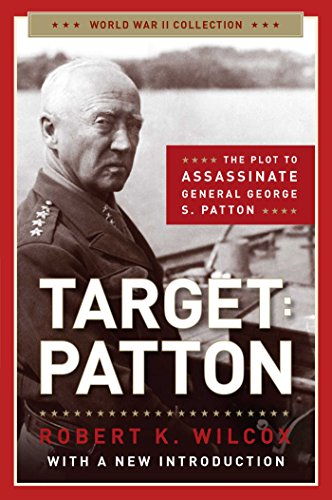
As an example, I came across Target Patton by Robert K. Wilcox, providing some very strong evidence that the 1948 fatal car crash that claimed the life of Gen. George S. Patton was not accidental, but was instead an assassination by America’s own OSS, fore-runner of the CIA, which was then also heavily infiltrated by Soviet agents. Unlike the above deaths, which were merely highly suspicious in their timing and concentrated sequence, in the case of Patton the evidence was considerably stronger, even including the eventual public confession decades later of the OSS assassin responsible, with his claims supported by the contents of his personal diary.

At the time of his death, Patton was America’s highest-ranking military officer stationed on the European continent and certainly one of our most famous war-heroes. But he had bitterly clashed with his civilian and military superiors over American policy towards the Soviets, whom he viewed with intense hostility. He died the day before he was scheduled to return home to America, there planning to resign his commission and begin a major national speaking-tour denouncing our political leadership and demanding a military confrontation with the USSR. Prior to stumbling across the book in question, which had been totally ignored by the entire American media, I had never encountered a hint of anything untoward regarding Patton’s death, nor had I been aware of the political plans he had formulated prior to his sudden fatal accident.

DesperateDeception 

Once a possible pattern has been observed, accumulating additional pieces becomes a much more natural process. A year or so after encountering the strongly substantiated claims of Patton’s assassination, I happened to read Desperate Deception by Thomas E. Mahl, a mainstream historian, whose book was released by a specialized military affairs publishing house. This fascinating account documented the long-hidden early 1940s campaign by British intelligence agents to remove all domestic political obstacles to America’s entry into World War II. A crucial aspect of that project involved the successful attempt to manipulate the Republican Convention of 1940 into selecting as its presidential standard-bearer an obscure individual named Wendell Wilkie, who had never previously held political office and moreover had been a committed lifelong Democrat. Wilkie’s great value was that he shared Roosevelt’s support for military intervention in the ongoing European conflict, though this was contrary to virtually the entire base of his own newly-joined party. Ensuring that both presidential candidates shared those similar positions prevented the race from becoming an referendum on that issue, in which up to 80% of the American public seems to have been on the other side.

Wilkie’s nomination was surely one of the strangest occurrences in American political history, and the path to his improbable nomination was paved by quite a number of odd and suspicious events, most notably the extremely fortuitous sudden collapse and death of the Republican convention manager, a key Wilkie opponent, which Mahl regards as highly suspicious.

Wilkie went on to suffer a landslide defeat at Roosevelt’s hands in November, but quickly reconciled with his erstwhile opponent, and was sent abroad on a number of important political missions. Future historians would surely have been fascinated to learn some of the internal details of how British intelligence operatives had managed to “parachute” an obscure lifelong Democrat into leading the top of the Republican ticket in 1940, thereby fatefully ensuring American entry into World War II. But unfortunately all of Wilkie’s personal knowledge of such momentous events was forever lost to posterity when he suddenly took ill and died of a heart attack—or according to Wikipedia 15 consecutive heart attacks—on October 8, 1944 at the age of 52.

One of the most powerful political figures of Roosevelt’s dozen years in office was his close aide Harry Hopkins, who actually moved into the White House in 1940 and remained a permanent resident for nearly the next four years. Although Hopkins hardly bore an exalted title, being an administrator of various New Deal programs and later serving as Commerce Secretary, he was frequently referred to as “the Deputy President” and certainly carried more weight than any of FDR’s vice presidents or Cabinet members, generally being regarded as the second most powerful political figure in the country.

Hopkins, a former social worker and political activist, was decidedly on the left, having his roots in a New York City progressive tradition that shaded into socialism, while being very strongly pro-Soviet in his foreign policy views. There are some indications in the Venona Papers that he may even have actually been a Soviet agent, and Herbert Romerstein and Eric Breindel took that position in their book The Venona Secrets, but John Earl Haynes and Harvey Klehr, the leading Venona scholars, doubted this likelihood based on technical arguments.
In the last year or so of Roosevelt’s life, his relations with Hopkins had frayed, and when FDR died in April 1945, thereby elevating Harry S. Truman to the presidency, Hopkins’ remaining influence disappeared. Having spent so many years at the absolute center of American power, Hopkins planned to publish his personal memoirs of the momentous events he had witnessed during the years of the Great Depression and the Second World War, but he suddenly took ill and died in early 1946, age 55, surviving his longtime political partner FDR by only eight months. According to the authoritative references provided in his Wikipedia entry, the cause of death was stomach cancer. Or malnutrition related to digestive problems. Or liver failure due to hepatitis or cirrhosis. Or perhaps hemochromatosis. Although Hopkins had been in poor health for many years, questions do arise when the death of America’s second most powerful political figure is ascribed to a wide variety of somewhat different causes.

The particular timing of events may sometimes exert a outsize influence on historical trajectories. Consider the figure of Henry Wallace, probably still dimly remembered as a leading leftwing Democrat of the 1930s and 1940s. Wallace had been something of a Midwestern wonder-boy in farming innovation and was brought into FDR’s first Cabinet in 1933 as Secretary of Agriculture. By all accounts, Wallace was an absolutely 100% true-blue American patriot, with no hint of any nefarious activity appearing in the Venona Papers. But as is sometimes the case with technical experts, he seems to have been remarkably naive outside his main field of knowledge, notably in his extreme religious mysticism and more importantly in his politics, with many of those closest to him being proven Soviet agents, who presumably regarded him as the ideal front-man for their own political intrigues.

From George Washington onward, no American president had ever run for a third consecutive term, and when FDR suddenly decided to take this step during 1940, partly using the ongoing war in Europe as an excuse, many prominent figures in the Democratic Party launched a political rebellion, including his own two-time Vice President John Nance Garner, who had been a former Democratic Speaker of the House, and James Farley, the powerful party leader who had originally helped elevate Roosevelt to the presidency. FDR selected Wallace as his third-term Vice President, perhaps as a means of gaining support from the powerful pro-Soviet faction among the Democrats. But as a consequence, even as FDR’s health steadily deteriorated during the four years that followed, an individual whose most trusted advisors were agents of Stalin remained just a heartbeat away from the American presidency.

Under the strong pressure of Democratic Party leaders, Wallace was replaced on the ticket at the July 1944 Democratic Convention, and Harry S. Truman succeeded to the presidency when FDR died in April of the following year. But if Wallace had not been replaced or if Roosevelt had died a year earlier, the consequences for the country would surely have been enormous. According to later statements, a Wallace Administration would have included Laurence Duggan as Secretary of State, Harry Dexter White at the helm of the Treasury, and presumably various other outright Soviet agents occupying all the key nodes at the top of the American federal government. One might jokingly speculate whether the Rosenbergs—later executed for treason—would have been placed in charge of our nuclear weapons development program.

As it happens, Roosevelt lived until 1945, and instead of running the American government, Dugan and White both died quite suddenly within a few months of each other after they came under suspicion in 1948. But the tendrils of Soviet control during the early 1940s ran remarkably deep.

As a striking example, Soviet agents became aware of the Venona decryption project in 1944, and soon afterward a directive came down from the White House ordering the project abandoned and the records of Soviet espionage destroyed. The only reason that Venona survived, allowing us to later reconstruct the fateful politics of that era, was that the military officer in charge risked a court-martial by simply ignoring that explicit Presidential order.

In the wake of the Venona Papers, publicly released a quarter century ago and today accepted by almost everyone, it seems undeniable that during the early 1940s America’s national government came within a hairsbreadth—or rather a heartbeat—of falling under the control of a tight network of Soviet agents. Yet I have only very rarely seen this simple fact emphasized in any book or article, even though this surely helps explain the ideological roots of the “anti-Communist paranoia” that became such a powerful political force by the early 1950s.

Obviously, Communism had very shallow roots in American society, and any Soviet-dominated Wallace Administration established in 1943 or 1944 probably would sooner or later have been swept from power, perhaps by America’s first military coup. But given FDR’s fragile health, this momentous possibility should certainly be regularly mentioned in discussions of that era.

If important historical matters are excluded from the media, a younger generation of scholars may never encounter them, and even with the best of intentions the historiography they eventually produce may contain enormous lacunae. Consider, for example, the prize-winning volumes of political history that Rick Perlstein has produced since 2001, tracing the rise of American conservatism from prior to Goldwater down to the rise of Reagan in the 1970s. The series has justly earned widespread acclaim for its enormous attention to detail, but according to the indexes, the combined total of nearly 2,400 pages contains merely two glancing and totally dismissive mentions of Harry Dexter White at the very beginning of the first volume, and no entry whatsoever for Laurence Duggan, or even more shockingly, “Venona.” I’ve sometimes joked that writing a history of post-war American conservatism without focusing on such crucial factors is like writing a history of America’s involvement in World War II without mentioning Pearl Harbor.

Sometimes our standard history textbooks provide two seemingly unrelated stories, which become far more important only once we discover that they are actually parts of a single connected whole. The strange death of James Forrestal certainly falls into this category.

During the 1930s Forrestal had reached the pinacle of Wall Street, serving as CEO of Dillon, Read, one of the most prestigious investment banks. With World War II looming, Roosevelt drew him into government service in 1940, partly because his strong Republican credentials helped emphasize the bipartisan nature of the war effort, and he soon became Undersecretary of the Navy. Upon the death of his elderly superior in 1944, Forrestal was elevated to the Cabinet as Navy Secretary, and after the contentious battle over the reorganization of our military departments, he became America’s first Secretary of Defense in 1947, holding authority over the Army, Navy, Air Force, and Marines. Along with Secretary of State Gen. George Marshall, Forrestal probably ranked as the most influential member of Truman’s Cabinet. However, just a few months after Truman’s 1948 reelection, we are told that Forrestal became paranoid and depressed, resigned his powerful position, and weeks later committed suicide by jumping from an 18th story window at Bethesda Naval Hospital. Knowing almost nothing about Forrestal or his background, I always nodded my head over this odd historical event.

Meanwhile, an entirely different page or chapter of my history textbooks usually carried the dramatic story of the bitter political conflict that wracked the Truman Administration over the recognition of the State of Israel, which had taken place the previous year. I read that George Marshall argued such a step would be totally disastrous for American interests by potentially alienating many hundreds of millions of Arabs and Muslims, who held the enormous oil wealth of the Middle East, and felt so strongly about the matter that he threatened to resign. However, Truman, heavily influenced by the personal lobbying of his old Jewish haberdashery business partner Eddie Jacobson, ultimately decided upon recognition, and Marshall stayed in the government.


However, almost a decade ago, I somehow stumbled across an interesting book by Alan Hart, a journalist and author who had served as a longtime BBC Middle East Correspondent, in which I discovered that these two different stories were part of a seamless whole. By his account, although Marshall had indeed strongly opposed recognition of Israel, it had actually been Forrestal who spearheaded that effort in Truman’s Cabinet and was most identified with that position, resulting in numerous harsh attacks in the media and his later departure from the Truman Cabinet. Hart also raised very considerable doubts about whether Forrestal’s subsequent death had actually been suicide, citing an obscure website for a detailed analysis of that last issue.

It is a commonplace that the Internet has democratized the distribution of information, allowing those who create knowledge to connect with those who consume it without the need for a gate-keeping intermediary. I have encountered few better examples of the unleashed potential of this new system than “Who Killed Forrestal?”, an exhaustive analysis by a certain David Martin, who describes himself as an economist and political blogger. Running many tens of thousands of words, his series of articles on the fate of America’s first Secretary of Defense provides an exhaustive discussion of all the source materials, including the small handful of published books describing Forrestal’s life and strange death, supplemented by contemporaneous newspaper articles and numerous relevant government documents obtained by personal FOIA requests. The verdict of murder followed by a massive governmental cover-up seems solidly established.

As mentioned, Forrestal’s role as the Truman Administration’s principal opponent of Israel’s creation had made him the subject of an almost unprecedented campaign of personal media vilification in both print and radio, spearheaded by the country’s two most powerful columnists of the right and the left, Walter Winchell and Drew Pearson, only the former being Jewish, but both heavily connected with the ADL and extremely pro-Zionist, with their attacks and accusations even continuing after his resignation and death.
Once we move past the wild exaggerations of Forrestal’s alleged psychological problems promoted by these very hostile media pundits and their many allies, much of Forrestal’s supposed paranoia apparently consisted of his belief that he was being followed around Washington, D.C., his phones may have been tapped, and his life might be in danger at the hands of Zionist agents. And perhaps such concerns were not so entirely unreasonable given certain contemporaneous events.

Lord Moyne, the British Secretary for the Middle East, had been assassinated in 1944 and UN Middle East Peace Negotiator Count Folke Bernadotte had suffered the same fate in 1948. Declassified British documents eventually revealed an assassination plot against Foreign Secretary Ernest Bevin that same year, and Margaret Truman’s memoirs mention a failed assassination attempt against her own father in 1947. Zionist factions were responsible for all of these incidents. Indeed, State Department official Robert Lovett, a relatively minor and low-profile opponent of Zionist interests, reported receiving numerous threatening phone calls late at night around the same time, which greatly concerned him. Martin also cites subsequent books by Zionist partisans who boasted of the effective use their side had made of blackmail, apparently obtained by wire-tapping, to ensure sufficient political support for Israel’s creation.

Meanwhile, behind the scenes, powerful financial forces may have been gathering to ensure that President Truman ignored the unified recommendations of all his diplomatic and national security advisors. Years later, both Gore Vidal and Alexander Cockburn would separately report that it eventually became common knowledge in DC political circles that during the desperate days of Truman’s underdog 1948 reelection campaign, he had secretly accepted a cash payment of $2 million from wealthy Zionists in exchange for recognizing Israel, a sum perhaps comparable to $20 million or more in present-day dollars.
Republican Thomas Dewey had been heavily favored to win the 1948 presidential election, and after Truman’s surprising upset, Forrestal’s political position was certainly not helped when Pearson claimed in a newspaper column that Forrestal had secretly met with Dewey during the campaign, making arrangements to be kept on in a Dewey Administration.

Suffering political defeat regarding Middle East policy and facing ceaseless media attacks, Forrestal resigned his Cabinet post under pressure. Almost immediately afterwards, he was checked into the Bethesda Naval Hospital for observation, supposedly suffering from severe fatigue and exhaustion, and he remained there for seven weeks, with his access to visitors sharply restricted. He was finally scheduled to be released on May 22, 1949, but just hours before his brother Henry came to pick him up, his body was found below the window of his 18th floor room, with a knotted cord wound tightly around his neck. Based upon an official press release, the newspapers all reported his unfortunate suicide, suggesting that he had first tried to hang himself, but failing that approach, had leapt out his window instead. A half page of copied Greek verse was found in his room, and in the heydey of Freudian psychoanalyical thinking, this was regarded as the subconscious trigger for his sudden death impulse, being treated as almost the equivalent of an actual suicide note. My own history textbooks simplified this complex story to merely say “suicide,” which is what I read and never questioned.

Martin raises numerous very serious doubts with this official verdict. Among other things, published interviews with Forrestal’s surviving brother and friends reveal that none of them believed Forrestal had taken his own life, and that they had all been prevented from seeing him until near the very end of his entire period of confinement. Indeed, the brother recounted that just the day before, Forrestal had been in fine spirits, saying that upon his release, he planned to use some of his very considerable personal wealth to buy a newspaper and begin revealing to the American people many of the suppressed facts concerning America’s entry into World War II, of which he had direct knowledge, supplemented by the extremely extensive personal diary that he had kept for many years. Upon Forrestal’s confinement, that diary, running thousands of pages, had been seized by the government, and after his death was apparently published only in heavily edited and expurgated form, though it nonetheless still became a historical sensation.

The government documents unearthed by Martin raise additional doubts about the story presented in all the standard history books. Forrestal’s medical files seem to lack any official autopsy report, there is visible evidence of broken glass in his room, suggesting a violent struggle, and most remarkably, the page of copied Greek verse—always cited as the main indication of Forrestal’s final suicidal intent—was actually not written in Forrestal’s own hand.

Aside from newspaper accounts and government documents, much of Martin’s analysis, including the extensive personal interviews of Forrestal’s friends and relatives, is based upon a short book entitled The Death of James Forrestal, published in 1966 by one Cornell Simpson, almost certainly a pseudonym. Simpson states that his investigative research had been conducted just a few years after Forrestal’s death and although his book was originally scheduled for release his publisher grew concerned over the extremely controversial nature of the material included and cancelled the project. According to Simpson, years later he decided to take his unchanged manuscript off the shelf and have it published by Western Islands press, which turns out to have been an imprint of the John Birch Society, the notoriously conspiratorial rightwing organization then near the height of its national influence. For these reasons, certain aspects of the book are of considerable interest even beyond the contents directly relating to Forrestal.

The first part of the book consists of a detailed presentation of the actual evidence regarding Forrestal’s highly suspicious death, including the numerous interviews with his friends and relatives, while the second portion focuses on the nefarious plots of the world-wide Communist movement, a Birch Society staple. Allegedly, Forrestal’s staunch anti-Communism had been what targeted him for destruction by Communist agents, and there is virtually no reference to any controversy regarding his enormous public battle over Israel’s establishment, although that was certainly the primary factor behind his political downfall. Martin notes these strange inconsistencies, and even wonders whether certain aspects of the book and its release may have been intended to deflect attention from this Zionist dimension towards some nefarious Communist plot.
Consider, for example, David Niles, whose name has lapsed into total obscurity, but who had been one of the very few senior FDR aides retained by his successor, and according to observers, Niles eventually became one of the most powerful figures behind the scenes of the Truman Administration. Various accounts suggest he played a leading role in Forrestal’s removal, and Simpson’s book supports this, suggesting that he was Communist agent of some sort. However, although the Venona Papers reveal that Niles had sometimes cooperated with Soviet agents in their espionage activities, he apparently did so either for money or for some other considerations, and was certainly not part of their own intelligence network. Instead, both Martin and Hart provide an enormous amount of evidence that Niles’s loyalty was overwhelmingly to Zionism, and indeed by 1950 his espionage activities on behalf of Israel became so extremely blatant that Gen. Omar Bradley, Chairman of the Joint Chiefs of Staff, threatened to immediately resign unless Niles was fired, forcing Truman’s hand.

Classics Professor Revilo Oliver, for decades a very influential figure in far right circles, had been a founding member of the John Birth Society and editor of its magazine, but angrily resigned in 1966, claiming that its leader Robert Welch, Jr. had accepted an offer of heavy financial support in return for focusing solely upon Communist misdeeds and scrupulously avoiding any discussion of Jewish or Zionist activities. Based on the evidence, that accusation appears to have considerable merit, with the JBS leadership soon treating indications of “anti-Semitism” as grounds for immediate expulsion. Major Communist political influence had largely disappeared in America by the late 1940s, while Jewish and pro-Israel influence grew enormously from the early 1960s onward, and by focusing almost exclusively upon the former and totally avoiding the latter, the JBS organization increasingly presented a totally delusional view of American politics, which surely contributed to its eventual decline into complete irrelevance.

Among those who grow skeptical of establishment media verdicts, there is a natural tendency to become overly suspicious, and see conspiracies and cover-ups where none exist. The sudden death of a prominent political figure may be blamed on foul-play even when the causes were entirely natural or accidental. “Sometimes a cigar is just a cigar.” But when a sufficient number of such persons die within a sufficiently short period of years, and overwhelming evidence suggests that at least some of those deaths were not for the reasons long believed, the burden of proof begins to shift.
Excluding the much larger number of less notable fatalities, here is a short list of six prominent Americans whose untimely passing during 1944-1949 surely evoked considerable relief within various organizations known for their ruthless tactics:
  • Wendell Wilkie, lifelong Democrat nominated for President by the Republicans in 1940, Died October 8, 1944, Age 52, Heart attack.
  • Gen. George Patton, highest-ranking American military officer in Europe, Died December 21, 1945, Age 60, Car accident.
  • Harry Hopkins, FDR’s “Deputy President,” Died January 29, 1946, Age 55, Various possible causes.
  • Harry Dexter White, Soviet agent who ran the Treasury under FDR, Died August 16, 1948, Age 55, Heart attack.
  • Laurence Duggan, Soviet agent, Prospective Secretary of State under Henry Wallace, Died December 20, 1948, Age 43, Fall from 16th story window.
  • James Forrestal, former Secretary of Defense, Died May 22, 1949, Age 57, Fall from 18th story window.
I do not think that any similar sort of list of comparable individuals during that same time period could be produced for Britain, France, the USSR, or China. In one of the James Bond films, Agent 007 states his opinion that “Once is happenstance, twice is coincidence, three times is enemy action.” And I think these six examples over just a few years should be enough to raise the eyebrows of even the most cautious and skeptical.

Foreign leaders outraged over America’s destructive international blundering have sometimes described our country as possessing physical might of enormous power, but having a ruling political elite so ignorant, gullible, and incompetent that it easily falls under the sway of unscrupulous foreign powers. We are a nation with the body of a dinosaur but controlled by the brain of a flea.

The post-war era of the 1940s surely marked an important peak of America’s military and economic power. Yet there seems considerable evidence that during those same years, a varied mix of Soviet, British, and Zionist assassins may have freely walked our soil, striking down those whom they regarded as obstacles to their national interests. 

Meanwhile, nearly all Americans remained blissfully unaware of these momentous developments, being lulled to sleep by “Our American Pravda.”
=====================