THE ACCUSED
J7 Profile: Mohammad Sidique Khan (Age: 30)
Mohammad Sidique Khan: Alleged to be responsible for the Edgware Road Blast
 Khan's Early Life & Career
 Mohammad Sidique Khan was born on 20th October 1974 in Leeds, to Tika Khan, a foundry worker and Mamida Begum, both from Pakistan. He was the youngest of six children and grew up in Beeston, attending Matthew Murray High School, now known as South Leeds High School.
Two of Khan's friends from school were interviewed for a BBC radio documentary, "
Biography of a Bomber" (
MP3 audio, 3.5MB), part of
Radio 4's Koran and Country series. The documentary revealed that Khan’s friends were mainly white, that he considered himself Western, that he had returned from a trip to America besotted with all things American, and that he was more commonly known by an anglicised version of his name, 'Sid'.
Ian Barrett remembered that Khan had no interest in religion and rarely went to a mosque:
"The other Pakistani lads would have to go mosque because their families would say 'You're going to mosque.' But Sid didn't go," says Ian. "He didn't seem interested in Islam and I don't ever remember him mentioning religion."
“He was very English. Some of the other Pakistani guys used to talk about Muslim suffering around the world but with Sidique you’d never really know what religion he was from.”
Note: You can watch a rather
contrived interview with Nasrean Suleaman, the presenter of Biography of a Bomber, who
appears to have done very little journalism before, or since, this particular episode of Koran & Country,
despite being a BBC journalist for 11 years. In fact, the only other case Suleaman appears to have covered for the BBC, aside from the alleged ringleader of the London bombings, happens to be that of
Zacarias Moussaoui who was charged in connection with, and jailed for life over, his apparent involvement in 11 September attacks on the US.
According to paragraph 10 of the Home Office account of the London bombings, after leaving school, Khan worked for the government; in the Benefits Agency and later in the Department of Trade and Industry (DTI). He then decided to leave to study for a degree in business studies at Leeds Metropolitan University (LMU). It was at LMU that he met his wife, Hasina Patel, a Muslim of Indian origin. While still at university, his interest in helping disadvantaged young people appears to have developed and he took on part-time youth and community work before graduating with a second-class degree in business studies in 1996. The Independent reported Khan describing his youth work in a job application:
“As a youth worker I have had extensive experience in managing difficult children. I was approached by a member of the community who told me in confidence [that] his younger brother had been suspended from school and his parents were extremely upset. I began ... a discussion with the child [and] met his parents at their house and the situation was [resolved]."
Khan also detailed a "potentially dangerous" confrontation at a school. "I have an excellent rapport with the youth [community] so ... I targeted the ringleaders and spoke to them, calming them down and offering sympathy as well as empathy. We then approached the teachers and as a large group casually walked together up Beeston Hill which [defused] the situation."
Associates of Khan have confirmed his role as an interlocutor between police and youths.
Khan also described his interventions in the case of a young heroin addict, his help in getting excluded children back into school and how he arbitrated in a dispute between rival gangs. "I feel patience and understanding comes through experience and maturity," he wrote. "I constantly analyse society and speak to people regarding current issues. I consider my ability to empathise with others and listen to their problems as well as offer viable solutions to be one of my strong assists."
During summer holidays Khan ran workshops for young people.
Afzal Choudhry, a community worker who took part in the summer sessions, remembers Khan was "always ready to get involved." He also said that Khan was not particularly religious when they first met around 1997.
“[He] sometimes got "what we call the Friday feeling" and would go to mosque for Friday prayers, but he otherwise didn't pray much, says Mr. Choudhry.”
Khan accepted an offer from Afzal Choudhry to work on a government-funded study of the drug problems in Beeston.
“In a note appended to the 2001 report, Mr. Khan wrote: "I have tried to support and help local drug users in the past, but at best this has been haphazard. I feel that the knowledge and experience on drugs and community research that I've gained through the training and the field work has been invaluable."
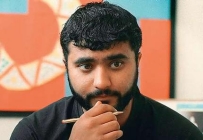
When designing a brochure on the subject,
Khan insisted “
The British flag must be part of it. I was born here and I am proud to be British.”
Khan’s mother-in-law,
Farida Patel, was the daughter of Ismail Patel, an anti-apartheid activist who died in 1973 after he had been under house arrest for 10 years. She moved to England about 30 years ago and married Abdul-Salaam Patel here in the early eighties. Farida was a co-opted member of the British government's council of religious leaders from 1996 until 2000. Her husband died in April 2004. In July 2004, Farida was a guest at a Buckingham Palace garden party,
reportedly accompanied by her husband and her daughter Hasina, although clearly if it is true that Addul-Salaam Patel died in April of that year, he could not have attended this particular party. At the event Farida Patel received an award for her work as a teacher specialising in bilingual studies, although this was not her first attendance at such an event as, in 1998, Farida Patel made history as the first Asian woman to attend a garden party at Buckingham Palace.
Despite some disapproval from their families, Khan and Hasina married on 2nd October 2001 and had a daughter in May 2004. Hasina was pregnant at the time of the London attacks. There were
some reports that the marriage had broken down and that Khan and his wife had separated. One has to assume that, even if stories of their separation are true, they are likely to have still had some sort of relationaship since Hasina was in the
early stages of pregnancy and had reported her husband missing
hours after the blasts.
Khan was aware of the pregnancy and had told friends about it. However, Hasina unfortunately miscarried not long after the London bombings.
Khan’s Work at Hillside School
The couple lived near Farida Patel in Dewsbury. Hasina worked as a community enrichment officer and, in the same year they married, Khan started working as a learning mentor at
Hillside Primary School in Beeston. The former head of Hillside Primary School, Sarah Balfour, is married to MP John Trickett,
the Labour MP for Hemscott, and in July 2004, Khan was given a
tour of the Houses of Parliament as a guest of MP Mr. John Trickett.
The Guardian noted:
“Few men were more popular on the streets of Beeston than the 30-year-old family man. Recognised by his sensible sweaters and neat, coiffeured hairstyle, Khan's respectability peaked nine months ago when he visited Parliament as the guest of a local MP. There he was praised for his teaching work. Even now, those who hang about Cross Flatt's Park describe him as their mentor. He remains the man who coaxed them back into the education system; the bloke who took them on canoeing and camping trips to the nearby Yorkshire Dales; the man who bought them 'loads of extra bullets' when he took them paint-balling. Hussain and Tanweer were among those who idolised Khan from his days as a youth worker in Beeston when he had nurtured their love of cricket and football.”
After the London bombings, Sarah Balfour, said of Khan:
"Sidique Khan was a member of staff at Hillside Primary School and he was employed here between March 2001 and December 2004 as a learning mentor.
"He was great with the children and they all loved him. He did so much for them, helping and supporting them and running extra clubs and activities.
"Sidique was a real asset to the school and always showed 100% commitment."
A disclosure of Khan’s attendance and employment record at Hillside, including the dates he commenced and terminated his employment were made available through an
FOI request. The disclosure showed that Khan was employed on a fixed term contract which was continually extended. He started work on 8th March 2001 and appeared to have a perfect attendance record until January 2003, where he took special leave. The disclosure stated that there was no more leave until early 2004, where there began a few period of sick leave and special leave. He took an unauthorised absence on 1st December 2004, which resulted in him handing in his resignation on 7th December 2004.
Strangely, the Home Office report notes:
“More problematic was his increasingly poor attendance record. This culminated in a period of sick leave from 20 September to 19 November 2004.
The school administration had reason to believe that the absences were not genuine and dismissed him. At the same time, he had in any case, written to say he would not be returning to work.”
According to the disclosure of Khan’s employment record, the period of sick leave ran from 20th September 2004 until 30th November 2004, and then from 1st December 2004 until 7th December, so it is unclear why the date of 19th November 2004 was given by the Home Office report. There is also no record of Khan being ‘dismissed’. Not for the first time, the Home Office report directly contradicts other official information.
Equally confusing is that the disclosure letter in turn contradicts Khan’s
personnel record from Hillside. The letter lists dates where Khan either took special or sickness leave and concludes, “
Mr. khan did not have any other time absent from work”.
However, there are eight other absences listed in the personnel record which are not acknowledged in the disclosure of Khan’s attendance, one of these being paternity leave taken from 19th May 2004 to 26th May 2004.
The personnel record also contradicts the dates of one period of absence listed in the disclosure but strangest of all is that both the disclosure letter regarding Khan’s attendance and employment record at Hillside and the Official Report state that Khan terminated his employment with the school on 7th December 2004 in writing.
Two documents in Khan’s personnel file seem to contradict this assertion. Firstly, Sarah Balfour, had written a letter to request that Khan’s pay be stopped since he had made no contact with the school regarding his sickness since November 22nd 2004. This letter was dated 9th December 2004. If Khan’s resignation had been received on 7th December 2004, this letter would not have needed to be written and sent as it was. Secondly, the form attached to the resignation letter is dated 17th December 2004. The resignation letter itself is undated. A large portion of the text has, for some reason, been obscured prior to its release, although the words “We are departing next week” are clearly visible. The reason given for the resignation on the attached form is ‘family commitments’.
Hillside Primary School has since been closed and the school's former headmistress, Sarah Balfour, has retired as a headteacher and is now a consultant working for Leeds Education.
Khan's Alleged Trips Abroad

Whether Khan resigned on 7th or 17th December 2004, he was apparently still in England at the time, indicating that wherever he was going and why, it was not until “
next week”. Therefore, it is confusing that the Home Office report states in paragraph 43 that Khan and Tanweer had
travelled to Pakistan on 19th November 2004 and did not return until 8th February 2005. Khan states his intent in the letter to be travelling somewhere the following week, apparently to do with a family commitment. It is also unclear how he could have handed in his resignation and be in Pakistan at the same time.
Although there is
plenty of speculation about the alleged activities in Pakistan, particularly with regard to
Shehzad Tanweer, the Home Office report is unable to offer any supporting evidence. The section where the Pakistan trip is referred to -
“Were they directed from abroad?” - is punctuated throughout with such phrases as “
appears to have”, “
it is possible”, “
we do not have firm evidence”, “
it seems likely”, “
it is unclear”, “
we assume” and “
there were reports in the media…but there is no reliable intelligence or corroborative information to support this”. The report even goes on to admit that extended trips to Pakistan are not unusual among young British Muslim men. Indeed, trips abroad by any second generation British subjects are not unusual, especially where extended familly members are still resident abroad.
On 9th July 2006, an article in The Sunday Times alleged that Khan was linked to those accused of a suicide bombing in Tel Aviv in 2003. It stated that fresh evidence had been uncovered linking Khan to Omar Sharif and Hanif Asif, who are reported to have killed three people and injured 50 in 2003 with an apparent suicide attack on a bar in Tel Aviv. This was based on the testimony of Kursheed Fiaz, the owner of an IT company in Manchester, who had not been to the police with his concerns. The article also went on to mention a day trip Khan took to Israel in 2003:
“Accompanied by a group of British tourists and a woman said to be his wife, Khan spent only 24 hours in the country. Israeli authorities have investigated the trip but have been unable to establish whether it might have been a “dry run” or reconnaissance mission for the bombers.”
However, the Home Office report stated “There is no evidence of anything suspicious” when referring to the trip to Israel in paragraph 48. Moreover, according to the Sunday Times report, Israeli police confirmed that Khan visited Israel on 19th February 2003, two months before the attack, yet Khan’s personnel and employment record showed that he was only away from work from 27th January 2003 until 14th February 2003. It is therefore unlikely that Khan was in Israel 5 days after his return to work in the UK, else his extended absence from work would have been recorded in his personnel and employment files.
The Home Office report also claims Khan visited Pakistan for two weeks in July 2003; the summer school break which commences in July is considered annual leave for the staff, but most schools do not break up until late in July. Without knowing what date in July Khan is alleged to have travelled on, clear conclusions cannot be drawn. If the trip was literally two weeks in July, this is extremely unlikely. Firstly, because the school would be unlikely to let him take time off in July near the end of term, and secondly because no such absence is noted on his records.
The Home Office report offers no evidence for its speculation into Khan’s activities on this trip.
Gyms in Beeston & Claims of Radicalisation
The gyms appear to have gained a reputation for being hotbeds of extremist teachings by Khan to young impressionable Asian boys. There is also speculation regarding activities which may have taken place in the nearby Iqra Learning Centre and youth clubs which were hosted in various locations. According to the Telegraph:
“A member of staff recently expressed concern that someone at the centre was preaching extremist views to young people, "doing his own thing, radicalising and recruiting".
An acquaintance of Khan's told the BBC that he regularly visited Pakistan and Afghanistan to attend military training camps and had used the centre for recruiting.
The man, who refused to be identified, told Radio 4's PM programme that he regarded Khan as a "fruitcake" who regularly voiced anger over western foreign policy in Palestine, Iraq and Afghanistan.”
Voicing anger over Western foreign policy in the Middle East is not an alien concept to many people resident in the UK, not just those of Pakistani or Asian descent. There are many protests over this very issue, which millions of people have participated in. It is difficult to see how such views could arouse suspicion, since they don’t appear to be connected to any suggestion that Khan intended to take direct and extreme action. A member of staff speaks of “someone” at the centre “radicalising and recruiting” yet it is not stated that this is Khan; it could be anyone. Furthermore, there is no concrete evidence that Khan attended training camps in Pakistan and Afghanistan.
With reference to the gyms, clubs and bookshop, in paragraph 25 the Official Report states:
“Information about what went on in these places is mixed and incomplete.
Much is hearsay. Accounts from those with more direct knowledge are conflicting. It is difficult to be sure what the facts are. Some have said the clubs, gym and bookshop were well known locally as centres of extremism. For example, that one of the gyms was known as ‘the Al Qaida gym’ because of who frequented it, and that the local bookshop was used to watch extremist DVDs and videos, access extremist websites, and for extremist lectures. Others present a very different picture.”
Consequently, it is hard to apply any great degree of accuracy about Khan’s exact role, aside from that of a youth and community worker. The very different picture presented by “others” would probably include
this account of the material seized from the Iqra bookshop, demonstrating the difference between ‘
anti-Western’ literature and ‘
anti-war’ literature.
Additionally, The Telegraph wrote:
“Although Leaders at the Hamara centre headquarters insisted they had no knowledge of any radical activity at the youth office and there is no suggestion that anyone else there, at the school or the KMWA mosque was aware of any.”

Much was made in the national and international media about a white-water rafting trip in Wales that Khan and Tanweer participated in on 4th June 2005, along with another youth worker,
Naveed Fiaz, which was organised through the Hamara Centre. It was mooted as a “
bonding weekend” to toughen the men up for their suicide mission.
However, it was stated by Paul O’Sullivan, the director of the National White-water Rafting centre at Canolfan Tryweryn that they are
not a residential centre, and the longest the group could have stayed would have been two hours, making their activities there
no more sinister than those of the Manchester United football squad or John Prescott MP, the deputy Prime Minister.
Moreover, outdoor activities such as white-water rafting, paintballing, fell walking and so on, are extremely common in youth work programmes nationwide. They should not, therefore, be thought of as particular activities of potential bombers, suicide or otherwise, else a large chunk of the population of young Western males and females are, by this definition, engaging in suspicious activities. Concluding that such trips are used to ‘groom’ young Muslims into accepting extremist ideals, as some reports have implied, is erroneous, especially when considering that ‘brainwashing‘ can take place in any location and there is no evidence that participating in white-water rafting can contribute to people becoming radical religious extremists. Indeed, the Home Office report admits in paragraph 30, “There is no firm evidence about how such trips might have been used.”
Sally Jackson, who manages a canoeing centre in nearby Llangollen, told
The Independent that it was unusual for groups of Asian men to participate in the sport. Kate Blyth, the instructor who was in charge of Khan’s group on 4th June 2005 also commented that the reason she remembered Khan’s group was because it was the
first time she had taken an Asian group out rafting.
However, another worker at the centre, John Gorman, said "
I cannot remember this group. We get so many people and a lot of Asian men."
In an article published on 24th July 2005, the Sunday Express stated that police had even made a connection between the suspects of 7/7 and 21/7 by the discovery of a brochure for the white-water rafting centre “pieced together” by police from a rucksack ‘bomb’ that did not explode.
Interestingly, Kate Blyth described how two groups of Asian men went rafting at the same time, with her leading one group and a colleague leading the other. She stated that she realised the two groups were acquainted when Khan turned to a man in the other group and began translating instructions for him.
Ms. Blyth concluded:
“That’s what convinced me they were all together - that and because they were all Asians. The odds of the centre putting two Asian groups together at random is unlikely.“
Despite some rather
bemusing conjecture from locals to the centre and media speculation, it has never been explicitly stated that Khan organised the trip or what his motivations might have been for participating. Kate Blyth remarked that Khan seemed to be in charge, but that he was an “arrogant loudmouth” and the group as a whole were badly behaved, didn’t concentrate on the crucial briefing and did not pay attention to instructions. This suggests the behaviour of somebody not taking the activity seriously and simply out to have fun, rather than a serious precursor to a ‘suicide mission.’
Khan and Converts to Islam
The full name of TBB is Technology Bits & Bats Ltd, whose shop base 'idooPC' was
raided by police in September 2005 in connection with the 7/7 investigation.
The work Mr. Gilbertson was doing for McDaid led to work at the
Iqra bookshop, which is actually described on its shop front as a ‘learning centre’ and part of the Iqra Trust, providing not just Islamic literature but media services, youth activities, orphan sponsorship and seminars and presentations. The Iqra Trust is a registered charity with outlets worldwide.
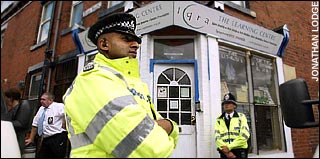
McDaid, who converted to Islam in 2000, had previously worked at another Islamic bookshop, ‘Rays of Truth’, in Leeds. It was here that he met fellow convert
James Alexander McLintock, who also appears to have links to the Iqra. A former friend of Khan stated that McLintock - also known as
Mohammed Yacoub or Mohammed Yaqub and 'The Tartan Taliban' as a result of his efforts in Afghanistan - had run a series of Islamic study sessions there, before Khan began working there as a volunteer in 2001. When questioned by
The Sunday Times, McDaid did not deny McLintock’s involvement in Beeston.
Asian community leaders reportedly asked the police to
investigate the links between McLintock and the study groups he ran. Confusingly, McLintock also appears to be known as
Anas al-Liby, also with
alleged links to al-Qa'ida. Neither Martin 'Abdullah' McDaid nor James 'Mohammed Yacoub/Yaqub' McLintock are mentioned in the Home Office report, despite their interesting connections to terrorism and the reports that McDaid was being
monitored by the security services.
Martin Gilbertson says he worked directly with McDaid, Khan, and the two other men who helped run the bookshop; Tafazal Mohammed and Naveed Fiaz, neither of whom could be traced for comment by
The Guardian.
Mr. Gilbertson said of Khan:
“I became aware of Sidique Khan, the man the newspapers and authorities call the bombers' 'ringleader'. To be honest, he wasn't the one who stood out. I bumped into him, and he was much like the others - 'Allah Akbar' and all that. But he wasn't the ranting type; what he seemed to want was kudos within the group, and among people on the street outside. Khan's way was to be a 'cool dude'; it was all about kudos in the Muslim community. Khan was well known at the gym round the corner, affiliated to the Leeds Community School and Iqra - known as the 'al-Qaida gym'. So far as I could see, Khan was the one who had to be 're-converted' or 'reverted' - as they say - back to Islam first.”

This testimony regarding Khan does not really corroborate the Home Office report, which states in paragraph 14 that Khan was “serious” about his religion by the time he started his job at Hillside Primary School in March 2001. Martin Gilbertson was not having contact with Khan until 2002. His statements also conflict with those of Martin 'Abdullah' McDaid (pictured left), who claimed that Khan had
left the Iqra bookshop before he joined and that he only knew the four suspects to exchange greetings.
In the same interview, Mr. Gilbertson said:
“On reflection, I don't know which way round it was. Whether the people at Iqra were putting Khan up to it, or whether Khan was using them. The path of least resistance is to say that the people at Iqra were creating the atmosphere in which Khan worked. Khan was taking advantage of the atmosphere they were creating, but what I don't know is to what extent the others were aware of what he was doing. I see it as series of pyramids: at the top, the official Muslim community leaders; below that, the pyramid I was working for at Iqra and Hamara YAP, with Khan as a hinge between this and a third tier of pyramids: one of which was the footsoldiers, the bombers.”
However, Mr. Gilbertson never actually states exactly what Khan was doing. It is also unclear who the people were in the pyramid he describes ‘above’ Khan.
A few days after The Guardian interview, while the media were still discussing Mr. Gilbertson’s revelation, Charles Shoebridge, a former detective with the Metropolitan Police, who now writes about terrorism, stated on the BBC Newshour programme:
"The amount of information coming out and the quality of information coming out. The fact that that has been so consistently overlooked it would appear by the security service MI5, to me suggests really only one of two options."
"Either, a) we've got a level of incompetence that would be unusual even for the security services. But b) possibly, and this is a possibility, that this man Khan may even have been working as an informant for the security service."
"It is difficult otherwise to see how it can be that they've so covered his tracks in the interim."
It is not inconceivable that a young man prominent in the Muslim community would be asked to undertake work for the security services to identify potential extremist groups. In September 2005, a leaked document detailed
plans by MI6 to infiltrate such groups.
Just a few days before Mr. Gilbertson came forward with his story, a book by US intelligence specialist Ron Suskind was being publicised, in which he claimed that the CIA discovered in 2003 that Khan was planning to attack American cities and subsequently banned him from entering the US. This claim
directly contradicted that of MI5 who denied that Khan had been listed as a terror threat.
Since Babar’s claims tied Khan in to Operation Crevice and camps in Pakistan that British authorities still have no evidence that he visited, it is quite remarkable that MI5 can state they did not consider him a threat. It was claimed in the days following the attacks that the suspects were ‘clean skins’; unknown to the security services or police, but French Interior Minister Nicolas Sarkozy told reporters that the then Home Secretary, Charles Clarke, had told him that some of the suspects had been subject to “partial arrest” in spring of 2004. They were not charged, in the hope of catching the ‘wider network’ - which apparently never happened. Mr. Clarke
strongly denied this.
But, in October 2005, it emerged that Khan had been under surveillance in 2004, and just a few days after this, it was revealed that all four men had been tracked by the security services. The Intelligence and Security Committee (ISC) report into the London bombings described Khan as being “peripheral” to previous surveillance, despite the fact that resources were devoted to photographing him, tracking his car and tapping his phone. Interestingly, the ISC were
unable to view the transcripts of the taped telephone conversations, prompting accusations of a cover up by MI5.
The Times notes:
"For the ISC report to be more incisive would not have been difficult. It does reveal that there were occasions before the attacks when MI5’s attention was drawn directly or indirectly to Khan but goes to great lengths to play them down. For example, the report notes that in 2003 a known terrorist suspect under investigation by MI5 made calls to a telephone number registered to a “Siddeque Khan".
Which is interesting, because that was not how Mohammad Sidique Khan’s name is spelled. One wonders how much confidence there can be in the effective surveillance of a person with a different name. It is also strange that Khan managed to allegedly be involved in so many terrorist activities, including the claim that he was involved with the attack in Israel, as mentioned above, on a support worker’s salary while managing to fool so many people in
in his own community, who were
in shock and disbelief when told that Khan was one of the alleged perpetrators of the London attack. In August 2006 the Yorkshire Post reported that Khan's car was bugged with an electronic tracking device but that the
device was only installed after 7th July 2005.
In paragraph 64, the Official Report gives a brief description of Khan’s finances:
“Khan appears to have provided most of the funding. Having been in full-time employment for 3 years since University, he had a reasonable credit rating, multiple bank accounts (each with just a small sum deposited for a protracted period), credit cards and a £10,000 personal loan. He had 2 periods of intensive activity – firstly in October 2004 and then from March 2005 onwards. He defaulted on his personal loan repayments and was overdrawn on his accounts.”
This certainly suggests that if the cost of the London bombings was as low as the Home Office report speculates it was, estimating that it only cost around £8,000, then Khan could have been in a position to finance it personally. However, this does not take into account the still unresolved discrepancy of exactly which type of explosive was used on July 7th. If the explosives were military grade, as the
French Interior Minister asserted that they were, these would cost considerably more than a home-made concoction allegedly involving hair bleach and other readily available domestic materials, which the Official Report states still has not been identified entirely. It also doesn’t explain how the other activities abroad that it is speculated Khan was involved in were funded.
The notion that the exact nature of the explosives used was unknown by the time the Home Office account of the London bombings was published, some ten months after the incidents, is entirely ludicrous.
There were even allegations that Khan travelled to
Malaysia and the Philippines in 2001 to meet leaders of extremist Islamic group Jemaah Islamiah (JI), an organisation that is closely linked with al-Qaeda. However, the Home Office report concluded in paragraph 48:
“There were media reports soon after the attacks that Khan had visited Malaysia and the Philippines to meet Al Qaida operatives. These stories were investigated and found to have no basis.”
But these stories did not appear to be retracted by the media that published them, leaving those who had read them to conclude that they were based on facts, which is unfortunate.
The report also stated in paragraph 66, when referring to the weeks preceding 7th July 2005, “There are some indications that Khan was worried about being under surveillance during this time.” This suggests that Khan was engaged in unlawful activities, which again begs the question of why he was never detained.
Martin Gilbertson says he contacted the police about his claims in October 2003, but instead of being interviewed or asked to give a statement, he was told to send the names of the men he was concerned about and examples of the material he was producing at the Iqra bookshop. He did so, and heard nothing in response. In fact, when one considers the
catalogue of information that the security services had about Khan, the ISC’s conclusion that there was no intelligence failure is rather dubious, to say the least.
7th July 2005 and the Aftermath
Mohammad Sidique Khan is accused of detonating a bomb on a westbound train leaving Edgware Road station and heading towards Paddington. The only person on the train who claims to have seen Khan is
Danny Biddle. The details of Mr. Biddle’s testimony change significantly each time they are reported. As well as the accounts mentioned in the link, there is another account where Mr. Biddle describes a man he now believes to be Khan as:
“Sitting with a rucksack over his shoulders and a main bag in his lap over his chest”. Danny watched him look at his wrists several times - as if checking the time. “When he first put his hand in the bag my first thought was medication, or he’s getting something to eat, or he’s a diabetic, whatever. As the train pulled out of Edgware Road station, he put his hand back in the bag, lifted his head and looked up and then there was light like a thousand camera flashes going off.”
The public were told the bombs were in the rucksacks that the men were reportedly carrying, so it is extremely strange that Mr. Biddle refers to a connection between Khan reaching into a “
main bag” and the explosion occurring. Furthermore, even in the one CCTV image released of the alleged perpetrators of the attacks, taken from outside Luton station, no "main bag" can be seen. Biddle's other statements, where he refers to Khan pulling “
some sort of cord”, contradict the police’s assertion, as reported in
The Guardian, that the bombs were detonated with ‘
button-like devices‘. It is unclear whether these discrepancies are due to Mr. Biddle having inconsistent recollections of the event or to poor reporting.
It is also worth noting that in instances of crimes where hard and tangible evidence exists to provide an explanation of events, eye witness accounts are generally dismissed owing to the many well documented problems with eye witness recollections of events, particularly in cases where severe trauma is suffered.
Reports implied another passenger on the train, John Tulloch, had also seen Khan, but Mr. Tulloch said:
"I don't know if I did see him…I'm still not sure. In my police report I emphasised that I had a strong impression of someone who looked like him and was sitting opposite me in the Tube, but I can't guarantee that it was that day."
Inexplicably, according to the Home Office report, identifying documents belonging to Khan were found two days after the bombings at both Edgware Road and Aldgate. Five days after this, on 14th July, property belonging to Khan was found at a third blast site, Tavistock Square.
Given that Khan is alleged to be responsible for the Edgware Road incident, quite how Khan managed to place his ID in two locations other than Edgware Road, including on a number 30 bus that exploded almost an hour after he is supposed to have killed himself and others at Edgware Road, is yet another in the long line of mysteries that surround the events of 7th July 2005.
Another curiousity is that when the men were first identified, Khan was actually incorrectly named as
Rashid Facha, a name very different from his own, despite the fact that every other detail of his family and address was correct.
On 1st September 2005, as questions were being raised about whether the events of 7th July 2005 were suicide attacks, a video was broadcast on the al-Jazeera channel of Khan making a statement which appears to indicate his anger with Western governments and the atrocities they perpetrate against Muslims in the Middle east. In the video he does not state that he intends to attack London, nor does he mention the attack he is accused of perpetrating. This video is discussed in detail
here.
Interestingly, in paragraph 40 of the Home Office report, there is mention of a separate Will that Khan left, although it is not clear how this was obtained, nor has this ever been released to the public. The report describes the will as focussing:
“....much more on the importance of martyrdom as supreme evidence of religious commitment. It also contains anti-Semitic comments. It draws heavily on the published Will of a young British man killed during the US bombing of Tora Bora in Eastern Afghanistan in late 2001, and who was married with young children like Khan. He appears as something of a role model to Khan.”
There is no explanation in the report for how it is known that these parallels were intentionally drawn with the other person’s will, and a search by J7 researchers of published wills by British men killed in Afghanistan has so far yielded no results.
Khan’s family released
one statement on 16th July 2005 and have not spoken publicly since. They said:
The Khan family would like to sincerely express their deepest and heart felt sympathies to all the innocent victims and their families and friends affected by this horrific and evil act.
We are devastated that our son may have been brainwashed into carrying out such an atrocity, since we know him as a kind and caring member of our family.
We urge people with the tinniest piece of information to come forward in order to expose these terror networks which target and groom our sons to carry out such evils.
We have no further comment and do not wish to be approached further by the media.”
The Telegraph reported on 29th October 2005, that Khan’s family had asked for a second post mortem to be carried out on his remains, by an independent pathologist. The Telegraph wrote:
“Exhaustive tests on the remains have already been carried out by forensic scientists to determine what type of explosives Khan was carrying and how they were detonated and it is not clear what further information they will now yield”
Despite these “exhaustive tests”, the Home Office report was still unable to state what type of explosive was used, or how they were detonated, by its publication ten months later.
The calls by Khan's family for a second post-mortem would suggest that they are not satisfied with the results of the first post-mortem and are still trying to ascertain the cause of death.
No further information has been given about a second post-mortem and, to date, unlike Hussain and Tanweer, there have been no reports of either Lindsay Germaine or Mohammad Sidique Khan having had funerals. The inquests are scheduled to take place in June 2007.
J7 Profile: Hasib Mir Hussain (Age: 18)
Hasib Mir Hussain: Alleged to be responsible for the number 30 bus blast in Tavistock Square

Hasib was
born on September 16th 1986 in Leeds General Infirmary, the youngest of four children to Maniza and Mahmood Hussain. He lived in the Holbeck area of Leeds with his parents, older brother and sister-in-law.
He attended Thomas Danby College in Leeds, where he had gained an AVCE in business this year and was awaiting the results of the five NVQs he had taken at the time of the London bombings. He had previously attended
Matthew Murray High School in Beeston from 1998 to 2003, during which time he had a good attendance record. He achieved GCSEs in English language, English literature, maths, science, Urdu, design technology and a GNVQ in business studies.
In the days following the release of Hasib’s identity as one of the suspects, people who knew him gave widely varying accounts of the type of young man he was.
The Mirror reported that he was ‘full of hate’ from the age of 14 when he threatened terror against classmates in the wake of September 11 and it was also reported that he had been withdrawn from sitting his GCSEs by the school. However,
these claims were rubbished by the headmaster of the school who stated:
"There has been a lot of misinformation spread about this young man. He did the GCSEs, contrary to reports in the media, and he did not spread leaflets of hate mail around the school. It's just not true. We are as staggered as anyone else that this has happened and there was absolutely no indication during his time here that it would.”
Hussain was described as 'a charmer who liked to flirt' by Associated Press Writer Scheherezade Faramarzi after speaking to a friend who also spoke of
Hasib’s sense of humour and style.
"He was an ordinary lad. He always smiled as he walked past our house. He was soft-spoken and calm."
“He was a good lad…a good looking man. He had a good personality.”
Another friend told the
Evening Standard, “Hasib was someone I looked up to. He was a gentle giant.”
There were a few
reports from the community that until the summer of 2004, Hasib was also known for his clubbing and occasional drug taking. However, The Guardian reported that such activities made
Hasib no different from any other teenager in the area and that according to his friends, just days before the London bombings, Hasib had little else to talk about but cars, girls and sport.
Hasib Hussain lay sprawled upon the short grass of Cross Flatt's Park, the ribbon of green that borders the red-bricked houses of Beeston. It was four days before the London bombings and the 18-year-old was enjoying a final reefer with childhood friends. As another long summer night in Leeds dissolved into darkness, Hussain betrayed none of the radicalism that would shortly immortalise the teenager as the youngest suicide bomber to strike western Europe.
Instead the patter never strayed from the norm: who was going out with whom, who was driving what, who'd found a job. 'When you grow up with someone and smoke weed with them it normally means you're close,' said a lifelong friend of Hussain last Thursday night.
It was also said that he had been cautioned for shoplifting in the same year. This was reported to have been of
great concern to his parents, who were said to have sent him to Pakistan and also paid for him to do the Hajj pilgrimage to Mecca.
Many reports spoke of how Hasib had returned from the trips
devoutly religious, eschewing jeans and T-shirts for
robes and a topi hat and growing a beard. However,
this is disputed by Hasib’s family, who stated that Hasib had only ever visited Pakistan once since he was a baby and this was to attend his brother’s wedding three years ago. His brother also said:
“There was absolutely no sign of him becoming devoutly religious. He wore jeans and trainers, just like me."

Hasib apparently loved sport, particularly
cricket and football and played for local teams. He had been taking driving lessons from his father and had definite plans for the type of car he planned to buy; only a few days before he died he was enthusiastically showing his mother a car magazine which had a picture of the car he wanted. His father says Hasib was very sensible with his money, and would save his pocket money, only using it to buy clothing and everyday items. He never showed any signs of having any more money than his allowance from his parents. According to his family, he loved the London sights, particularly the London Eye and would often talk to his sisters and nieces about them.
In an interview given to the Mail on Sunday Hasib's father spoke of how Hasib was engaged to be married to a girl in Pakistan, with whom he had formed a close relationship through numerous telephone conversations, and also of Hasib's confidence in his academic future:
"'It was Hasib's choice. The marriage was agreed after he had seen her photograph and been shown a video. Nobody stood in his way. Hasib and her were to marry before he had finished his education.' The father-of-four insisted that his son had been free to call off the engagement at any time.
Mr Hussain said: 'There was absolutely no pressure on Hasib - he told me he was very happy to marry this girl.' He declined to identify her because he 'did not want her to get involved' but confirmed that she had been told of her would-be husband's death.
Mr Hussain said: 'I could not bring myself to speak to her.
She was told by our relatives in Pakistan. She and Hasib had spoken regularly on the telephone, and she was naturally devastated.' Mr Hussain said that the day after Hasib set off the bomb on the No 30 bus in Tavistock Square which killed himself and 13 innocent people, the family learned he had scored distinctions in four out of the five National Vocational Qualification (NVQ) exams he sat at Thomas Danby College in Leeds - easily enough to fulfil his apparent dream of taking a business degree at Leeds Metropolitan University.
He said his youngest child had 'never been in any doubt' that he would pass the NVQ exams.
'Hasib was so confident. I would try and discuss with him what we would do if he didn't get the grades and he would just say, "Don't worry, Dad. It won't be a case of me having to write to them, they will be coming to me.
Just you wait and see.'' 'It was as though Hasib considered that it was part of his destiny to go to university.
He had complete faith in himself"
Hasib's parents last saw him on Wednesday, the day before the bombings when he had told them he was going to London with some friends. This was backed up by
a report in The Independent which stated:
One of the last conversations he had with his parents was on Wednesday afternoon. He told his mother, Maniza, that he intended to travel down to London the next day with 'a few of the lads'. He was casual about his plans, according to a resident, who said he had told Mrs Hussain: 'I might go to London for the night and come back tomorrow morning.' His mother saw him asleep on the sofa a few hours later. She thought nothing of his plans. 'He goes to stay with friends two or three times a month,' said the resident.
Hasib is suspected of detonating a bomb on the No.30 bus in Tavistock Square on the July 7th.
As with the reports of his character, accounts of exactly what he did on that day are widely conflicting. He was said to have left Kings Cross station after being unable to get onto a tube train due to the Northern Line being suspended. This theory appears to be based on an
unauthenticated claim of responsibility which implied that the bombs had been intended for the north, south, east and west of the city. However, the
Northern Line was, in fact, not suspended and Hasib could easily have caught a train to a destination north of Kings Cross, not only on that line but on other underground lines which were also open.
There are confusing reports as to what Hasib did after leaving the concourse of Kings Cross. Some claim that he went to have a meal in McDonalds. Others state that he tried to make frantic phone calls to the other men.
The Times reports that:
Hussain is believed to have first called Mohammad Sidique Khan, 30, the alleged leader of the group, saying: “I can’t get on a train. What should I do ?” Then in quick succession he left the same message for Shehzad Tanweer and Jermaine Lindsay as, clearly agitated about his next move, he hurried away from the station. A police source who has heard the telephone calls said: “His voice was getting more and more frantic with each call.” Investigators could tell from his breathless voice that Hussain was walking fast as he made these calls.
This suggests that he was not sitting in McDonalds whilst making the calls. In the same report, it is stated:
After his stop at McDonald’s Hussain climbed on to a passing No 30 double-decker bus in Tavistock Square.
This is at odds with the reports that it is
not known where or when Hasib boarded the bus and also conflicts with reports that the No.30 was the second bus that Hasib had taken after
leaving Kings Cross. Confusingly, Hasib was reported to have been making the phone calls whilst walking down a street at 9am, and also sitting in McDonalds having a meal at 9am. The
Home Office narrative states: "9.02am Hussain goes into McDonald’s on Euston Road, leaving about ten minutes later." Yet when a CCTV image of him was released on the day after the Bali bombings, exiting a chemist’s onto the main concourse of Kings Cross station, the timestamp at the bottom was 9am. According to other reports,
Kings Cross was already being evacuated by 9am, yet the photo shows no evidence of this.
A passenger on the number 30 bus, Richard Jones, described how an ‘agitated young man’ rummaging in a small bag had made him decide to leave the bus between stops, just before the bus exploded. However, it is clear that the man Richard Jones saw
could not possibly have been Hasib Hussain, not just because Richard Jones says he was on the bottom deck of the bus whereas the bomb was at the back of the upper deck, but because the description he gave of the young man that he saw does not match the physical description of Hasib as given by the police and shown in the CCTV pictures which were released.
Another oddity is that Hasib was identified due to the apparently unique injuries sustained by suicide bombers due to the
explosives they strap on to their bodies. It is perhaps strange that he would have been identified by these unique injuries caused by strap on explosives when it was stated that he was carrying his bomb in a rucksack.
"We, the family of Hasib Mir Hussain, are devastated over the events of the past few days. Hasib was a loving and normal young man who gave us no concern and we are having difficulty taking this in. Our thoughts are with all the bereaved families and we have to live ourselves with the loss of our son in these difficult circumstances. We had no knowledge of his activities and if we had, we would have done everything in our power to stop him. We urge anyone with information about these events, or leading up to them, to cooperate fully with the authorities. This is a difficult time and we ask you to let us grieve for our son in private.”
On August 2nd 2005,
Hasib Hussain's brother said:
"Two weeks before he disappeared he called my mother to his room. He was sitting on the bed and asked her to get rid of the spider in there. He was so gentle. He was built like me physically, but people got the wrong idea - he was a big softie. We've not been shown any other forensic evidence to link him. It's just the credit card. I still think there will be evidence to prove he is innocent."
J7 Profile: Shehzad Tanweer (Age: 22)
Shehzad Tanweer: Alleged to be responsible for the Liverpool Street/Aldgate/Aldgate East Blast(s)
He was born in St. Luke's Maternity Hospital in Bradford, but moved to Beeston with his parents, brother and two sisters when he was still a toddler. He was a popular student at Wortley High School and also an outstanding sportsman with
a shelf full of trophies.
A report in the Washington Post states Shehzad's
primary passion was playing cricket and that he rarely missed a Wednesday night match at the local park. In the same article Tony Miller, a fellow cricket devotee from Beeston, said, ”Every time I saw him, he seemed like he was enjoying life," said Tony Miller, a fellow cricket devotee from Beeston.”
His father, a former Yorkshire Police officer, owned several local businesses, including a
chip shop, which Shehzad often worked in, joking with customers as he served them. His red Mercedes, a gift from his father, was a well known sight around Beeston.

The news that Shehzad was suspected of detonating a bomb on a tube train at Aldgate left the people who knew and loved him reeling with shock. Their comments and statements unanimously give the impression of a quiet, sporty young man who took little interest in the news or political issues.
"He felt completely integrated and never showed any signs of disaffection," Ahmad wrote. Tanweer was never interested in foreign policy or politics, said Ahmad, adding that she never once saw him reading a newspaper or watching the news. Nor did she see him attend any protests against Britain's involvement in Iraq or Afghanistan, or against Israel.”
Safina also said:
“Nothing could anger him. I cannot recall the last time I heard him even raise his voice.”
Long-time
family friend Neil Kay said:
I've known Kaki [Shehzad] since he was two. He was always praying. He'd even get up at 4am to pray.
"He's a very religious lad, but a lot of his friends are white. He never put a white man down. He called me his uncle Neil. I can't believe he could be a religious fanatic.
"He was a good cricketer and was always watching sport on TV when he wasn't helping out at the fish and chip shop."
Chris Whitley, who lives across the street from the Tanweer family, said:
“He was my best mate growing up. He couldn't go a day without playing cricket."
Classmate Sunny Lotta remembers that Shehzad:
“Got on with everyone and had lots of friends who were white, Sikhs, whatever.”
An unnamed friend said:
“Shehzad was the sort of person who would always tell the young kids that they should stay out of trouble and make something of their life.”
Malik Abdul Shabaz expressed his disbelief, saying:
''If you met Shezzy, you'd love him. He was really calm and humble. Very intelligent. All them boys was. That's why this is so shocking."
"Shazzy is the best lad I have ever met. He's a top guy and a top lad. We play cricket together, he's a bowler and a batsman. He wouldn't do anything like this. He's from a very strong family. He went to university to be educated; he did a sports science degree. I saw him last week. Shehzad is a very kind person who would get along with anyone and anybody. He's the kind of guy who would condemn extremism."
"We were all just having a laugh and joking," he says incredulously. "He just said the usual things, 'good catch', that kind of thing. He was a wonderful, relaxed bloke. That's why we are all in shock. If he was a radical then he hid it from us. He would listen to everyone's point of view."
“My son was more British in his orientation than anything else. He has planned his career in sport. Even on the night before he died, he was playing cricket."
Shehzad's uncle, Bashir Ahmad, said:
"I saw him the day before he went to London. He was completely calm and normal, just his normal self. He was playing cricket in the park with his friends until quite late in the evening.
He was a very kind boy, intelligent and well-respected by everyone. This is not the boy I know. He must have had forces behind him.
He was proud to be British. If our family had thought he had been involved in any fanatical groups, we would have put a stop to it. There is no explanation I can come up with for why he did this. Our lives have been shattered."
A representative of the Metropolitan Police Anti-Terrorist Branch also referred to this cricket game, along with an observation that much of the behaviour Shehzad exhibited in the days before the bombings did not fit a pre-conceived terrorist profile:
“The unnamed official told delegates that Tanweer argued with a cashier that he had been short changed, after stopping off at a petrol station on his way to the intended target in London.
The official told the seminar held in Preston, Lancashire two weeks ago: "This is not the behaviour of a terrorist - you'd think this is normal.
"Tanweer also played a game of cricket the night before he travelled down to London - now are these the actions of someone who is going to blow themselves up the next day?”
An article in the
Independent newspaper on September 10th painted a picture of Shehzad as a ‘single minded Jihadist killer’. The article stated that Shehzad and Mohammad Sidique Khan were part of a group of young Asian men in Beeston, known as the ‘Mullah Crew’. This group reportedly took on the task of cleaning up young drug addicts, taking them on outdoor pursuits activities such as white water rafting and paintballing. The comments made by locals regarding the ‘Mullah Crew’ are at odds with the numerous descriptions of Shehzad as given above. One source said:
"They would not take lads who had become too 'Westernised' for their liking."
This conflicts with statements such as this given by a neighbour of the Tanweers:
“The Tanweers' neighbour told how the man dressed in a Western way, often in designer tracksuits and trainers.
”He didn't have a beard; he wore sports tops, tracksuit bottoms and trainers -like anybody else really,"
and also with reports that
Shehzad even wore a baseball cap to mosque.
The article stated that Tanweer `seemed to have planned to get his own back' against an attack that was made on his fathers chip shop.
It is not apparent, though, how it seemed that way when it is admitted in the following paragraph that Tanweer had no involvement in the attack on a white youth but appears to make it seem as if he would have by mentioning a completely unrelated public order offence caution he received on a different occasion.
There were reports that Shehzad visited Pakistan. Bashir Ahmad told reporters that he went purely to study religion and learn about the Koran.
The Independent stated:
“He stayed with an uncle and is not believed to have travelled very far. After three months, he returned to England to resume life in Leeds, choosing to work part time at his father's chip shop, the South Leeds Fisheries on Tempest Road near his home. He came back early because he didn't like "the heat, the poverty and the attitude the Pakistanis had towards people from England'', according to Mr Ahmad. He denied his nephew had travelled to Afghanistan or had taken part in training camps while he was in Pakistan. "There is no way. I have seen his passport," he said.”
"Tanweer was a noble soul…He was a shy and simple guy who would never be involved in a heinous crime like a suicide bombing."
Mr. Pervaiz also said that Tanweer left the village to visit madrasahs in Lahore and Faisalabad only occasionally, and that the trips were for just a few days at a time.
A number of reports claimed that Shehzad met terror suspect
Zeeshan Siddiqui, but Siddiqui himself says the reports linking him to the London attacks are “false, baseless and misleading.” Siddiqui was arrested in Pakistan in May 2005 on suspicion of having links to al-Qa’ida, but has also only been charged with document forgery and immigration offences related to outstaying his Pakistan entry visa.
Shehzad is alleged to have killed himself and seven other passengers on a train at Aldgate. There are no reported witness sightings of him either at Kings Cross station or on the train.
The Metropolitan Police stated on July 12th:
'Property in the name of a second man was found at the scene of the Aldgate bomb. And in relation to a third man property in his name was found at the scene of both the Aldgate and the Edgware Road bombs.
'We also have very strong forensic and other evidence, that it is very likely one of the men from West Yorkshire died in the explosion at Aldgate’
A
survivor of the Aldgate bomb, Bruce Lait, told the Cambridge Evening News:
"The policeman said 'mind that hole, that's where the bomb was'. The metal was pushed upwards as if the bomb was underneath the train. They seem to think the bomb was left in a bag, but I don't remember anybody being where the bomb was, or any bag,"
Shehzad had
reportedly hired a Nissan Micra from the First 24 Hour car rental company in Leeds, which was used to drive himself, Hasib Hussain and Mohammad Sidique Khan down to Luton. The car was hired in his own name and he used his own credit card to pay for it. When the car had not been returned by July 12th, staff called round to the Tanweer family home in Beeston to collect it.
Shehzad was laid to rest in October 2005 in a ceremony which was extremely tightly controlled by security agencies at the family's ancestral graveyard in Pakistan. Family members were apparently unable to make speeches or statements during the service and witnesses reported that attendees were not allowed to speak or offer direct condolences to the family. Police guarded the grave for some time afterwards.
The Telegraph interviewed Shehzad's father:
Mr Tanweer said his son was entitled to a proper burial, although the family now intends to discover why he became a suicide bomber. The July 7 attacks killed 56 people, including the bombers, and injured more than 700 others. "My first priority was obviously to bring his dead body to our ancestral graveyard for the burial," he said. "Since I'm able to do this only now, I would soon try to find out the reasons [for the suicide mission] and will tell the world."
According to a report in The Times, there is additional footage of Khan directly confessing to the attacks, which he did not mention in the video which was broadcast. The Times added:
“Another of the cell, Shehzad Tanweer is also said to appear, according to a source involved in obtaining the film for the Arab satellite channel, Al-Jazeera.”
There were no further mentions in the media of any other footage until
an ABC news source announced on July 5th 2006 that a
video of Tanweer would be broadcast on al-Jazeera the following day. It is not clear how advance warning of the broadcast was obtained, or how al Jazeera obtained the video.
The airing of the video just happened to coincide with the culmination of a week of media articles specifically about Tanweer, including an in-depth analysis in
The New Statesman and an article in
The Times. There was also an interview with a family friend of the Tanweer’s in a section of
the Independent newspaper on the day of July 7th. While it is unsurprising that there should be articles about any of the accused in the week preceding the anniversary, there were no stories about the other three suspects and one assumes that at the time their articles were written, no journalists knew that a video would be released and making features about Tanweer all the more pertinent.
A
transcript of the video was made available, showing exactly what Tanweer says in the video, along with Ayman al-Zawahiri and American al-Qa’ida member Adam Gadahn. There is an incongruent background to Gadahn; his real name is
Adam Pearlman, although the FBI lists his aliases as Abu Suhayb Al-Amriki, Abu Suhayb, Yihya Majadin Adams and Yayah. Adam Gadahn's father is the musician
Phil Pearlman of Pearlman Messianic Ministries, and his grandfather was
Carl Kenneth Pearlman, a Urologist and member of the board of directors of the Anti-Defamation League. It was Phil Pearlman who changed the family name to Gadahn after converting to Christianity. Adam Gadahn was educated at home before moving in with his grandparents at the age of 15 and converting to Islam, an experience he wrote about in an essay he submitted to the
USC website in 1995.
There is no explanation for how Gadahn and Tanweer were acquainted, if indeed they were. There is also no explanation for how Tanweer, a British citizen from birth, appears in this video to have no knowledge of the electoral system in Britain, speaking as a foreigner who assumes that the Government of this country always represents the wishes of its people, although he would have known this is most certainly not the case.
Tanweer would have known how many people in Britain were against the atrocities that he appears to blame 'westerners' for in this video, despite the fact that he and his family and friends were the very people that in the video he claims are deserving of mass slaughter. These men would never have suffered the agony of seeing their homes and families destroyed, and one has to wonder how much of a role watching extremist DVDs plays in 'radicalising' young men who according to their friends, considered themselves British in every way.
Many non-Muslim British citizens are angered and outraged at the actions of the British government, not as a result of watching 'radicalising' or 'extremist' DVDs, but as a result of mainstream media news reports of the many atrocities perpetrated abroad in which the British government is willingly complicit.
It does not follow, despite
the views of Martin Gilbertson, an IT expert who produced the anti-Western propaganda and who claimed that the DVDs produced "an atmosphere conducive to the bombers", that this anger leads directly to a compulsion to commit the same kind of appalling atrocity, especially not against ordinary passengers travelling on London transport, none of whom would have been responsible for the actions of the British government.
Curiously, when Martin Gilbertson began to feel concerns about the propaganda DVDs and the men he was working with, which included
Martin Abdullah McDaid, an ex-special forces anti-terrorist operative who had converted to Islam, and took the material and names to the police,
they made no response.
McDaid stated to the
Mirror in July 2005 that not only was no such propaganda available at the Iqra Learning Centre, but that he had not worked with any of the four suspected men during his time there. It has also been reported by
other sources that these propaganda materials were not associated with the Iqra.
As yet, no friend of Tanweer or family member has given their opinion on the video, even to say if it resembles Tanweer or not, as Khan’s friends did after a video of him was released in September 2005. It is also unclear where or when this video was made, as the Official Report into the London bombings appears to have found no confirmation of Tanweer’s movements during his trip to Pakistan, or who he met whilst there.
J7 Profile: Jamal/Germaine Lindsay (Age: 19)
Germaine Linsday: Alleged to be responsible for the King's Cross / Russell Square blast
Lindsay's name has been reported in numerous variations:
Jermaine Lindsay,
Lindsay Jermaine,
Lindsay Jamal,
Jermaine Morris Lindsay,
Jermaine Maurice Lindsay,
Germaine Morris Lindsay,
Germaine Maurice Lindsay,
Germaine Lindsay,
Jamal Lindsay,
Gemal Lindsay,
Lyndsay Jermain,
Lindsay Germail and
Lindsay Germain.
Although all reports seem to agree that when he converted to Islam he changed his name to
Abdullah Shaheed Jamal and his family and friends refer to him by the name Jamal.
Like the other suspects, the reports of Jamal and his background conflict wildly making it incredibly difficult to establish many lucid facts about his life but he was born in Jamaica on
September 23rd 1985. Depending on which account is read, he was born in either
Mandeville or
Waterford.
His mother became a probation officer and within a year had given birth to Jamal’s half-sister, Dana. Four years later, Maryam and Barry split and Dana went to live with her father, leaving Jamal and his mother alone, until she met another partner, with whom she had another daughter, Lauren.
Jamal grew up in the area of
Dalton in Holays, attending Rawthorpe Junior, a church school and Rawthorpe High School where he was noted for his good grades and love of sports:
“Theresa Weldrick, who was in the year below at secondary school, said she was stunned to learn of his part in the London atrocities.”He was really nice. He was one of those people you never expected to get into trouble. He was just so good. What possessed his soul?"
Sally Lewin also attended Rawthorpe and grew up a little awed by Jamal. "He did all his exams and was in the top group. He was dead brainy."
In contrast, on August 8th, The Huddersfield Examiner published an interview with a woman named Juliet Davidson, a former drug addict who claims that Jamal was her dealer:
“Juliet, 26, first met Lindsay - known to her as G - five years ago outside a row of shops in Harp Inge, Dalton.
He was just 14 at the time and a student at Rawthorpe High School.
She said: "He used to hang around and when I was going there to score one day he asked me to get my drugs off him.
"I used to get heroin and crack cocaine off him every day for about two years.
There are contradictory accounts as to how the conversion changed Jamal. Some say he completely altered his attitudes and appearance:
“After he converted, Lindsay came to be known as the most pious of all the Muslim teens in the hardscrabble neighborhood and tried to convert other children.
''He became more extreme than anybody else," recalled Chris John, 17, a high school classmate and neighborhood friend from Lindsay's youth. ''When he converted, he stopped hanging out with his normal friends."
Lindsay stopped chasing girls and play-fighting in the halls of Rawthorpe High School. He turned his attention to academics and athletics, where by all accounts he shined. He broke records in track and scored some of the highest marks in the school on exams. When other kids would write a few paragraphs for a history essay, he would lay out his argument all afternoon, in page after page after page.
In all that he accomplished, Lindsay credited his religion.
''Every little thing that he did, he would always say 'Allah Akbar' [God is great] as loud as he could after everything," said a close friend from high school who asked that his name be withheld because of the media attention. ''Whether it was getting a goal [in soccer], or winning the 100-meter."
Others say he kept it very quiet and did not make an issue of it:
“When he was about 15, he converted to Islam at the same time as his mother.
"We were surprised but he didn't make a big deal about it," said a former classmate. "He was just a regular guy. He was bright but quiet. He was keen on athletics and we used to go out running together."
According to the Daily Mirror article ‘
Prize Fighter’ which was published on July 16th 2005, but is not available in the newspaper’s online archive, Jamal had given career advice to fellow students at Rawthorpe, appearing on a council careers website, talking about the benefits of doing work experience with a local company. In the Mail on Sunday article ‘
Wife thought Bomber was having an Affair’ it is stated:
“The teenager had planned to become a solicitor, but after getting several GSCEs, he inexplicably failed to take up an offer of a place at Greenhead Sixth Form college in Huddersfield.”
However, an explanation for the ‘inexplicable’ failure of Jamal to study at Greenhead was given by a friend in an interview with The Boston Globe:
“Everything changed after Lindsay graduated from high school, perhaps due to an accident of fate. He applied to Greenhead College, a nationally acclaimed school in Huddersfield, and his exceptionally high grades assured him admission, the close friend recalled. But his application was lost in the mail, the friend said, and by the time he reapplied the school was already full.”
Maryam emigrated to America in 2002, leaving Jamal in Huddersfield. She told the Mail on Sunday:
“Jamal told me Britain was his home. He said he wanted to get a job before going back to his studies. I felt he had become such a responsible kid after his conversion that he would be OK. A probation officer who attended our mosque said he’d keep an eye on him and rented him a house. I helped support him and he was able to claim benefit. We never lost touch. I’d call him once or twice a week and visit every year."
Oddly, even though the Mail on Sunday acknowledged that Maryam emigrated in 2002, it states later in the article:
“There have been reports that Germaine was monitored by the FBI after spending a month long holiday with his mother in Cleveland in December 2001, three months after the World Trade Centre attacks.”
If his mother didn’t move until 2002, it is rather unlikely that he would have visited her there in 2001. On this confusing issue, another report states:
“Some American officials, who render the Jamaican bomber's name as Jermaine Maurice Lindsay, say he was on a list of some 2,000 names collected last year in connection with Operation Crevice, a British and Pakistani joint police action aimed at foiling an alleged terror plot. It appears that Lindsay had contact with someone under scrutiny in the case, which concerned a scheme to blow up London's Heathrow airport or some other target of similar magnitude. But the Jamaican, who American investigators say visited his mother in Cleveland more than once during the 1990s, was never listed as a major terror suspect, and some British officials deny they ever had him in their sights.”
Also:
“Sources say that he visited her there in both 1994 and in either 2000 or 2001. Now, those sources say that the last visit was short, only about four -- three or four days. Now, keep in mind, Lindsay is reportedly only about 19 or 20, so he would have been about 14 when he last came to the United States.”
When Jamal was 14, he was still living in Huddersfield with his mother. In 1994, he would have been only 8 years old; incredibly young to have merited being on an
FBI terror watch list. The Independent newspaper believes the confusion has resulted from a simple case of mistaken identity:
“A similar mix-up is understood to be behind the claims by US intelligence that Germaine Lindsay, 19, the bomber who carried out the King's Cross attack, was on a British watch list. This was because the "fourth" bomber was wrongly identified in the United States as Lindsay Jermaine - someone with a similar name to a terrorist suspect.”
It was not long after his mother moved abroad that Jamal began a relationship with Samantha Lewthwaite. Samantha is a white, Muslim convert who was born in Northern Ireland while her father was serving there as a British soldier. The certainty that Jamal fell in love and married a white woman suggests that he was not inclined to be racially prejudiced - contrary to the account given by Juliet Davidson:
"He was always going on about racism.He thought all white people were trash and said he was going to get them all on drugs to kill them off.”
Samantha herself, in an interview with The Sun, said that they began their relationship before they had actually met face to face when she was given his email address by a friend.
At the time, Samantha was studying religion and politics at the School of Oriental and African Studies in Russell Square. Samantha said:
“I wanted to marry a British Muslim and so did he. We didn’t want an arranged marriage so I suppose in a way we kind of arranged our own.”
When they eventually met, it was in October 2002 at a Stop the War march in Hyde Park, London. Samantha said:
“The Jamal I met and married was a man of peace. We found that we were very much alike and kindred spirits. He wanted to qualify as a human rights lawyer and I was a member of an Amnesty International group at school.”
The couple married in the front room of a friend’s house and went to live in Huddersfield. According to The Guardian:
“Jamal and Ms Lewthwaite lived in a terraced house, paying the £63 a week rent by claiming housing benefit. He would supplement his income by working occasionally as a carpet fitter and with a sideline, selling mobile phone covers at the local Saturday market.”
The following year, 2003,
they moved to Bradford. It was reportedly after this move that Jamal made contact with the other men in Leeds. He had met Egyptian biochemist
Dr. Magdi Mahmoud el-Nashar during the Muslim festival of Ramadan in October-November 2004. Dr. Nashar found him the flat in Alexandra Grove, Burley, which was later alleged by police to be the ‘bomb factory’. Confusingly, it was reported that he had asked Dr. Nashar for help in finding a place to live in Leeds so that he could ‘move there from London with his wife and child’. There are no reports that Jamal had ever resided in London.
A friend of Dr. Nashar, architect Abed Shad, said he met Jamal at the Grand Mosque in Burley, opposite the flat:
"He was a big, powerfully built man, not fat but muscular. He wore the traditional Muslim robes and cap and spoke with a southern or London accent. Magdy told me that he lived in Bradford for a while. I believe they met for the first time in the prayer room at Leeds University. He was studying Arabic, either on an academic or self-help basis, and was very devout.
"Jamal himself said that he lived in Bradford and I believed that he was married. He converted to Islam a few years ago. He always used to play with the children at the mosque. He liked to be with kids and seemed to be a very soft character.
He travelled from Bradford because he loved the mosque in Leeds."
It seems very strange that Jamal would be described as having a ‘southern or London accent’ having lived in Yorkshire since he was a baby.
How he met the other three suspects is even less clear.
The Guardian claimed, “He is understood to have met other members of the bombing team in Pakistan.”
Indeed, there were other reports that Jamal had travelled to
Pakistan, and also
Afghanistan, but these are denied by Samantha and his mother was quoted in the Mail on Sunday article, ‘
Wife thought Bomber was Having an Affair’, as saying:
“There’s no way he could have gone to Afghanistan. He was newly married. His wife would have flipped. He didn’t even have a passport for quite a while – after his son was born in March 2004, he couldn’t bring him to see me in America.”
According to The Telegraph, Jamal met the other three men at the Hamara Centre in Beeston:
“About two years ago, Lindsay and his pregnant wife left Huddersfield and moved to Bradford. He became a regular at the Hamara youth centre in Leeds, where he was befriended by the three other young Muslims who carried out the London bombings.
He resurfaced earlier this year with his pregnant wife and 15-month-old son in Aylesbury.”
Although, according to a different Telegraph article, it was Aylesbury that they moved to two years ago. A neighbour is quoted as saying:
"He moved down here a couple of years ago. You used to see him around all the time. He was very keen on wrestling and boxing.”
But in the same report:
“Neighbours said the couple had moved to the rented property in April. They had not been seen at the house for about a week.”
The reports that Jamal and Samantha had only recently moved to Aylesbury are backed up by a further Telegraph report:
“The father of Germaine Lindsay, the fourth suspected suicide bomber, has revealed that his regular telephone conversations with his son came to an abrupt end two months ago…Their conversations suddenly stopped about the time that Germaine is believed to have moved from Bradford to a rented flat in Aylesbury, Bucks, with his partner, Samantha Lewthwaite, and their 14-month-old son, Abdullah.”
And a still different account from The Scotsman, which states that:
“Originally, he lived in Bradford, where he first met Elnashar; they both attended the Grand Mosque in Leeds. The youngster - he was believed to be only 19 - then moved to Aylesbury in Buckinghamshire where he married a local woman, Samantha Lewthwaite.”
The Mirror wrote:
“Lindsay worked under a false identity as a fitter for Haddenham Carpets in Aylesbury until around May 2005. He called himself Gemal Lindsay, a corruption of his real name and Islamic name Abdullah Shaheed Jamal.”
Which implies that left the company around the same time that he actually moved to Aylesbury.
The accounts of Lindsay’s connection to the flat in Alexandra Grove which he allegedly rented through Dr. Nashar are rather puzzling. The previous tenant of the flat, Samir Al Ani left to return to Iraq in May 2005. His relative, respected hospital consultant Dr Shakir Al Ani, said:
"Samir, who is a distant relative, left me the keys when he went back to Baghdad.
"There was someone coming from London who needed somewhere to stay so I gave Magdy [Dr. Nashar] the keys for him about a month ago. I did not take the other man's full name and I never met him. But I spoke to him on the phone. He had a British accent, it was not a distinct accent but he was fluent.
"He told me he wanted to get rid of some of the furniture because he needed the space, that his wife was coming and he wanted to 'do it up'. I didn't think it was a problem but explained it wasn't my property."
The first curious aspect to this matter is that according to the other reports, Jamal had only just moved to Aylesbury with his wife and child a few weeks before the London attacks. Yet he was apparently trying to rent a flat for them all in Leeds
at the same time.
Secondly, the descriptions of the man who neighbours saw coming and going from the flat do not resemble Jamal:
“Forensic tests confirm Jermain was at the address as well as Khan, Hussain and bomber Shahzad Tanweer, 24. Geoff Thompson, 57, who lived opposite No 18, said: "I told police I'd seen a stranger acting suspiciously some five to six weeks ago.
"He was about 6ft 3in tall and had a Mediterranean look with dark, curly hair. He'd come and go at strange hours and always seemed to be hiding from view. There was something dodgy about him. You'd see him coming out of the mosque just opposite at 3am."
“A newly developed flat in bedsit land, this is where the deadly bombs were made in the bath by a mystery man who arrived from London and "needed somewhere to stay."
He is described as being of Mediterranean appearance, about 30 to 35, 6ft 3in tall, with short curly dark hair. He is believed to have left the country on July 6.”
Although in some early reports, Jamal was described
as being in his thirties.
Interestingly, the above descriptions sound more like the ‘mastermind’ that was believed to have been behind the suspects, who now apparently
no longer exists:
“A TERROR general behind the four London suicide bombers was being hunted last night after the discovery of his explosives factory.
The mastermind, whose name is known to the Mirror, moved into the tiny housing association flat in Leeds about a month before last Thursday's murderous attacks.
He was given keys to the flat by Egyptian student Magdy Elnashar, 33, who has returned to his homeland and cannot be contacted on his mobile phone.
The suspect speaks with a British accent and may have met the bombers at Luton station on the morning of the carnage to hand over hardware or final instructions.”
“The man was pictured on a closed-circuit security tape with the four bombers just before they entered London's Underground on July 7 with backpacks the police believe contained bombs. He is British and dark-skinned, apparently of Caribbean descent, the official said.”
Jamal is suspected of detonating a bomb on the Piccadilly Line between Kings Cross and Russell Square, killing 26 people. There is no clear evidence for any motivation he may have had to carry out such an attack.
His widow, Samantha, appears to believe that Jamal was influenced by extremists he came across in mosques in London and Luton:
“She said: “His behaviour gradually began to change. He turned from the man that I married. In hindsight I can now see exactly what was happening to him and why. How these people could have turned him and poisoned his mind is dreadful. He was an innocent, naive and simple man. I suppose he must have been an ideal candidate.”
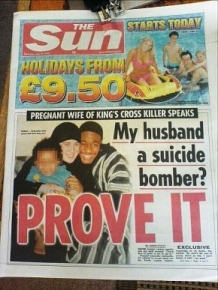
Certainly there is speculation that Jamal went to the
same mosque as Richard Reid, the notorious ‘Shoe Bomber’ and Zacarias Moussaoui, who was sentenced to life in prison in May 2006 for his apparent involvement in the planning of 9/11.
However, given that Reid and Moussaoui
were arrested and detained in 2001, at the time when Jamal was still in Huddersfield, it is unlikely that he would have met them, even if he did attend the mosque.
It has also been speculated by some media that Jamal was involved with
extremist groups and The Telegraph wrote:
“An obsessive body-builder, Lindsay had moved to Aylesbury only seven weeks ago. Once there, he forged close links to Islamic fanatics in the Luton area.
Though Lindsay never officially joined al-Muhajiroun, the organisation that celebrated the slaughter of 3,000 on September 11, he was well known among its ranks. At weekends he would join other members on the streets of Luton, openly recruiting. As he handed out leaflets, he became familiar to passers-by as "one of those looneys".
But no concrete evidence has been presented that he actually was. There is also no proof that despite possible involvement with radical Islamic groups, he would have been influenced to the extent of carrying out mass murder.
There are some accounts that indicate very un-Islamic behaviour exhibited by Jamal. The Guardian newspaper interviewed his neighbours on Northern Road in Aylesbury, one of whom said:
“I saw him on a daily basis. I don't think he worked because he was always around during the day, taking the baby in and out of the Fiat Brava. He would park it over the entrance to my property and people would complain to him about that. They were getting quite cheesed off with him."
She added: "The other thing was the noise. They would play very loud music in the house and the car. When it came from the house people would knock and complain. They would never open the door but eventually the music would be turned down. The neighbours were getting quite upset about it."
According to the Belfast Telegraph:
“The details of Lindsay's last days were revealed in an interview with his mother Maryam McLeod Ismaiyl who, fearing reprisals, is in hiding on the Caribbean island of Grenada, where she has been living for several months.
Samantha told her the pair had had a row, she said, adding: "She told me he had lost his job and that she had discovered he'd been sending text messages addressed to a girl.”
Jamal had also apparently been on a spending spree buying large quantities of perfume. This was attributed to the possible use of alcohol in the making of bombs – even though there are much cheaper ways to purchase alcohol.
The amount of money Jamal was spending had aroused the suspicion of his bank who had taken the rather unusual step of bringing in private detectives to investigate him.
“Noel Hogan, of investigators Hogan and Co International, said last night: "We were aware of this man's movements in the immediate run-up to the London bombing.
"As soon as we became aware of his involvement we contacted the Anti-Terrorist Branch. We have passed them our full records. I can say no more."
Samantha had apparently later decided that the texts were not to a girl after all, but must have been to do with the planning of the attacks.
Nevertheless, she did not report him missing straight away after the bombings so convinced was she that he had left her for another woman. (Mail on Sunday, July 24th 2005)
Peculiarly, in the days following the identification of the men as the suspected bombers, Samantha was adamant that her husband could not have been involved:
“He wasn't the sort of person who'd do this. I won't believe it until I see proof,"
“Samantha Lewthwaite, the wife of the Jamaican suspect, told The Sun newspaper she refused to believe her husband was among the bombers "until they have his DNA."
Yet in the interview with the Sun, published on September 23rd, she said:
“The next day [July 14th] they showed me Jamal on CCTV and said his DNA proved he was one of the bombers. My world collapsed”
This is very odd considering that the police stated on the same day, July 14th, that
DNA identification of Jamal would take some time.
Curiously, according to
The Times, the DNA sample used to identify Jamal's remains was taken from the pay and display ticket he had apparently put on his car in Luton station car park. He had reportedly arrived at Luton station at 5am on July 7th,
waiting almost an hour in the car park for the other three suspects to arrive. The car in which he would have used to travel from Aylesbury to Luton has remained an object of mystery compared to the detailed reporting of the Nissan Micra which was alleged to have been used by the men from Leeds. It is completely unclear in any media report exactly which car Jamal drove in his everyday life, if it was his own car he used to drive to Luton on the 7th or if it was one he had hired and what exactly was found in the car at whichever point it was recovered from the car park. Some media had reported that
Jamal's car had been towed away on the day of the attacks and stayed in a lock-up for five days. The reports said that the car had been taken away 'as a matter of routine', but if it was the car park ticket which gave police the DNA sample to identify him, then the car would presumably have been properly ticketed according to the rules of the car park. It is hard to see, then, how it could have aroused suspicion enough to warrant being towed away on the day when nobody knew who was responsible for the atrocities in London.
When the Metropolitan Police gave press conferences on
July 12th and
July 14th, they stated that they had found personal documents bearing the names of three of the four men close to the seats of three of the explosions. They have never stated that they found personal documents close to the seat of the Piccadilly Line explosion bearing the name of Jamal, who is suspected of causing it.
Bizarrely, Jamal was not the original name given as that of the 'fourth bomber'. This was originally reported to be Ejaz or Eliaz Fiaz, whose name was given by the press in the same way in which they reported the names of the other three suspects before the police had confirmed them. Fiaz's brother, Naveed, was arrested shortly after the bombings and released on July 23rd without charge.
His mother said that Jamal did not believe in hurting innocent people in the name of Islam:
“At the time of the family's conversion, a ''climate of extremism" was growing in Islam, Ismaiyl said, and she sometimes discussed with her son the violent acts of other Muslims. Both agreed that suicide bombing was unacceptable.”
“McLeod added that his suspected role in the bombings was incomprehensible because "after Sept. 11, I was devastated, and so was Germaine." She added, "We cried for all the people who died and wondered how Muslims could do this."
"Jamal was the best son I could have hoped for, I respected and admired him so very much. I have so many questions but I do not know if I'll ever receive the answers, perhaps only Allah - he's the only one who knows everything. I need evidence to believe that my baby could ever harm anyone, let alone kill, injure or traumatise a community and the world."
“I don’t know whether that was my son. Neither I nor his wife have been able to identify him.”
Jamal's half sister, Dana, spoke of her "great brother":
"I want proof," she said. "He did change but he never changed in his love for people."
His widow Samantha, cradling in her arms the newborn daughter that Jamal would never meet, said:
“The killing of innocent British civilians by Jamal was something I could never comprehend because he was always a peaceful man who loved people,” she said. “He was so angry when he saw Muslim civilians being killed on the streets of Iraq, Bosnia, Palestine and Israel — and always said it was the innocent who suffered.”


 The most notable anomalies in the 'official account' of the events of July 7th 2005 are summarised
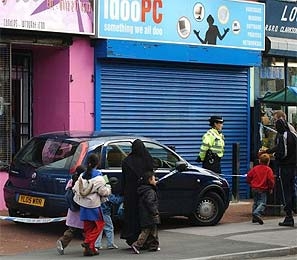 On 24th June 2006, an
  Shehzad Tanweer was
  Some reports say that